Kunda Gymnasium Rait Türkel Old Tallinn Report Instructor:Teacher Kristi Aron Kunda 2012 Introduction Like most cities with an eight-hundred-year-old past, Tallinn is a patchwork of historic areas. The city's pride and joy is without a doubt its Medieval Old Town, but equally enchanting is the Kadriorg district, a throwback to the time when Estonia was ruled by the Russian Tsars. Tallinn is the capital and largest city of Estonia. It occupies an area of 159.2 km2 with a population of 416,470. It is situated on the northern coast of the country, on the shore of the Gulf of Finland, 80 km south of Helsinki, east of Stockholm and west of Saint Petersburg. Tallinn's Old Town is in the list of UNESCO World Heritage Sites. It is ranked as a global city and has been listed among the top 10 digital cities in the world.The city was a European Capital of Culture for 2011, along with urku, Finland.T...
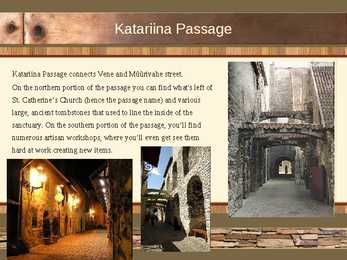
Katariina Passage Katariina Passage connects Vene and Müürivahe street. On the northern portion of the passage you can find what's left of St. Catherine's Church (hence the passage name) and various large, ancient tombstones that used to line the inside of the sanctuary. On the southern portion of the passage, you'll find numerous artisan workshops, where you'll even get see them hard at work creating new items. City wall Tallinn's medieval city wall is a sub-facility that was built to protect the lower Tallinn and upper Tallinn (Toompea). The building of the city wall began in 1310th years, and by improving over time it formed the city wall with defensive buildings (towers). It was finished by the end of the 1561. Then it was 2.35-kilometer-long circular wall, which had 27 wall gate, 8 tower gate and 21 other stone fortifications. Many parts of the to...
Introduction Tallinn, the capital city of the Republic of Estonia and of the Harju county, is a town in North Estonia on the coast of the Gulf of Finland. It has nearly half a million inhabitants and covers an area of almost 160 sqkm. It is also an important economic and cultural centre and one of the main ports in the Baltic States. Tallinn is one of the oldest cities on the Baltic Sea. It is unique for its well-preserved architecture from the 13-15 centuries. In contrast to the ancient town-walls and towers, Tallinn of today offers modern hotels, restaurants, sport and cultural centres. Every five years national song and folk dance festivals take place in Tallinn. The yachting regatta of the 1980 Moscow Olympic Games was held at Pirita. History Tallinn means in English "Danish town". The place is believed to have been settled by Finno-Ugric people about 2500 BC. It was first marked on a map of the world by the Arab geographer al-I...
Names of town ● Lindanise - it was first used in 1219, derived from mythical Linda, the wife of Kalev and the mother of Kalevipoeg, national hero. ● Koluvan - found in old Russian chronicles, the name possibly deriving from the Estonian mythical hero Kalev ● Reval - used after 1219; comes from two german words ‘reh’ and ‘fall’, meaning the falling of the deer - as they fall down the Toompea hill, probably when escaping from the Danish occupation or just the hunters. ● Tallinn - used after Estonia gained its independence in 1918, origin is definitely estonian; meaning Taani-linn, tali- linn. Liberty Square ● The central square of Tallinn, it was renovated in 2008. There used to be Harju gate, which can now be seen through glass. ● The statue of Liberty, 2009; represents freedom, Estonia has been under many foreign powers, starting with Danes, Sweden, German and Russia. The clock of liberty, 2...
Kunda Ühisgümnaasium Tallin Old Town Report Student: Kristin Karu Teacher: Kristi Aron Kunda 2012 The Alexander Nevsky Cathedral The Alexander Nevsky Cathedral is an orthodox cathedral in the Tallinn Old Town,Estonia. It was built to a design by Mikhail Preobrazhensky in a typical Russian Revivalstyle between 1894 and 1900, during the period when the country was part of theRussian Empire. The Alexander Nevsky Cathedral is Tallinn's largest and grandest orthodox cupola cathedral. It is dedicated to Saint Alexander Nevsky who in 1242 won the Battle of the Ice on Lake Peipus, in the territorial waters of present-day Estonia. The late Russian patriarch, Alexis II, started his priestly ministry in the church. Interior of the Cathedral. The Alexander Nevsky Cathedral crowns the hill of Toompea where the Estonian folk hero Kalevipoeg...
TOOMPEA Toompea (from German Domberg – Cathedral Hill ) is a limestone hill with an area of about 7 hectares in the central part of Tallinn. It towers about 30-40 m above the surrounding areas. According to the legend it´s the tumulus mound over the grave of the national hero Kalev, erected stone by stone in his memory by his grieving wife Linda. It is the birthplace of Tallinn - a place where in 1229 the Knights of the Sword built a fortress instead of the wooden Estonian stronghold. Toompea Castle is also one of the most potent symbols of the reigning power. Today Toompea is the seat of the Government of Estonia as well as the Riigikogu, both of which are often simply colloquially referred to as Toompea. For centuries there was only one access to Toompea - Pikk Jalg - but there is also another way leading up to Toompea - Lühike Jalg, which was made in the 14th century. At present Pikk Jalg and Lühike Jalg are used only by pedestri...
Kiek in de Kök is an old German language nickname for towers, mainly those that formed parts of town fortifications. They gained the name from the ability of tower occupants to see into kitchens of nearby houses. Due to the history of the Hanseatic League and the Teutonic Order, also towers far outside modern Germany bear this name, like in Gdask and Tallinn. The tower in Tallinn is an artillery tower built in 1475.The walls are 4 m thick but the tower was then lower than today. The waterproof upper floor made of cobblestones was open and had 22 embrasures in its parapet. The parapet must have been covered by some kind of a roof but the middle part of the floor was uncovered to get the mortars and catapults in place better. Compared to the other Tallinn towers Kiek in de Kök was predominant in its fire power, due to its 27 embrasures for cannons and 30 for handguns. The ground floor was a storage floor and there was also the initial ent...
Old Tallinn Old Town, a medieval walled city filled with old buildings and fortifications. The sheltered bay and the easily defended Toompea Hill made it a natural place to settle. Sometime about 1050 A.D. a fortress was built atop the hill, the first of many. In 1219 the Danes showed up as part of the Northern Crusade to subjugate the Baltics and convert the local pagans to Christianity whether they wanted to or not. The Danes improved the fortifications and expanded the town, which became part of the Hanseatic League, a trading organization of a hundred northern cities. The Danes sold Tallinn to the Livonan Order, a branch of the Teutonic Knights, in 1346. The Swedes came next in 1561. Tallinn weathered plague and the Great Northern War and became part of Russia in 1710. In 1918, Estonia declared independence from Russia and fought a bitter war against Bolshevik Russia. Independence didn’t last long, ...
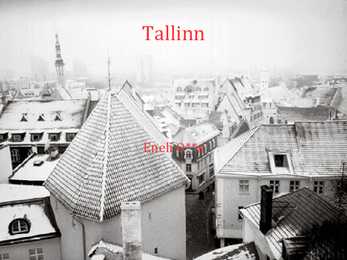
Tallinn Eneli O**a History City rights were given to Tallinn on May 15, 1248 Independent since 1991 Covers the area of 159.2 km2 Old Town of Tallinn Tallinn's Old Town is one of the most well- preserved old towns in northern Europe The golden era in lies in the period between the early 15th and mid 16th centuries It has three parts: Lower Town, Upper Town + Town Wall, Towers and the Gates Lower Town/Upper Town Town Hall Square Toompea Castle & Tall Tallinn Town Hall Hermann's Tower Town Hall Pharmacy Cathedral of Saint Mary the Virgin Great Guild Hall Danish King's Garden House of the Brotherhood of Black Heads Other Attractions Ka...
Tallinn English College English Sergo Vainumäe 9A TALLINN Report Supervisor: Inge Välja Tallinn 2006 Order of contents: 1.Introduction 2.Toompea 3.Lower Town 4.Kadriorg and Pirita 5.Museums 1. Introduction Tallinn, the capital of Estonia, lies on the Baltic Sea. It is on almost the same latitude east St. Petersburg in Russia, Stockholm in Sweden and Stavanger in Norway, and covers 158 sq km. Tallinn was first marked on a map of the world by the Arab geographer al-Idrisi in 1154, its name then being Kolyvan (probably derived from the name Kalev). In the 13th-century Chronicle of Henricus de Lettis the town was called Lyndanise. Later came Reval (presumably after the old county of Rävala), the name used by the Germans who ruled the country for seven centuries. Russians then modified Reval...
Tallinn is a small port town in which the population is 371 000 people, and the area is only 159,2 km².( square kilometers). Tallinn, the capital of Estonia, is named after taani linnus, which means Danish castle. The Castle in question was built by King Waldemar of Denmark in the 13th century. The settlement quickly developed itself into a busy port. -The Old Town In medieval age Tallinn was called Reval and it was as big as the Tallinns Old Town is now. Uniqueness of Tallinn is that it is one of very few European cities, where the historical lay-out is kept in it's original form , and has a lot of monuments of that time. Thanks to that in 1997 Old Tallinn has been included in the list of a world heritage of UNESCO. -The Raekoja Square The Raekoja Square is used for senturies like market and fair square, here took place many festivals, and criminals were executed. In summer on Raekoja Square many open air conserts ...
Edinburgh Castle is an ancient stronghold which dominates the sky-line of the city of Edinburgh from its position atop Castle Rock. It is Scotland's second most visited tourist attraction. Human habitation of the site is dated back as far as the 9th century BC. As it stands today though, few of the castle's structures pre-date the Lang Siege of the 16th century, with the notable exception of St Margaret's Chapel, the oldest surviving building in Edinburgh, which dates from the early 12th century.As with all castles, Edinburgh's fortress has been a centre of military activity. As an ancient fortress Edinburgh Castle is one of the few that still has a military garrison, albeit for largely ceremonial and administrative purposes. The New Barrack Block is now home to the official headquarters of the Royal Regiment of Scotland and 52 Infantry Brigade, as well as home to the regimental museum of the Royal Scots and Royal Scots Dragoon Guards. ...
TALLINN History Tallinn is one of the oldest cities in the Baltic Sea region. Tallinn was first mentioned in written sources of the 1154th, when the Arabian geographer Al Idris took a world map the city 'Kaleveny "/ Kolõvan. Through the years, the city of Tallinn had several names: Lindanisa, Kolõvan, Reval and eventually Tallinn. Tallinn was granted the Lübeck law in 1248 and became the member of the Hanseatic League in 1285. General Data l Country - Estonia l County - Harju County l First appeared on map - 1154 l Town rights - 1248 l Mayor - Edgar Savisaar l Aera - Total 159.2 km2 (61.5 sq mi) l Population - (1 Mar 2012) Total - 416,470 Denisty - 2,614.0/km2(6,766.6/sq mi) Tallinn Coat of arms Flag Top 5 Attractions 1. Kiek in de Kök Visitors to the museum will see examples of Medieval firepower, displays detailing how the city's system of walls and towers devel...
Kiek in de Kök tower The cannon tower Kiek in de Kök was founded in 1475-1483. The name was first recorded in the description of the second siege of Tallinn in 1577 as Kyck in de Kaeken, later on several forms of the same name were used, such as Kik (Kyk) in de Kok, Kiek in die Küche, Pulffer-Thurm Giecken Köck. In 1696 the present name Kiek in de Kök was also mentioned, meaning "peek into the kitchen" in Low German. And true enough, it was possible to watch what the enemy was doing in their "kitchen" i.e. on position lower down from the about 38m-high tower. Already in the late 15th century the tower was somewhat reconstructed. The outer walls were made thicker and the tower got a diameter of 17.3 m. The walls are 4 m thick but the tower was then lower than today. The waterproof upper floor made of cobblestones was open and had 22 embrasures in its parapet. The parapet must have been covered by some kind of a roof but the middle part o...
My Town I live in Tallinn. It's the capital and main seaport of Estonia. Tallinn is a very beautiful city that lies on the Baltic Sea. It covers 158 square kilometres. The Mayor of Tallinn is Jüri Ratas. The population of our capital is about 400000 people. About 55% of them are Estonian, 37% Russians and the other 8% are from different nations. The people here are mostly engaged in industry- mainly the food industry (23%), trade (16%) and transport and communication (14%). History. Tallinn has a great history. It was first marked on a map of the world by the Arab geographer al-Idrisi in 1154, its name then being Kolyvan. In the 13 th- century chronicle of Henricus de Lettis the town was called Lyndanise. Then it was called Reval for some time and finally Estonians started to call the town Tallinn from Taanilinn (Danish town) after the Danish conquest in the 13th century. Th...
The City of London History The City of London occupies one square mile in the middle of the capital. It once made up the entire town of London, surrounded by the wall first built by the Romans. The Roman Londinium grew up on the northern side of the "London Bridge" in the past. Products such as olive oil, wines and fruit were brought by ships from different parts of the Roman Empire and unloaded onto wooden quays along the river. In AD 61 the native Celtic Iceni tribe, led by Queen Boudicca, rose up against The Romans. They burnt Londinium to the ground but Roman armies eventually defeated Boudicca. The city was rebuilt and was gradually surrounded with a wall of stone and brick which lasted for many centuries. During the archeological excavations in 1954 the Roman Temple of Mithras was revealed. It was a pagan temple dedicated to the Persian Sun-god. The Temple was later reconstructed only a short way...
Accessible- easy for anyone to obtain and use Admittedly- used for saying that you admit something is true, especially when this makes your main idea weaker Affordable- cheap enough for ordinary people to afford Agricultural- relating to farming Alcoves- a small area in a room that is created by building part of one wall further back than the rest of the wall Ample- enough, and often more than you need Attic- the room in a house under the roof Bedsit- a room that you rent that is used for both living and sleeping in Brick pillars- Bungalow- a house that is all on one level Caravan- BRITISH a vehicle that people can live and travel in on holiday. Caravans are usually towed (=pulled) by a car. The American word is trailer Carpenter- someone whose job is to make things from wood, or to repair things that are made of wood Cellar- a room under a building, below the level of the ground, usually used for storing things Compatible-...
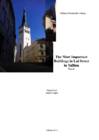
Tallinna Mustamäe College The Most Important Buildings in Lai Street in Tallinn Report Supervisor: Ingrid Teigar Tallinn 2014 Table of Contents Introduction.............................................................................. 3 Lai Street in general.................................................................. 4 The origin of the name "Lai"...................................................... 4 1 Lai Street / 4 Nunne Street...................................................... 5 17 Lai Street............................................................................. 6 23 Lai Street............................................................................. 6 27 Lai Street............................................................................. 8 29 Lai Street...........................................................................
Tallinn Mustamäe College G2K Jaana-Kristiina Jõgevest The Four oldest churches of Tallinn Report Supervisor: Ingrid Teigar Tallinn 2009 The Dome Church The Danes began fortification of Toompea after the conquest of Tallinn in 1219 and probably also built the first church there. It was presumably a wooden building located at the site of the present cathedral. However, a serious conflict with the Order of the Brothers of the Sword broke out soon as the latter wanted to gain control of the entire Estonia. The order succeeded in subordinating Tallinn and the whole of North Estonia to its rule in 1227. The monks of the Dominican Order began the construction of a stone church in Toompea in 1229. The first written data on the cathedral date back to 1233, the date of a battle...
THE CITY OF LONDON History The City of London occupies one square mile in the middle of the capital. It once made up entire town of London, surrounded by the wall first built by Romans. The Romans also built a bridge over the Thames and there has been one in the same area ever since. The Roman Londinium grew up on the northern side of the bridge. In AD 61 the native Celtic tribe, led by Queen Boudicca, rose up against the Romans. They burnt down Londinium to the ground and killed most of its inhabitants. Roman armies eventually defeated Boudicca and Londinium was rebuilt. At the end of the fourth century AD the Roman Empire began to crumble and the Roman armies were recalled from Britain to defend Rome itself. Once they had left, tribes such as Angles, Saxons and Jutes invaded and settled in from Holland, Germany and Denmark. Together they are known as Anglo-Saxons. They were farming people who pr...
Contents Introduction...................................................3 London's early history.....................................45 The people of London......................................6 Buildings and bridges......................................7 Intruduction London is the capital of the united kingdom (UK), which is made up of Great Britain(England, Scotland, Wales) and Northern Ireland. The city lies in the southeast of England and covers an area of about 1,578 square kilometres on either side of the River Thames. With population of seven million, London is by far the largest city in the UK. Birmingham, the second largest, has just over one million inhabitants. Cultural life London is the worldclass centre. It has more than40 theatres, where audiences enjoy everything from musicals to William Shakespeare's plays. The city also ...
London History The Romans AD 43- AD 410 The Romans finally invaded Britain in AD 43 from Kent. The Romans lead by Julius Caesar attempted to invade Britain twice before that in 55 and 54 BC but the invasions were unsuccessful. They made their way to the river Thames and sailed up it. The Romans knew it was important to control a crossing point at the river Thames, so they decided to build a settlement on the north bank. Although small settlements had been built on the banks of the Thames, the Romans were the ones who built the first city. They called their city Londinium. The Roman engineers noticed that the point where the swampy river narrowed would make an ideal crossing point, they built London Bridge. Less than 20 years later the native Iceni tribe, led by Queen Boudicca, rose up against the Romans in revenge for mistreatment and burnt Londinium to the ground. The well disciplined Roman army defeated her forces and Londinium was r...
Foreword Bridging rivers, gorges, narrows, straits, and valleys always has played an important role in the history of human settlement. Since ancient times, bridges have been the most visible testimony of the noble craft of engineers. A bridge can be defined in many ways, but Andrea Palladio, the great 16th century Italian architect and engineer, hit on the essence of bridge building when he said "...bridges should befit the spirit of the community by exhibiting commodiousness, firmness, and delight." In more practical terms, he went on to explain that the way to avoid having the bridge carried away by the violence of water was to make the bridge without fixing any posts in the water. Since the beginning of time, the goal of bridge builders has been to create as wide a span as possible which is commodious, firm, and occasionally delightful. Spanning greater distances is a distinct measure ...
I Native Americans · Origin of Native Americans Origin is debatable Siberia->Alaska Crossed the land bridge around 14,000 years ago "ice-free corridor" Hunters, searching for fresh grounds · Different tribes and their way of life In tents, dark skin, hair is long, black and straight, women-agriculture, men- hunting. bands(chief. Travelled together) and tribes land was owned by the tribe that occupied it. 200 different tribes Apache- "enemy"- hunted buffalos, oil and natural gas from their land Cherokee- largest tribe Cheyenne- from Minnesota and S & N Dakota. High system of laws Northwest Ordinance of 1787 Signed in 1787 by Thomas Jefferson. The creation of the Northwest Territory as the first organized territory Ohio River was settled, 5 new states Advancement of education, maintenance of civil liberties, exclusion of slavery Promised not to invade or disturb Indians Northwest Indian War-> to stop white expropriation (sun...
Color-- -1- -2- -3- -4- -5- -6- -7- -8- -9- Text Size-- 10-- 11-- 12-- 13-- 14-- 15-- 16-- 17-- 18-- 19-- 20-- 21-- 22-- 23-- 24 TWILIGHT By Stephenie Meyer Contents PREFACE 1. FIRST SIGHT 2. OPEN BOOK 3. PHENOMENON 4. INVITATIONS 5. BLOOD TYPE 6. SCARY STORIES 7. NIGHTMARE 8. PORT ANGELES 9. THEORY 10. INTERROGATIONS 11. COMPLICATIONS 12. BALANCING 13. CONFESSIONS 14. MIND OVER MATTER 15. THE CULLENS 16. CARLISLE 17. THE GAME 18. THE HUNT 19. GOODBYES 20. IMPATIENCE 21. PHONE CALL 22. HIDE-AND-SEEK 23. THE ANGEL 24. AN IMPASSE EPILOGUE: AN OCCASION twilight STEPHENIE MEYER LITTLE, BROWN AND COMPANY New York Boston Text copyright © 2005 by Stephenie Meyer All rights reserved. Little, Brown and Company Time Warner Book Group 1271 Avenue of the Americas, New York, NY 10020 Visit our Web site at www.lb-teens.com First Edition: September 2005 The characters and events portrayed in this book are fictitious. Any similarity to real persons...
1. Basic Phrases ¡Buenos días! ¡Buenas tardes! ¡Buenas noches! bway-nohs dee-ahs bway-nahs tard-ays bway-nahs noh-chays Hello! / Good morning! Good afternoon! Good evening! / Good night! ¡Hola! / ¡Chao! Adiós. Por favor. oh-lah / chow ah-dee-ohs por fah-bor Hi! / Bye! Good bye. Please. Hasta la vista / Hasta luego. Hasta pronto. Hasta mañana. ah-stah lah vees-tah / ah-stah ah-stah prohn-toh ah-stah mahn-yahn-ah loo-ay-go See you soon. See you tomorrow. See you / See you later. (Muchas) Gracias. De nada. Bienvenidos (moo-chah...
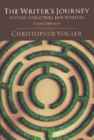
THE W R I T E R ' S JOURNEY M Y T H I C STRUCTURE FOR W R I T E R S THIRD EDITION CHRISTOPHER VOGLER S C R E E N W R I T I N G / W R I T I N G Christopher Vogler explores the powerful relationship between mythology and storytelling in his clear, concise style that's made i this book required reading for movie executives, screenwriters, playwrights, fiction and non-fiction writers, scholars, and fans of pop culture all over the world. Discover a set of useful myth-inspired storytelling paradigms like "The Hero's Journey," and step-by-step guidelines to plot and • character development. Based on the work of Joseph Campbell, The Writers Jour...
CHAPTER 1 GETTING TO KNOW THE TOEFL WHAT IS THE TOEFL? The TOEFL is a comprehensive English language examination required by more than 3,000 colleges and universities in the United States, Canada, and other parts of the world. In addition, foreign born professionals frequently need a TOEFL score for certification to practice their profession in the United States or Canada. The TOEFL is a timed test that consists of the three sections listed here. THE TOEFL Section 1 Listening Comprehension 50 questions 35 minutes Part A Statements 20 questions Part B Short Dialogs 15 questions ...
Some of the things you will learn in THE CODEBREAKERS • How secret Japanese messages were decoded in Washington hours before Pearl Harbor. • How German codebreakers helped usher in the Russian Revolution. • How John F. Kennedy escaped capture in the Pacific because the Japanese failed to solve a simple cipher. • How codebreaking determined a presidential election, convicted an underworld syndicate head, won the battle of Midway, led to cruel Allied defeats in North Africa, and broke up a vast Nazi spy ring. • How one American became the world's most famous codebreaker, and another became the world's greatest. • How codes and codebreakers operate today within the secret agencies of the U.S. and Russia. • And incredibly much more. "For many evenings of gripping reading, no better choice can be made than this book." —Christian Science Monitor THE ...
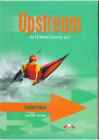
;P ulJbijlg lsBN 978-1-8432s-569-7 Illllll]ililil]t llll ||||rl 9 x781843x255697x Conlenls UNI T1 househol d & appl i ances; dw el l i ngs ln Searchof the Perfect My Home is my chores;colours& rooms;home H ome(mul ti pl choi e ce) Castle(pp. 5-19) safety TheCharmingPast:Blarney ...
;P ulJbijlg lsBN 978-1-8432s-569-7 Illllll]ililil]t llll ||||rl 9 x781843x255697x Conlenls UNI T1 househol d & appl i ances; dw el l i ngs ln Searchof the Perfect My Home is my chores;colours& rooms;home H ome(mul ti pl choi e ce) Castle(pp. 5-19) safety TheCharmingPast:Blarney ...
;P ulJbijlg lsBN 978-1-8432s-569-7 Illllll]ililil]t llll ||||rl 9 x781843x255697x Conlenls UNI T1 househol d & appl i ances; dw el l i ngs ln Searchof the Perfect My Home is my chores;colours& rooms;home H ome(mul ti pl choi e ce) Castle(pp. 5-19) safety TheCharmingPast:Blarney ...
;P ulJbijlg lsBN 978-1-8432s-569-7 Illllll]ililil]t llll ||||rl 9 x781843x255697x Conlenls UNI T1 househol d & appl i ances; dw el l i ngs ln Searchof the Perfect My Home is my chores;colours& rooms;home H ome(mul ti pl choi e ce) Castle(pp. 5-19) safety TheCharmingPast:Blarney ...
 annaabi.ee