Leidsid 33 sarnast õppematerjali, mis on seotud failiga "Tallinn, our capital city". Need materjalid aitavad sul teemat sügavamalt mõista.
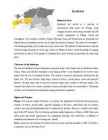
tourism, square, kadriorg, overview, location, medieval, toompea, castle, unesco, freedom, audience, experience, kadrioru1894 and 1900, during the period when the country was part of theRussian Empire. The Alexander Nevsky Cathedral is Tallinn's largest and grandest orthodox cupola cathedral. It is dedicated to Saint Alexander Nevsky who in 1242 won the Battle of the Ice on Lake Peipus, in the territorial waters of present-day Estonia. The late Russian patriarch, Alexis II, started his priestly ministry in the church. Interior of the Cathedral. The Alexander Nevsky Cathedral crowns the hill of Toompea where the Estonian folk hero Kalevipoeg is said to have been buried according to a legend. (There are many such legendary burial places of him in Estonia.) The cathedral was built during the period of late 19th century Russification and was so disliked by many Estonians as a symbol of oppression that the Estonian authorities scheduled the cathedral for demolition in 1924, but the decision was never implemented due to lack of funds and the building's massive construction. As
Tallinn, general overview Prepared: Hanna Bergmann 16.04.2011 Tallinn's Old Town is in the list of UNESCO World Heritage Sites. Tallinn is ranked as a global city and has been listed among the top 10 digital cities in the world. Tallinn is a European Capital of Culture for 2011, along with Turku, Finland. Location Tallinn is situated on the northern coast of the country, on the banks of the Gulf of Finland, 80 km south of Helsinki, east of Stockholm and west of Saint Petersburg. Tallinn is situated on the southern coast of the Gulf of Finland, in north-western Estonia. Tallinn Population The registered population of Tallinn is 412,341 (as of 1 Dec 2010). According to Eurostat, in 2004 Tallinn had the largest number of non-EU nationals of all EU
Tallinn sightseeing Cristofer Krik 8.klass Lagedi Kool Tallinn's Old Town Included in the UNESCO World Heritage List Best protected and intact medieval town Cobblestone lanes, gothic spires and iron street lamps Cappuccino and Wifi The Town Hall On Raekoja square Intact gothic town hall Operates as a museum and concert hall ,,Old Thomas" Town Hall Aphothecary The Aleksander Nevsky Cathedral Orthodox cathedral Design by Mikhail Preobrazhensky Spectacular and onion- domed structure Dedicated to Alexander Yaroslavich Nevsky Kasutatud materjal http://www.visitestonia.com/en/ http://www.tourism.tallinn.ee/eng/explore/attractions/old_town http://images.google.ee/ http://en.wikipedia.org/wiki/Tallinn
Estonian cities Tallinn is the capital and largest city of Estonia. It occupies an area of 159.2 square kilometers with a population of 413,000. It is situated on the northern coast of the country, on the banks of the Gulf of Finland, 80 km south of Helsinki, east of Stockholm and west of Saint Petersburg. Tallinn was founded in the 12th century and has been under the rule of Denmark, Sweden, and Germany as well as Russia, and all left their mark on the city's architecture. It is one of the best preserved medieval towns in northern Europe, and makes a beautiful impression from
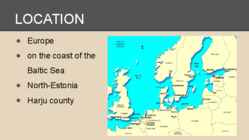
LOCATION ● Europe ● on the coast of the Baltic Sea ● North-Estonia ● Harju county FACTS ● capital city of Estonia ● largest city in Estonia ● population 435,000 ● area 156 km² ● previous name - Reval HISTORY ● first marked on the map in 1154 ● Danish rule started in 1219 ● 1285 - member of the Hanseatic League ● 1345 - Danes sold Tallinn to the Teutonic Order ATTRACTIONS ● Toompea Castle ● Old Town ● Town Hall ● Kadriorg - beautiful park ● City Centre - medieval churches, modern towers OLD TOWN ● listed in the UNESCO world heritage list ● built up from the 13th to 16th centuries ● old Hanseatic town ● surrounded by huge walls ● many towers, narrow streets TOWN HALL ● on the Town Hall Square ● built in 1402-1404 ● oldest in the Baltic region and Scandinavia ● tower height is 64 m ATTRACTIONS Old Town Town Hall ATTRACTIONS Park Kadriorg City Centre Thank you for listening!
My Town I live in Tallinn. It's the capital and main seaport of Estonia. Tallinn is a very beautiful city that lies on the Baltic Sea. It covers 158 square kilometres. The Mayor of Tallinn is Jüri Ratas. The population of our capital is about 400000 people. About 55% of them are Estonian, 37% Russians and the other 8% are from different nations. The people here are mostly engaged in industry- mainly the food industry (23%), trade (16%) and transport and communication (14%). History. Tallinn has a great history. It was first marked on a map of the world by the Arab geographer al-Idrisi in 1154, its name then being Kolyvan. In the 13 th-
City rights were given to Tallinn on May 15, 1248 Independent since 1991 Covers the area of 159.2 km2 Old Town of Tallinn Tallinn's Old Town is one of the most well- preserved old towns in northern Europe The golden era in lies in the period between the early 15th and mid 16th centuries It has three parts: Lower Town, Upper Town + Town Wall, Towers and the Gates Lower Town/Upper Town Town Hall Square Toompea Castle & Tall Tallinn Town Hall Hermann's Tower Town Hall Pharmacy Cathedral of Saint Mary the Virgin Great Guild Hall Danish King's Garden House of the Brotherhood of Black Heads Other Attractions Kadriorg Palace The Kadriorg Art Museum Alexander Nevsky Cathedral
Kunda Gymnasium Rait Türkel Old Tallinn Report Instructor:Teacher Kristi Aron Kunda 2012 Introduction Like most cities with an eight-hundred-year-old past, Tallinn is a patchwork of historic areas. The city's pride and joy is without a doubt its Medieval Old Town, but equally enchanting is the Kadriorg district, a throwback to the time when Estonia was ruled by the Russian Tsars. Tallinn is the capital and largest city of Estonia. It occupies an area of 159.2 km2 with a population of 416,470. It is situated on the northern coast of the country, on the shore of the Gulf of Finland, 80 km south of Helsinki, east of Stockholm and west of Saint Petersburg. Tallinn's Old Town is in the list of UNESCO World Heritage Sites
the Hanseatic League in 1285. General Data l Country - Estonia l County - Harju County l First appeared on map - 1154 l Town rights - 1248 l Mayor - Edgar Savisaar l Aera - Total 159.2 km2 (61.5 sq mi) l Population - (1 Mar 2012) Total - 416,470 Denisty - 2,614.0/km2(6,766.6/sq mi) Tallinn Coat of arms Flag Top 5 Attractions 1. Kiek in de Kök Visitors to the museum will see examples of Medieval firepower, displays detailing how the city's system of walls and towers developed through the centuries and an exhibit on crime and punishment in Old Tallinn. 2. Kadriorg Palace - Kadriorg Art Museum A trip to Tallinn isn't a trip to Tallinn without a visit to this magnificent northern baroque palace, built by Peter the Great for his wife, Catherine I, in 1718. The grandiose palace with its surrounding manicured gardens is home to the foreign art collection of the Art Museum of Estonia.
The Danes, led by King Valdemar II, conquered northern Estonia in 1219. Legend has it that one day, when the Danes were about to lose a bloody battle, the sky suddenly opened and a red flag with a white cross on it dropped down upon them from the heavens. This is allegedly how the Danes obtained their national flag, the Dannebrog in a battle against the Estonians. In the middle of the 14th century Denmark sold its possessions in Estonia to the German Teutonic Order. Toompea became the seat of the German-born gentry. A wall was built to separate the Upper Town and the Lower Town. In 1285 Tallinn joined the Hanseatic league and became a junction of trade between East and West. Tallinn is said to be built on salt, as it was an important trading commodity. In the 16th century Tallinn had a population of about 7,000 8,000 making it one of the biggest cities in northern Europe. In 1629 Sweden took control of the whole of Estonia. Though hard times
Tallinn is a small port town in which the population is 371 000 people, and the area is only 159,2 km².( square kilometers). Tallinn, the capital of Estonia, is named after taani linnus, which means Danish castle. The Castle in question was built by King Waldemar of Denmark in the 13th century. The settlement quickly developed itself into a busy port. -The Old Town In medieval age Tallinn was called Reval and it was as big as the Tallinns Old Town is now. Uniqueness of Tallinn is that it is one of very few European cities, where the historical lay-out is kept in it's original form , and has a lot of monuments of that time. Thanks to that in 1997 Old Tallinn has been included in the list of a world heritage of UNESCO. -The Raekoja Square The Raekoja Square is used for senturies like market and fair square, here took place many festivals, and criminals were executed
international trade routes for Vikings. Long struggle of power with foreign intruders has left ancient strongholds in Valjala, Lihula and Soontagana. The churches in Muhu, Valjala, Mustjala, Karja and Kihelkonna are honorable and elderly because Straitland was the one to bring Christianity to Estonia. The castle of Kuressaare is still standing proudly, but in Lihula only ruins can be seen. The patterns of national dresses and the churches bring memories of secret sign cultures of Medieval Times. Good knowledge of singing and facility of speech of the people of Straitland have given Estonia a big number of writers and poets. Character of the landscape The area of Straitland contains Pärnumaa county and some of the islands such as Saaremaa, Muhu, Kihnu, Ruhnu and Abruka
Lilleküla ja Hiiu 1929, Rahumäe ja Nõmme 1930, Tondi 1936, Kivimäe 1937). 1936 new connection into city, Tondi-Central Tallinn tramway opened. Tram in 1920s The building of Tallinn Airport started in 1932, and the airport was opened officially on 20 September 1936. Tallinn Airport had regular connections to abroad by at least Lufthansa, LOT and the Finnish company Aero (now Finnair). Tallinn's zoo established in 25.08.1939 and based on the edge of Kadriorg Park. 5 Occupation time (1940-1991) After World War II started, Estonia was occupied by the Soviet Union (USSR) in 1940, and later occupied by Nazi Germany from 1941-44. After Nazi retreat in 1944, it was occupied by the USSR again. After annexation into the Soviet Union, Tallinn became the capital of the Estonian SSR
Old Tallinn The history of Tallinn has been long and dignified and up to the end of the medieval times connected with the area forming the foundation of current Old Town.The frist settlements on the coast of Northern Estonia appeared at the end of the 10th century,when the Estonians established a stronghold in the neighborhood of a favorable port- on the hill of Toompea. The dominants of that time are preserved in their medieval from : churches, public buildings,the Town Hall with the square in of it and the order castle on the hill of Toompea. The O ld Town is the spiritual centre of Estonia with the most important shrines,museums and its historical heritage. The Old Town has surprise for the one-day tourist as well as for its own citizens who have walked the streets of the medieval city for decates. Ten face of the Old Town Vibrant old town
Definately sightseeing. Estonia is a beautiful country and theres alot to see. Tallinn is the most popular place for tourists to visit. Tourists will also like the friendly people of Estonia, and ofcourse they will like the beautiful girls in here too. Tallinn, as the capital of Estonia, has alot of tourist attractions. For instance tourists can take tours in Tallinn or visit the Old town and its colorful shops. In Tallinn tourists can see the beautiful Kadriorg park with its Swan Pond and the Baroque Catharina Palace. Not far from Kardiorg is the Song Festival Grounds. In Pirita they can see the Forest Cemetery, where many important Estonian public figures are buried. Tourist can also visit the ruins of St.Brigitta's Convent in Pirita, Maarjamae Palace, Russalka and the Memorial Monument of Estonia's Shipwreck. Popular places where tourists go are also Toompea Hill on which Tallinn was founded in the 12th century, the Parliament House, Alexander
Tallinn Lillekyla Gymnasium Report Legends of Tallinn Tallinn 2009 Introduction I chose the topic ,,Legends of Tallinn", because I had heard some splendid myths about Tallinn from my history lessons and I was eager to widen my horizon. I am quite interested in history in general and I especially love tales about medieval Tallinn. I hope that I will find out some entertaining stories to tell my friends. Legends of Tallinn There are many interesting legends about buildings or sights in Tallinn. Nobody can tell, if they are all true or not, but at least they make the medieval capital much more intriguing and attractive for tourists as for the locals.
2 Towns (Upper & Lower Town) Tallinn used to be divided into 2 parts - Upper Town where lived the aristocracy, gentry and the clergy; and Lower Town with traders, craftsmen and merchants. Legend says the Toompea Hill is actually the tumulus mound of the great Kalev. Linda carried rocks to his grave. It is a naturally- formed limestone hill. Lower Town was a merchantile centre, Tallinn also belonged to the Hansaetic League (1285). It is often referred to as the town of citizens. Any grown-up, married and economically independent person, born in a legal marriage between two free people and having lived in the town for at least 3 months, could apply to the Magistracy for citizenship
Tallinn Tallinn is situated on the southern coast of the Gulf of Finland, in north-western Estonia. A limestone cliff runs through the city. It is exposed, for instance, at Toompea and Lasnamäe. However, Toompea is not a part of the cliff, but a separate hill. Coastline is 46 kilometres long.The highest point of Tallinn, at 64 meters above the sea level, is situated in the district of Nõmme, in the south-west of the city. The first human steps, that archeologists found, are about 5000 years old. Tallinn`s first fortress was built in Toompea, in 1050. As an important port for trade between Russia and Scandinavia, it became a target for the expansion of the Teutonic Knights and the Kingdom of Denmark
Cities and towns of Estonia Facts 47 cities/towns Almost 50% forest In 2011 Tallinn was the European Capital of Culture Has over 1,500 islands Tallinn Capital of Estonia Old town Businesses Park Kadriorg TV tower Open-air museum Zoo Estonia Theatre Tartu University Old town AHHAA science centre Aura water park & SPA Art and history museums Vanemuine Theatre Pärnu Captial of summer Beach SPA hotels Tallinn gate Endla Theatre Viljandi Sild Viljandi Lake Ruins of the Viljandi Order Castle Ugala Theatre Rakvere Rakvere Castle Modern central square Aqua SPA hotel Rakvere Theatre Haapsalu Episcopal Castle
and tacky commercialism. Packed in among thousands of other visitors, trying like crazy to see the city in three days and worrying about getting ripped off, it's not surprising, may think the city is overrated. Just relax, take a deep breath. While the city centre is a mélange of stunning architecture, from Gothic, Renaissance and baroque to neoclassical, art nouveau and cubist, beyond the medieval lanes of the Old Town and the Castle District, there's an entire other cosmopolitan city to explore. Search out the riverside parks, lively bars and beer gardens, music clubs, museums and art galleries. Harness Prague's excellent public-transport system to explore emerging suburbs such as Zizkov, Vinohrady, Smíchov and Holesovice. You'll be guaranteed cheaper prices, a more local ambience, and an assured escape from any more feelings of doubt..
How to Make Tourism in Tallinn Profitable Nowadays tourism is one of the world`s largest industries. In Estonia it is also developed really largely. First of all, the main what attracts people abroad are journeys. People want to widen their outlook. Tallinn is the right place for tourists who want to get know about the medieval life in Europe. Here are such attractions as the Medieval Old Town, Kadriorg Park and Rusalka monument. These are the main places people usually want to visit. So, we must develop our tourism system. For example, make up some journey programmes with elements of the Estonian tales. That certainly attracts much more tourists in Tallinn. Moreover, Tallinn has the good benefit in its geographical location. Estonia is like a bridge or gate between Europe and Russia. And Tallinn is the heart of Estonia its capital. Estonians
INTRODUCTION Tallinn is the capital and largest city of Estonia. It occupies a surface of 159.2 km2 in which 404,000 inhabitants live. It is situated on the northern coast of the country, on the banks of the Gulf of Finland, in north-western Estonia. Tallinn is the location of many institutions of higher education and science. As an important port for trade between Russia and Scandinavia, it became a target for the expansion of the Teutonic Knights and the Kingdom of Denmark. Historically, the city has been attacked, sacked, razed and pillaged on numerous occasions. Although extensively bombed by Soviet airforces during the latter stages of World War II, much of the medieval Old Town still retains its charm.
There are five flights and 158 steps. Water Tower The old water-tower of Viljandi between the museum and Town Hall has been reconstructed now into an observation tower. Church spires and the Old Water Tower form a silhouette on the lake surface. The Water Tower offers a magnificent view of the whole town. Hanseatic merchants settled here as long ago as the 14th century. Due to its good location, varied nature and good connecting roads, Viljandi is an excellent place for trade, stopovers and living. Bridge When you walking along a footpath you will soon get to the famous suspension bridge. The first bridge in 1931 was a contribution to the town by the landlord of Tarvastu, Karl von Mensenkampff. The bridge is over 50 m long. It has been rebuilt many times over the years, last time in 1995. The Viljandi Order Castle
............................................... 11 47 Lai Street............................................................................ 12 50 Lai Street............................................................................ 13 Summary................................................................................. 15 References.............................................................................. 16 2 Introduction Pikk Street as the longest and also the main street from medieval times is well-known, but Lai Street that runs parallel to it is not. The aim of the report is to be helpful for the students of Tallinna Mustamäe College who study the history of Tallinn and would like to get additional information about Lai Street, as they need to pass the guide practice exam in form eleven. The report is divided into chapters so that each chapter deals with one of the important houses in Lai Street
Festivals and events dedicated to the consumption of beer are a lot of fun, but if you want to get the true feel of the country, you need something a little more ethnic. Like a town fair. Just as July becomes August, the seaside town of Haapsalu will host a grand spectacle of rural Estonian entertainment. The White Lady Days is a summer celebration filled with amusement for all the family. Held in and around the remains of the Teutonic-knights-era castles, the fair combines enchanting medieval legends with modern countryside charm to create a comprehensive experience of Estonia beyond the big cities. But the legend of the White Lady of Haapsalu, which is at the heart of the festival, is perhaps the most famous tall tale of the many that are so abundant in Estonia's folklore. It is the story of a poor girl who falls in love with the son of the village elder, and disguises herself as a choirboy in order to sneak into the castle
.............................. 9 References.................................................................................................................................10 2 Introduction I choose this topic because I want to get know more about local Theatres I hoped to get more information about their location, for whom each theatre is designed and a little overview about their history. The history of Estonian theatre does not differ much from that of the neighbor countries. The first play was performed in the 16th century at the Tallinn Town Hall. The town school children, who were Germans, staged Terence's The Andria in Latin. The first theatre house in Tallinn was mentioned in written materials which date from the late 17th century; the house was used by travelling theatre groups
Welcome to Tallinn You have probably already heard that Tallinn was chosen to be the Culture Capital of Europe during the year 2011. So, we have already done a great deal of work to make our town worthy of this status. Tallinn is worth visiting not only at the main tourist season, but also out of it. Attractions: · The Medieval Old Town · Kadriorg Park · Tallinn Zoo · Botanical Garden · Rusalka Monument · Marzipan Museum Make sure you build each of these into your programme, you won`t be upset. On the contrary, you`ll be amazed what you`ll see there! Practical information: If you decide to travel by yourself without any guides, you will need to know some helpful information about Tallinn: · We have a good transport system of buses, trams and trolleys, which
restaurants, sport and cultural centres. Every five years national song and folk dance festivals take place in Tallinn. The yachting regatta of the 1980 Moscow Olympic Games was held at Pirita. History Tallinn means in English "Danish town". The place is believed to have been settled by Finno-Ugric people about 2500 BC. It was first marked on a map of the world by the Arab geographer al-Idrisi in 1154. The Estonians were the first to build a stronghold on the spot of the Toompea Hill, but the real Tallinn was built by the Danes who conquered the north of Estonia in 1219. Legend has it that one day, when the Danes were about to lose a bloody battle, the sky suddenly opened and a red flag with a white cross on it dropped down upon them from the heaven. This is how the Danes obtained their national flag. In 1346 the Danish king sold his Estonian lands to the Teutonic Order, who a year later resold them to the Livonian Order. The Germans renamed Tallinn and called it Reval
Tallinn Mustamäe College G2K Jaana-Kristiina Jõgevest The Four oldest churches of Tallinn Report Supervisor: Ingrid Teigar Tallinn 2009 The Dome Church The Danes began fortification of Toompea after the conquest of Tallinn in 1219 and probably also built the first church there. It was presumably a wooden building located at the site of the present cathedral. However, a serious conflict with the Order of the Brothers of the Sword broke out soon as the latter wanted to gain control of the entire Estonia. The order succeeded in subordinating Tallinn and the whole of North Estonia to its rule in 1227. The monks of the Dominican Order began the construction of a stone church
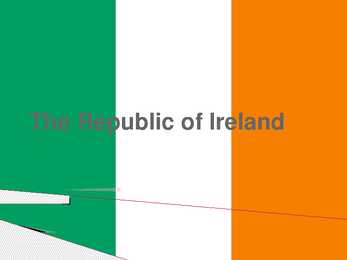
there were Catholic schools and churches In 1916 Ireland was declared a free country In 1921 the northern and southern parts separated, the latter became the Irish Free State. Northern Ireland remained part of the UK In 1949 the southern part declared itself the Republic of Ireland Today Ireland has many political conflicts; many people have been killed in outbursts of violence Economic development Transport costs are high due to its location Low inflation and tax breaks attract foreign investors to the Republic The economy is heavily dependent on agriculture Tourism is a flourishing branch of the economy All the major cities lie on the coast or near the sea. They are Dublin, Galway, Limerick, Cork and Waterford Where to go? Ireland features wild coastlines, sandy beaches, lush valleys, dark peat lands and unruffled lakes. The island may be divided into the following parts: * Southeast Ireland * Cork and Kerry
Travel may occur by human-powered transport such as walking or bycycling, or with vehicles, such as public transport, automobiles, trains and airplanes. Etymology The term "travel" originates from the Old French word travail. The term also covers all the activites performed during a travel (movement). A person who travels is spelled "traveler" in the United states, and "traveller" in the United Kingdom. Purpose and motivation Reason for traveling include recreation, tourism or vacationing, research travel for gathering information, for holiday to visit people, volunteer travel for charity, migration to begin life somewhere else, religious pilgrimages and mission trips, business travel, trade, commuting, and other reason, such as to obtain health care or fleeing war or for the enjoyment of traveling. World's best places to visit: Paris and Barcelona Why go: Year after year, the Why go: Known around the world
It is held every five years in July on the Tallinn Song Festival Grounds. The national symbols of Estoniaare flags, coat of arms National symbols of Estonia Estonia Blue cornflower The Estonian Coat of Arms blue: vaulted blue sky above the native land; black: attachment to the soil of the homeland as well as the fate of Estonians for centuries black with worries; white: purity, hard work, and commitmen One of the mighty limestone structuresToompea Castle and Tall Herman, Tallinn The Barnswallow-- Estonia's National Bird http://estonia.eu/about-estonia/country/estonian-nature-wildlife.html 25.03.13 http://www.nationsonline.org/oneworld/estonia.htm 25.03.13 http://www.tartu.ee/?lang_id=2 30.03.13 http://www.visitestonia.com/en/holiday-destinations/city-guides 30.03.13 http://en.wikipedia.org/wiki/Estonia30.03.13 http://en.wikipedia.org/wiki/National_symbols_of_Estonia 30.03.13 http://en.wikipedia.org/wiki/List_of_cities_and_towns_in_Estonia 30
At various times in history, the city has been given different names. In 1219 Henricus de Lettis wrote about the Lyndanise stronghold of the Rävala people. On 13 June that year King Waldemar II of Denmark came to conquer north Estonia. The Estonians lost the battle and the Danse renamed the town Reval, as it was the centre of the ancient Estonian province of Rävala. The Estonian, however, rejected the name and began to call the city Taani linn, the Estonian for Danish castle. Tallinn’s economy started to boom in the 19 th century with the emergence of machine-building, woodworking and textile industries. A railroad was built in 1870, linking the city to St. Petersburg. From that time Estonia maintained close ties with Russia. From 1918 to 1940 Tallinn was the capital of the Republic of Estonia. It was then that Tallinn became the official name of the town. Toomas Hendrik Ilves (born 26 December 1953) is the fourth President of Estonia, in office since 2006.
 annaabi.ee