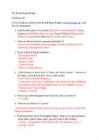
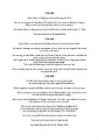
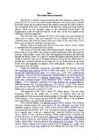
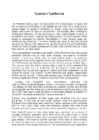
- 172 years 6. What are the roles of the Queen? - The British Sovereign can be seen as having two roles: Head of State, and 'Head of the Nation'. 7. Find information about Buckingham Palace: what are the opening hours of the State rooms? (dates, time), price (for adults and students) - 26 July 30 September 2009 09.45-18.00 ( last admission 15.45 ) - 1)Adult £16.50 Over 60/ Student (with valid ID) £15.00 8. Find out 10 first successors (line of succession) - Sophia of Hanover George I George II Frederick, Prince of Wales George III Prince Edward Victoria Edward VII George V George VI Elizabeth II 9. What are the dates (2) of Queen's birthdays? 1) The Queen's actual birthday is on 21 April 2) Her birthday is officially celebrated in Britain on the 3rd Saturday of June each year. 10. What kind of pets does the Queen have?
He and his fellow conspirators were arrested. In all, roughly 100 rebels were hung, although the Queen pardoned 400 others. 5.SLAID Mary tried to make social reforms which were mostly unsuccsessful. One of those was her marriage to Philip II of Spain, in 1554, which was wery unpopular amongst everyone. She couldn't have successors thou there where two phantom pregnancies when she thought she was pregnant but wasn't. Philip spent very little time with Mary, once he realized that she was not able to bear a child. Mary died at the age of 42 from cancer. She was succeeded by her half-sister Elizabeth I, who quickly undid many of Mary's changes, and returned England to its former Protestant-friendly environment.
The population of the USA is about 270 million people. They are called Americans. Most of the people live in towns. In America there are the representatives of all the races and national groups of the world. There are about 24 million Negroes in the country and over 800,000 Indians. Many of the inhabitants come from Mexico and other South American countries. The United States is a federal union of fifty states. The original thirteen states were the successors of the thirteen colonies that rebelled against British rule. Most of the states were carved out of unorganized territories, with the exceptions being Vermont, Texas, and Hawaii; each was an independent republic before joining the union. Early in the country's history, three states were created out of the territory of existing ones: Kentucky from Virginia; Tennessee from North Carolina; and Maine from Massachusetts. West Virginia broke away from Virginia during the American Civil War. The most
was shifting and New Spain was being threatened by several European powers including England, France and Russia. The Spanish King, Carlos III, decided that Spain would have to physically occupy California or risk losing it. In 1769 Gaspar de Portola and Father Junipero Serra led an expedition that established missions and presidios in San Diego and Monterey and discovered the hitherto unknown port of San Francisco. Serra, who remained in California after Portola departed, together with his successors established a system of missions running from San Diego in the south to Sonoma in the north. These together with a few undermanned presidios and very small towns were to constitute the high water mark of Spanish involvement in California. The Spanish crown did not see California as a source of revenue. It was, however, seen to have political/military importance in protecting New Spain's northwestern position in the Americas. Spain never did strengthen
were not, involved in the company, but whose farm becomes the site of the most lucrative mine. Shortly after founding the company, De Beers already controlled almost all the world's diamond production, either they bought out new producers or entered into agreements with local governments. They had diamonds mines in Australia, India, Russia and some of the African countries. In 1927 the chairmanship of the company was taken over by the Jewish businessman Ernest Oppenheimer, whose successors have been operating as chairmen of the group till 2011, when they sold their 40% stake to Anglo America. De Beers view during the Oppenheimer times was all or nothing like example: The discovery of diamonds in Siberia in the 1950s was a threat to the control De Beers kept over the diamond supply. Rather than compete with Russian diamonds, De Beers offered to buy almost everything that came out of Siberia -- funneling all the
THE ENLIGHTENMENT Britain prospered due to the productivity of its colonies in India and North America. Of course, many other countries also wanted those colonies and England waged wars with France, Spain and the Netherlands. Textile industry became the most important and developed industry in England. It was a time of domestic peace and prosperity. Queen Anne (1702 1714). Her successors were in fact German they didn't even speak English ans were the beginning of the Hannove dynasty. George I (1714 1727), George II ( 1727 1760), george III (1760 1820) in 1783 he lost the American colonies, except Canada. Reason and common sense pervaded the land. Isaac newton lived during that time. It was also the beginning of the industrial revolution, which was precipitated by the invention of the steam engine by James Watt in 1775
to warfare and the environment. There are two main denominations in Muslims: Sunnis and Shias. The largest denomination in Islam is Sunni Islam, which makes up 75%-90% of all Muslims. Sunnis are also called as Ahl as-Sunnah what means ,,people of the tradition". These hadiths, recounting Muhammad's words, actions, and personal characteristics, are preserved in traditions known as Al-kutub Al- Sittah(Six major books). Sunnis belive that the first four caliphs were rightful successors to Muhhamad. Also, Sunnis think that anyone who is righteous and just could be a caliph but they have to act like Koran and the Hadith says, the example of Muhhamad and give the people their rights. The Sunnis follow the Koran and then the Hadith. If legal matters are not found in the Koran or the Hadith, they usually follow madh'habs(schools of thought): Hanafi, Hanbali, Maliki and Shafi'i, established around the teachings of Abu Haifa, Ahmad bin Hanbal, Malik ibn
They had adopted their town. Many Scandinavian words came into the English language (happy, ugly, ill, weak etc.) The Saxons' Golden Age started when Athelstan (Alfred's grandson, Edward's son), won a great victory in 937 against an army of Irish Vikings, Scots & Stathclyde Britons. Athelstan was interested in good government. He ordered on coinage to be used throughout the land. The king was a collector of art & holy relics. After his death his successors, Edmund & Eadred, had to fight new Viking raiders. England was not at peace again until Edgar became king of Wessex in 959. With his death in 975 the golden age ended. At the end of the 10th cent. the Danish invasions were resumed. Ethelred II, the Unready, who had come to the throne in AD 978, brought in a tax called Danegeld to keep the Danes out. It was the beginning of a regular tax system. A new round of Danish invasion came at the beginning of the 11th cent. King Etherlred II was
The boy's uncle John Gaunt, ruled for him. Richard II was less fortunate. He had neither diplomatic skills nor popularity. He had bad advisers (a tax for every person over the age of 15). Landlords tried to force peasants back to serfdom. People revolted, their leader was Wat Tyler. R II managed to put it down, but the revolt was a warning to the king & nobles. R II was the 2nd king to be killed by ambitious lords. He had no children. There were 2 possible successors: 1) the earl of March, the 7-year- old grandson of Ed III's second son; 2) Henry on Lancaster, son of John of Gaunt. It was difficult to say who had better claim to the throne, but Henry was stronger. He took the crown by force. Became Henry IV. Henry died in 1413 and passed on to his son Henry V a kingdom that was peaceful & united. Henry V was a brave & intelligent man and like Richard I he became one of England's favourite kings
Scotia, New Brunswick, and Canada--were united as "one Dominion under the name of Canada". It also divided the province of Canada into the provinces of Quebec and Ontario and provided them with constitutions. The act served as Canada's "constitution" until 1982, when it was renamed the Constitution Act, 1867, and became the basis of Canada's Constitution Act of 1982. The executive government was vested in (given to) Queen Victoria and her successors. These two provisions meant that Canada would have parliamentary and cabinet government. The legislature was to consist of a Senate and a House of Commons. The act also authorized establishment of a Supreme Court of Canada. 14. From which countries did most immigrants arrive in Canada in the following periods: (1) before 1760; (2) 1760 to the end of the 19 th century; (3) in the early 20 th century; (4) after World War II; (5) from the 1960s to the present?
craftsmen and peasants, and fairly soon they (the third generation) became bilingual. The Anglo-Norman Empire William controlled two large areas: Normandy, which he had inherited from his father, and England, which he had won in war. As duke of Normandy he had to recognize the king of France as his lord, whereas in England he was king with no lord above him. Through a number of marriages, William’s successors added to Normandy the provinces of Anjou6, Aquitaine7 and Brittany, and expanded their territories in France to the Pyrenees. King Henry II (1154–1189) controlled a greater area than the king of France. In 1204, during the reign of King John, the French invaded and captured Normandy, and the Anglo-Norman nobles lost their lands there. This is when the Norman ruling class really began to mix with and marry the Saxons, and consider themselves English rather than French
According to most sources, approximately 85% of the world's Muslims are Sunni and approximately 15% are Shi'a, with a small minority who are members of other Islamic sects. Sunni Divisions of IslamSunni Muslims are the largest group in Islam. In Arabic, asSunnah literally means "principle" or "path". The Sunnah (the example of Muhammad's life) as recorded in the Qur'an and the hadith is the main pillar of Sunni doctrine. Sunnis believe that the first four caliphs were the rightful successors to Muhammad; since God did not specify any particular 13 | P a g e leaders to succeed him, those leaders had to be elected. Sunnis recognize four major legal traditions, or madhhabs: Hanafi, Maliki, Shafi'i and Hanbali. All four accept the validity of the others and a Muslim might choose any one that he or she finds agreeable, but other Islamic
all new British Citizens are required to attend. The central elements of this ceremony are the 13 Pledge of Loyalty to the United Kingdom' and the `Oath of Allegiance'. The latter reads as follows: I (name) swear by Almighty God that on becoming a British citizen, I will be faithful and bear true allegiance to Her Majesty Queen Elizabeth the Second, her Heirs and Successors, according to law. These ceremonial statements are given in front of the Union Jack and the participants stand whilst singing the National Anthem, which closes the ceremony. The powerful symbolism invested in the practice of flying flags at half-mast is demonstrated by the offence caused when this practice is not respected. In Britain, when Diana, Princess of Wales, died, the flags on all public buildings were at half
unanimously proclaimed King of Portugal by his soldiers. Afonso then established the first of the Portuguese Cortes at Lamego, where he was crowned by the Archbishop of Braga, though the validity of the Cortes of Lamego has been disputed and called a myth created during the Portuguese Restoration War. Afonso was recognized in 1143 by King Alfonso VII of León and Castile, and in 1179 by Pope Alexander III. Afonso Henriques and his successors, aided by military monastic orders, pushed southward to drive out the Moors, as the size of Portugal covered about half of its present area. In 1249, this Reconquista ended with the capture of the Algarve on the southern coast, giving Portugal its present-day borders, with minor exceptions. The reigns of Dinis I, Afonso IV, and Pedro I for the most part saw peace with the Christian kingdoms of Iberia, and thus the Portuguese kingdom advanced in prosperity and culture.
every man has a right to everything; even to one another's body'.13 But we could just as well say that in such a condition of things, where nobody has any duty not to take anything he wants, no one has any rights. The fact that we could well say this shows that the ordinary modern idiom of 'rights' does not follow Hobbes all the way to his contrast between law and rights. Nor did Locke or Pufendorf; yet they did adopt his stipulation that 'a right' (jus) is paradigmatically a liberty.14 Their successors are those who today defend the 'choice' theory of rights, which as we saw in the preceding section is one eligible way ofaccounting for most, but not all, of the modern grammar of rights. And even those who defend the 'benefit' theory of rights are far from using the idiom of Aquinas, since (in common with ordinary language-speakers and lawyers in all modern languages) they think of 'a right' as something beneficial
activity in England. English resistance was uncoordinated and often ineffective. 'England' was a region of several independent kingdoms - often at war with each other. Eventually, King Alfred was able to confront the Vikings at Edington. Alfred had to concede the northern and eastern counties to the Vikings, York became the capital of the Viking Kingdom of York. These areas were gradually reconquered and brought back under English control by Alfred's successors. *Feudalism and the manor system Manorialism, otherwise known as the Manorial System, is the political, economic, and social system by which peasants of medieval Europe were made dependent on their land and on their lord. The manorial system was the most convenient device for organizing the estates of the aristocracy and the clergy in the European Middle Ages. Feudalism is a hierarchical system in which a lord or king gives a gift or land to a vassal in exchange for protection
advanced nation (Germany), they took up the task of choosing what parts of Marx's thought might serve to clarify social conditions that Marx himself had never seen. Mõjutajad: Max Weber, Sigmund Freud. Their emphasis on the "critical" component of theory was derived significantly from their attempt to overcome the limits of positivism, crude materialism, and phenomenology by returning to Kant's critical philosophy and its successors in German idealism, principally Hegel's philosophy, with its emphasis on negation and contradiction as inherent properties of reality. Major theorists include: Max Horkheimer; Theodor W. Adorno; Walter Benjamin; Herbert Marcuse; Erich Fromm, Jürgen Habermas Herbert Marcuse (July 19, 1898 July 29, 1979) was a German-Jewish philosopher, political theorist and sociologist, and a member of the Frankfurt School
After the Elector of Hanover succeeded to the English throne as George I in 1714, retaining the rule of the German state, the Decyphering Branch collaborated with the black chamber maintained at Nienburg by the Hanoverian government. Cryptanalysts Bode, Lampe, and Neubourg had even been imported from there—an ironic development in view of a refusal of Wallis to divulge his technique to Hanover a few years earlier. Mail opening became habitual. George and his successors took a constant personal interest in the work, often encouraging talent with royal bounty. Correspondence was closely watched for cribs that were passed to the Decyphering Branch. During the 1700s, the branch's output averaged two or three dispatches a week, and sometimes one a day. Its cryptanalysts solved the dispatches of France, Austria, Saxony and other German states, Poland, Spain, Portugal, Holland, Denmark, Sweden, Sardinia, Naples and other
young know today. A giant dock is built: but where is the ship?”1 The Finnish composer Kalevi Aho, possessing quite an extensive experience of Estonian music, provides the following stylistic classification of modern Estonian composers: 1. Traditionalism and tonic: Ester Mägi, Urmas Sisask 2. Folklorists and exotics: Veljo Tormis, Kuldar Sink, Sven Grünberg 3. Neo-Classicists and vitalists: Jaan Rääts, Raimo Kangro 4. Pluralists and successors: Eino Tamberg, Lepo Sumera, Erkki-Sven Tüür, Peeter Vähi 5. Neo-Impressionists: Alo Põldmäe 1 Santeri Levas, Jean Sibelius (Tallinn: Eesti Raamat, 1971) 275. 6. Neo-Expressionists: Mati Kuulberg, Toivo Tulev, Mari Vihmand. 2 Concluding with brief remarks about the disposition of some younger composers, I should like to add my view. The difficult process of self-advancement leads towards a superb spiritual creative level
students. It w o u l d be interesting to see, in that hypothetical universe, how the perspective o f the creator m i g h t mellow, perhaps producing a tone completely different from those o f the first six films, in a future where humans will have to make ever more difficult choices about the Force and the god-like possibilities of technology. H a v i n g explored idealized goodness in the first three films, and the roots o f evil in the prequels, Lucas and his successors m i g h t find a synthesis in a future triad o f films that finally brings a balance to the Force. In 2 0 0 1 I participated in the making of a documentary film, A Galaxy Ear, Far Away, looking into the "Stars Wars phenomenon" that was cresting in the public imagination because o f the revival of the series. T h e film took a light-hearted view o f the curious obsessions o f Star Wars fans and the importance of the movies in their lives
 annaabi.ee