 10 punkti
Autor soovib selle materjali allalaadimise eest saada 10 punkti.
10 punkti
Autor soovib selle materjali allalaadimise eest saada 10 punkti.
 ~ 1 leht
Lehekülgede arv dokumendis
~ 1 leht
Lehekülgede arv dokumendis
 2015-11-10
Kuupäev, millal dokument üles laeti
2015-11-10
Kuupäev, millal dokument üles laeti
 5 laadimist
Kokku alla laetud
5 laadimist
Kokku alla laetud
 0 arvamust
Teiste kasutajate poolt lisatud kommentaarid
0 arvamust
Teiste kasutajate poolt lisatud kommentaarid
 Photographer
Õppematerjali autor
Photographer
Õppematerjali autor
consequential, or other damages. For general information on our other products and services, please contact our Customer Care Department within the United States at (800) 762-2974, outside the United States at (317) 572-3993 or fax (317) 572-4002. Wiley also publishes its books in a variety of electronic formats. Some content that appears in print may not be available in electronic books. For more information about Wiley products, visit our web site at www.wiley.com. Library of Congress Cataloging-in-Publication Data: Tracy, Brian. Change your thinking, change your life : how to unlock your full potential for success and achievement / Brian Tracy. p. cm. ISBN 0-471-44858-3 (alk. paper) 1. Success—Psychological aspects. I. Title. BF637.S8T634 2003 158
Education Education is so multifaceted that it is difficult for me to know where to begin discussing it, or how to prioritize the many factors. Relaying my own experience is easy: I had a standard classroom approach, supplemented by inordinate reading. In only the briefest and least memorable instances did I receive any individual tutoring. Education is commonly thought of as the job of schools. Adults cry "educate our children!" Everyone has opinions about the best way to do the job. It is of urgent importance, and all the numerous factors are much studied, debated, and new (or old) ideas continually tested or retested. Some people say "it's as simple as . . . " and then name their pet peeve or passion. My view is not of an education specialist, but of one who loves sharing what I learn, and owes much to educators. Since I don't have an educational theory neatly worked-out, nor an outline
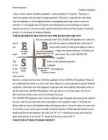
I-for investor Each of us resides in at least one of the four quadrants of the CASHFLOW Quadrant. Where we are is determined by where our cash comes from. Many of us rely on paychecks and are therefore employees, while others are self-employed. Employees and self-employed individuals reside on the left side of the CASHFLOW Quadrant. The right side of it is for individuals who receive their cash from business they own or investments they own. The CASHFLOW Quadrant is about the four different types of people who make up the world of business, who they are and what makes individuals in each quadrant unique. It will help you define where you are in the Quadrant today and help you chart a course for where you want to be in the future as you choose your own path to financial freedom. While financial freedom can be found in all four of the quadrants, the skills of a "B" or "I" will help you reach your financial goals more quickly
of world put together. The majority of so-called Africans leaders want to stay in power until the day their bodies are put in the grave. Through buffoonery, utter mismanagement and downright stealing of the wealth of the masses, these leaders have so impoverished Africa that we are now nothing but a beggar continent. We beg for everything; we are more dependent on our colonial masters than when we received our independence from them. Africa owes the West more money than we and our generations to come can pay. I arrived in America in December of 1967as an official of what we believed was going to be a dynamic African nation – the young Republic of Biafra. But Biafra was defeated and Nigeria remained one, as a giant of Africa. In the last 32 years, I have watched with horror and outright helplessness as the downward slide of the African race continues to escalate. But rather than address the problems, we
82. Never placate a bully or a tyrant unless he's got a gun to your head. 83. Never vocalize when you clear your throat. 84. Opt out of the insanity around you. 85. Wear clothes that fit you; it is impossible to disguise the shape of your body. 86. Work as hard as you can, because you won't know whether your life preserver works until the ship sinks. 87. Word hard. Think actively. Investigate thoroughly. Doubt everything. Notice interconnections. 88. Be clear about what you want. Be responsible. Be flexible. Be patient. Be cooperative. 89. Post-modernism is an ideology masquerading as skepticism. 90. Post-modernists defend themselves against their critics by making their arguments so convoluted and ambiguous that nobody can follow them. 91. Science is imperfect, but post-modernism brings nothing constructive to the party. In fact, it prides itself on "deconstruction," i.e., trivializing everything but itself by labeling it as
The most interesting style was modernist combined with realism. The most interesting writer of this period was John Dos Passos 1896-1970. He is linked to the 1930's, the period of fear, unemployment, the rise of facism, market crashing. Came from an interesting background, grandfather was portugese, his mother came from puritan New England. Father was a lawyer and importand figure on wall street. He was born into a well off family and this is a paradox about him. Upper middle class family, yet his political views were very radical, he was extremely well educated. He was hostile against the social order in the usa. The central theme in his writings is the criticism of basic institutions of american society. Interestingly, he wasnt just a social critic but one of the best experimentalists. Anti war novel called ,,Three soldiers". Dos Passos went to Europe, served for a while. Three main characters, three young soldiers
Golden Grammar rules 1. Don't use an with own. Sue needs her own room. (NOT Sue needs an own room.) I'd like a phone line of my own. (NOT ... an own phone line.) 2. Use or rather to correct yourself. She's German or rather, Austrian. (NOT She's German or better, Austrian.) I'll see you on Friday or rather, Saturday. 3. Use the simple present play(s), rain(s) etc to talk about habits and repeated actions. I play tennis every Saturday. (NOT I am playing tennis every Saturday.) It usually rains a lot in November. 4. Use will ..., not the present, for offers and promises. I'll cook you supper this evening. (NOT I cook you supper this evening.) I promise I'll phone you tomorrow. (NOT I promise I phone you tomorrow.) 5. Don't drop prepositions with passive verbs. I don't like to be shouted at. (NOT I don't like to be shouted.)
DOES MONEY BUY EVERYTHING? Money plays an important part in our lives. In several aspects, it is the most important thing in life.Without money we could not buy our food, clothes and all the other things that we need to live comfortably.We use money not only to meet the basic needs of life but also to pay for our own advancement. We use it for education which helps us to live a better life. But does money buy everything, especially happines? We live in a material world and most of our lives depend on materials for happiness and comfort. All of these materials have to be purchased and so on a very basic level, without money, you cannot survive, at least not very comfortably. This is the very first level of money buying happiness, money can buy things necessary for survival and without life, there is no happiness. Some people say that they have money but they are not still pleased,the
 annaabi.ee




Kõik kommentaarid