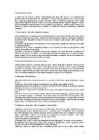
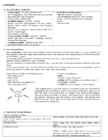
Then later word is converted from the earlier one. 11. Back-formation new words are formed by taking away affixes. (nt, connection, to connect). This process is based on analogy. Back-form is word building and it means coining verbs. (nt, butcher, to butch; sculptor, to sculpt, television, to televise). Rarely some other parts of speech are found (nt, nasty, to nast) 12. Abbreviation . Engl has a tendency to form short words. A new word is formed by shortening the stem. (nt, ad, advertisment; siss, sister; doc, doctor). Are usually colloquial. If the shortened form is used more often than the long form, it becomes neutral (nt, phone, telephone). Abbr. Types of shortening: *initial shortening- means dropping the first part (nt, telephone, phone) *final shortening- second part dropped (exam, examination) *acronyms- words made up of initial letters (nt, USA, WC) *ellipsis- shortening an expression (nt, bub, public house)
· increased emergence of Scandinavian loan-words. · graphological · disappearance of Old English writing conventions;1.2 · increased use of Latin and Anglo-Norman. In general, Old English might be called a synthetic language, which uses inflectional morphemes to express the syntactical relationships. Middle English might be called an analytical language, which uses function words to constitute syntactical relationships. SHORTENING AND LENGTHENING IN MIDDLE ENGLISH Late in Old English, vowels were lengthened before certain clusters: /nd/, /ld/, /rd/, /mb/, //. Later on, the vowels in many of these words were shortened again, giving the appearance that no lengthening happened; but evidence from the Ormulum indicates otherwise. vt. Middle-English period: lengthening and shortening of vowels faili GREAT VOWEL SHIFT The Great Vowel Shift was a major change in the pronunciation of the English language that took
Healthy lifestyle How many of you believe that they lead a healthy life? Through century´s people have desired immortality. From beggars to emperors, everybody has been looking for an easy way to live forever. And even if they realized, that it is impossible, they started searching for ways to live longer. Finally they realized, that the only ones shortening our life are ourselves. We do it to ourselves. That's why everybody started living healthy. But is living a healthy life an easy way of living? In my point of view a healthy lifestyle is only healthy, when one does it in the right amount. You can do more damage to your body if you don't do it correctly. For example you can start working out. Start running, Go to gym etc. But if you start a green tea diet at the same time,
The first word of the pair comes down from Old English whereas the second one is a Scandinavian borrowing. Examples of native doublets are 'shadow' ('тень') and 'shade! Both are derived from the same Old English word 'sceadu'. 'Shade' is developed from the Nominative case, 'sceadu' is derived from oblique ease 'sceadwe'. The words 'drag' and 'draw' both come from Old English 'dragan' ('тащить') Etymological doublets also arise as a result of shortening when both the shortened form and the full form of the word are used: 'defense' - 'защита' - 'fence' - ''забор'; 'history' - 'история' - 'story' - 'рассказ'. Examples of ETYMOLOGICAL TRIPLETS (i.e. groups of three words of common root) are few in number: hospital (Lat.) - hostel (Norm.Fr.) - hotel (Par.. Fr.); to capture (Lat.) - to catch (Norm. Fr.) - to chase (Par. Fr.). 15. Folk etymology = popular etymology Folk’ or ‘popular’ theories (i.e
9) Coversion A type of dervation where no suffix is used to change the word class. Catch as a verb and catch as a noun, brake-down as a verb and break-down as an adjective. 10) compounds Are formed by joining two or more root morphemes. Compounds are often idiomatic in meaning or at least not entirely transparent. Coffe plus pot equals coffeepot 11) Clipping Clipping ise the wordformation process which consists in the reduction of a word to one of its parts- shortening. Three types of clipping: Foreclipping- retain gthe fial part of the word- racoon-coon, telephone- phone Back-clipping- retains the beginnig crocodille- crock, doctor- doc, gasoline-gas Ambiclipping- middle part is retained- influenza- flu Clipping means beginning plus beginning situation comedy- sitcom But blending is if you take beginning plus the end- money plus energy=monergy 12) Abbrevation and Acronyms
connect). This process is based on analogy. Back-form is word building and it means coining verbs. (nt, butcher, to butch; sculptor, to sculpt, television, to televise). Rarely some other parts of speech are found (nt, nasty, to nast) Alphabetisms, initialisms, acronyms words made up of the initial letters (nt, USA, WC) Clippings, fore clippings, back clippings, ambiclippings Clipping is the word formation process which consists of the reduction of a word to one of its parts- shortening. Three types of clipping: Fore clipping- retain the final part of the word- racoon - coon, telephone- phone Back clipping- retains the beginning crocodile- croc, doctor- doc, gasoline-gas Ambiclipping- middle part is retained- influenza- flu Clipping means beginning plus beginning, situation comedy- sitcom Blends blends form if you take beginning plus the end- money plus energy=monergy Clipped compounds compounds formed by clipping.
The current is small for the first few tenths of a volt. Above knee voltage, the slightest increase in diode voltage produces a large growth in current. If the current is too large, approaching to the burnout current, the excessive heat will destroy the device. Closely related to the max forward current and forward voltage drop is the maximum power dissipation that indicates how much power the diode can safely dissipate without shortening its life. 6. Plot the same waveforms for the circuit built on the thyristor instead of the diode. 7. List the advantages and disadvantages of these devices. Easy to destroy the device by too high voltage, current or frequency values Large currents cause significant voltage drops It can convert alternating current/voltage into direct one Can be applied in detectors, which fin signal in noisy condtitions
o AWOL – absent without official leave, TWOC – taken without owners consent, AIDS, NATO, Scuba – self-contained underwater breathing apparatus,, SIM – subscriber identification module 24. Clippings, fore clippings, back clippings, ambiclippings Clipping is a word-formation process during which a word is reduced to a certain part of it while retaining the original meaning. Also known as shortening or truncation. Clipping creates lexemes with the same meaning, but different stylistic value. Clippings are usually monosyllabic and might have homonyms. Clipped forms are usually informal. Back-clippings – the most common type of clipping, where the first part of the word remains, and the end is cut off. Crocodile – croc Doctor/document – doc Decaffeinated – decaf
and used by people to show that they are one of the gang. Slang is used as a protest against the standard or because of the desire to be original. If a word is widely used, it ceases to be slang and becomes a neutral word. (Skyscraper, taxi, photo) (But booze created by Chaucer remained a slang word for centuries. Slang is formed by word building and also by figures of speech (metaphorupper storey --head; bread--money; metonymyskirt--woman; hyperbolekilling--astonishing; ironyas clear as mud; shortening biz--business) · There is also back slang--a word is written backwards (mur, yob, top o' reeb) · Rhyming slang (trouble and strife--wife) · Slang is noted for a great number of synonyms (excellent--old, elegant, fruity, nasty, tops, wicked; money--bacon, beans, cheese, dirt, dust, oil, snow, tomatoes, potatoes, etc; drunk--blued, boiled, all wet, fried, pie-eye) American slang is much more colourful.
energy. In living muscle during contraction, supplies of ATP within the muscle. Since it the ATPase activity of myosin provides is so vital, muscle cells have developed energy for myosin bound to actin to swivel several ways of producing/regenerating ATP. and ultimately pull the thin filaments toward Muscle can use energy precursors stored in the center of the sarcomere. This produces the muscle cell, such as glycogen, lipids, and contraction by shortening the myofibril, the phosphagens (phosphocreatine, ATP), and it muscle cell, and eventually, the muscle. The can use energy sources recruited from the myosin and actin can disassociate when a blood stream (blood glucose and circulating new molecule of ATP is bound to the myosin lipids). Which of these reserves (intracellular head (Goll et al. 1984). In postrigor muscle, or circulating) the muscle cell uses depends
4 vesicle formation ; 5 movement of vesicles ; 6 exocytosis / vesicles fuse with membrane ; 2+ 7 ref. active transport (of ACh / Ca ) ; 8 AVP ; e.g. ref to microtubules / endocytosis 4 max muscular contraction 9 ATP attaches to myosin head / ATPase ; 10 hydrolysis of ATP / ATP → ADP + P ; 11 myosin head tilts / shortening of sarcomere ; 12 ATP / energy, required for detachment of myosin head ; 13 from actin ; 14 calcium pumps in sarcoplasmic reticulum ; 15 synthesis of protein (for repair, growth) ; 16 AVP ; 5 max 8 max QWC – clear, well-organised using specialist terms ; 1 award the QWC mark if four of the following are used in correct context
hair or European." Jennings found little difference in the skull length between those long- hairs and short-hairs; indicating that the Victorian long-hairs had not yet become the snub- nosed cats familiar to 21st Century cat lovers. When Weir drew up his "points of excellence" for judging cats in 1889 he defined differences between the Angora and the Persian. Pocock later stated (1907) that Persians had a marked shortening and widening of the face i.e. it had diverged from the Angora. In addition, the Angora had sleeker fur, lacking a woolly undercoat. By 1903, Simpson had effectively dismissed the Angora cat in favour of the Persian type. Only in very recent times has the true Turkish Angora come back from being thus relegated in Britain. By 1901 the colours were black, white, blue, orange (red selfs, red tabbies), cream or fawn,
muscle ber. Fast-twitch muscle bers have the greatest potential for growth, whereas slow- twitch fibers have the least potential. Just a smidge of helpful science: muscle bers are composed of myofibrils, which are in turn composed of two laments--actin (thin laments) and myosin (thick laments)--that slide over each other to cause muscles to contract, a literal shortening of the muscle. Actin laments, which are necessary to this process, are stabilized by actin-binding proteins. One actin-binding protein called alpha-actinin 3 (ACTN3) is expressed only in fast-twitch muscle ber, the crown jewel of shot-putters and bodybuilders worldwide. It turns out that both of my chromosomes (one from Mammy and one from Pappy Ferriss) contain the R577X variant of the ACTN3 gene, a mutation that results in a complete de ciency of our most desired ACTN3
cipher provides 26 cipher alphabets, a keyword might define the half dozen or so that are to be used in a particular message. Codewords or codenumbers can be subjected to transposition or substitution just like any other group of letters or numbers—the transforming processes do not ask that the texts given to them be intelligible. Code that has not yet undergone such a process—called superencipherment —or which has been deciphered from it is called placode, a shortening of "plain code." Code that has been transformed is called encicode, from "enciphered code." To pass a plaintext through these transformations is to encipher or encode it, as the case may be. What comes out of the transformation is the ciphertext or the codetext. The final secret message, wrapped up and sent, is the cryptogram. (The term "ciphertext" emphasizes the result of encipherment more, while "cryptogram" emphasizes the fact of transmission more; it is analogous to "telegram
 annaabi.ee