Leidsid 33 sarnast õppematerjali, mis on seotud failiga "Prepositions". Need materjalid aitavad sul teemat sügavamalt mõista.
concentration, benefit, pack, prepositions, changed, rich, advise, without, depend, upon, available, ideal, variety, important, period, orbit, around, account, squeeze, complyto decide on sth; -millegi üle otsustama a reason for sth; - millegi põhjus to be in a state of sth.- mingis seisundis olema PREPOSITIONS 3 to account. for sth/sb; -aru andma v ära seletama kellelegi to be important to/for sth/sb; -olla tähtis kellegi jaoks/millegi poolest kellelegi/millelegi to bid .for .sth; -millessegi panustama to be optimistic/pessimistic about sth; -millegi üle opt. /pessi. olema to be available of/to sth/sb; -millegi/kellegi jaoks saadaval olema to be rich in sth; -millegi poolest rikas olema investment in th; -investeering millessegi concentration .on sth; -millelegi keskenduma a concentration .of th; -millegi keskendumine to cope with sth/sb; -millegi/kellegagi toime tulema to get benefit from sth; -millestki kasu saama to have the benefit .of .sth; -mingit eelist omama to depend on/upon sth/sb for sth; - kellestki millegi pärast sõltuma to pack sth/sb in/into/with sth; -millessegi/millegagi midagi pakkima
Reise for Search for Study for Suitable for Thank sb for Thankful for Trend for Wait for AT Astonished at Expert at Furious at Shocked at BY Astonished by Impressed by Satisfied by Shocked by IN Believe in ON Blame on sb Experiment on Impression on Spend money on sth Waste sth on FROM Borrow sth from sb Prevent sb from Prohibit sb from doing sth Protection from Quotation from Receive from Recover fromrefrain from INTO Bump into Convert into Crash into Effort into sth UPON Depend upon BETWEEN Choise between Comparison between Connection between Contact between Difference between Distinguish between Relationship between AS Same as
Absent from-puuduma Abstain from-halvast harj hoiduma According to-vastavalt Account for-põhjendama Accuse sb of-süüdistama Accustomed to-harjunud Acquainted with-tuttav millegi/kellegagi Advantage of-eelis Advice on-nõu andma Afraid of-kedagi kartma Afraid for-kellegi pärast kartma Agree with sb on sth-nõustuma Aim at-sihtima Allergic to-allergiline Amazed at/by-imestunud Amount to-ulatuma sinnani Amused at/with/by-lõbustatud Angry at what sb does-vihane Angry with sb about sth-vihane Angry with sb for doing sth-vihane Annoyed with sb about sth-häiritud (in)answer to-vastus Anxious about sth-murelik Apologise to sb for sth-vabandama Appeal to/against-meeldima Apply(to sb)for sth-kandideerima Approve of-heaks kiitma Argue with sb about sth-vaidlema Arrest sb for sth-arreteerima Arrive at(a small place)-saabuma Arrive in(a town)-saabuma Ashamed of-häbenema Ask for-küsima midagi Ask sb a question-küsimust kelleltki küsima Astonished at/by-hämmingus Attend to-osa võtma (un)a
7. to talk down to sb to talk to someone like you're better than they are 8. to pick up sth (v) start a topic 9. to pass on a message (v) - 10. to bring up a point - 11. to commute (v) to travel regularly over some distance 12. commuter (n) person who travels back and forth between something 13. virtuous (adj) naturally good at something, morally excellent 14. exasperated (adj) extremely annoyed 15. dismayed (adj) without courage 16. deed (n) something that is done 17. to boast about sth (v) to brag about sth 18. to exaggerate about sth (v) to magnify beyond the limits of truth, overstate 19. to grumble about sth (v) to complain quietly grumpy 20. to moan about sth (v) to complain 21. to mumble about sth (v) to speak in a low indistinct manner 22. to mutter about sth (v) to complain murmuringly 23. to insist on sth (v) to demand 24
1. Ületama, milleski parem olema- Beat sb at sth. 2. Mitte hetkekski- not for a moment. 3. Vaikust katkestama- Break the silence 4. Pärani silmadega vahtima- Stare at sb wide-eyed. 5. Pilti tegema, fotografeerima- Take a picture/photo 6. Kellelegi teele ette jääma- Get in their way. 7. Infot erinevatest allikatest kontrollima- Check the information with different sources. 8. Kõrvast hammustada saama- Have you ear bitten. 9. Kedagi millessegi kaasama- Get somebody involved in sth in the topic 10. Oma varrukat üles keerama- Roll up his/her sleeve. 11. Midagi ära kasutama- Make use of sth 12. Kellelegi/millelegi võimalust andma- Give sb a chance 13. Milleski edukas olema- Be successful sth 14. On võimalik, et- The chances that 15. Millelegi keskenduma- Focus on sth 16. Eesmärki püstitama- Set a goal 17. Esile kerkima- Pop up 18. Millestki vabastama- Free from sth 19. Välja jätma- Cut out 20. Meeldejätmise oskus- Memory skills 21. Üldised teadmised- General norrige 22. Tasul
UNIT4 Appendix1 G 1. Genius (n) at 1. geenius 2. glance (v) at 2. pilku heitma 3. glare (v) at 3. põrnitsema 4. good (adj) at 4. osav 5. good (adj) to 5. hea 6. grateful..sb..sth (adj) to, for 6. tänulik kellelegi millegi eest 7. guilty (adj) of 7. süüdi 8. guilty about 8. kahetsema H to 1. happen (v) 1. kellegiga juhtuma about/with 2. happy (a
SÕNAD E.K. TÕLGE VÄLJENDID 1 aggressive agressiivne + 1 afraid of sth. 2 alive elav + 2 amused at/by sth. 3 angry vihane + 3 angry with sb. 4 appalling väga kohutav - 4 annoyed with sb. about sth. 5 astonished rabatud - 5 anxious about sth. 6 authentic audentne/ehtne - 6 ashamed of sb. 7 bad halb + 7 bored with sth/sb. 8 better parem + 8 brilliant at sth. 9 brave julge/vapper + 9 calm down 10 calm rahulik + 10 cheer sb. up 11 cheerful rõõmsameelne + 11 clench their fist 12 cunning kaval + 12 close to sth. 13 delicious maitsev + 13 delighted with sth. 14 delighted meelitatud - 14 dissapointed with sth/sb. 15 depressed rusutud - 15
One of the ESP courses. What we are going to do, what is needed: · What we do - 1 test, on words. · 2 Essays, that means that we have to look into academic writing · Homereading we read a case from European Court of Justice thingy. · Oral thing. · 90% you have to attend · Have to prepare for class and take part of it etc What we learn: Terms Expressions / collocations (nt obey/abide by the law) Explaining AWOL absence without a leave Legal English can be divided into 3 levels. We learn the first one, which is needed for the other two! You have to know the vocabulary etc. Second level has to do with legal contracts... The third level both 1 and 2 and explaining... We learn the vocabulary + explaining. Process of law-making draft law/bill (seaduseelnõu) is developed draft is sent to the parliament readings(amendments made to the law (seadusemuudatused)pass/ adopt the lawpass on to the presidentproclame
to rise in the east tõusma idast to hear sth. on the radio midagi raadiost kuulma to see sth. on (the) television midagi telerist nägema Prepositions of movement: 1)We use TO in order to express movement toward a place. They were driving to work together. She's going to the dentist's office this morning. 2)TOWARD and TOWARDS are also helpful prepositions to express movement. These are simply variant spellings of the same word; use whichever sounds better to you. We're moving toward the light. This is a big step towards the project's completion. 3)With the words HOME, DOWNTOWN, UPTOWN, INSIDE, OUTSIDE, DOWNSTAIRS, 3 UPSTAIRS, we use no preposition. Grandma went upstairs Grandpa went home. They both went outside.
LANGUAGE FOCUS II 1. The storm made it difficult to establish a connection, so we had limited access to the Internet today. 2. If your computer crashes unexpectedly, you will lose all unsaved data, so rememeber to save your work regularly. 3. The main components of a standard computer are the keyboeard, the mouse, the monitor and the central unit. 4. Modern computers will recognise hardware components as soon as you connect them without you having to do anything else. 5. Every time you download something off the Internet, your modem starts converting and storing incoming data. LANGUAGE FOCUS III 1. Your mouse will work on any surface but, ideally, you should use a mouse mat. 2. The invention of the silicon chips meant that computers advanced at an unprecedented rate. 3. Put the disk in your floppy drive and save the file onto it; this way you can use it on any other computer. 4
268. shift work vahetustega töö 269. part-time work osaajaline töö 270. work on days off töötamine puhkepäevadel 271. work on public holidays töötamine riigipühadel 272. on-call time valveaeg 273. incapacity pension töövõimetuspension 274. pregnancy- and maternity leave rasedus- ja sünnituspuhkus 275. paternity leave isapuhkus 276. parental leave lapsehoolduspuhkus 277. leave without pay palgata puhkus 278. educational leave = study leave õppepuhkus 279. frequent ground sage alus 280. proprietary liability varaline vastutus 281. cancel ordinarily or extraordinarily üles ütlema korraliselt või erakorraliselt 282. dismiss lahti laskma 283. an advance notice ette teatama 284. length of service (seniority ühes ettevõttes) tööstaaz 285. labour dispute committees töövaidluskomisjonid 286
Words & expressions 1) A generous nationhelde rahvas 2) A polar bearjääkaru 3) A social disastersotsiaalne katastroof 4) Connected through charityühendatud läbi heategevuse 5) Continuing economic problemsjätkuvad majanduslikud probleemid 6) Daytoday workigapäevane töö 7) Economists rely on sthmajandusteadlased tuginevad millegi 8) Endangered speciesohustatud liigid 9) Extreme weather eventsekstreemsed ilmastikunäitajad 10) Halfway around the worldpooleldi ümber maailma 11) In conclusionkokkuvõttes 12) In the fight for resourcesvõitluses resursside pärast 13) It's doubled to more than a billionsee on kahekordistunud rohkem kui miljardile 14) Life on our planetelu meie planeedil 15) Limited to onepiiratud ühele 16) Nevertheless,...kuid siiski, sellegipoolest 17) On the EarthMaal 18) People in the Westinimeses Läänes
14. Collection of evidence (kogutud tõendid) - compilation of proof, confirmation a. Admissible evidence 15. To drop charges (süüdistust tagasi võtma) - no longer officially accuse someone of a crime 16. Overburdened criminal system (ülekoormatud kriminaalsüsteem) - criminal justice system with excessive unsolved caseloads Criminal law Criminal offences o Summary offences – väärtegu Tried without a jury Minor crimes Magistrates court o Indictable offences Serious crimes (murder) Crown court About criminal code, penal code State against individual When in arrest, you can ask for a bail PUBLIC LAW Set crimes have set punishments Criminal proceedings o Adversarial justice (cross-examination)
THE COLDEST PLACE ON EARTH 1. elanik inhabitant 2. ära puhuma blow away 3. liiga pagana külm too damn cold 4. millegagi põrkuma collide with sth 5. tegelikult in fact 6. kauge, eemalasetsev remote 7. eespool midagi, kedagi ahead of sth 8. olema huvitatud/kirglik millegi suhtes be passionate about sth 9. huvi köitma capture interest 10. varandus fortune 11. üles kasvatama raise 12. kohalik local 13. omama own 14. ülbitsema, laiama, uhkustama boast 15. kaunistama midagi adorn sth 16. õitseng, buum boom 17. endale/enda teada midagi hoidma keep to oneself
1) Eduactional charities - Hariduslikud heategevusasutused 2) Universal education - Üldkättesaadav haridus 3) Compulsory education - Kohustuslik haridus 4) Full-time education - Päevane õpe 5) Home schooling - Koduõpe 6) Maintained schools - Riigikoolid 7) National Curriculum - Rahvuslik õppekava 8) Independent schools - Erakoolid 9) Foundation subjects - Alusained 10) School hours - Koolitunnid 11) Terms - Semestrid 12) State schools - Riigikool 13) Primary (education) - Algharidus/algkool 14) Infant - Väikelastele 15) Junior - Algaste 16) Secondary - Põhikool 17) Single-sex - Ühesoolised 18) Co-educational - Segakoolid 19) Comprehensive schools - Üldhariduskool 20) Selective - Valiv 21) General certificate of secondary education - Põhikooli lõpueksam 22) Independent examination boards - Sõltumatud eksamikomisjonid 23) Vocational college - Kutsekool 24) Technical college - Tehnikumid 25) A-Level - Riigieksamid 26) Further eduaction colleces - Täiendõpe 27) National Voca
Future Tenses Will-future and going to-future Andrea Terasväli Future forms Will-future Going to- Simple Present Future Future future presen progressi progressi perfect t ve ve • • Planned Future Planned Action Sth. Will Prediction, action in action action in will already assumptio the future is fixed the near definitely have n (assur future happen happene • logical ed/de (it d before • conseque ffinite) usually a certain spontaneo nce (sth. happens) time in us action Is goint to the happen) future Form Will-future Going to- Simple Present Future
November • Monday morning • breakfast • the morning(s)/ • the day of • lunch(time) afternoon(s)/evening(s), • dinner(time) • the holidays • night • the interval In Estonia the school year starts in September. The first school day is on the 1st of September. Lessons usually start at 8 0’clock. I often work at night. These prepositions are also used in the following expressions and prepositional phrases: in on at • the beginning • holiday • the beginning of sth • the middle of ... • business • the end of May • the end (=finally) • time (= punctual, not • (the age of) 27 • time (=soon enough for late) • the moment
1. Kasvav nõudlus- Rapidly-growing demond. 2. Hiigelsuur edu- Massive version 3. Esile tooma- Pointed out 4. Millessegi rohkesti energiat panema- Put a lot of energy sth 5. Kedagi rahulolevana hoidma- Keep sb mates happy 6. Reegleid kehtestama- Established rules 7. Turvalisuse kaalutlusel- Strictly followed 8. Tiitlit andma- Adevarded the title 9. Raadios esinema- Perform on the radio 10. Ootamatult- Out of the blue 11. Räägitakse, et- It's rumoured that 12. Troonile saamise järjekorras- In line to the throne 13. Kellelegi ringkäiku tegema- Give sb a tour 14. Külaliste raamat- A guest book 15. Läbi astuma, külastama- Come around 16. Ajaloost läbi imbunud- Stebed in history 17. Ainult vähesed inimesed- Only few peoples 18. Kohutavalt- terribly
Test 13 1 Translate. 1 Minu lemmiklill on maikelluke. My favourite flower is the lily of the valley. 2 Eesti rahvuslikud sümbolid on suitsupääsuke ja rukkilill. The Estonian national symbols are the barnswallow and the cornflower. 3 See kindlus on pärit 15. sajandist. This fortress dates from the 15th century. 4 Saaremaal on palju tuuleveskeid. There are lots of windmills on Saaremaa. 5 Eesti pinnas ei ole väga rammus. Estonian soil is not very rich. 6 Kas sa oled käinud paekivi muuseumis Porkunis? Have you been to the limestone museum in Porkuni? 7 Raekoja plats The Town Hall Square 8 millegagi võrdlema compare sth with sth 2 Write the questions. 1 in / longest / What / Estonia / is / the / river What is the longest river in Estonia? 2 ever / smoke / Have / a / had / sauna / you Have you ever had a smoke sauna? 3 language / of / is / official / What / the / Estonia What is the official language of Estonia?
talking; reading to post to become to explain 7a NOUN Biography 2. Dream 3. Fitness 4. infection 5. proffesion 6. promise 7. sense ADJECTIVE Biographical Breamy fit infected proffesional promising sensible NOUN Advice Behaviour Imagination Influence mention practice reminder 7B was... mentioned influenced fit practise, practise advised, adviced, proffesional dreamy Behavioen 8) 1. Have you made it up with your friend? 2. Hei s white in the face. I'm afraid he'll faint 3. Our lifestyles have changed over the last fifty years. 4. where was your bike found? 5. I paricked and couldn't assess the situation 9) 1. wight 2. entire 3. amount 4. temperature 5. headache 6. emergency 7. reminder 8. virus 9. apparently 10. neichbourhood 11. essay Down : WEATHERVANE
Test 15 1 Translate. 1 Maakera kliima on muutunud. The climate of the Earth has changed. 2 Põlisameeriklaste suguharud vahetasid kaupu. Nateive American tribes exchanged goods. 3 Nende põhilised vaated olid sarnased. Their basic views were similar. 4 Nad austasid kõiki eluvorme. They respected every form of life. 5 Valged asukad liikusid läände. The white settlers moved westward. 6 Tänapäeval elavad paljud põlisameeriklased reservaatides. Today lots of Native Americans live in reservations. 7 kellegisse armuma fall in love with sb 8 kellestki / millestki erinema
empire); Economy: Industrialization; urbanization (people moved to towns no agriculture & food); laissez- faire economy new type, where government has no control over economy; booming economy- needed new markets and endless supply of raw materials; 1845- potato famine in Ireland, 1846- Corn Laws (import of cheap corn to feed hungry people); Social life: religious doubts (Darwin's The Origin of Species 1859)- question raised: is there a God at all?; sexual liberation- changed people thoughts about sex (before men & women had different bedrooms); problems: alcoholism, prostitution, child workforce, primitive technology. · How did the class structure change? Highest class was aristocracy (the Church and the nobility); the middle class/the bourgeoisie (shopkeepers, merchants, lawyers, businessmen etc.) was the biggest class; and the lowest class "the working class" and
chewy (adj) chilli (n) chimpanzee (n) choir (n) cholesterol (n) chord (n) choreography (n) chronologically (adv) chuck (v) chuckle (v) chunk (n) circuit board (n) circulation (n) circus (n) civilisation (n) claim (v) classical (adj) claw (n) clearing (n) click your fingers (phr) client (n) climax (n) clip (n) close-up (adj) clown (n) clue (n) cluttered (adj) code (n) coincidence (n) collapse (v) collide with (v) colonise (v) coma (n) combat (v) come forward (phr v) come up to scratch (idm) come upon (phr v) coming (adj) 5 commentator (n) commit (v) committed (to) (adj) commute (v) companion (n) compassion (n unc) compel (v) compile (v) complacent (adj) computer-generated (adj) con (n) conceal (v) concede (v) conceivably (adv) concentrate (v) concentration (n) concept (n) conceptual art (n) concerned (adj) condition (n) conduct (v) confess (v) confidence (n) congestion (n) connect with (v) connection (n) conscientious (adj) consecutive (adj) consequence (n)
ebb and flow (306) - to decrease and then increase, as with tides; a decrease followed by an increase, as with tides an adversary (309) an opponent in a contest; contestant Lyman describes the relationship between him and his mother. He says that he gave her mother strength by becoming the adversary. to placate (312) - To allay the anger of, especially by making concessions; appease When Lipsha went to work after school, Lyman let him sweep, box scraps, pack orders once in a while to placate Marie and Lulu. conniving (313) conspiring; acting in a way that secretly comes to other people. A conning plot, scheme. Lyman wanted to fire his mother kindly, but her conniving stripped Lyman's patience. leverage (326) (The use of credit or borrowed funds to improve one's speculative capacity and increase the rate of return from an investment, as in buying securities on margin;) positional advantage or influence
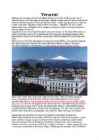
Veracruz Spilling from the slopes of the Sierra Madre Oriental to the Hulf of Mexixo,the state of Veracruz froms a 450-mile-long crescent.Since Spanish colonial times the harbor at the city of Veracruz has been the point of entry for diverse cultures either staging invasions or seeking a share in the state's abundant resources.these newcomers Spaniards, Africans, Greeks, Italians and Cubans blended with the indigenous people to create a mélange of traditions that are unique to Veracruz. Long before Cortes these tropical lowlands wwewe the domain of the Olmec,Mesoamerica's oldest civikization, which rose to prominence 3,000 years ago, developing religious ideas, mathematical concepts and a calendar system that would be adopted later by the Maya and Aztec. Master carvers, the Olmec disappeared mysteriously around 400 b.c.,leaving behind gigantic asalt heads believed to represent their rulers.Most are n display in Mxico's museums, including t
1. What does the word “philosophy” mean? The study of proper behaviour and the search for wisdom, in greek means love for wisdom 2. Is philosophy a science? Why? What kind of science it is? Yes it is. It tries to understand the meaning of reality. It’s the science of truth. Science, as it exists today, happens within the framework of philosophy. Philosophy, however, is bigger than science. It is also a form of art and discipline…... 3. Name three characteristics of Classical philosophy? deeply rooted in religious traditions ; believes that inferior was created by superior ; more positive ; seeks the real truth ; about intelligence ; reaalsuse üle mõtisklus ; believes that god is truth 4. Name three characteristics of Modern philosophy. believes that superior was created by inferior (!) ; more negative ; about will ; power ; domain of reality ; believes that knowledge is truth ; man is god 5. What was the problem that the first philosophers tried to solve? The problem of m
1. Advertising campaign- series of actions taken to advertise/ talk uo a product 2. Price promotions- to lower the price and advertise it, to make a product more popular 3. Premium brands- goods that are with good quality and expensive 4. Special offer- when sht's on sale or offered with a better price 5. Core brand- the main product 6. Marketing plan- an arrangement how to do business 7. Consumer product- something that is made especially for the customers 8. Brand loyalty- when someone uses mostly the same trade-mark 9. Brand awareness- when you know what the market holds 10. Market share- stocks 11. Advertise- to publish something 12. Associate- if you connect one thing with another in your mind 13. Consume- when you use sth up 14. Market- the people who buy things and the place to buy things from 15. Produce- to make and launch into market 16. Profit- if you make more money of something than you paid for it 17. Promote- when you work to make something more popular 18. Rival- a comp
1. What are the capitals of the 4 constituent countries? England- London; Northen Ireland- Belfast; Scotland- Edinburgh; Wales- Cardiff 2. Order the invaders in correct chronological order: Anglo-Saxons, Normans, Romans, Celts. Romans Anglusaxons , Norman 3. How did the Celts influence Britain? Language. Wars. Engand and Scotland eventually became 1 contry 4. How many people approximately speak English? Approximately 600 million 5. Who (which tribes) gave the base of the English language?Germanic tribes- Anglo-Saxons. 6. Describe Wales.- Wales is a mountainous country on the western side of Great Britain. The national game of Wales is Rugby. Flag- Red dragon on a green and white field. They have their own language Cymraeg ( Welsh) . Anthem- Land Of My Fathers. Official animal- Dragon. There used to be a lot of coalmines. 7. What are the symbols of the 4 constituent countries? England- The three national symbol
Upstream advanced pp.36-37 1. Kogu oma headuses (Benign)- to be at its most benign 2. Puutumata nõmm, mäed pristine moorland, mountains 3. Peatusin oja ääres- I stooped at a rivulet 4. Paljalt ujuma- to take one's skinny dip 5. Punt lärmakaid austraallasi--.a gaggle of raucous Aussies 6. Kõrvetav kuumus- blistering heat 7. Üksildased reisijad-solitary bushwalkers 8. Ronimisvarustust pakkima--- to pack the climbing gear Upstream upper Unit 6 Ootesaal lennujaamas departure lounge pp.100-101 1. Meelitama jõukaid turiste-to attract up-market travellers 2. Napi eelarvega reisima- travel on shoestring budget 3. Majanduslangus-a downturn in the national economy 4. Kohalikud võimud- the local authorities 5. Meelitama sukeldujaid- to attract divers 6. Julgustama loodusturismi-to encourage eco- tourism 7. Kaitsma mereelustikku- to protect marine life 8
Unit 4 HEALTH AND CARE 17.conventional medicine n - the usual form of medicine Language Leader Advanced practised in most European and North American countries [= western medicine] tavameditsiin 1. alternative medicine ['meds()n] n - medical 18.cough v - [kf] to suddenly push air out of your throat treatment that is not based on the usual western with a short sound, often repeatedly: Matthew methods: Acupuncture is widely used by practitioners coughed and cleared his throat. köhima of alternative medicine. 19.discharge v - to officially allow someone to leave 2. anonymous ['nnims] adj - unknown by name: Our somewhere, especially the hospital or the army, navy client prefers to remain anonymous. etc, or to tell them that they mu
Emblems are gestures with direct verbal translations, such as a goodbye wave; Illustrators are gestures that depict what is said verbally, such as turning an imaginary steering wheel while talking about driving; an affect display is a gesture that conveys emotions, like a smile; regulators are gestures that control interaction; an adaptor is a gesture that facilitates the release of bodily tension, such as quickly moving one's leg. Speech-independent gestures are dependent upon culturally accepted interpretation and have a direct verbal translation. A wave hello or a peace sign are examples of speech-independent gestures. Speech related gestures are used in parallel with verbal speech; this form of nonverbal communication is used to emphasize the message that is being communicated 2 Communication style low vs high context cultures
This can cause problems, because addicts who use their computers all the time can overload the phone circuits meaning that other people cannot make ordinary phone calls. III Exercise 1. John wondered what the doctor would charge him for the operation. 2. I received a fine for illegal parking yesterday. 3. As soon as the school as sufficient funds, they will build a new gym. 4. This jumper cost me a lot of money. 5. Embarrassingly, we nearly left the restaurant without paying the bill. 6. The instructor's fee for driving lessons is £10,00 per hour. 7. He wouldn't accept a cheque as payment. 8. I have had an account at that bank for years. IV Exercise In Britain, some children start their education by going to a kindergarten or nursery school when they are 2 or 3 years old. They must go to school from the age of 5, when they usually enter the state school system by attending primary school until they are 11 years old. Then
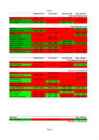
Sheet1 ESMASPÄEV TEISIPÄEV KOLMAPÄEV NELJAPÄEV Tallinnast väljuvad lennud London Luton 1255 1355 x 1305 1405 x Milan Bergamo x x x 2125 2320 Oslo Rygge 1005 1040 x 0935 1010 x Riiast väljuvad lennud Bremen x 1015 1110 x 1020 1115 Brüssel Charleroi 1430 1605 x x x Dublin x 1455 1615 x 1210 1330 East Midlands 2200 2300 x x 1140 1240 Frankfurt Hahn x 2040 2200 x
 annaabi.ee