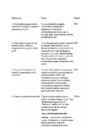
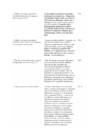
Õpiküsimus Vastus Allikad 1. Millist informatsiooni töötleb See on mõeldud fonoloogilise ÕO9 töömälu fonoloogiline komponent informatsiooni lühiajaliseks (phonological loop)? säilitamiseks. Seal toimub informatsiooni säilitamine, aga ka mälujälje pidev värskendamine korduva artikuleerimise abil. 2. Millist informatsiooni töötleb Selles komponendis hoitakse visuaalset ÕO9 töömälu visuaal-ruumiline ja ruumilist informatsiooni. See on komponent (visuo-spatial sketch- süsteem säilitamaks ja manipuleerimaks pad)
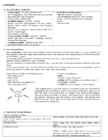
grammatical behavior. -able, -al, -ness, -ist, -dom 21. Infixes – An infix is an affix that is inserted inside its base. A word element (a type of affix) that can be inserted within the base form of a word (rather than at its beginning or end) to create a new word or intensify meaning. The process of inserting an infix is called infixation. Examples: abso- bleedin-lutely “According to an approach developed in Optimality Theory, infixation is often if not always a phonological rather than a morphological phenomenon. That is, an infix is an affix that is inserted close to, rather than at one end of its base so as to promote observance of phonological well-formedness constraints”. Morphologists usually agree that English has no infixes. However, there is the possibility of inserting expletives in the middle of words to create new words expressing the strongly negative attitude of the speaker (e.g. kangabloody- roo, abso-blooming-lutely
partially obstructed and a turbulent airflow is produced (i.e. friction). Fricatives may be voiced or voiceless. Consonants can be classified by: place of articulation( bilabial /p/; /b/; /m/ ; labiodental /f/; /v/; alveolar /t/; /d/; /n/; velar /k/; /g/ manner of articulation refers to variation in the way the airstream is affected (blocked vs.partially blocked; vocal folds are vibrating or no vibration). Affricate a stop followed by a homorganic fricative (phonological)/ a stop plus a fricative (phonetics). These are the only sequences that can occur at both the beginning and the end of words in English. Homorganic means that the plosive and the following fricative must be made with the same articulators. Nasals in case of nasals, the air escapes through the nasal cavity, because oral cavity is completely closed at some point. M, n, Within a word containing letters ,,ng" in the spelling, occurs without the following g if
the component words, e.g. Gestapo from GEheimSTAatsPOlizei `secret state police'. The other obvious way in which languages get new words is from other languages. These take two principal forms: A loanword is a word in one language taken from another language (e.g. English chair, table, restaurant, gateau from French; note that the first two feel less foreign than the second two, primarily because they were borrowed much earlier and have adapted in various ways to the phonological patterns of English). A calque is a word in one language that is based on a corresponding word in another language, formed by translating the subparts of the original word into the borrowing language. The classic example is English marriage of convenience based on French mariage de convenance. There are various other kinds of foreign influences on vocabulary. A loanshift is a change in the meaning or use of a word in one language based on the meaning or use of a similar-
1. Millist informatsiooni töötleb Fonoloogiline komponent on mõeldud ÕO9 töömälu fonoloogiline komponent fonoloogilise informatsiooni lühiajaliseks (phonological loop)? säilitamiseks. Funktsiooniks on verbaalse informatsiooni säilitamine, töötlemine ja taastamine Aitab objekte meeles pidada visualiseerimiseks. Eristatakse kahte alakomponenti: fonoloogiline hoidla (toimub info säilitamine) ja artikulatoorse
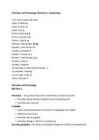
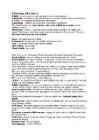
Phonology. Mid-term 2. Syllable - is a phonological unit consisting of one or more phonemes. In phonetics a syllable is a unit which consists of a centre, that has little or no obstruction to airflow; it is comparatively louder than other sounds. In phonology syllables are the possible combinations of phonemes. The syllable consists of - onset, nucleus, coda. (every syllable has a nucleus: vowel, syllabic l, or m, n). Rhyme/rime nucleus + coda; the nucleus and the coda constitute a sub-syllabic unit rhyme. Words rhyme, when their nucleus and coda are identical. (E.g 'cr-o-wn', 'd-o-wn'). The hierarchical structure of the syllable: Onset the beginning of the syllable Nucleus/peak the open part of a syllable, generally a vowel. Coda a consonant sound which ends the syllable. Open syllable - has no coda Closed syllable - has a coda! Texts: [t-e-k-s-t-s]- (Consonant, Vowel, Consonant, Consonant, Consonant, Consonant). Stron...
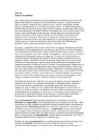
a childhood reading, Walter Starkie's Raggle-Taggle (1933), hence the pre-voyage connotations attributed to this place as `romantic', `mysterious', etc. This positive stereotyping is reinforced by the phonological magic of the place name that to Murphy suggests `a one-word poem' (1992, p. xiii). To Hoffman, Eastern Europe (and Poland in particular) is part of her early biography, since it is here that she was born and spent her childhood. Her personal
see: Old English/Titles and Nicknames In all other cases, the adjective was declined strong, including if it came after a linking verb: ·I eom grat - "I am great" · wihta wron ftta - "The creatures were fat"). CHARACTERISTIC FEATURES OF MIDDLE ENGLISH A comparison of English texts written in the tenth or eleventh centuries with those produced in the late twelth or early thirteenth reveals the following differences between Old and Middle English: · phonological · Old-English diphthongs become Middle English monophthongs, e.g. on heofonum - > in hevene; · new diphthongs emerge in the Middle English period, e.g. dæg -> dai, day; · Initial [h] before consonants disappears in the Middle English period, e.g. hræven - > raven; · [f, v] and [s, z] , which were allophones in the Old-English period, become phonemes;
Lexicon Deep structure Semantic interpretation Transformational component Syntactic surface structure Phonological component Phonological form (Chomski joonis oma teooria kohta) Generatiivne semantika. Chomsky järgne noorem põlvkond (G. Lakoff, J. Ross) lihtsustasid skeemi. Semantiline esitus on primaarne. Keel on vahend mõtete esitamiseks kindlas vormis. Süvastruktuuride asemel genereeritakse kohe lausete semantilised esitused. Foneetiline esitus
The features that Wells excludes from EE's phonetic make-up that are typical of Cockney are: · h-dropping, so that Cockney hand on heart becomes ('and on 'eart). · th-fronting, using labiodental fricatives instead of dental fricatives This turns I think into /a fink/ and mother into /move/ (Wells 1997) However, Coggle (1993) claims that TH fronting in word-medial and word-final positions is becoming widespread at the Cockney end of the EE spectrum. 4. Difficulties in defining phonological boundaries between Received Pronunciation, Estuary English and Cockney Rosewarne (1984 onwards) places Estuary English speakers on an accent continuum between RP and Cockney, and according to him they can display various shades of EE either towards the Cockney or the RP end of this continuum. Maidment (1994) represents this definition by means of Diagram 1 and points to the fact that such a depiction of Estuary English would indicate that there are rigid
seotud pikaajalise mäluga (ka kui pikaajalise mälu aktiveeritud osa) Baddeley (1986jj) mudel ja selle edasiarendused. Töömälu 3 osa Tähelepanu koordineeriv keskus (central executive) Verbaalse info Visuaalruumilise info töötlemise blokk töötlemise blokk (phonological loop) Passiivne fonoloogiline töötlus (visuospatial sketchpad) Aktiivne kõne tekitamine Visuaalne semantika Kõne LILL MESILANE Mõõdetakse · Arvujadade meeldejätmine loetule vastupidises suunas 25489351 · Meeldejätmine loetud suunas: pigem
tegevust. 5. Mis on kogemuslik empaatia ja mis rolli mängivad selles peegelneuronid? Kogemuslik empaatia on mingi teise olendi seisundi tahtmatu ning vahel võib olla märkamatu kogemine Peegelneuronite poolt on see vahendatud. 1. Millist informatsiooni töötleb Fonoloogiline komponent on mõeldud ÕO9 töömälu fonoloogiline komponent fonoloogilise informatsiooni lühiajaliseks (phonological loop)? säilitamiseks. ). Funktsiooniks on verbaalse informatsiooni säilitamine, töötlemine ja taastamine Aitab objekte meeles pidada visualiseerimiseks Eristatkase kahte alakomponenti: fonoloogiline hoidla (toimub indormatsiooni säilitamine) ja
Instituut (Meelis Mihkla, kõnesüntees), Tallinna ülikool (Mart Rannut, aktsent). EKGs puudub foneetika-fonoloogia osa. Katkenud on artikulatoorse foneetika uurimistraditsioon. Vaja oleks tänapäevast aparatuuri, koostööd arstide ja eripedagoogidega. · Valter Tauli: 1) maailma keelte muutumine, raamatud ,,The structural tendencies of languages" ja ,,Structural tendencies in Uralic languages", 2) keelekorraldusteooria, 3) eesti keele uurimine ja korraldamine. ,,Phonological tendencies in Estonian" (doktoriväitekiri) ,,Eesti keele grammatika" I, II ,,Standard Estonian Grammar" I, II · Tiit-Rein Viitso: läänemeresoome keelte fonoloogia sünkrooniliselt ja diakrooniliselt 2008 ,,Liivi keel ja läänemeresoome keelemaastikud" · Mati Hint: eesti keele astmevaheldus, prosoodia. ,,Häälikutest sõnadeni","Eesti keele sõnafonoloogia I". Murrete ja sugulaskeelte fonoloogia (Karl Pajusalu, Pire Teras, Merike Parve, Ilse Lehiste).
kaasnev kvantiteet on eraldi prosoodiline foneem; kas häälikuühendid on eri foneemid või foneemikombinatsioonid? EKGs puudub foneetika-fonoloogia osa. Praegu on alustatud foneetika ja fonoloogia tervikkäsitluse koostamist (kollektiivne töö, projekti juht Eva-Liina Asu-Garcia). Valter Tauli: 1) maailma keelte muutumine, raamatud ,,The structural tendencies of languages" ja ,,Structural tendencies in Uralic languages", 2) keelekorraldusteooria, 3) eesti keele uurimine ja korraldamine. ,,Phonological tendencies in Estonian" (doktoriväitekiri) ,,Eesti keele grammatika" I, II;,,Standard Estonian Grammar" I, II Tiit-Rein Viitso: läänemeresoome keelte fonoloogia sünkrooniliselt ja diakrooniliselt 2008 ,,Liivi keel ja läänemeresoome keelemaastikud" Mati Hint: eesti keele astmevaheldus, prosoodia. ,,Häälikutest sõnadeni","Eesti keele sõnafonoloogia I". Murrete ja sugulaskeelte fonoloogia (Karl Pajusalu, Pire Teras, Merike Parve, Ilse Lehiste). Morfoloogia
Verb forming o There are four suffixes which derive verbs from other categories (mostly adjectives and nouns), -ate, -en, -ify, and –ize. -ate -en -ify -ise/ize 20. Infixes An infix is an affix that is inserted inside its base. They are rare in English and rather phonological than morphological phenomena. English has a process of infixation of certain words, but no bound morphemes qualify for an infix status. Narc-o-logy Calc-i-ferous Kanga-bloody-roo 21. Combining forms A combining form can either be a prefix or a suffix, the difference is that while prefixes and suffixes only modify an existing meaning, the combining form adds a layer of extra meaning to the word, e.g.
 annaabi.ee