 100 punkti
Autor soovib selle materjali allalaadimise eest saada 100 punkti.
100 punkti
Autor soovib selle materjali allalaadimise eest saada 100 punkti.
 ~ 1 leht
Lehekülgede arv dokumendis
~ 1 leht
Lehekülgede arv dokumendis
 2011-05-02
Kuupäev, millal dokument üles laeti
2011-05-02
Kuupäev, millal dokument üles laeti
 4 laadimist
Kokku alla laetud
4 laadimist
Kokku alla laetud
 0 arvamust
Teiste kasutajate poolt lisatud kommentaarid
0 arvamust
Teiste kasutajate poolt lisatud kommentaarid
 jonza
Õppematerjali autor
jonza
Õppematerjali autor
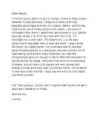
Kuidas kirjutada kirja inglise keeles? 1. Alusta alati (taandrida) Dear ...(nimi) ja see järel kirjuta koma a. Nt. Dear Sam, 2. Teksti kirjutamist alusta taandreaga ja juhata tekst sisse a. Nt. (taandrida) How have you been?/ How are you? Sorry I havent written you for a while, because...(põhjus, miks sa ei ole talle kirjutanud) b. Nt. (taandrida) Thank you for your letter! It was nice hearing about you. You asked about (teema, millest on vaja kiri kirjutada) 3. Kirjuta teemast 1-3 lõiku, igas lõigus vähemalt 4-6 lauset. a. Iga lõik eralda taandreaga 4. Viimases lõigus teema lõpetamiseks võid küsida inimeselt kellele kirjutad millega ta tegelenud on või midagi teema kohta. a. Nt. Tell me what have you been up to? / How is school? / Have you met any new people
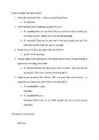
TRAVELLING Exercise 1. a) When was the last time you travelled by bus, went by tram, took a taxi, flew, sailed on a car-ferry, rode a bike? These are all means of transport. A vehicle is the general word for all types of road transport. The last time I travelled by bus was in September and the last time I went by tram was yesterday. The last time I took a taxi was in August. The last time I flew was in September. The last time I sailed on a car-ferry was in 2020. The last time a rode a bike was in August. b) Divide the following means of transport into three groups: Transport by air Transport by water Transport on land A hot-air balloon, a jet, a A yacht, a submarine, a canoe, a A double-decker bus, a lorry, a helicopter, a plane, a rocket, rowing boat, a barge, a ferry coach, a tram, a moped, a van, a spacecraft
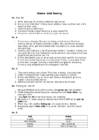
4. We from time to time go to Scotland. 5. The weather is very good never. 6. Even so, we have a always great time. Ex. 1 p. 40 1. A. I missing my boyfriend when he goes away. B. Sorry I miss your party last week. 2. A. Alice wasn't good at Maths so she had to work hard. B. You will have to working hard because I want you to finish cleaning the whole house by 4 o'clock. 3. A. She stood very closing to him so that she could see the letter he was reading. B. Anna and her mother are very close. They spend all their time together. 4. A. James and John staying on the help clean the classroom. B. He stay on and took four A leves. Ex. 2 p. 40 1. have a strong relantionship 2. didn't go to 3. do a lot of work 4. think about something that is difficult 5. near 6. stay late 7. feel sad about 8. go into a higer class Ex. 3 p. 40 1. Grow up 2. Put up with 3. Look after 4. Bring up 5
Fighted you? 4 Mul tuli hea mõte. Miks me ei võiks üllatuspidu teha? I hit upon an idea, why couldn't we do the sürpriise party? 5 Eddie ja Lara vahel tekkis pinge. The tention was building up between Eddie and Laura. 6 Et endid lõbustada, hakkasime naljalugusid rääkima. To cheer ourselves up, we tõld the funny stories. 7 Carrie silmad olid täis pisaraid kui ta luges oma venna kirja. Carrie's eyes were filled whith tears, when she read her brother's letter. 8 Te võiksite enne näituse avamist kesklinnas ringi vaadata. You could have a look around in the cmiddle town before opening the exhibition 9 Oled sa kunagi pulmas käinud? Are you ever atended to the wedding? 10 Ära osuta tema peale, aga räägi, milline ta näeb välja. Don't point at him, but tell, whitch he likes. --- 7 7. a. Work in groups of 3-4 and think of an ending to the story The Big Apple. Choose the best ending. b. Listen to Part Two of the story The Big Apple
9 Did he reading when he heard the scream? ____________________________________________________________________________________________ 10 Which book did you enjoying most? ____________________________________________________________________________________________ Marks: /10 Words, words, words 4 Write the words which mean the following. The first letter of each word has been provided. 1 Children wear this to school to make them look the same. u______________________ 2 A jacket and trousers made from the same material. s ______________________ 3 A man wears this round his neck and over his shirt to make him look smart. t _______________________ 4 We wear these to protect our clothing
1. Do you know any famous tourist attraction in London? What do you know about them? 2. Do you know any famous people in the history of Great Britain? What are they famous for? 3. What kinds of things are typically British or English in your opinion? 4. If you could visit Great Britain, which places would you like to see? Why? COMMUNICATION 1. How do you usually communicate with your friends? 2. Which do you prefer making a phone call, sending an email, writing a letter? Why? 3. What are the advantages and disadvantages of mobile phones? 4. How do you think people will communicate in the future? Do you think they will communicate more or less than today? 5. Have you got a telephone at home/ a mobile phone? 6. How many times a day does it ring? 7. Where is the phone in your home? 8. Who gets most of the calls in your family? 9. Who makes most of the calls? 10. How big is your phone bill per month? 11
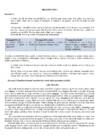
Letters Letters FORMAL, INFORMAL, TRANSACTIONAL TASK 1 Read the extracts and answer the questions. · Where are the extracts from? · What is the purpose of each letter? · How do they differ? · Which extracts are examples of formal letters? · How is the reader addressed in a formal letter? · What are the closing remarks for formal letters? · What is the salutation in a friendly letter? · How would you end extracts 1,2,3 ? · How would you begin the extracts 4 and 5? 1. Dear Mr Miller, I received your kind invitation to the reception. Unfortunately, owing to other commitments. I will be unable to attend ... 2. Dear Ralph, l just got your invitation to the company's event. l `m afraid I can't make it because I've a/ready made plans which l can "t change ... 3. Dear Sirs,
GRAMMAR 1 and 2. Helpful marginal notes throughout the books have been provided to reinforce existing skills and call attention to common problem areas. We wish you every success in your pursuit of English proficiency. 1 What is Grammar? 5 The Simple Past Tense 98 Regular and Irregular Verbs 99 Was and Were 104 2 The Capital Letter 6 The Past Progressive Tense 106 The Future Tense 108 Can and Could 112 May and Might 113 3 Nouns8 Do, Does and Did 115 Common Nouns 8 Would and Should 120 Proper Nouns 13
 annaabi.ee








Kõik kommentaarid