TRAVELLING
Exercise 1.
a) When was the last time you travelled by bus, went by tram, took a taxi, flew, sailed on a car-ferry,
rode a bike? These are all means of transport. A vehicle is the general word for all types of road
transport.
The last time I travelled by bus was in September and the last time I went by tram was yesterday. The
last time I took a taxi was in August. The last time I flew was in September. The last time I sailed on a
car-ferry was in 2020. The last time a rode a bike was in August.
b) Divide the following means of transport into three groups:
Transport by air
A hot-air balloon, a jet, a
helicopter, a plane, a rocket,
spacecraft
Transport by water
A yacht, a submarine, a canoe, a
rowing boat, a barge, a ferry
Transport on land
A double-decker bus, a lorry, a
coach, a tram, a moped, a van, a
jeep, a bicycle, a horse-cart, a
shuttle, ambulance
A yacht, a double-decker bus, a glider, a hot-air balloon, a lorry, a coach, a submarine, a canoe, a tram, a jet, a
moped, a van, a rowing boat, a helicopter, a jeep, a barge, a ferry, a plane, a bicycle, a rocket, a horse-cart, a
shuttle, spacecraft, ambulance, .
c) Which form of transport do you associate with each of the words and phrases below? (Train, car,
boat, plane)
Set sail boat, a cruise boat, traffic jam car, compartment train, fast lane car, indicate, commuter train,
take off plane, pull in car, bonnet car, fasten your seatbelts car/plane, rush hour train, customs plane,
voyage boat, go aboard plane/train/boat/car, boarding cards boat/plane.
Exercise 2. Read the text and translate the words and expressions in bold.
AIR TRAVEL
This is the usual sequence of activities when you travel by plane. First you go to the check-in desk where
your luggage is weighed and your ticket checked (not controlled). Your luggage allowance is usually 20 kg and
if you want to takes heavier bags you have to pay excess baggage. You also receive your boarding card with
your seat number on it and then you may proceed to the passport control. After your passport and hand-luggage
(for safety reasons) have been checked, you can spend your time shopping in the duty-free shops that are
situated in the departure lounge. About half an hour before take-off, you are told to go to a certain gate where
you wait before you get on/board the plane. When entering the plane you are welcome to pick up some fresh
newspapers and inside the plane you can put your things in the overhead locker above your seat.
The safety rules are explained when everyone has found their seat – window, aisle, middle. Smoking is not
allowed on board, only in the terminal building. The passengers are asked to fasten their seat belts and put their
seat in the upright position. Soon the plane is ready to take off. It taxis towards the runway, accelerates and
takes off.
The captain/pilot soon announces the cruising altitude and the flight attendants serve drinks or a meal. You
can always turn to an air steward or stewardess if you have a problem. At the end of the flight the cabin crew
distribute landing cards to people who need to fill them in before entering certain countries.
When the plane lands, you have to wait for it to come to a halt. After that you are allowed to get off. You go
to the baggage reclaim where you collect your luggage and then pass through the customs. The green gates are
for people who have nothing to declare and the red ones are for those with goods to declare.
(Saar, Sild: All the World’s a Puzzle. Form 10, p.104)
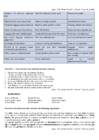
Sequence of activities tegevuste
järg
Duty-free shops tollivabad poed
Runway lennurada
Check-in desk registratuuri laud
Departure lounge ootesaal
Accelerate kiirendama
Weigh the luggage pagasit kaaluma Board the plane pardale minema
Cruising altitude lennu kõrgus
Check the ticket piletit kontrollima
Take-off õhkutõus
Flight attendants stjuardessid
Luggage allowance lubatud pagas
Overhead locker pea kohal olev kapp
Cabin crew lennupersonal
Pay excess baggage ülemäärase
pagasi tasu
Aisle seat vahekäigu koht
Landing card maandumiskaart
Boarding card pardakaart
Terminal building terminalihoone
Come to a halt peatuma
Proceed to the passport control
liikuma edasi passikontrolli
Fasten the seat belts kinnitama
turvavööd
Baggage reclaim
pagasi
kättesaamine
Safety reasons turvakaalutlustel
Upright position püstine asend
Pass through the customs tollist
läbi minema
Safety rules turvanõuded
To taxi ruleerimine
Goods
to
declare
deklareeritavad kaubad
Exercise 3. Cross the incorrect word out in these sentences.
1. My train was delayed and I lost/missed the plane.
2. The boys were late, so they had to take/catch a taxi.
3. I reached the station in time to catch/reach the 5 o'clock train.
4. It is prohibited to drive/ride a motorbike without a crash helmet.
5. It was very difficult to fly/drive the plane in such bad weather.
6. Buses to the airport travel/run every 15 minutes.
7. Your flight tickets are checked/controlled at the check-in gate.
8. Bus fares/tickets here are more expensive than in the south.
(Saar, Sild: All the World’s a Puzzle. Form 10, p.107)
REMEMBER!
Arrive in Tallinn
Reach Tallinn
Get to Tallinn
Arrive at the airport
Reach the airport
Get to the airport
Arrive home
Reach home
Get home
Exercise 4. Read the text and translate the following expressions:
You
ride a horse, bicycle, or anything else that you sit on with your legs hanging down. You
drive (=control
and guide) a car or any other wheeled vehicle that you sit inside and your passengers are
riding in it or
being
driven. The person in control of a train or bus
drives it, the person in control of a plane
flies or
pilots it, and on
a boat the person in control
sails or
pilots it.
You
get on anything you ride, and later
get off it or
dismount from it; you
get on a bus or train and later
get
off it or
alight from it; you
get on/off a boat or
embark/disembark; you
get on or
board a plane and later
get
off it; and you
get into and
out of a car or taxi.
(Saar, Sild: All the World’s a Puzzle. Form 10, p.107)
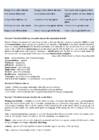
Rattaga sõitma
ride a bicycle
Rongiga sõitma
ride in the train
Laeva peale minema
get on a boat
Autot juhtima
drive a car
Laeva juhtima
sail a boat
Lennuki pardale minema
board a
plane
Autoga sõitma
ride in a car
Lennukit juhtima
fly a plane
Lennuki pardalt lahkuma
get off a
plane
Hobusega ratsutama
ride a horse
Bussi peale minema
get on the bus Autosse istuma
get into a car
Rongi juhtima
drive a train
Bussist väljuma
get off the bus
Autost väljuma
get out of a car
Exercise 5. Read the following text and translate the expressions in bold:
Hotels in Britain are graded with stars from one-star to five-star (the best and most expensive).
B&B is a type
of
accommodation where you pay for a bedroom and breakfast.
Full board at the hotels includes breakfast,
lunch and dinner;
half-board only breakfast and dinner. It is advisable to book in advance if you want to get
rooms in the middle of the
tourist season (when the places may be fully booked). You may book either a
single
room or
en suite (room with a private bathroom), a
double room (one big bed for two) or a
twin room (for
two people with two single beds). When you arrive you
check in at the reception.
(Saar, Sild: All the World’s a Puzzle. Form 10,p.104)
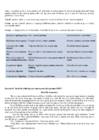
B&B – bed and breakfast, tuba hommikusöögiga
Accommodation – majutus
Full board – täispansion
half-board – poolpansion
tourist season – turismihooaeg
Single room – üheinimese tuba
En suite – privaatse vannitoaga
Double room – kaheinimese tuba
Twin room – kahe üheinimesevoodiga tuba
Check in at the reception – Vastuvõtulauas sisse registreerima
Exercise 6. Find out what is:
Airbnb – Airbnb is an online marketplace that offers accommodation
Couchsurfing – Couchsurfing is an online hospitality exchange platform
Youth hostel – Youth hostel provides cheap accommodation for mainly young people
Exercise 7. Read the text and translate the words below.
Package tour/holiday – a holiday or tour for which one pays a fixed price that includes travel, accommodation,
meals, the services of the guide, etc. If you take a package tour, you'll travel in a large group. The travel agency
will arrange everything. There will be a guide or often several guides in the places where we are going. The
guide knows the country well and he often speaks the language of the country too. He will help us while we are
abroad.
Visa – a permit stamped into a passport or a similar document that allows us to enter or leave the country which
issues it. We will get it from the embassy. AE visé. (
entrance visa,
transit visa).
Hijack – take control of a vehicle, especially an aircraft, and force it to go an unscheduled destination, often
taking passengers as hostages. (
hijacker, hijacking)
Journey – process of travelling from one place to another. (go on a journey, a day's journey)
Trip – a journey of any length; to take a trip or excursion.
Tour – a journey round an area, country, etc with stops at various places of interest along the route and which
usually returns to the starting point at the end. (go on a tour of France; make a tour of a building; on tour;
guided tour; coach tour)
Travel – go from place to place; to journey, especially abroad or far from home. (travel expenses)
Cruise – to sail about for pleasure, stopping at different places; said of a vehicle or aircraft: to go at a steady
comfortable speed.
Voyage – a long journey to a distant place, especially by air or sea; a journey into space (voyager)
Reisipakett
package tour Reis, teekond
journey
Bussiekskursioon
coach tour
Reisibüroo
travel agency Ühepäevane reis
a day’s journey
Reisima, rändama, reisimine
travel
Välismaal olles
while
abroad
Väljasõit, lõbusõit, reis, rännak
trip
Reisikulud
travel expenses
Sissesõiduviisa
entrance
visa
Huvireis, pikem matk/ekskursioon, ringreis
tour
Laevaga lõbureise tegema
cruise
Plaaniväline sihtpunkt
unscheduled destination
Mööda Prantsusmaad reisima
go on a tour of
France
Reisikiirusega sõitma, lendama
cruise
Kaaperdama
hijack
Hoones ringkäiku tegema
make a tour of a
building
Lõbusõit, laevareis
cruise
Kaaperdaja
hijacker
Ringreisil
on tour
Mere/õhureis, kosmoselend
voyage
Kaaperdamine
hijacking Giidiga ekskursioon
guided tour
Mere /õhureisija
voyager
Exercise 8. Read the following text and answer the question WHY?
Don't fly tomorrow.
This is a story about Jack Frazer and David Holliday who started to work at the same factory in London
on the same day thirty years ago. Jack started to work as a clerk. He was very hard-working, and after thirty
years he became the managing director. He was a good, generous employer, but he wanted everyone to work as
hard as he himself did. He couldn’t tolerate anyone who was lazy or who didn’t do his job properly.
David Holliday started work as the night-watchman. He was happy in his job and didn’t want to change
it. He had never liked crowds of people and he didn’t like noise. The job was perfect for him. At night the
machines were silent and he worked alone. Six nights of the week he turned up for work as the other employees
went home. Everyone knew him and liked him.
One day Mr Frazer was in his office when he got a phone call from the night-watchman. “Good
morning,” he said. “This is David Holliday, your night-watchman. I started work here thirty years ago, just as
you did. Do you remember?”
“Yes I remember,” answered Frazer. “What can I do for you?”
“Well, that’s very important that I talk to you,” Holliday said. “Please listen to me. It really is very, very
important.”
“What is it?” asked the director.
Holliday began to speak quietly. “I know you are going to fly to Geneva tomorrow,” he said, “and I must
warn you not to go by plane. I know this sounds silly, but for three nights in a row now I have had the same
dream that you were on the plane that crashed into the mountains. I saw the plane and then I saw you sitting in
it and then it crashed. It was exactly the same dream each night. Please believe me. Don’t fly tomorrow.”
Frazer was shocked and surprised. “I don’t believe in such sort of thing,” he said, “but thank you very
much for ringing anyway,” and he put the phone down.
But deep down he was afraid, and after a few hours he asked his secretary to cancel his flight reservation
and book him on the night train instead.
The following day, after visiting the company’s Geneva factory, Mr Frazer returned to his hotel room. He
switched on the television just as the news began. He heard about a plane that had crashed into a mountain side,
a plane from London to Geneva. It was the plane he had booked to fly on. There were no survivors.
When Mr Frazer got back to London, he went straight to his office and rang up David Holliday. He asked
him to come and see him when he started work this evening.
When Holliday arrived Frazer took out his cheque book and wrote out a cheque for 5,000 pounds. He
gave it to Holliday and thanked him for saving his life. He also sacked him immediately.
WHY?
Because he had been sleeping at work.
Exercise 9. Read the text about London Transport and find the word that best fits each space.
Travelling into London (1) .....is..... extremely straightforward. And so too is travelling
(2) ....around....the capital. The easiest method is to use the Underground (the Tube) (3) ....which......covers over
1904 km and can be entered from any over 293 (4) .....stations.....
The system is very efficient and the (5) ....trains...... are clean, safe and comfortable.
London’s famous red buses are also a very easy and enjoyable (6) ...way......of getting round and seeing
the city. A detailed guide to routes and fares can be obtained (7) .....from.....any Underground station and many
newsagents. And London’s black (8) ....cabs......are perhaps the safest and most reliable (9) .....in.....the world.
All licensed cab drivers are highly (10) .....trained....and charge strictly controlled (11) ......fares.... .
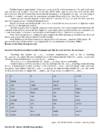
1.
Is
is
was
will be
2.
behind
over
around
on
3.
who
which
where
as
4.
doors
car parks
corridors
stations
5.
trains
boats
cars
floors
6.
route
way
trip
street
7.
through
near
from
about
8.
cabs
cab
cars
taxicab
9.
over
on
at
in
10. trained
teach
taught
learned
11. tickets
travel cards
money
fares
(Saar, Sild: All the World’s a Puzzle. Form 10, p.110)
Exercise 10. Answer the following questions:1. Where have you travelled in Estonia?
L
ast year, I have been travelling quite a lot in Estonia and visited most of the places here. I have
seen every side of the country – Tartu, Tallinn, Pärnu, Narva, Valga, Haapsalu and so on. I have also
toured the islands and visited the national parks.
2. Name a place of interest in Estonia and find some facts about it.
I’m interested in visiting Vilsandi. It’s the most western habited island of Estonia. The area of the
island and the surrounding sea with some islets form a national park. Thousands of sea birds stop
there and it hosts a lot of seals. The nature of Vilsandi is really rich – more than 30 species of
orchids, juniper bushes and fossiled corals can be found there. The most fun part though is that often
in the summer you can walk there through the sea from Saaremaa.
3. Which Estonian dishes should be introduced to foreigners?
I think the most important part is the black bread. A lot of Estonian dishes can be a bit bland, so I’d
personally recommend the snacks (like small pies or sprat sandwich) and sweets (like kohuke or
kama).
4. What souvenirs are popular in your country?
It’s popular to get some knitted gloves or socks in the winter and something made out of linen in the
summer. Some popular souvenirs are also a bottle of Vana Tallinn, handicrafts, sweets from Kalev
or a magnet with the skyline of the old town in Tallinn.
1. Which countries would you like to visit? Why?
I would like to visit Iran, Algeria, Tunisia and Iceland. I have been wanting to visit Iran since I was in
Armenia and didn’t have enough money to buy a visa to Iran - I think it’s a really interesting country
and the people there seem amazing. I would love to experience the culture there and listen to people talk
about their life. I’d like to visit Algeria and Tunisia (and also Morocco) because it’s like another side of
the Mediterranean sea and culture, it has seen a lot of different influences through history and so I’d
love to see how’s life there. Last but not least, Iceland is on my list because of its nature.
2. What could be learnt from other cultures?
I think we can learn a lot from different cultures but most importantly it widens our view of the world
and helps us to make sense of it all better. For me, it’s important to keep myself in check with reality -
understand how big and diverse the world is and how small am I.
3. What souvenirs would you bring from different countries? (e.g. a bowl and a box of chopsticks from
China; a Russian doll from Russia, etc)
I personally collect magnets from art museums, so I’d love to get one from Tate Modern in London,
Louvre in Paris, Hermitage in Saint Petersburg, Museum of Modern Art in New York City, Towada Art
Centre in Japan, The Metropolitan Museum of Art in New York City and Museo Nacional del Prado in
Madrid.
EXERCISE FOR THE PREPARATION OF THE SPEAKING TEST AT THE EXAMINATION
MONOLOGUE
Antud ülesandes tuleb õpilasel
esmalt kommenteerida vaieldavat/vastuolulist väidet. Selles ülesandes on
õpilasel kaks minutit aega, et mõelda esitatud väite üle ja ta võib teha ka kirjalikke märkmeid. Märkmete
tegemine ei ole kohustuslik. Märkmeid tehes ära hakka kirja panema terveid lauseid, vaid ainult märksõnu,,
millest sa rääkida tahaksid. Nendele toetudes saad sa oma mõtteid edasi arendada, et kaks minutit rääkida.
Ülesandes tuleb:
1. Öelda, miks mõned inimesed võiksid niimoodi arvata.
2. Põhjendada nende arvamust.
3. Anda oma isiklik arvamus.
4. Toetama oma arvamust põhjenduste ja näidetega.
5. Monoloog peab lõppema lühikese kokkuvõttega
Example
Some people say that plastic products should be banned.
Why do you think they say that? Do you agree? Give reasons.
Sa peaksid alustama oma monoloogi antud väite kordamisega: Some people say that plastic products
should be banned.
Seejärel pead ütlema, MIKS sa niimoodi arvad.
I think they say so because plastic is a wonderfully strong, long-lasting material which is very difficult
to destroy. Most plastic does not decay because bacteria will not eat it and so it stays the same for hundreds of
years. Therefore plastic pollutes our environment.
Seejärel kasuta allolevaid väljendeid, et antud väitega nõustuda/mitte nõustuda.
I totally agree with this prompt. In my opinion plastic not only pollutes our environment but it also destroys life
around us. People are very careless. Bits of plastic debris litter the shore: bottle caps, toys, cigarette lighters,
fishing line and other garbage, say nothing of plastic bags and bottles.
The average plastic bag is used for only 5 minutes, yet can take up to 1,000 years to break down in the
environment. Plastic water bottles, for example, take 450 years to decompose.
Birds inadvertently feed on plastic floating on the water, mistaking it for food, and many times this ingestion
leads to death and even the death of their young. Turtles, dolphins, and whales can choke or starve by
confusing plastic bags for jellyfish. On land, plastic bags kill native birds, fauna, and other animals.
Large pieces of plastic, such as bottles and packaging have well-known effects on sea life, strangling birds and
fish and transporting alien species to new waters.
Especially lethal is discarded fishing gear. Millions of tons of cut line, lines with hooks, and nets litter our
oceans causing cause slow, painful deaths to everything from tiny seabirds to whales.
The horrible truth is that every piece of plastic ever made still exists. There are thousands and thousands
pieces of plastic floating in the world’s oceans.
Agreeing:
· In my opinion...
· The way I see it...
· If you want my honest opinion....
· According to...
· As far as I'm concerned...
· If you ask me...
Disagreeing:
· I don't think so.
· I'm afraid I disagree.
· I'd say the exact opposite.
· Not necessarily.
· That's not always true.
· That's not always the case.
· No, I'm not so sure about that.
Lõpuks tee väike kokkuvõte:
The way I see it is that the production of plastic should be stopped immediately and people should switch over
to other environmentally friendly materials.
TASK.
Some people say that a person who has not travelled is not educated.
Why do you think they say that? Do you agree? Give reasons
Some people say that a person who has not travelled is not educated. I think they say so because travelling
exposes you to so much new information and enables you to gain such important life lessons. You are often
exposed to a new language, culture, history, nature and even current events. This all happens in a real-life
setting and as a firsthand experience, so it might seem like this kind of education is necessary to be educated.
Even though I am a strong supporter and a fan of travelling, I do not think a person can’t be educated unless
they have travelled. An educated person should be wise, creative, empathetic and engaged, which is something
that travelling can often teach. But I think the opportunity to become educated should be available to
everybody. Even though it is not true in today’s world, I think socially requiring travelling as part of becoming
educated makes education even more privileged. I believe there are different ways to be educated and there are
different ways to travel. Learning is not only about the information you’re exposed to but also about your
willingness to absorb it. So I do believe travelling can add to your education but it’s not inherently educating.
Document Outline
 50 punkti
Autor soovib selle materjali allalaadimise eest saada 50 punkti.
50 punkti
Autor soovib selle materjali allalaadimise eest saada 50 punkti.
 ~ 8 lehte
Lehekülgede arv dokumendis
~ 8 lehte
Lehekülgede arv dokumendis
 2021-11-13
Kuupäev, millal dokument üles laeti
2021-11-13
Kuupäev, millal dokument üles laeti
 11 laadimist
Kokku alla laetud
11 laadimist
Kokku alla laetud
 0 arvamust
Teiste kasutajate poolt lisatud kommentaarid
0 arvamust
Teiste kasutajate poolt lisatud kommentaarid
 katrinkais
Õppematerjali autor
katrinkais
Õppematerjali autor
 annaabi.ee








Kõik kommentaarid