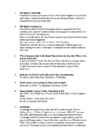
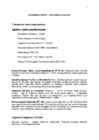
Special courts Lay judges in Finland The Finnish judicial system consist of: ● Courts ● Prosecution service ● Enforcement authorities ● Prison and probation service ● Bar Association General courts 1.District Courts 2.Courts of Appeal 3.Supreme Court District court ( Finnish: käräjäoikeus) 27 district courts Criminal cases, civil cases and petitionary matters Chief Judge and District Judges Courts of Appeal 5 courts Chief Justice and Senior Justices Appointed by the president The Supreme Court Helsinki President and 18 justices Function is to rule on important points of law Gives advice to President and Ministry of Justice Administrative courts Regional Administrative Court 8 courts The judicial oversight of administrative acts is the task of the administrative courts. Cases like land use, building, environmental protection, child welfare. Supreme Administrative Court President and 19 justices
) The Judiciary. The 1992 constitution established a court system consisting of three levels of courts: county, city and administrative courts at the first level, circuit courts and the second level and the Supreme Court at the highest level. There are 2 city courts, 14 county courts and 4 administrative courts in Estonia. The Supreme Court has 17 judges. The Chief Justice of the Supreme court is nominated by the president and confirmed by the Riigikogu. Justices are appointed for life. Courts must protect everyone's rights and freedoms in accordance with constitution and laws. Everyone is equal before the law and the courts.
Work out how much money would be needed for the felief of the poor and set the poor rate accordingly Collect the poor rate from property owners Relieve the poor by dispensing either food or money Supervise the parish poor-house Overseers The law required each parish to elect two Overseers of the Poor every Eastern Unpaid often unwilling position Under the supervision og Justices of Peace Compulsory local tax was imposed Poor Those who would work but could not able-bodied and deserving poor, received help of work for wage Those who could work but wouldn´t idle poor, whipped through the streets, publicly, until they learned the error of their ways Those who werw too old/ill/young to work impotent and deserving poor. Were to be looked after in almshouses, hospitals, orphanages or poor houses.
mõrv - Homicide mõttetu vandalism mindless vandalism narkokaubandus -Drug trafficking noor seaduserikkuja a young offender nooruk - Adolescents oma vara kaitsma protect your property otsusele jõudma reach a verdict paadunud kurjategija a hardened criminal perekonnaõigus - Family law pettus - Fraud pisargaasi kaasas kandma carry a mace spray pisikuritegu petty crime politsei küsitleb kurjategijaid- the police question the witnesses rahatrahv a fine rahukohtunikud - Justices of peace range karistus severe punishment raskekuritegu serious crime riigikohus - Crown courts röövis süüdistama conviction for robbery seaduse kuulekas ülikond a law-abiding society seaduserikkuja - Wrongdoers seadust rikkuma to break the law sekretär - Judge's clerk sobimatu - Ineligible- surmanuhtlus the death penalty sõda kuritegevuse vastu war on crime sõidukite vargus vehicle theft süüalune - Prisoner in the dock süüdi tunnistama - Pleaded guilty
Alexy hinnangul on isiklike õiguste juured vaieldamatult kristlikus ja antiikõiguses, kuid nende õitseng sai alguse renessansimaailmas. Vanas Kreekas oli rõhk andmete kaitsmisel eelkõige avalikul õigusel (polis) ning erasfäär (oikos), kuhu kuulub otseselt privaatsuse kaitse, oli suhteliselt vähetähtis. Ka Vanas Roomas olid avalikud asjad (res publica) olulisemad eraasjadest (res privatae). Nii jätkus rõhuasetus andmete kaitsmisel veel sajandeid nt. aastal 1361 kehtestati Inglismaal Justices of the Peace Act, mis lubas vahistada piilureid ning salakuulajaid ja milles andmete kaitse väljendub eelkõige riigisaladuse kaitses ning vähesel määral ka isikuandmete kaitses. Isiku ja isiklike õiguste ning vabaduste väärtustamist võib täheldada alles 16 sajandil, mil toimus Prantsuse Revolutsioon. Järgnevatel sajanditel võeti privaatsuse kaitseks vastu esimesed seadused (nt Rootsis, Prantsusmaal, Norras). Need seadused
every four years). The government or the executive branch is formed by the prime minister, nominated by the president, and a total of 14 ministers. The government is appointed by the president after approval by the parliament. The legislative power lies with the unicameral parliament, the Riigikogu or State Assembly, which consists of 101 seats. Members are elected by popular vote to serve four-year terms. The supreme judiciary court is the National Court or Riigikohus, with 19 justices whose chairman is appointed by the parliament for life on nomination by the president. Internet voting has been used in local elections in Estonia. The lawmakers in Estonia have authorized internet voting for parliamentary elections as well. The current president is Toomas-Hendrik Ilves. Before him there have been three presidents in Estonia Arnold Rüütel, Lennart Meri and Konstantin Päts. Currency and taxes. In June 1992, Estonia replaced the ruble with its own
Congressional oversight is intended to prevent waste and fraud, protect civil liberties and individual rights, ensure executive compliance with the law, gather information for making laws and educating the public, and evaluate executive performance. The legislative branch has 435 voting members. The judiciary is all the courts - Federal courts, Supreme Court, Circuit Courts of Appeal and District Courts. The federal judiciary consists of the U.S. Supreme Court, whose justices are appointed for life by the President and confirmed by the Senate, and various "lower" or "inferior courts," among which are the courts of appeals and district courts. The Supreme Court is the highest court in the federal court system. Separate from, but not entirely independent of, this federal court system are the individual court systems of each state, each dealing with its own laws and having its own judicial rules and procedures. The U.S. district
staatus. Oma uurimuses kaardistasin ühiskonnast kooliklassi kanduvaid otseseid ning kaudseid sotsiaalseid probleeme ( Leino, lk 5). 9 2. Inglismaa sotsiaalhoolekande kujunemine Suurbritannia on koht kus ühiskondlik hoolekandesüsteem tekkis kõige varem. Esimeseks sammuks sinnapoole oli 1552. aasta korraldus koostada valdades ametlikud vaeste nimekirjad, nn vaeste-registrid.1563. aastal määratles Justices of the Peace vaeste kategooriad täpsemalt ning nimetas rahalised vahendid, mille abil vaesust leevendada. Vaestena käsitleti järgmisi inimesi. · Soovisid, aga ei saanud töötada (töövõimelised vaesunud isikud). Neile tuli pakkuda abi või tasulist tööd. · Suutsid, aga ei soovinud töötada (tegevusetud, jõudeelajad). Neid häbistati avalikult, et nad mõistaksid valitud tee ekslikust. · Ei suutnud töötada, sest olid liiga noored või vanad või haiged
The government consists of 12 ministers, including the prime minister himself. The prime minister has the right to appoint other ministers, whom he will assign with a subject to deal with and who will not have a ministry to control, becoming a 'minister without a portfolio'. The prime minister has the right to appoint a maximum of 3 such ministers, as the limit of ministers in one government is 15. The supreme judicial power is vested in the Supreme Court or Riigikogus, with 19 justices. The Chief Justice is appointed by the parliament for nine years on nomination by the president. The official Head of State is the President of Estonia, who gives assent to the laws passed by Riigikogu, also having the right of sending them back and proposing new laws. The president, however, does not use these rights very often, having a largely ceremonial role. He or she is elected by Riigikogu, with two-thirds of the votes required. If the candidate does not gain the amount of
gentlemen were anxious to influence the king's politics both at home & abroadin order to protect their interests. The alliance between esquires & merchants made Parliament more powerful & separated the Commons more & more from the Lords. Many European countries had the same kinds of Parliaments at this time, but in most cases these disappeared when feudalism died out. In England the death of feudalism helped to strengthen the House of Commons in Parliament. In 1363 Ed III appointed ,,justices of the peace" to deal with smaller crimes & offenses & to hold court 4 times a year. These JPs as they became known, were usually less important lords or members of the landed gentry. They were & still are chosen for their fairness & honesty. This made the middle classes still stronger. The JPs remained the only form of local government to the countryside until 1888. They still exist to deal with small offenses. In the 15th cent. grew discontent with the Church
218. exclusively appellate courts eranditult apellatsioonikohtud 219. review judgements vaatavad üle kohtuotsused 220. by way of appeal proceedings apellatsioonimenetluse teel 221. divided into chambers jagatud kambritesse 222. respectively vastavalt 223. handling criminal offence matters käsitleb kriminaalkuritegusid 224. in panels of at least three judges vähemalt kolmest kohtunikust koosnevas paneelis 225. en banc - (kohtunikekogu) täies koosseisus 226. the justices of the Supreme Court riigikohtunikud 227. a leave to appeal luba apelleerida 228. to grant andma 229. Appeals Selection Committee apellatsioonide valimiskomisjon 230. to compose/ of koosnema 231. the highest body kõrgeim organ 232. competent to act kompetentne tegutsema 233. court of constitutional review põhiseaduslikkuse järelevalve kohus 234. rare in legal tradition õigustraditsioonis haruldane 235. independent in their activities oma tegevuses sõltumatu 236
representative—the Governor General of Canada (currently David Johnston)—who is permitted to exercise almost all of the monarch's Royal Prerogative, though there are some duties which must be specifically performed by, or bills that require assent by, the king or queen. The government is defined by the constitution as the Queen acting on the advice of her privy council. The Privy Council consists mostly of former members of parliament, chief justices of the Supreme Court, and other elder statesmen. The day- to-day operation of government is guided only by a sub-group of the Privy Council made up of individuals who hold seats in parliament. This body of ministers of the Crown is the Cabinet. One of the main duties of the Crown is to ensure that a democratic government is always in place, which means appointing a prime minister (at present Justin Trudeau) to thereafter head the Cabinet
esindajad. Olid suurmaavaldajad igas shires v countys. Said väga kiirelt kõige vihatumaks amentikuks, kuna tegutsesid jõuliselt kuninga huvides: finantsasjades, sõjanduses, kohtuasjades, kuninga korralduste ja seaduste kuulutamisel ja täitmise kontrollimises olid nad kuninga huvide kaitsjad. Liikusid ka ringi ja võisid tüliküsimusi lahendada. Olid ametlikud eesistujad ka krahvkonna kohtutes. Rahukohtunikud (justices of the Peace, JP), nende teke ja funktsioonid. Tudorite valitsusajal sisseseatud lordleitnanti (lord lieutenant) ametikoht. 14.sajandil tekivad. Parlament võtab vastu seaduse, et igas maakonnas tuleb nimetada 20 ametisse seadusekuulekad maavaldajad, rahukohtunikud. Võtsid sheriffidelt üle kohtu funktsioonid. Alguselt määrati neid abistama. Antakse aga rohkem politseifunktsioone
 annaabi.ee