 50 punkti
Autor soovib selle materjali allalaadimise eest saada 50 punkti.
50 punkti
Autor soovib selle materjali allalaadimise eest saada 50 punkti.
 ~ 1 leht
Lehekülgede arv dokumendis
~ 1 leht
Lehekülgede arv dokumendis
 2018-02-05
Kuupäev, millal dokument üles laeti
2018-02-05
Kuupäev, millal dokument üles laeti
 4 laadimist
Kokku alla laetud
4 laadimist
Kokku alla laetud
 0 arvamust
Teiste kasutajate poolt lisatud kommentaarid
0 arvamust
Teiste kasutajate poolt lisatud kommentaarid
 UDP
Õppematerjali autor
UDP
Õppematerjali autor
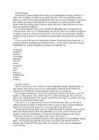
TRAVELLING Exercise 1. a) When was the last time you travelled by bus, went by tram, took a taxi, flew, sailed on a car-ferry, rode a bike? These are all means of transport. A vehicle is the general word for all types of road transport. The last time I travelled by bus was in September and the last time I went by tram was yesterday. The last time I took a taxi was in August. The last time I flew was in September. The last time I sailed on a car-ferry was in 2020. The last time a rode a bike was in August. b) Divide the following means of transport into three groups: Transport by air Transport by water Transport on land A hot-air balloon, a jet, a A yacht, a submarine, a canoe, a A double-decker bus, a lorry, a helicopter, a plane, a rocket, rowing boat, a barge, a ferry coach, a tram, a moped, a van, a
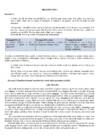
Vocabulary: to criticize - tasteless overcooked - ingredient - to invent - sauces - to disguise - spice herb - delicious - disappointing - to lend cuisine British Youth (2) Most 18 and 19 year-olds in Britain are quite independent people. English people say that children grow up more quickly now. Relationships within the British family are different now. Children have more freedom to make their own decisions. For example, children aged 13 may be employed part time in Great Britain. Age 15 is legally a "young person" not a "child". Age 16 is a school leaving age. They can leave home, drive a moped, marry with "parents' consent" buy beer. Age 17 can drive a car. Age 18 can vote, get married, drink in pubs. Education is a very important part in the life of British youth. One can't become an independent person without it. When time comes to enter a college a young Englishman chooses one far away from home. It is a necessary part of becoming adult.
Present A: He is speaking. · action taking place in the at the moment, Continuous N: He is not speaking. moment of speaking just now, Q: Is he speaking? Listen!, Look!, · action taking place only for a now, right now limited period of time · action arranged for the future Past Simple A: He spoke. · Finished action in the past yesterday, 2 N: He did not speak. minutes ago, in Q: Did he speak? · actions taking place one after 1990, last Friday another Past A: He was speaking
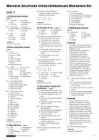
3 Prime Minister 7 figures Students' own answers 4 votes Photocopiable © Oxford University Press 1 Maturita Solutions Upper-Intermediate Workbook Key 1G Magazine article page 10 1 1 Introduction: C 2 Background information: A 3 Main events: D 4 Conclusion: B 2 1 One afternoon, at the time, when I finally reached safety, after that day 2 and fast! The rock was now more than a kilometre out to sea! After that day, I always checked the times of the tides before I went swimming! I'd never been so exhausted in my life! 3 exhausted, fantastic 4 Only when I woke up ... 3 1 Had the distance been twenty metres further, I wouldn't have made it. 2 Never in my life had I been so exhausted. 3 So tired was I that I fell asleep.
_ 9 I sometimes _________________________________ (ride) my bicycle to school. 10_ She usually _________________________________ (go) to the gym on Friday evenings. Marks: /10 2 Choose the correct tense (present simple or present continuous) in these sentences. 1 How do you usually start/are you usually starting your day? _____________________________________ 2 What time do you go/are you going to bed at weekends? _____________________________________ 3 This Girlzone CD is belonging/belongs to Alan. _____________________________________ 4 I understand/am understanding English, but not Spanish. _____________________________________ 5 Why does she run/is she running? Because she's late for work. __________________________________ 6 She doesn't enjoy/is not enjoying the film. _____________________________________
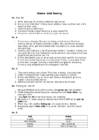
Ex. 3 p. 32 John and Suzie say 1. They are very lucky because the flat is 2. Living in a city is much easy than being in the country. 3. The garden in the square is one of the nice gardens in London. Martin says 1. It is very relaxing to live in the country. 2. A flat near the office would be more convenient than where he lives now. 3. He lives in one of the most beautiful places in the world. Katrina says 1. She used to have a difficult time getting to shool. 2. When they were rebuilding the city centre, the traffic jame were even worst than they were before. 3. The trip to school is much better than it used to be. Ex. 7 p. 33 1. Katarina is not as older than her brother. 2. Towns are more as inconvenient than villages. 3. The journey was not as bad than it was last time. 4. The train is not as slower than bus. 5. London is not as smaller than Birmingham. 6
) It usually rains a lot in November. 4. Use will ..., not the present, for offers and promises. I'll cook you supper this evening. (NOT I cook you supper this evening.) I promise I'll phone you tomorrow. (NOT I promise I phone you tomorrow.) 5. Don't drop prepositions with passive verbs. I don't like to be shouted at. (NOT I don't like to be shouted.) This needs to be thought about some more. (NOT This needs to be thought some more.) 6. Don't use a present tense after It's time. It's time you went home. (NOT It's time you go home.) It's time we invited Bill and Sonia. (NOT It's time we invite Bill and Sonia.) 7. Use was/were born to give dates of birth. I was born in 1975. (NOT I am born in 1975.) Shakespeare was born in 1564. 8. Police is a plural noun. The police are looking for him. (NOT The police is looking for him.) I called the police, but they were too busy to come. 9. Don't use the to talk about things in general. Books are expensive
"It'll be great. I love you, Mom." She hugged me tightly for a minute, and then I got on the plane, and she was gone. It's a four-hour flight from Phoenix to Seattle, another hour in a small plane up to Port Angeles, and then an hour drive back down to Forks. Flying doesn't bother me; the hour in the car with Charlie, though, I was a little worried about. Charlie had really been fairly nice about the whole thing. He seemed genuinely pleased that I was coming to live with him for the first time with any degree of permanence. He'd already gotten me registered for high school and was going to help me get a car. But it was sure to be awkward with Charlie. Neither of us was what anyone would call verbose, and I didn't know what there was to say regardless. I knew he was more than a little confused by my decision -- like my mother before me, I hadn't made a secret of my distaste for Forks. When I landed in Port Angeles, it was raining. I didn't see it as an omen -- just unavoidable. I'd
 annaabi.ee







Kõik kommentaarid