 10 punkti
Autor soovib selle materjali allalaadimise eest saada 10 punkti.
10 punkti
Autor soovib selle materjali allalaadimise eest saada 10 punkti.
 ~ 3 lehte
Lehekülgede arv dokumendis
~ 3 lehte
Lehekülgede arv dokumendis
 2017-02-09
Kuupäev, millal dokument üles laeti
2017-02-09
Kuupäev, millal dokument üles laeti
 1 laadimist
Kokku alla laetud
1 laadimist
Kokku alla laetud
 0 arvamust
Teiste kasutajate poolt lisatud kommentaarid
0 arvamust
Teiste kasutajate poolt lisatud kommentaarid
 V70
Õppematerjali autor
V70
Õppematerjali autor
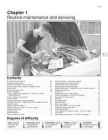
. . . . . . . . . . . . . . . . . . . . . . . . . . . . . . . . . . . . 25 to 38 18 to 28 Seat belt anchor bolts . . . . . . . . . . . . . . . . . . . . . . . . . . . . . . . . . . . . . . . 29 to 41 21 to 30 Roadwheel bolts . . . . . . . . . . . . . . . . . . . . . . . . . . . . . . . . . . . . . . . . . . . 70 to 100 52 to 74 Capacities Engine oil (drain and refill) OHV engine: With filter change . . . . . . . . . . . . . . . . . . . . . . . . . . . . . . . . . . . . . . . . 3.25 litres (5.7 pints) Without filter change . . . . . . . . . . . . . . . . . . . . . . . . . . . . . . . . . . . . . . 2.75 litres (4.8 pints) CVH engine: Carburettor engines with filter change: Pre-July 1982 . . . . . . . . . . . . . . . . . . . . . . . . . . . . . . . . . . . . . . . . . 3.75 litres (6.6 pints) July 1982 onwards . . . . . . . .
TOPICS FOR SPEAKING CYLINDER FRAME The cylinder section of the engine consists of a number of cylinder blocks, which are tightened together with the engine frame and the bedplate by means of through- going stay bolts. Two central bores, one at the top and one halfway down inside the cylinder block, enclose the cylinder liner. The upper part of the cylinder block forms part of the cooling water space around the central part of the cylinder liner, whereas the lower part forms the scavenge air space. A central bore in the bottom of the cylinder block encloses the piston rod stuffing box. The bottom is double with a hollow space through which cooling water is circulated. On the exhaust side of the cylinder block there is a circular opening leading into the longitudinal scavenge air receiver of the engine. Furthermore, there is an inlet pipe for cooling and lubricating oil. The cylinder block is provided with cleaning and inspection covers for the cooling water and
H-Helen, J - Julia 1.Receiving a money order H: - Hello, I would like to cash a money order. J: - Hello! You should present your identity card. H: - But, you know, I'd like to receive money order for my sister. How do I go about it? J: - Your identity card and letter of attorney, please. H: - Here you are. J: - Well...Unfortunately, I can't cash your money order your signature is not witnessed. H: - Ok. Than, please, I'd like to cash my money order. J: - Take this form and fill it in. May I see your passport? H: - Yes. Please. So...Should I write my full name, my passport number and the sum of money that has been sent to me, right? J: - Certainly. How would you like the money? H: - I prefer one hundred rouble notes, if you don't mind. J: - Here is your money. H: - Thank you Getting a post-restante. H: - Hi, Julia! What are you doing here? J: - I'm getting post restante letter from Boris... H: -Ah, yeah, remember him. What is he saying? J: - Oh, well...He is asking to come to
It is used primarily in enthusiast and specialist circles. In recent American English usage, a car's fascia is its front-end "look" - grille, headlamps, front bumper, and other details. This area is possibly the most critical in defining a car's identifiable look, and is also the easiest to restyle when a car's styling needs to be refreshed (due to the fact that front end panels, grille, lights, etc. can be updated with different styling and fitted to the same chassis to significantly change the appearance rather than redesigning the entire body/chassis of the car). Again, this word is mostly used by the auto trade and automotive journalists. Furthermore, the fascia is used to describe the single panel that conceals the bumper, front or rear, and ties the bumper element visually with the sides of the vehicle--often including an inlet for cooling. 93% [citation needed] of fascias are made of TPO (thermoplastic olefin elastomer). This material is
University of Pennsylvania "It's about time this book was written. It is a long-overdue manifesto for the mobile lifestyle, and Tim Ferriss is the ideal ambassador. This will be huge." --Jack Can eld, cocreator of Chicken Soup for the Soul®, 100+ million copies sold "Stunning and amazing. From mini-retirements to outsourcing your life, it's all here. Whether you're a wage slave or a Fortune 500 CEO, this book will change your life!" --Phil Town, New York Times bestselling author of Rule #1 "The 4-Hour Workweek is a new way of solving a very old problem: just how can we work to live and prevent our lives from being all about work? A world of in nite options awaits those who would read this book and be inspired by it!" --Michael E. Gerber, founder and chairman of E-Myth Worldwide and the world's #1 small business guru "Timothy has packed more lives into his 29 years than Steve Jobs has in his 51." --Tom
6 6 Keep your car and its accessories in good condition. Keep the tires properly inflated, the brakes adjusted, and the windshields and windows clean. Replace windshield wiper blades when they begin to streak, and all make sure all the lights are working properly. 7 7 Use your signals properly. Always use your signal, even if you think no one is there. When changing lanes on the freeway, don't signal as an afterthought or during the lane change. Signal at least a couple of seconds in advance so others know what you're going to do before you do it. (Ever notice how most of the skid marks along the highway are just before an exit ramp? - this is where you have to be the most careful.)8 8 Don't tailgate. No matter how slowly traffic is moving, keep at least two seconds of following distance between you and the car ahead. Any less and you won't be able to stop in time if the driver
1. Cover your closed eyes with your hands, so that the palms are over (but not touching) your eyelids. Your fingers should overlap above your nose on your forehead; 2. Take several deep breathes and take in the complete darkness (or visualize a relaxing setting); 3. After 20 seconds or so, uncover your eyes and allow them to refocus. You're ready to continue your day! 3)Refocus Routine. If you regularly work with your computer, you should periodically look away to allow your eyes to change focus. This exercise should be repeated regularly throughout the day. 1. Cover your closed eyes with your hands, so that the palms are over (but not touching) your eyelids. Your fingers should overlap above your nose on your forehead; 2. Take several deep breathes and take in the complete darkness (or visualize a relaxing setting); 3. After 20 seconds or so, uncover your eyes and allow them to refocus. You're ready to continue your day! OR: 1
GESTURES If you know your subject thoroughly, and believe in it with your heart, good news are to come! Gestures will become automatic, almost instinctive. Then, the only selftutoring you need to do is study yourself on videotape to sort out the weak gestures from the strong ones. You'll see them, don't worry. What are examples of "weak gestures"? · Fiddling with your spectacles. · Playing with a pen or paper clip. · Reaching in your pocket and unconsciously jiggling the change there. · Repeatedly patting your hair, scratching your head, pulling on an ear, buttoning and unbuttoning a coat. · Frequently clearing your throat. · Using any single gesture over and over and over again. Why are these bad? In a single word, they are distracting. They distract the audience's attention from your message. On the other hand, strong, forceful, and complementary gestures strengthen your presentation.
 annaabi.ee












Kõik kommentaarid