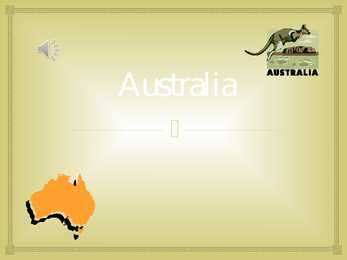
Eating bugs Annika Annika History Hunters and gatherers ate bugs to survive Christians and Jews ate bugs "At first the males are better to eat, but after copulation the females, which are then full of white eggs." Main info 1,462 species of edible insects crickets, cicadas, grasshoppers, ants, worms and scorpions, tarantulas. Insects used as a source of nutrients and insects as condiments Pesticide use can make insects unsuitable We eat from one to two pounds of insects each year Most of insects are caught wild except for silk moth pupae
Britain. Later, around 6000 BC, Great Britain itself became separated from continental Europe. The earliest evidence of human presence in Ireland is dated at 10,500 BC, demonstrated by a butchered bear bone found in a cave in County Clare. It is not until about 8000 BC, however, that more sustained occupation of the island has been shown, with evidence for Mesolithic communities around the island. These Mesolithic communities lived as hunter- gatherers across the island until about 4000 BC. Name · The name Ireland derives from Old Irish Eriu. This in turn comes from the Proto-Celtic Iveriu, which is also the source of Latin Hibernia. Iveriu derives from a root meaning 'fat, prosperous'. Economy · Despite the two jurisdictions using two distinct currencies, a growing amount of commercial activity is carried out on an all- Ireland basis. This has been facilitated by the
range of animal and plant life, as well as one of the world's oldest ethnic groups. After the last Ice age, when sea rose considerably (märkimisväärselt kasvanud), Australia and its largest island Tasmania, became isolated form the rest of Asia. 2. The earliest inhabitants The earliest humans living in Australia are called Aborigines and they are descended (pärinevad) from among the earliest humans in the world. For thousands of years Aborigines lived as hunter-gatherers along the coast and in the inland desert areas, following the same lifestyle as their ancestors. 3. Finding food and water Aboriginal tribes obtained water from trees and roots and even squeezed water out of the bodies of frogs. Women collected anything that grew or moved, including fruit, lizards, snakes, roots, grass, etc. Their skill in finding food even in the most extreme conditions often kept the whole group alive. 4. Hunting
miles (27,556 square kilometers) of land. There are a total of 992 islands in the Solomon Islands History When Spanish explorer Álvaro de Mendaña de Neira visited the Solomon Islands in 1568, he found some gold at the mouth, he erroneously thought that this could be one of the locations in which King Solomon (the Israelite monarch) obtained gold for his temple in Jerusalem. Mendaña then named the islands after King Solomon--Solomon Islands. Papuan-speaking hunter-gatherers from New Guinea were settling the southern and eastern Solomon Islands by 25, 000 BC. They were the only inhabitants for thousands of years, until Austronesian-speaking proto-Melanesians began moving in around 4000 BC. Most people lived in small villages on tribal lands, practicing shifting cultivation, fishing, hunting, carving, weaving and canoe building. They worshipped ancestors. They were also head-hunters and cannibalism was common. Demography
The United States of America. History. For thousands of years America was unknown to Europe. There lived only the native people, who had come from Siberia many thousand years ago by a land bridge. They had spread over the country, varying enormously from nomadic food gatherers to fishing societies. Then the Vikings visited Canada around AD 1000, but they did not stay. In 1492 Christopher Columbus discovered America while trying to reach India. He named the native people Indians, because he though he had reached India. He didn't stay either and in the sixteenth century the first Europeans to settle in America were the Spanish, the English and the French. The first village founded by the English settlers was in Virginia in 1607. It was called Jamestown
Deer, buffalo, fish, and various birds were the game of choice. Corn, beans, squash, berries, nuts, and melons were the fruits and vegetables that were consumed. Berries were also often used as a natural dye for fabrics. For the Indians of the Northeast area, the trees of the forest were the primary material for shelter, tools and fuel, and the animals of the forest were the primary food source. But the Northeast Woodland Native Americans were not solely hunters and gatherers, but also fishermen and farmers. The people of the Southeast were farmers first and hunters, gatherers, and fishermen second. Legend of Pocahontas Pocahontas is most famous for saving the life of John Smith, a leader among the English colonists. In 1607, Smith was captured by Powhatan warriors and held captive for four days. When two large rocks were brought in, the legend goes, Smith had a hunch his beheading was imminent. But Pocahontas
in the early 19th century, prior to the Great Famine. The name Ireland derives from the name of the Celtic goddess Ériu (in modern Irish, Éire) with the addition of the Germanic word land. Most other western European names for Ireland, such as French Irlande, derive from the same source. A satellite picture of Ireland The history of Ireland began with the first known settlement in Ireland around 8000 BC, when hunter-gatherers arrived from Great Britain and continental Europe, probably via a land bridge. Few archaeological traces remain of this group, but their descendants and later Neolithic arrivals, particularly from the Iberian Peninsula, were responsible for major Neolithic sites such as Newgrange. Following the arrival of Saint Patrick and other Christian missionaries in the early to mid-5th century A.D., Christianity subsumed the indigenous pagan religion by the year 600. From around 800 A.D
Histor y. Human habitation of Australia is estimated to have begun between 42,000 and 48,000 years ago, possibly with the migration of people by land bridges and short seacrossings from what is now Southeast Asia. These first inhabitants may have been ancestors of modern Indigenous Australians. At the time of European settlement in the late 18th century, most Indigenous Australians were hunter gatherers, with a complex oral culture and spiritual values based on reverence for the land and a belief in the Dreamtime. The Torres Strait Islanders, ethnically Melanesian, were originally horticulturalists and huntergatherers. Celebrity from Australia Gillian Armstrong director,producer Kimberly Davis model Scott Ronald Dixon professional racer Russell Crowe actor Kylie Minogue actress 6 largest cities. Sydney
Indonesia, Oceania, Highest annual increase of The Republic of timber 50 m3/ha in a year. Central Africa Forest is replaced with slash and burn method. Shelter for the gatherers Subequatorial open Australia, Brazil, Palms, Eucalyptuses 5 m3/ha in a year. stands (hõrendikud) Venezuela, The DR Majority of timber is for of Kongo, India firewood (scrubby trees) Dry climate Forests of damp USA, Brazil, Coniferous trees, 15-20 m3/ha in a year. Very
A few aborigines still live in the emptier part of the continent and follow the thousand-of-years-old customs of their ancestors. Dutch sailors stopped at several places on the northen and western coasts in the 1600s. They brought back word that the land was '' of very little use ''. First people in Australia were the ancestors of the current Aborigenes, who arrived from present-day Southeast Asia over 40,000 years ago. Most of these people were hunter-gatherers, with their own oral culture and spiritual values. They had a great respect of the land and a belief in the Dreamtime. As the population grew and new areas were explored, five largely self-governing Crown Colonies were established over the course of the 19th century. On the 1 January 1901, the colonies became states linked by one federal government the Commonwealth of Australia.
New Zealand was given dominion status in the British Empire in 1907 and granted autonomy by Britain in 1931, independence was formally proclaimed 1947. Today the Maori population is increasing faster than the pekaha, and Maori culture has had a major impact on New Zealand's society. The word "aboriginal" means "the first" or "the earliest known". The Aborigines reached Australia more than 40 000 years ago. They are dark-skinned people who probably came from Asia. They were hunter-gatherers, using spears and boomerangs for hunting. Before the first white settlers came, there were around 300 000 aborigines in about 250 tribal groups. Each group had its own territory, traditions, beliefs and even language. The Aboriginal religion is based on dreaming, they believe in Dreamtime. They say that at the beginning of time the world was a shapeless mass of nothing, waiting to be transformed into that what we see today. Aborigines believe that they are constantly
ümbritseva looduskeskkonna erinevustest. Näiteks linnulaulu dialektid erinevates piirkondades ja erinevad toiduhankimise viisid simpansitel. Kultuur laiemas tähenduses Ühiskonna tüübid Järgnev tüpoloogia lähtub eelkõige elatusvahendite hankimise viisist ja kajastab mingil määral tüüpide ajaloolist järgnevust. Kütid ja korilased (hunters and gatherers; foragers) - Inimkond on valdava osa oma ajaloost elanud selles ühiskonnatüübis. - Sõltuvus loodusest. Ise ei kasvatata ei loomi ega taimi; toitu hangitakse küttimise ja korilusega. - Väikesed grupid. Elatakse paarikümne inimeselistes gruppides, aeg-ajalt kogunetakse ka suurematesse gruppidesse. - Liikuv eluviis. Liigutakse ringi, ühes kohas ei peatuta kaua. - Sooline tööjaotus. Mehed tegelevad peam. küttimisega, mis on küllaltki ebakindel toidu hankimise vahend
CARIBOU, NETSILIK, COPPER and Western Arctic Inuit (who replaced the MACKENZIE INUIT). There are five main Inuit language dialects in Canada, Inuvialuktun, Inuinnaqtun, Inuttitut, Inuttitut, and Inuttut that are collectively known as Inuktitut or Inuttituut. (see NATIVE PEOPLE, LANGUAGES) In the last census 32 580 people or reported Inuktitut as their mother tongue (first language learned). Traditionally, the Inuit were hunters and gatherers who moved seasonally from one camp to another. Large regional groupings were loosely separated into smaller seasonal groups: winter camps (called "bands") of around 100 people and summer hunting groups of fewer than a dozen. Each band was roughly identified with a locale and named accordingly - eg, the Arvirtuurmiut of Boothia Peninsula were called "baleen whale-eating people." During roughly 4000 years of human history in the Arctic, the appearance of new people has
ENGLISH LITERATURE Ancient Britain Lived on the British Isles in the 1st millenium. They most probably came from Eastern Europe and belonged to the Celtic race and also spoke Celtic. They were primitive hunters- gatherers, farmers. Some Celtic words are still used in modern English, however they are used mostly in place names. For example: · avon river · cumb valley · ford shallow place in the river Ancient Britons had their own religion and priests or druids and temples. In the year 55 BC Britain became a Roman province. Romans were highly developed and had their own language latin, which has also greatly influenced English. The military occupation
(Gaelic-speaking) Scotland north of the river Forth, alongside Albania or Albany, both derived from the Gaelic Alba. The use of the words Scots and Scotland to encompass all of what is now Scotland became common in the Late Middle Ages. History Repeated glaciations, which covered the entire land-mass of modern Scotland, have destroyed any traces of human habitation that may have existed before the Mesolithic period. It is believed that the first post-glacial groups of hunter-gatherers arrived in Scotland around 12,800 years ago, as the ice sheet retreated after the last glaciation. Groups of settlers began building the first known permanent houses on Scottish soil around 9,500 years ago, and the first villages around 6,000 years ago. The well-preserved village of Skara Brae on the Mainland of Orkney dates from this period. Neolithic habitation, burial and ritual sites are particularly
Black opals and pink diamonds are though to be especially valuable. Australia is a very rich country because of its mineral sources. People: The earliest humans living in Australia are called Aborigines, and they are descended from among the earliest humans in the world. They are native people who came from Asia about 30 000 or 40 000 years ago. The word "aborigine" means "from the beginning". For thousands of years Aborigines lived as hunter-gatherers along the coast and in the inland desert areas, following the same lifestyle as their ancestors. They were dark skinned people who lived in tribes of about 500 distinct groups, speaking about 200 different languages. Contact with British settlers began in 1788 when Captain Phillip raised the union Jack at Sydney Cove. The British, thinking that their culture was superior, tried to impose it on the native Aborigines
a second language. 5. Which British colonies became dominions? What was their status? Is the name dominion used for these countries nowadays? The first dominions were Canada (1867), Australia (1901), and New Zealand (1907) The name "dominion" is not used anymore. 6. Which organisation unites Britain and most of its former colonies nowadays? The Commonwealth unites Britain with its former colonies. Ireland 1. Who were the early inhabitants of Ireland? Seafarers, fisheremen and hunter-gatherers from mainland Europe arrived around 8000 BC 2. When was Christianity established in Ireland? 432 AD Saint Patrick arrived in Ireland and began converting the Irish to Christianity. Who is Ireland's patron saint? Saint Patrick is Ireland's patron saint. When is his feast day? His feast day is on 17 March 3. When did the English conquest of Ireland begin? Henry II, with permission from tha Pope, sought to conquer Ireland. In 1171 he became the first English monarch to set foot on the isle.
erinevused ei tulene otseselt geneetilistest erinevustest ega ümbritseva looduskeskkonna erinevustest. Näiteks linnulaulu dialektid erinevates piirkondades ja erinevad toiduhankimise viisid šimpansitel. Kultuur laiemas tähenduses Ühiskonna tüübid Järgnev tüpoloogia lähtub eelkõige elatusvahendite hankimise viisist ja kajastab mingil määral tüüpide ajaloolist järgnevust. Kütid ja korilased (hunters and gatherers; foragers) - Inimkond on valdava osa oma ajaloost elanud selles ühiskonnatüübis. - Sõltuvus loodusest. Ise ei kasvatata ei loomi ega taimi; toitu hangitakse küttimise ja korilusega. - Väikesed grupid. Elatakse paarikümne inimeselistes gruppides, aeg-ajalt kogunetakse ka suurematesse gruppidesse. - Liikuv eluviis. Liigutakse ringi, ühes kohas ei peatuta kaua. - Sooline tööjaotus. Mehed tegelevad peam. küttimisega, mis on küllaltki ebakindel toidu hankimise vahend
There will be other adventures, but this one is complete, and as it ends it brings deep healing, wellness, and wholeness to our world. The Seekers have come Home. 215 T H E W R I T E R ' S JOURNEY ~ T H I R D EDITION Christopher Vogler R E T U R N Quest for Fire has a wonderful Return sequence that shows how storytelling probably began, with hunter/gatherers struggling to relate their adventures in the outer world. T h e film's heroes enjoy the fruits of their quest at a barbecue around a campfire. T h e Trickster clown o f the hunting party now becomes the storyteller, acting out an adventure from the Tests phase, complete with sound effects and a funny mimed impression of a m a m m o t h Threshold Guardian they met on the quest. A wounded hunter laughs as his injuries are tended: in film language, a declaration of the healing
" In fact, there is overwhelming evidence linking diet and acne. Starting in the 1970s, a Connecticut doctor named William Danby collected evidence connecting dairy consumption and acne; it is telling that Danby wasn't a professional scientist. When his patients gave up dairy, it often helped. In 2002, six scientists (none a dermatologist) published a paper with the Weston Pricelike conclusion that two isolated groups of people (Kitava Islanders and Ache hunter-gatherers) had no acne at all. They had examined more than 1,000 subjects over the age of 10 and found no acne. When people in these groups left their communities and ate di erently, they did get acne. These observations suggest that a lot of acne--maybe all of it--can be cured and prevented by diet. Why is the o cial line so wrong? Because the painstaking research needed to show the many ways diet causes acne is the sort of research that professional researchers can't do and don't want to do
 annaabi.ee