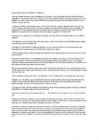
1.ÜLESANNE 1) My goalis to finish school with good marks. 2) Everybody was surprised because Ann performed so confidently. 3) Expeditions are a good oppurtunity to meet people with similar interests. 4) My sister has done a lot of voluntary work at our youth club. 5) Do you fancy going to a football match? 6) Parents should pass on their experience to the next generation. 7) Mary decided to challange herself and take part in the swimming competition. 2. ÜLESANNE ( sample answers ) 1) Would you like to go swimming tonight? Yes, i'd love to. What time shall we go? 2) Do you fancy going to the theatre on Saturday
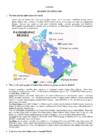
km. It extends from the Atlantic Ocean in the east to the Pacific Ocean in the west and northwarsd into the Arctic ocean. Canada shares land borders with the USA to the south and north-west. The population of Canada is about 33,3 million and the capital is Ottawa. The first inhabitants of Canada were native Indian peoples, primarily the Inuits. Starting from the late 15th century both British and French expeditions explored and later settled the Atlantic coast. French ceded nearly all of its colonies in North-America in 1763 after the Seven Years War. Canada is a parlamentary democracy and a constitutional Monarch with Queen Elizabeth the Second as a head of state. The federal comprises ten provinces and three territoties. Canada is a bilingueal and multicultural country. Both English and French are official languages at federal level.
mentioning ( nimetama ) that the atmosphere is "famously relaxed and liberal as has been felt appropriate in a school which thrives ( edenema ) on the individuality of its members." To balance the academic pursuits of the pupils, a wide and varying number of activities are offered to all pupils. Sports are a key activity at Westminster, as are Art, Drama and Music. Over the academic year, the School organises several exchanges and expeditions. In addition, some pupils participate ( osalema ) in annual events such as PHAB (Physically Handicapped and Able Bodied) and Commemoration ( mälestus ) along with School traditions like The Greaze each Shrove Tuesday. 1066 Battle of Hastings 1179 Benedictine monks of Westminster Abbey werw required by Pope Alexander III to provide a small charity school 1245 Westminster Abbey rebuilt 1348 First outbreake of the Black Death 1540 Dissolutoin of Benedictine Monastery
Augustan Age (early 18th century) admired and emulated the original Augustan Age Aftermath of the Glorious Revolution: Bill of Rights (constitutional monarchy), Act of Toleration (except Catholics); Treaty of Union (now Great Britain); growing empire, influenced situations in NA Age of Enlightenment: Descartes: "cogito ergo sum"; Thomas Hobbes "Leviathan" (liberal thought); Isaac Newton (new scientific views); John Locke (father of political liberalism) The British Empire: first expeditions (1496 Cabot); breaking into the Atlantic (1562); colonies (1584) Literature: rise in education standards and availability; high time for metaphors; Ancient Rome's traditions of direct polished and political writing; Oliver Goldsmith defining your own cultural moment; journalism Prose: Daniel Defoe (from London; journalism, biographies, novels; picturesque "Robinson Crusoe") Jonathan Swift (from Ireland; started with pamphlets; direct and unembellished "Gulliver's Travels")
UNIT 17 TEST 1.ÜLESANNE 1) My goalis to finish school with good marks. 2) Everybody was surprised because Ann performed so confidently. 3) Expeditions are a good oppurtunity to meet people with similar interests. 4) My sister has done a lot of voluntary work at our youth club. 5) Do you fancy going to a football match? 6) Parents should pass on their experience to the next generation. 7) Mary decided to challange herself and take part in the swimming competition. 2. ÜLESANNE ( sample answers ) 1) Would you like to go swimming tonight? Yes, i'd love to. What time shall we go? 2) Do you fancy going to the theatre on Saturday
Exposing the Human Condition in Antigone Heroism entails several things; a selfless act, courage, or the accomplishments of bold and daring expeditions. A hero can also mean courage in the face of death. Others may view this type of hero as stupid, or a martyr. Every hero has faults and these faults along with heroic deeds make the man or woman; a hero, heroine. "Antigone" would be considered a hero in the sense of being a martyr. Because of her love for her family Antigone wanted to give her brother a proper burial, and even though he did evil deeds, she respected him. She believed that all of the dead were in a state of equality
Brunos Californias. Samuti on Twitteril serverid ja kontorid San Antonios, Texases, Bostonis,Massachusettsis. Pärast Twitteri loomist Jack Dorsey poolt 2006. aastal on lehekülg kogunud populaarsust üle maailma ning 2011. aastal kasutab seda umbes 200 miljonit inimest. Twitterit finantseerinud riskikapitaliettevõtete hulka kuuluvad Institutional Venture Partners, kunagine eBay investor Benchmark Capital, Union Square Ventures, Spark Capital,Insight Venture Partners ja Bezos Expeditions. 2010. aasta augustis teatas Twitter, et Venemaa päritolu Mail.ru omanik Digital Sky Technologies ja teised investorid investeerivad Twitterisse 800 miljonit USA dollarit. Omadused Twitterit on võrreldud veebipõhise IRC kliendiga. Säutsud on vaikimisi nähtavad kõikidele, kuid autorid saavad siiski piirata sõnumite lugemist ainult enda jälgijatele. Kasutajad saavad säutsuda läbi Twitteri veebilehe, väliste
Spanish California The fifteenth century saw the completion of the reconquest of Spain and the emergence of Ferdinand and Isabella as the rulers of an expansionist empire eager to spread Christianity to distant lands and increase the wealth and power of Spain in the process.. Immediately after Christopher Columbus's discovery of the Americas in 1492, Spain began a series of expeditions into North, Central and South America. In 1519 Hernan Cortes began a campaign to conquer Tenochtitlan. It took several years but eventually he prevailed. The Aztec capital was razed to the ground and replaced by Mexico City. Mexico City quickly became the political/military center for most of Spain's possessions in North and Central America - what they were to call New Spain. The conquistadores brought great wealth to the throne but they also posed
· 1983-84 ja 1987-88 oli sesoonses rühmas geograaf August Loopmann. · 1972-73 talvitus meteoroloog-aktionometristina Molodjoznajas Enn Kaup. Kolm aastat hiljem talvitus ta Novolazarevskajas, hiljem tegi sesoonseid uurimistöid mitmel Antarktika veekogul. · 1981-83 oli Mirnõis ja 1987-88 Molodjoznajas aeroloog-geograaf Rein Männik. · 21. jaanuaril 1996. a. seilas Eesti Mereinstituudi poolt Kanada polaarturismi firmale "Marine Expeditions" renditud ökoturismilaev "Livonia" Marguerite'i lahele, Antarktika lähedal, sellega tegi laev Eesti meresõidu ajalugu, olles esimeseks Eesti lipu all olevaks laevaks, mis käinud nii kaugel lõunapolaarjoone taga. Laevaarstiks oli Tallinna Keskhaigla kardioloog dr. Rein Vahisalu, kes uuris meeskonnaliikmete kohanemisvõimet ja stressitaluvust. Eesti Vabariik liitus Antarktika lepinguga 45. riigina 17.mail 2001.
Intro: Canada is a country occupying most of northern North America, extending from the Atlantic Ocean in the east to the Pacific Ocean in the west and northward into the Arctic Ocean. It is the world's second largest country by total area and its common border with the United States to the south and northwest is the longest in the world. The land occupied by Canada was inhabited for millennia by various groups of Aboriginal people. Beginning in the late 15th century, British and French expeditions explored, and later settled along, the Atlantic coast. France ceded nearly all of its colonies in North America in 1763 after the Seven Years' War. In 1867, with the union of three British North American colonies through Confederation, Canada was formed as a federal dominion of four provinces. It is a bilingual and multicultural country, with both English and French as official languages. Geography: Covering most of the northern part of the North American continent and with an area
harmonious relationship between himself and the outside world. This is the obverse of the fear that comes with disorientation. Indeed, a distinctive and legible environment not only offers security but also heightens the potential depth and intensity of human experience. Although life is far from impossible in the visual chaos of the modern city, the same daily action could take on new meaning if carried out in a more vivid setting. Strain and anxiety accompanied even the best-prepared expeditions. It must be granted that there is some value in mystification, labyrinth,or surprise in the environment. This is so, however, only under two conditions. First, there must be no danger of losing basic form or orientation, of never coming out. The surprise must occur in an overall framework; the confusions must be small regions in a visible whole. Furthermore, the labyrinth or mystery must in itself have some form that can be explored and in time be apprehended
million in the United States alone, and finished in the number 1 spot at the box office during its debut weekend. Jackass: Number two With the release of Jackass: The Movie, director Jeff Tremaine and the rest of the Jackass cast believed that Jackass was finished and there would be no further projects under the franchise. However, during the final season of Wildboyz, Johnny Knoxville joined his former castmates Chris Pontius and Steve-O on various expeditions around the world. It was said that Knoxville went so far out during the filming of the show that Tremaine pulled him aside and said "If you're willing to go this all out, why not get all the guys together and shoot another movie?" Knoxville agreed, and with both Viva La Bam and Wildboyz finishing their runs, the entire cast was available to reunite and film the sequel. Jackass Number Two was released on September 22, 2006, produced by MTV Films and distributed by Paramount Pictures
Brendan known as the Navigator; discovered in the 6th century; was an Irish monk - Scandinavians - 10th century, first by accident, then Leif Eriksson sighted the land. They attempted to colonize it but were driven out by the locals. - John Cabot Italian; wanted to reach China; sighted land in 1497; the exact place is not known; received sponsorship from King Henry VII - Jacques Cartier French; did altogether three expeditions; visited present-day Quebec City and Montreal 6. Immigrants: - From 1760s mostly from France (it was a French colony) - 1760s to the end of the 19th century mostly from the UK (either directly or US Loyalists) - The early 20th century from Continental Europe (Scandinavians, Italians, Ukrainians) - At present visible minorities (coloured people) from developing world. 7
· 18th century first settlement in West Africa. English was emplored as lingua franca to be used between the English traders and the people living there. One by one the East African countries were declared independent, but in some of them English still remains. If it is not the official, it is the 2nd language to be learnt. · From 1850s Many East African countries were settled by English colonies. There were many expeditions and explorers · 18th century English was introduced in the subcontinent of South Asia. · 1765-1947 British sovereignty in India. (the Raj) · 1803 Louisiana, was bought from the French. · 1890 Florida was bought from Spain. · 1835 English educational system was introduced in India · Hindi, the official language, has influenced English spoken in India and it now has a distinctive national character.
It was very important in Aboriginal thinking, to replicate the songs that had been first played and sung by the ancestors in the Dreamtime. When the traditional music and songs were used, living men considered themselves to be in the Dreamtime. Particularly during initiation ceremonies. However 'new songs' were created from time to time. They told of important events in the history of the tribe. Events such as great battles or hunting expeditions. Other songs and music were for general amusement or entertainment and early European observations of the Aborigines included camp life where the people played games and sang songs around their camp fires. Almost all of the Koori (preferred name of Australian aborigines) shaman are initiated within one large group, called "The Dreamers". This is due to the fact that Australia has some of the strongest, and chaotic magic, around. All of the shaman are needed to put a check on that chaos
discover the Atlantic seaboard of North America were the Norsemen from Greenland about 1000 AD. On 20 May in 1497 an Italian named John Cabot sailed west from Bristol in England, hoping to reach Kathay. He sighted land on 24 June rediscovered of Canada's eastern shores and landed somewhere near Newfoundland, Maine or Cape Breton Island. King Henry VII gave him 10 pounds for "finding a new isle" and sponsored a new yoyage. Jaques Cartier did three expeditions to Canada. He sailed from Northern France in 1534, 1535-1536 and 1541-1542 and sailed up the St Lawerence River. He visited the sites of the present Quebec City and Montreal then Indian villages. Samuel de Champlain founded New France and Quebec City on July 3, 1608. He is important to Canadian history because he made the first accurate map of the coast and he helped establish the settlements. 9. Who founded the first permanent French settlement in Canada? Where?
Divided into tribes, ruled by kings, only in face of danger would they choose a single leader Legacy- hill-forts, farms, churches, field system, woodland, pasture, weapons, iron objects, langugae, culture Caesar in Britain The great Roman Emperor Firts came 55 BC to gather information, celts were doing agriculturally well,so romans wanted to get some food too In 54BC Caesar defeated Cassivelaunus Actual reasons why he made expeditions are unknown or wheteher he wanted to intend conquest The Roman Occupation 43-410 43 AD Emperor Claudius conquered Britain, it was easy, romans were more skilled and betetr equipped. Romans faced assaults of Picts, Scots, barbarians. 406-7 barbarians begin invasion Legacy- new types of animals, plants; miles, feet, inches-roman measurements;christianity; Roman basilica in curches; reading, writing; buildings, roads Christianity in Roman Britain
Why do you think the Romans came to Britain? Why do you think they left it? What do you think they left behind? How do you think the island came to be called ‘Britain’? The First Contact In 58–51 BC, the Roman general and political leader Gaius Julius Caesar 1 completed his conquest of Gaul. But Gallic resistance was hard to break and was strengthened by help from Britain. Caesar led two military expeditions to Britain in 55 and 54 BC. So the Romans became directly acquainted with Britain. In 54 BC Caesar advanced deep inland. His chief aim in invading Britain was to destroy the druids – influential Celtic priests who were the main organizers of help for the Gauls. He also knew that further conquests would boost his popularity in Rome. But a rebellion in Gaul forced him to withdraw from Britain. And the Civil War in Rome forced him to put off the idea indefinitely.
proclaimed as frozen ones). Antarctic is a peaceful zone, any military activities are prohibited, inter alia, any measures of military nature, establishment of military bases, tests of equipment and weapons, fortification. It was permitted to use military equipment for scientific research/purposes. Prohibited to do nuclear explosion and to dispose any nuclear waste. Member states can compose expeditions (under the organizing state's jurisdiction) and polar stations (under the state's jurisdiction) and they are under the jurisdiction of the state, but not the territory. After the expedition countries should give the research to the other member states. All member states have the right to check if all provisions to the treaty are all fulfilled in good faith: freedom of flights (any country can send aircraft), can send inspections to stations of the
University Press. Lonner, W. J., & Malpass, R. 1994. Psychology and culture. Boston: Allyn & Bacon. Shore, Bradd 1996. Culture in Mind: Cognition, Culture, and the Problem of Meaning. Oxford University Press. Masing, Uku 2004. Keelest ja meelest. Taevapõdra rahvaste meelest, ehk juttu boreaalsest hoiakust. Ilmunud Tartu : Ilmamaa. Matsumoto, David, & Juang, Linda 2004. Culture and psychology: People around the world (3rd ed.). Wadsworth. Shweder, Richard A. 1991. Thinking through cultures : expeditions in cultural psychology. Harvard University Press. Tulviste, Peeter 1978. Mõtlemise muutumine ajaloos : loenguid mõtlemise ajaloolisest psühholoogiast. Tartu : Tartu Riiklik Ülikool. van der Veer, René, Valsiner, Jaan 1994. The Vygotsky reader. Oxford : Blackwell, 1994 Vygotsky, Lev 1975. Thought and language. MIT Press, 1975.
Oja, Olav Roots and Karl Leichter among others studied under him. His successful teaching career continued in Tallinn from 1940 until his death in 1970. Eller promoted the individuality of his students. Eduard Oja (1905-1950), though influenced by Eller, followed his own path. Oja’s best works may be characterised as poetic, vigorous, abundant in fancy and imagery. He was devoted to folk art, having taken part in folk music gathering expeditions. Oja was deeply interested in the philosophical aspects of art and life; his thoughts being expressed later in Ajatriloogia (Time Trilogy, 1936), consisting of three miniatures (Life, Eternity and Today) for orchestra. The most extensive and suggestive work from the early Thirties is Ilupoeem (Beauty Poem, 1930), his first composition for orchestra that stands out with its lushness of colours and forcibility.1 Oja explained his idea succinctly: “This is
the reasons: 1. I have been unable to find a single indigenous population that has thrived on a 100% PPBD, even after asking my 100,000+ Twitter followers to help me find one. Low animal product consumption is simple to find, but even the famous Jains of India are, with rare exception, lacto-ovo vegetarians. Dr. Weston Price (see "Sex Machine II") and others have been similarly unable to find a vegan indigenous culture in anthropological expeditions. 2. Our closest relatives, chimpanzees, are occasional meat-eaters, and humans produce the enzyme elastase, which serves to break down connective tissue for digestion. There are, on both sides of the fence, avid debates of evolutionary biology and con icting data points, but the argument-settling experience for me was empirical: 3. In the course of researching and interviewing for this book, I encountered dozens of former
 annaabi.ee