SPORT
In English the word ‘sport’ describes both casual play and the highest levels of performance. Recent
surveys reveal that 10% of adults play sports more than twice a week, the majority of the British population
involves in sport or physical recreation at least once a month. Most people have an interest in some sports as a
player, spectator or gambler, but everybody in Britain seems to be fond of outdoor exercise, be it jogging,
walking, rambling or just sitting on the bench outdoors. As British homes are rather cool in winter (at least for
Estonians!), the saying goes that ‘the English like fresh air outdoors and indoors’.
Most people are conscious of the good influence of sport on their health. They expect a lot from it –
having an attractive body shape, strengthening their hearts, lowering their blood pressure and reducing stress.
To keep fit or just to relax, most people in towns involve themselves in individual sports, such as recreational
walking (the most popular physical activity), jogging, swimming, cycling or aerobics. Squash, weight training,
snooker, darts, bowling and bowls (the latter also suitable for the elderly) are equally popular. People usually go
to sports and leisure centres, of which there are 2,000 all over the country, mostly built in the 1980s during a
campaign to encourage people to pay more attention to their health, and more and more people join sports
clubs. Also, a lot of new and colourful sports clothes started to be sold in shops. Selling sportswear has been big
business since 1990s. It is very fashionable to mix ordinary clothes with training shoes or shorts or tracksuits.
The sports centres offer various fitness classes: aerobics, step workout, circuit training where weights and other
equipment is used for increasing strength, fat attack, which is good for your hips and thighs. Doing aerobics has
become popular with both men and women. However, membership of a sports club can be expensive and not
everyone can afford the subscription. That’s why a lot of people follow fitness exercises on TV that are led by
well-trained coaches, but this is a very low impact workout.
People are interested in staying healthy, but the recent survey showed that people incorrectly believed that they
did enough exercise.
Exercise 1. Translate the words below with the words from the text and answer the following questions
about the text:
Juhumäng
Casual play
Treeningtunnid
Fitness classes
Esinemine
performance
Stepp-aeroobika
Step-aerobics
Äsjane küsitlus, uuring
Recent survey
Ringtreening
Circuit training
Kaasa lõõma, tegelema
involve
Rasvapõletus
Fat attack
Matkama
Ramble
Liikmeksolemine
membership
Vabaaja-, lõõgastumis-
leisure
Mõju
impact
Viimati mainitu
The latter
Vääriti, valesti
incorrectly
Tossud
Training shoes
Trenn
Workout
Dressid
tracksuit
Trenni tegema
Work out
1. What does the word ‘sports’ include?
The word ‘sports’ includes both the highest levels of performance and casual play.
2. Are the British people involved in sports enough to keep staying healthy?
British people are interested in staying healthy but a recent survey has shown that people incorrectly
believed they did enough exercise.
3. What do people expect from sporting?
People expect a lot from sporting - having an attractive body shape, strengthening their hearts, lowering
their blood pressure and reducing stress.
4. What kind of interest can one take in sports?
People can take various kinds of interests in sports - as a player, spectator or gambler.
5. What does the saying ‘the English like fresh air outdoors and indoors’ mean?
The saying means that the English’ like to both be outdoors but also have a lot of fresh air indoors.
6. What are the most popular sports with the British?
The most popular sports with the British are jogging, swimming, cycling and aerobics.
7. When were the sports clubs born?
Sports clubs were born in the 1980s.
8. What changed in people’s dressing style?
It has become popular to mix ordinary clothes with training shoes or shorts or tracksuits.
9. Name the different aerobics classes.
There are different aerobics classes like step workout, circuit training and fat attack.
Britain may have less world-famous sportsmen than some other countries, but it has been good at inventing
sports and fixing the rules of games. Football, rugby and hockey were first played in British public schools in
the 19th century and the rules for these games were written down in Britain between 1870 and 1890. Certainly,
propelling some sort of ball towards an opponent’s goal occurred long ago in China and ancient Greece. But at
that time, football was a wild, spontaneous game, frequently suppressed, but always breaking free. British
public schools made the first attempts to formalize its rules in the belief that the sport promoted strength, health,
loyalty, selflessness, cooperation, and team spirit. The British sailors, soldiers, engineers and entrepreneurs
transported the rules of football around the world. It is estimated that almost 300 million people around the
world are playing football today. Football “isn’t a matter of life and death. It’s more important than that.”
There is much that could be said about ice hockey. The first game was played by British soldiers in Canada
in the 1850s. In 1875, James Creighton drew up the rules and hosted the first indoor ice hockey match. It is
believed that the game was based on the English game of field hockey, the Irish game of hurling (brutal field
hockey), the Scottish game of shinty and the Native American game of lacrosse.
Boxing may be the oldest sport, but it has always been a brutal one. Kicking, biting and hitting a man while
down were an unfortunate part of boxing until, in 1743, the Brits laid down the first set of rules that provided
for padded gloves, 3-minute rounds with rests, and the 10-second knockout rule. Most importantly, it prevented
blows being rained on a man who was down, on one knee, or hanging on the ropes. Points were awarded only
for clean blows to the head and torso.
It was the Brits, who established the Marathon's famous 26.2 mile distance (26 miles, 385 yards).
At the 1908 London Olympics the marathon course had been set as usual at 26 miles, in tribute to the distance
between Athens and the location of the great battle of Marathon, where the Athenians defended their freedom.
The marathon was to be run from a starting line in the magnificent avenue of trees in Windsor Castle grounds to
White City Stadium in the west of London. Unfortunately the day before the race, King Edward VII had such a
bad cold that his doctor warned him not to go out. Undaunted, the organizers improvised. To allow the
indisposed King to give the signal for the start, the marathon was moved back into the castle courtyard, a
distance of 385 yards. Since then that magical .2!
Exercise 2. Translate the words below with the words from the text and answer the following questions
about the text. In case you need some help, you can consult the Internet, but copy-paste is NOT allowed!Andekas
Good at
Jõhker
brutal
Reegleid kindlaks määrama
Fix the rules
Kahetsusväärne
unfortunate
Tõukama, ajama
Propel
Ette nägema
Provide for
Toimuma
occur
Polsterdatud, vateeritud
padded
Alla suruma
suppress
Hoopidega üle külvama
Rain blows
Propageerima, edendama
promote
Lugupidamisavaldusena
In tribute to
Ustavus
loyalty
Kartmatult
undaunted
Isetus
selflessness
Haiglane
indisposed
Arvatakse, eeldatakse
estimated
Hoov, õu
courtyard
Answer the following questions about the text.
1. What has Britain been good at?
Britain has been good at inventing sports and fixing the rules of games.
2. Did the Brits invent football?
No, the Brits did not invent football but they did formalize the rules of the game.
3. In their opinion, what kind of sport was football?
In their opinion football was a wild and spontaneous game.
4. How did the new football spread?
The new football was transported around the world by British sailors, soldiers, engineers and
entrepreneurs.
5. Has football become a popular sport?
Yes, football has most definitely become a popular sport.
6. What games does ice hockey base on?
Ice hockey is based on field hockey, hurling, shinty and lacrosse.
7. What were the main rules introduced in boxing?
The main rules that were introduced to boxing provided for padded gloves, 3-minute rounds with rests,
and the 10-second knockout rule.
8. Why is the Marathon race called Marathon?
The Marathon race is called Marathon because its distance is equal to the distance between Athens and
the location of the battle of Marathon.
9. Why did the Brits change the length of the distance?
The Brits changed the distance by 385 yards because King Edward VII got sick the day before the race
and they had to start the race from the castle courtyard to allow the indisposed King to give the signal
for the start.
10. When did the Olympic Games take place in London?
The Olympic Games in London took place in 1908, 1948 and 2012.
11. When did the Paralympics take place in London?
The Paralympics in London took place in 2012 and in 1948.
British contribution to the following sports was certain:
·
Horse-racing that is of Irish origin, was taken up with gusto in Britain in the 18th century. Early
steeplechases required horse and rider to pass safely fences and ponds and rough terrain. Races today
are two to four miles. Riding is an active and sometimes dangerous sport. It has unwritten rules, and
requires ability, practice and courage. It is not only for the wealthy. Farm families are often on
horseback. All the competing riders around the world "ride English".
·
St Andrews is considered to be the birthplace of golf, for it was first played there as early as the 15th
century. St Andrews is still the most respected authority on golf in the world and has more golf courses
than most other places.
·
Ping pong was invented on the dining tables of England and it was called ‘whiff whaff’ and it was
played with the champagne bottle corks. Mimicking the game of tennis in an indoor environment,
everyday objects were enlisted as equipment. A line of books might be the net, a rounded top of a
champagne cork or knot of string as the ball, and a cigar box lid as the racket.
·
Around the same time with ‘whiff whaff’, the Brits started to play badminton with the same corks, this
time decorated with feathers, and called them shuttlecocks. The sport got its name after the country
estate of the English Duke of Beaufort, where they first played badminton.
·
In the 1820s boys at England's Harrow School discovered that a punctured ball "squashed" on impact
with the wall, and it produced a game that required greater skill and was more fun, called squash.
·
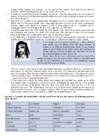
A seemingly lonely occupation, fly-fishing, is often conducted
with friends who rise before dawn. The sport advanced in
Britain as in 1496 an Englishwoman Dame Juliana Berners
wrote the first fishing manual. Dame Juliana also used very up-
to-date artificial flies (six of those she mentioned are still in
use), but her fishing rod was a simple rod.
Dame Juliana Berners was a noblewoman and a prioress of the
nunnery of Sopwell, near St. Alban's. Little is known or recorded about
her life but she is described as a learned and very intellectual woman
who was an avid angler and hunter.
·
The main target of fly-fishing is trout and salmon. Research published in 2006 says that fish have
personalities and that their memories extend up to three years. This information has been known for
centuries to anglers. They also know that trout can see, hear, and smell us and to take a great old trout, it
is best to try him at night, "for then he is bold and lies near the top of the water, watching the motion of
a frog or water-rat or mouse that he hunts after.
·
All cue sports have evolved into indoor games from outdoor stick-and-ball
lawn games. In the 1600s
table billiards grew in popularity as an indoor activity. In England, the game became a very popular
activity for members of the gentry. The early balls were made from
wood and
clay, but the rich
preferred to use
ivory. The curious fact is that while many English writers attribute its invention to the
French, the French say that it had its origin in England. There is a great conflict of opinion on both sides
of the Channel, and no research has definitely settled who invented the game first.
Exercise 3. Translate the words below with the words from the text and answer the following questions
about the text:
Panus
contribution
Sulgpall
badminton
Hobuste võidusõit
horse-racing
Läbitorgatud
punctured
Hobuste takistussõit
steeplechase
Rutjuma, lömastama
squash
Mõnu
gusto
Kokkupuude
impact
Konarlik maastik
rough terrain
Näiliselt
seemingly
Vilumus
practice
Korraldama, asju ajama
conduct
Asjatundja
authority
Õngitseja
angler
Järele aimama
Mimick
Kii
cue
Appi võtma
enlist
Maa aadel, peenem rahvas
gentry
Sõlm
knot
Elevandiluu
ivory
Kaas, kate
lid
Omistama
attribute
1. What kind of sport is riding?
Riding is an active and sometimes dangerous sport.
1. Why is St. Andrews considered the most respected authority on golf?
St. Andrews is considered the most respected authority on golf because it’s the birthplace of golf - it
was first played there as early as the 15th century.
2. How is drinking champagne connected with ping pong and badminton?
Both ping pong and badminton were first played with champagne bottle corks.
3. What did the naughty Harrods School boys do?
The boys at Harrow School discovered that a punctured ball "squashed" on impact with the wall, and
it produced a game called squash.
4. How has Dame Juliana Berners gone into history?
Dame Juliana Berners has gone into history as the author of the first fishing manual.
5. When is it best to catch trout and salmon?
The best time to catch trout and salmon is at night.
6. Who invented the cue sports? What are these games played with?
Nobody seems to know who exactly invented the cue sports – the English say it was the French and
vice versa. These games were played with balls made from wood or clay, but the rich preferred to use
ivory.
Besides, the Brits have in a finger in the pie of:
William Webb Ellis, an
English Anglican clergyman, is considered the
inventor of
rugby football while he was a pupil at
Rugby School. A plaque at
Rugby School bears the inscription: This stone commemorates the exploit of
William Webb Ellis, who with a fine disregard for the rules of football as
played in his time, first took the ball in his arms and ran with it, thus
originating the distinctive feature of the rugby game, AD 1823.
The rules of football as we know them today were established in 1848 at
Cambridge University, and the oldest official club in the world is
Sheffield
F.C.
Tennis originated from a 12th century French game called paume, where the
ball was struck with the hand. In 1874, Major Walter C. Wingfield patented
in London the equipment and rules for a game very similar to modern
tennis. The first championships at
Wimbledon in London were played in
1877. Even though it's been rumoured that baseball is an American game, it is
in fact British. Bowls has been traced to 13th century England. The modern
game field hockey, grew from English public schools in the early 19th
century.
A traditional pub game, darts, originated in Britain and the numbering layout was devised by Brian Gamlin.
The roots of
polo began in Persia as a training game for cavalry units, the rules of modern polo as a sport were
established in 19th century England.
The most popular sporting events
of the year include the London marathon, with the participation of
more than 30,000 people; the annual boat race between Oxford and Cambridge Universities on the river
Thames since 1829; the Wimbledon Tennis Championships that takes place in south London and is the most
important international tennis event; Royal Ascot, a four-day horse-racing event every June, etc.
In modern times Britain has produced a lot of sporting heroes. The future of British sport
lies in the
hands of many people: parents, teachers, trainers, recreational sportsmen and women, high performance
athletes, sport clubs, organisations and politicians. Derek Wyatt, MP, has said: “Everybody has their own gold
medal level and that is what we must aspire to and offer this country’s citizens.”In 2012 London hosted the
Olympic and Paralympic Games. London has hosted the Olympic Games twice before: in 1908 and 1948. And
the very first Paralympic Games were also held in London in 1948.
Exercise 4. Translate the words below so that the translation would suit the text, also answer the
following questions about the text. In case you need some help, you can consult the Internet, but copy-
paste is NOT allowed!
Have a finger in the pie
Olema kaasatud milleski
Numbering layout
numbripaigutus
clergyman
kirikumees
devise
kavandama
Plaque
mälestustahvel
Cavalry units
ratsaväeüksused
Inscription
Raidkiri
aspire
Pürgima
1. Will you please translate the following sentence into Estonian: This stone commemorates the exploit of
William Webb Ellis, who with a fine disregard for the rules of football as played in his time, first took
the ball in his arms and ran with it, thus originating the distinctive feature of the rugby game, AD 1823.
See kivi mälestab kangelastegu William Webb Ellise poolt, kes reeglite, mille järgi sellel ajal jalgpalli
mängiti, kerge eiramisena võttis esimesena palli kätte ja jooksis sellega, algatades nõnda ragbi mängule
omase tunnuse. PKr 1823
2. Was tennis originated in England? What makes Wimbledon courts so special? (consult the Internet!)
The origins of tennis can be traced to a 12th-century French handball game called jeu de paume but the
rules of the modern game originated in Birmingham, England. The first tennis tournament was held at
Wimbledon in 1877 and it remains the oldest tennis tournament.
3. What kind of sport is polo? Describe it in short.
Polo is a game played on horseback between two teams that consist of four players each who use
mallets with flexible and long handles to drive a wooden ball down a grass field and between two
goalposts.
4. Please name some famous British athletes?
Some famous British athletes are Sydney Barnes, George Best, Laura Davies, Gareth Edwards, Ryan
Giggs, Graham Hill, Sir Christopher Hoy, Lennox Lewis, Fred Perry and Paula Radcliffe.
5. How many medals did the UK get at the 2012 Olympic Games?
The UK got 65 medals at the 2012 Olympic Games.
6. Who are responsible for the future of the sport?
There are many different people responsible for the future of sport - parents, teachers, trainers,
recreational sportsmen and women, high-performance athletes, sports clubs, organisations and
politicians.
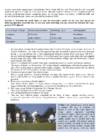
Cricket is the national game, mostly played
in summer. The sight of cricketers, all
dressed in white on the cricket pitch in a
village green, represents something
traditionally English. Teams are made up of
11 players each. They play with a ball
slightly smaller than a baseball and a bat
shaped like a paddle. Two batters stand in
front of wickets, set about 20 metres apart.
Each wicket consists of three wooden rods
pushed into the ground, with two small
pieces of wood (bails) balanced on top. A
member of the opposing team (the
bowler)
throws the ball towards one of the batters, who must hit the ball so that it does not knock a bail off the
wicket. If the ball travels far enough, the two batters run back and forth between the wickets while the fielders
on the opposing team try to catch the ball. The game is scored according to the number of runs, which is the
number of times the batters exchange places. Cricket is the world's second-most popular sport.
Exercise 5. Translate the words below so that the translation would suit the text. And answer the
question: What are the three most popular sports in the world?
The three most popular sports in the world are football, cricket and hockey.
Väljak
pitch
Väike värav
wicket
Kurikas
bat
Kepp, teivas
rod
Mõla
paddle
Põiklatt kriketis
bail
Pallilööja
batter
Pallija, servija kriketis
bowler
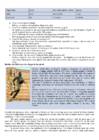
Fox hunting also originated in Great Britain. The
first attempt to hunt a fox with hounds was in
Norfolk in 1534, where a farmer used his dogs in
order to catch a fox. By the late 19th century,
foxhunting was the most popular sport. There were
about 200 official foxhunts in England, entertaining
about 50,000 Britons, and killing about 13,000 foxes
and 6,000 fox cubs each year. Thanks to the video
cameras, the realities and brutalities of this blood
sport were shown to the public, so that millions of
Britons could see how pregnant vixen were torn into
pieces by hounds and live foxes were thrown to
dogs. On 18 February 2005, hunting with dogs,
especially fox hunting was banned in England and
Wales.
Exercise 6. Answer the following questions about the text:
1. For how many centuries have the Britons hunted foxes?
The Britons have hunted foxes for almost 5 centuries.
2. Why was this widespread sport banned in 2005?
Hunting with dogs was banned in 2005 because thanks to video cameras it was realized how brutal this
sport was.
Exercise 7. Translate the following activities into English. If necessary, use the dictionary
Lõõgastav jalutamine
recreational walking
Aerutamine
pulling
Odavise
javelin throw
Poksimine
boxing
Sörkjooks
jogging
Sõudmine
rowing
Kettaheide
discus throw
Võimlemine
gymnastics
Matkamine
hiking
Kelgutamine
Sledding
Kuulitõuge
shot put
Peotants
ballroom danceJalgrattasõit
cycling
Suusatamine
skiing
Seinatennis
squash
Nooleviskemäng
darts
Jalgpall
soccer
Iluuisutamine
figure skating
Lauatennis
ping pong
Male
chess
Pesapall
Baseball
Kiiruisutamine
speed skating
Sulgpall
badminton
Kabe
checkers
Käsipall
handball
Kergejõustik
track and field
Võitluskunstid
martial arts
Piljard
billiard
Maahoki
field hockey
Kaugushüpe
long jump
Rahvastepall
dogdeball
Kulturism
body building
Keegel
bowling
Kõrgushüpe
high jump
Saalihoki
floorball
Laskmine
shooting
Rannavolle
beach volleyball
Teivashüpe
pole vault
Jõutrenn
weight training
Vibusport
archery
EXERCISES FOR THE PREPARATION OF THE EXAMINATION
1.48. C
49. A
50. A
51. C
52. C
53. B
54. B
2.50. C
51. B
52. C
53. A
54. B
55. A
56. B
57. A
 50 punkti
Autor soovib selle materjali allalaadimise eest saada 50 punkti.
50 punkti
Autor soovib selle materjali allalaadimise eest saada 50 punkti.
 ~ 14 lehte
Lehekülgede arv dokumendis
~ 14 lehte
Lehekülgede arv dokumendis
 2021-11-13
Kuupäev, millal dokument üles laeti
2021-11-13
Kuupäev, millal dokument üles laeti
 0 laadimist
Kokku alla laetud
0 laadimist
Kokku alla laetud
 0 arvamust
Teiste kasutajate poolt lisatud kommentaarid
0 arvamust
Teiste kasutajate poolt lisatud kommentaarid
 katrinkais
Õppematerjali autor
katrinkais
Õppematerjali autor
 annaabi.ee












Kõik kommentaarid