Leidsid 33 sarnast õppematerjali, mis on seotud failiga "English download B2 workbook lk 7 harjutus 1 vastused". Need materjalid aitavad sul teemat sügavamalt mõista.
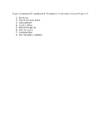
english, workbook, planning, feelings, visitEnglish download B2 workbook lk 7 harjutus 2 vastused 1. Do 2. does 3. Are 4. Know 5. Is 6. Are 7. Do 8. is
English download B2 workbook lk 16 harjutus 1 vastused (Listening) 1. Is being examined by modern scientists 2. Success in relationships 3. Generally speaking, it covers four different areas 4. People need to understand their own feelings 5. By communicating in different ways 6. May have been important to the survival of the species 7. Learn to develop their social intelligence
English download B2 workbook lk 9 harjutus 1 vastused ( Use your english 2) 1. Have been doing 2. Plenty of 3. Are you aware 4. Have you stopped 5. Have been calling you 6. Was alone 7. Has a huge amount 8. Beware of the
English download B2 workbook lk 15 harjutus 1 vastused (Use your English 2) 1. Satisfied 2. Miscalculate 3. Respectful 4. Dissatisfied 5. Ashamed 6. Uncontrollable 7. Disrespectful 8. controllable
English download B2 workbook lk 9 harjutus 2 vastused (Use your English 2) 1. Inappropriate 2. Indirect 3. Lonely 4. Unaccompanied 5. Immodest 6. Personal 7. Avoidable 8. Impersonal
English download B2 workbook lk 15 harjutus 2 vastused (Use your English 2) 1. Bottle up 2. Would not ever stand 3. Got used with 4. Used to drive 5. Would not get up 6. Did not use to 7. Irrational fear 8. Am not used to working
English download B2 workbook lk 10 harjutus 1 vastused (Listening) 1. Frustrated 2. Symbols 3. Unclear 4. Stop using 5. Parents 6. Classes 7. Clues to the meaning of the word 8. Under five years old 9. Makaton-friendly
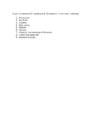
English download B2 workbook lk 8 harjutus 2 vastused (Vocabulary 2) 1. Nod 2. Impress 3. Direct 4. Appropriate 5. Express 6. Aware
English download B2 workbook lk 8 harjutus 1 vastused (Grammar 2) 1. Have you been hiding 2. Has just finished 3. Have you ever smiled 4. Has been biting 5. Have been waiting 6. Has expressed
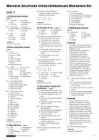
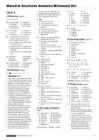
1 1 poll 5 commentators 3 Tick: belong, know, imagine, think, 2 public 6 celebrities understand Challenge! 3 Prime Minister 7 figures Students' own answers 4 votes Photocopiable © Oxford University Press 1 Maturita Solutions Upper-Intermediate Workbook Key 1G Magazine article page 10 1 1 Introduction: C 2 Background information: A 3 Main events: D 4 Conclusion: B 2 1 One afternoon, at the time, when I finally reached safety, after that day 2 and fast! The rock was now more than a kilometre out to sea! After that day, I always checked the times of the tides before I went swimming! I'd never been so exhausted in my life! 3 exhausted, fantastic 4 Only when I woke up ...
noticed when I was born! 3 1 Laura was offered a place at much. Personality-wise, I've got a lot of my Manchester University but she dad's traits in me. We're both quite bubbly and friendly (or so people 1C The origins of English turned it down. page 5 2 Whilst some people are in favour say), and we share quite a laid-back of the monarchy, others think we approach to life. When it comes to 1 1 Anglo-Saxon 8 Conquest
2 Whe do not change y after a vowel. I stay he stays I enjoy he enjoys When to use the Present Simple The Present simple generally refers to: · Facts that are always true Water boils at 100 degrees Celsius. · Habits and repeated actions British people drink a lot of tea. I get up at seven, have breakfast and go to university. · States, thoughts and feelings I don't like gangster films. The Present Simple is also used in · Making declarations Verbs describing opinions and feelings tend to be state verbs. I hope you'll come to my party. I bet you don't know the answer! · Headlines These are written in a 'telegram' style, and references to the past are usually simplified to present simple. Big family loses home in fire · Instructions and itineraries
Modals Sandra Haar Form 11 I am going to talk about... Can Could May Might Must Should Would Ought to Excercises References How do we use modal verbs? Affirmative: Subject + modal + infinitive, Example: She should stay Negative: Subject + modal(n`t) + infinitive, Example: She shouln`t stay Interrogative: (Wh) Modal + Subject + Infinitive, Example: Why should she stay? Can Ability to do something in the present-I can speak English. Permission to do something in the present-Can I go to the cinema? Request - Can you wait a moment, please? Offer- I can lend you my car till tomorrow. Suggestion- Can we visit Grandma at the weekend? Possibility- It can get very hot in Arizona. Could Ability to do something in the past- I could speak English. Permission to do something in the past- I could go to the cinema. Polite question- Could I go to the cinema, please? Polite request- Could you wait a moment, please
provider's details. Note that technical certificates do not prove that you are a qualified plumber, only the full NVQ Level 2 and 3 in mechanical engineering services: plumbing (domestic) do this. MET-UK, one of the UK's largest plumbing course providers, will be holding taster seminars at One Life Live. Teacher There are three training routes undergraduate, postgraduate or training-on-the-job. You'll need GCSE grade C in English and maths and for the latter two routes, you'll also need a degree. Grants, bursaries and golden hellos are widely available. Florist Although the most common way to become a florist is to train on the job, most career changers attend a course at college and then look for work. There are a number of qualifications ranging from NVQs to a national diploma. PR officer There are no set entry qualifications for becoming a PR officer, but it is a very
This method emphasizes on listening skills and following the orders. It is difficult to say how is evaluation accomplished but I think if the student performs correctly then the task passed. And once again no native language was used. · Humanistic methods: Community language learning http://www.youtube.com/watch?v=JWn4DJgbGHM Language Teaching Methods: Video 1c http://www.youtube.com/watch?v=AZVoN-roMM0 The Community Language Learning by 3rd Year of English Nondefensive learning (security, aggression, attention, reflection, retention) The teacher as a counsellor From dependent to independent learner, e.g. teacherstudent centeredness Recorded chunks of language (from mother tongue into the target language with the help of the teacher) Feelings are considered to be very important 3 Language and culture are integrated
9) a 1,000-piece puzzle 10) a 15-member team 3) PASSIVE VOICE AM/IS/ARE + III PÕHIVORM WAS/WERE + III PÕHIVORM Tee TV lk 36 h 8! Vastused: 1) was attended 2) are soaked 3) were damaged 4) should be baked 5) weren´t hurt 6) is meant 7) were flooded 8) can be booked 9) were surveyed, were published 10) can be hired EXERCISE PASSIVE VOICE Pane laused passiivi! 1) My great-grandfather built this house. 2) The policeman stopped the car. 3) In Canada people speak English and French. 4) The car killed his dog. 5) Robert took these photos. 6) Even the best pupils sometimes make this mistake. 7) Tailors make suits and overcoats. 8) The children do all the housework. 9) My boyfriend gave me this ring. 10) Ken saw the girls. 11) They clean the bedrooms every morning. Answers: 1) This house was built by my great-grandfather. 2) The car was stopped by the policeman. 3) English and French are spoken in Canada.
Are they politicians, writers, scientists, musicians? 42. Can you name some Estonian writers who are famous for their humour? Which of their books have you read? 43. What kind of books do you like to read? 44. When did you last read a poem? 45. Do you enjoy reading poems? http://www.abiks.pri.ee 46. Have you ever written a poem? When? What was it about? 47. Can you say a poem in English? 48. What books have you read lately? 49. When did you learn to read? Was it easy or difficult for you? 50. How much time do you spend on reading? Do you think it is enough? 51. Do you have a favourite book? / author? Why? Why not? 52. How do you choose a book to read? 53. Do you prefer to have books of your own or to borrow them from the library? 54. Do you think people will read more or fewer books in 20 years' time? Why?
Tests Superstar 1 Luke Prodromou Test 1 Name____________________ Class_______ Use your English 1 Complete these sentences using the correct form (present simple or present continuous) of the verb in brackets. _ 1 She is in a band and she _________________________________ (record) a CD at the moment. _ 2 She is an actress and often _________________________________ (appear) on television. _ 3 At the moment she _________________________________ (have) a rest because she is tired. _ 4 Mike is a doctor and he _________________________________ (live) in Manchester.
Have you ever had any embarrassing incidents in a shop? _______________________________________________________________ UNIT 8: Töövihikust harjutus 9. 1 See tõesti ärritab mind, kui inimesed ei lülita oma mobiile teatris välja. It really annoys me when people don´t switch off their mobile phones in the theatre. 2 Ma tahaksin oma telefonihelinat muuta. I´d like to change the ringtone of my mobile phone. 3 Tema teadmised inglise keelest on väga head. His knowledge of English is very good. 4 Ma surfasin eile kaks tundi internetis, aga ma ei leidnud vajalikku informatsiooni. Yesterday I surfed the Internet two hours but i didn´t found neccessary information. 5 Halloo, mina olen Kai. Palun kas ma saaksin rääkida Lizziega? - Ma kuulen. Hello, this is Kai. Could I speak to Lizzie please? - Speaking. 6 Vabandust, ma pean nüüd lõpetama. Ma helistan hiljem tagasi. Sorry, I have to finish now. I will call you back later. 7 Kus Maria on
Studium Units 1-4 e-formaat Toimetatud Tartu Emajõe Koolis Toimetaja I. Tars Tartus, 2016 Elektroonilisse vormingusse kohandatud õpikus kasutatud märgised, mis aitavad otsingukäsu kasutamisel navigeerida * Tavakirjas leheküljenumbri ees on kolm järjestikust sidekriipsu, tühik ja vastava lehekülje number, näiteks, --- 5; * peatüki ette on kirjutatud kolm x-i, tühik ja vastava peatüki number, näiteks xxx 5; * visuaalne info on pandud kahekordsete ümarsulgude vahele. I Love English 6 töövihik sobib inglise keele õpetamiseks 8. klassis Töövihik vastab riiklikule õppekavale Retsenseerinud Piret Kärtner, Viive Latt, Ingrit Tera Toimetanud Viiu Menning, Nicola Fyfe, Tiina Helekivi Kujundanud ja küljendanud Eve Kurm Tehniliselt toimetanud Andero Kurm Illustreerinud Ülle Meister Esikaas: Boswell and Dr. Johnson (foto Scanpix). Vaata Unit 20. Autoriõigus: Mare Jõul, Ülle Kurm, 2009 Kirjastus Studium, 2009 Kõik õigused on kaitstud
" (the evening) at "I go to bed at night." (night) in "It usually snows in the (a season) winter." Viljandi 2009 Viljandi County Gymnasium 4. Phrasal verbs Many verbs in English are followed by an adverb or a preposition (also called a particle), and these two-part verbs, also called phrasal verbs, are different from verbs with helpers. The particle that follows the verb changes the meaning of the phrasal verb in idiomatic ways: · drop off - decline gradually The hill dropped off near the river · drop off(2) - fall asleep While doing his homework, he dropped off. · drop off(3) - stop and give something to someone
About Tea "Shall I put the kettle on?" or "Would you like a nice cup of tea?" are questions you might be asked if you visit someone's home in the UK. The traditional English drink is tea - it is drunk throughout the day and is often made during social occasions. Coffee has become popular in recent years, but many people continue to drink tea. In the UK there are as many different ways of making and drinking tea as there are flavours. People drink Indian teas, Chinese teas, herbal teas, and fruit teas. English tea is specially adapted for UK tastebuds. To make a cup of English tea the first step is to boil some water - usually in an electric kettle.
The gerund form -ing The gerund form -ing is used: After some main verbs. (admit, appreciate, consider, delay, deny, detest, dislike, enjoy, escape, face, feel like, finish, forgive, give up, imagine, involve, mention, mind, miss, postpone, practise, prefer, put off, recommend, resent, risk, suggest, understand) I do not recommend going to that restaurant. After an adjective, verb or noun followed by a preposition. She is really good at swimming. He apologised to arriving late. I quite like the thought of working in a travel agency. In some fixed expressions I can not bear listening to people who complain. I can not help feeling that he is cheating us. That book is not worth reading. The infinitive with to The infinitive with to is used: After some main verbs (afford, agree, appear, arrange, ask, attempt, bear, begin, care, choose, consent, decide, determine, expect, fail, forget, happen
aristocrat and civil servant who has been unfaithful to his wife Darya Alexandrovna, nicknamed "Dolly". Dolly has discovered his affair - with the family's governess - and the house and family are in turmoil. Stiva's affair and his reaction to his wife's distress shows an amorous personality that he cannot seem to suppress. In the midst of the turmoil, Stiva reminds the household that his married sister, Anna Arkadyevna Karenina is coming to visit from Saint Petersburg. Meanwhile, Stiva's childhood friend Konstantin Dmitrievich Levin ("Kostya") arrives in Moscow with the aim of proposing to Dolly's youngest sister Princess Ekaterina Alexandrovna Shcherbatskaya, "Kitty". Levin is a passionate, restless but shy aristocratic landowner who, unlike his Moscow friends, chooses to live in the country on his large estate. He discovers that Kitty is also being pursued by Count Alexei Kirillovich Vronsky, an army officer
Blandings Castle by P.G. Wodehouse Wodehouse was an acknowledged master of English prose admired both by contemporaries and by modern writers. He has been called "English literature's performing flea", a derogatory description that Wodehouse cherished and adopted as the title of his autobiography. Best known today for the Jeeves and Blandings Castle novels and short stories, Wodehouse was also a talented playwright and lyricist who was part author and writer of fifteen plays and of 250 lyrics for some thirty musical comedies. Wodehouse took a modest attitude to his own works
price. The Greenery is a drive-in restaurant for people who want healthy food, but do not have time to cook at home. We are opened 24 hours 7 days a week. Our products are targeted at people with average or higher income. The company’s headquarters is located in Tallinn. The drive-in restaurants are located in major cities of Estonia. There are five drive-in restaurants in Tallinn, two in Tartu and one in Pärnu, Narva and Saaremaa. In the near future we are planning to expand into Nordic countries. The Greenery does not have many competitors, because the most fast food restaurants do not offer many healthy food alternatives. What differentiates us in the marketplace is that we focus on procuring organic and local food and each guest can easily customize the meal to their specific taste and diet requirements. The menu will offer seven categories of fast, simple, nutritious, and delicious dishes. The
forget, imagine, know, realise, recognise, suppose, suspect, think (= believe), understand possession: belong to, contain, have (= possess), include, own, possess other verbs: cost, depend on, fit, involve, matter, measure (= have length), mean, need, satisfy, surprise, weigh The PRESENT SIMPLE or the PRESENT CONTINUOUS 1 John (write) a letter every day. 2 All the students here (study) English now. 3 Who you wait) for? I (wait) for tom. 4 You can't see Henry now, He (have) a bath. 5 Every mother (love) her child. 6 What this book (cost)? It (cost) sixty kroons. 7 They had better come in . It (begin) to rain. 8 What you (drink) for breakfast? I usually (drink) coffee. 9 My husband (shave) every morning and every evening. 10 He (come) from Spain. 11 I (think) it's a pity you don't like sport because you (get) too fat.
Paul is a compassionate and sensitive young man; before the war, he loved his family and wrote poetry. Because of the horror of the war and the anxiety it induces, Paul, like other soldiers, learns to disconnect his mind from his feelings, keeping his emotions at bay in order to preserve his sanity and survive. As a result, the compassionate young man becomes unable to mourn his dead comrades, unable to feel at home among his family, unable to express his feelings about the war or even talk about his experiences, unable to remember the past fully, and unable to conceive of a future without war. He also becomes a "human animal," capable of relying on animal instinct to kill and survive in battle. But because Paul is extremely sensitive, he is somewhat less able than many of the other soldiers to detach himself completely from his feelings, and there are several moments in the book (Kemmerich's death, Kat's death, the time that he spends with
Audio Audio mp3 - Exercise 4 (463 KB) So now you know how to use basic tablature as it applies to notes and full chords. In this introductory set of lessons you will use TAB to learn different chords and by lesson six you will be able to play the full song, 'The Midnight Special'. Don't forget, for the ultimate guitar learning kit which includes step-by-step written lessons, video lessons, audio lessons and sophisticated software games to accelerate your guitar learning. Visit Jamorama.com to find out more. If you've made it this far in my course, you realize that getting to where you want to be with guitar requires quite a lot of quality time and quality information. To help you, I've included some fantastic time saving tools and software to accompany my lessons in the Jamorama - The Ultimate Guitar Learning Kit! In the next lesson we learn a new chord (the 'G' chord) and some new techniques. Once you have mastered G, we will try and practice changing
4 Who’s 4 training 5 who’s 5 speak 6 Whose 6 living 7who’s8who’s 7 am 8 eat 2 9 are 2 Where do you come from? 10 use 3 Are you married? 4 When did you start learning English? 8 5 How much English did you know when you 2 good came here? 3 terrible 6 Why are you studying English? 4 Heavy 5 busy 3 6 high 2 Why, f 3 Which, h 9 4 Whose, b 5 What, c 2a
childhood caught between two cultures, each on the brink of enormous change. Meena is desperate to fit in with the other children in her neighbourhood while forever feeling like an outsider because she is "different". Eventhough the Punjabi family is well respected by the locals, there are still sutations when they have to deal with racism. Plot summary (NB! Use the present tenses) Anita and Me by Meera Syal is the story of a young Punjabi girl growing up in the fictional English village of Tollington in the Midlands in the 1960s. The book follows Meena during her pre-teen years as she is desperate to fit in with the other children in her neighbourhood while forever feeling like an outsider because she is "different". She and her family are the only immigrants in the village. They are trying to work out how to fit into British society while attempting to maintain their own culture.
Task 1 8 points You found an advertisement on the Internet offering to plan a trip for you. You would like to travel around the UK. Read the advertisement and write a letter asking for suggestions. Use all the prompts. SUGGEST ME A TRIP We will make all the arrangements for you Let us know about · Number of people · Budget · Time · Places to visit · Things to do Contact us to get a trip proposal: Mary McCarthy, [email protected] Use the pen name Mari/Mart Mets for yourself. DO NOT WRITE any addresses. You should write 120 words. ----------------------------------------------------------------------------------------------------------------- --------------------- Dear Mrs McCarthy I found Your companies advertisement on the Internet offering to plan a trip. I'm very
This time next week I will be sun-bathing in Bali. 2)To refer to actions/events that will happen in the normal course of events: I'll be seeing Jim at the conference next week. 3)In the interrogative form, especially with 'you', to distinguish between a simple request for information and an invitation: Will you be coming to the party tonight? (= request for information) Will you come to the party? (= invitation) 4)To predict or guess about someone's actions or feelings, now or in the future: You'll be feeling tired after that long walk, I expect. 5)Events in progress in the future: When you are in Australia will you be staying with friends? This time next week you will be working in your new job. At four thirty on Tuesday afternoon I will be signing the contract. 6)Events/actions in normal course of events: I'll be going into town this afternoon, is there anything you want from the shops? Will you be using the car tomorrow? - No, you can take it.
 annaabi.ee