proceedings 2. kohtumenetlus (toimingud kohtus) court proceedings 3. oma seaduslikke õigusi jõustama enforce legal rights 4. kriminaalasja/süüdistust algatama/esitama start criminal action against, bring criminal charges against 5. süüdistaja prosecutor, prosecution 6. ohver victim 7. süüdistatav, kaitsealune (krim.) accused, defendant 8. väljaspool mõistlikku kahtlust beyond / without reasonable doubt 9. süüd tõestama prove guilt 10. süüs kahtlema doubt guilt 11. kahtlusalune suspect 12. süütuse presumptsiooni printsiip principle of presumption of innocence 13. õigus vaikida right to remain silent 14. rahatrahvi määrama impose a fine 15
Civil Procedure 1. tsiviil-, kriminaalmenetlus – civil procedure, criminal procedure 2. kohtuprotsess (toimingud kohtus) – trial, court proceedings, hearing a case 3. riigi nimel – in the name of the state 4. kriminaalsüüdistust algatama – to bring a criminal action 5. hagi algatama, kohtusse kaebama – to sue, to bring an action against smb 6. süüdistaja - prosecutor 7. ohver - victim 8. süüdistatav, kaitsealune (krim.) – defendant, the accused 9. väljaspool mõistlikku kahtlust – beyond reasonable doubt 10. süüd tõestama – tp prove the guilt 11. süüs kahtlema – to doubt the guilt 12. vabadusest ilma jätma – to deprive of freedom 13. lubatavad (vastuvõetavad) tõendid – admissible evidence 14. lubamatud tõendid – not admissible evidence 15. leidma kuriteos süüdi olevat – to find guilty of the crime 16
prosecution: that no other logical explanation can be derived on the blanace of probabilities (tõenäosuse tasakaalul põhinev) - the standard of proof in civil cases, demanding that the case that is the more probable should succeed (51%) suspect (kahtlusalune) - a person believed to have committed a crime plaintiff (hageja) - someone who brings a lawsuit against someone into civil court defendant (kostja) - a person being sued or accused of a crime admissible as evidence (tõenduskõlblik) - evidence which is found useful in helping the trier of fact and lawfully obtained trespassing (eramaale sisse tungima) - the act of walking on private property offence (väärtegu) - wroungful act; act against law negligence (hooletus) - carelessness or not paying attention, causing someone or something to be at risk of being harmed
For example county courts are limited to incidents that occurred within their locality and claims which don’t exceed 5000 GBP. A civil trial is before a single judge, generally sitting without a jury. There is almost always the possibility to appeal from a court of first instance. In Estonia civil actions are dealt with in county courts. The decision of county court can be appealed to the circuit court (second instance court). There are usually two parties – the plaintiff and the defendant, a third party who is affected by the case may also be included. Civil courts deal with civil actions (an official complaint, made by a person against another person who is said to have done something to harm them). Civil actions take place between two or more individuals in dispute (an argument or disagreement). Civil courts make adjudications (to make a formal decision about something) on these disputes. Some disputes are more serious and complex than others
Forgiveness and punishment Everybody who has ever done anything wrong has wanted forgiveness or gotten punishment. But forgiveness is not easy however punishment is. So should people forgive or should they decide to punish? Firstly people often do not want to forgive others and want them to feel the same pain as they did. As a result of that people want to punish the people who hurt them. Although if the defendant is sorry and regrets what they did, maybe it's okay to forgive. Even though it may be hard to let go of the hatred and emotions in the end it might help to move on. Secondly if the culprit is not sorry, do they even deserve redemption? And all the people in prisons who don't feel guilt, should we keep them in prison until they do? However the problem with that is that it costs a lot of money. On the other hand
He had already received the knife, but he had no idea how to get in a corpse room at police station. Then he remembered that, he have an old friend who is working in the police force. Karl met his old friend and talked about everything, and a friend sought the fingerprints of a firearm. Then he had a new problem, how to get the weapon back on its place, and then again go unnoticed, so that the second defendant is not guilty and also he. Fortunately, the cops had a lunch break and they all went into the next house to the pizza bar. He put his arm to one's place, and then he started to leave when one of the policemen had already come back, after his donuts. Therefore Karl was arrestedand and the lady, who was detained, was released. And she was very relied to hear that he was going to put in prison.
For instance I think it's absolutely ridiculous to get a million for that. I think many people have suffered much more and would deserve much more. But that all concludes in people's ego. It's the side that people get greedy. At that moment lawyers step into play. They have helped create a world in which dissatisfaction leads to blame. Most victims of legal harassment will settle with money in order to avoid a lengthy and expensive trial. The defendant, however vast they may become, will be carried by his or her lawyer, working for a share of the profits. The ,,ambulance chasing" lawyers who are involved in this sort of legal chicanery get rich because when they win they can win simply billions. Innocent defendants know that they have a choice: they either spend years fighting the case or else they settle out of court. Many small businessmen have gone bust because they cannot afford the premiums they've been expected to pay
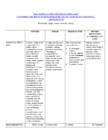
punishments) o Disclosure of material (alibis, witnesses) o Speeches o Prosecutor brings charges to court Criminal court - a court that has jurisdiction to try and punish offenders against criminal law - guilty beyond reasonable doubt - to punish the wrongdoer and avoid wrongful conviction - fair hearing - only admissible evidence - State vs defendant - Sabina – need of giving information - three types of criminal offences: o summary less serious offences e.g. minor motoring offences in the magistrate courts without a jury three lay magistrate or a stipendiary magistrate the magistrate reaches a verdict can be appealed
aggrieved party see pool, kes kahju kannatas injured party see pool, kes kahju kannatas perpetrator toimepanija (neg meaning) the burden of proof tõestamise kohustus the accused süüdistatav to commit a crime/offence kuritegu toime panama to bring the charges süüdistust esitama sole/exclusive right to do sth ainuõigus midagi teha charge laadima; süüdistama to drop the charges süüdistusest loobuma defendant kostja fair hearing/trial õiglane kohtupidamine impose the rules on sb unpleasant (taxes) kellelegi reegleid peale panama. To start criminal proceedings kriminaalasja avama Private prosecution erasüüdistus Domestic violence - koduvägivald Battery peksmine (pidev nt koduvägivallas) vägivalla 1 liik Shoplifting vargus poest Litigation!!!! kohtuprotsess Restitution taastamine Restitution of administrative court
Tom, the captain of the team, was injured in the game. It is up to you, Jane, to finish. She was, however, too tired to make the trip. Two hundred dollars, I think, is sufficient. 5. Use commas to separate three or more words, phrases, or clauses written in a series. The Constitution establishes the legislative, executive, and judicial branches of government. The candidate promised to lower taxes, protect the environment, reduce crime, and end unemployment. The prosecutor argued that the defendant, who was at the scene of the crime, who had a strong revenge motive, and who had access to the murder weapon, was guilty of homicide. 6. Use commas to separate two or more coordinate adjectives that describe the same noun. Be sure never to add an extra comma between the final adjective and the noun itself or to use commas with non-coordinate adjectives. Coordinate adjectives are adjectives with equal ("co"-ordinate) status in describing the noun; neither adjective is subordinate to the other
possessors. On August 30th, 1996, the hangars were taken under protection by the order of the Ministry of Culture. Recent History On June 5th, 2000, President Lennart Meri tried to visit the premises, but was obstructed from entering the territory by a non-Estonian speaking security guard. On August 25th, 2000, the Tallinn City Court decided in favour of the state. However, the decision was appealed by the defendant citing a violation of process regulations. In September- October 2001, the repairs of the roof cover of the central dome and the rain system were financed by the Tallinn Cultural Heritage Department. At the same time the court proceedings continued between the state and the illegal possessors. In July 2006, the Estonian authorities finally repossessed the Seaplane Harbour and ended the court saga that had lasted for 10 years. Estonian Maritime Museum and the Seaplane Harbour
as master franchises, and are responsible for opening new restaurants, licensing new third party operators, and performing standards oversight of all restaurant locations in these countries. The largest example of a master franchise is Hungry Jack's, which exclusively owns, operates or sub-licenses over 300 restaurants in Australia. As with other multi-national corporations, Burger King has been involved in several legal disputes and cases, as both plaintiff and defendant, in the years since its founding in 1954. Situations involving a myriad of legal topics have affected all aspects of the company's operations. Depending upon its ownership and executive staff at the time, its responses to these challenges have ranged from a conciliatory dialog with its critics to a more aggressive opposition with questionable tactics and negative consequences. How the company responded to these various issues has drawn praise, scorn, and accusations of political appeasement.
222. penalty punishment which is imposed if sth is not done 223. reason healthy mind that is not mad; sufficient ground of explanation oe of logical defence 224. to reinstate to put back into a former job or position 225. remedy way of repairing harm or damage suffered 226. pecuniary referring to money 227. obligee person who is owed a duty; võlausaldaja 228. aggrieved = injured party who has been damaged or harmed by a defendant's action 229. tender offer to work for a certain price (pakkumus) 230. assignee person who receives sth which has been legally transferred (keegi kellele kohustus on antud) 231. breach failure to carry out the terms of an agreement 232. intent the will or purpose with which one does an act 233. material important or relevant 234. labour law = employment law 235. employment contract tööleping 236. employee töötaja 237
judgments issued by the Court of First Instance pertaining to the European Union Civil Service Tribunal). The procedure for bringing direct action cases before the Court of Justice is much the same as that for references for preliminary rulings, except that, in addition notifying Member States of the case, the Registry also serves the application to the party sued, who can then submit a defense to the Court within one month. The applicant then has one month to submit a reply, and the defendant has an additional month to lodge a rejoinder. The court's procedures are extremely slow and laborious, with preliminary rulings typically taking 18 months, and direct actions two years. In urgent cases, the court is able to issue interim rulings through accelerated procedures. Direct effect and Supremacy Direct effect is a principle of EU law. It applies to those aspects of EU law that are enforceable directly by Union citizens in their own Member State, regardless of whether the
414. perjury valevanne 415. affidavit kirjalik vandetunnistus 416. verdict kohtuotsus 417. assassination atentaat 418. felony roim/mõrv 419. ranger korravalvur 420. impeachment presidendi tagandamine 421. associate justice abikohtunik 422. bench trial mitme kohtunikuga istung 423. misdemeanour väärtegu 424. statutory interpretation seadusega määratud tõlgendamine 425. district attorney ringkonnaprokurör 426. defendant süüdistatav 427. defence attorney kaitseadvokaat 428. persecution tagakiusamine 429. public defender riiklik kaitsja 430. self-defence enesekaitse 431. exculpatory õigeksmõistev 432. genocide genotsiid 433. tort õigusrikkumine 434. plaintiff hageja 435. gavel kohtuniku haamer *U11 436. public prosecutor riiklik süüdistaja 437. a council for the defence kaitseadvokaat 438. a collocation koosesinemine 439
It is used whether or not it is sanctioned by the government, or merely occurs within the "court of public opinion". The first such use reported by the Oxford English Dictionary dates to 1932. Another early instance is George Orwell's Homage to Catalonia (1938). The term is used by Orwell to describe how, in the Spanish Civil War, political persecutions became a regular occurrence. The term is used when a hunt for wrongdoers becomes abused, and a defendant can be convicted merely on an accusation. For example, in the History Channel documentary America: The Story of Us, narrator Liev Schreiberexplains that "the search for runaway slaves becomes a witch hunt. A black man can be convicted with merely an accusation. Unlike white people, they do not have the right to trial by jury. Judges are paid ten dollars to rule them as slaves, five to set them free."
direct knowledge of the matter; Jones has been arrested and charged with the crime and we are attending his trial. The prosecution's case is excellent, and we are privately presuming that Jones is guilty; also, he is rolling his eyes and drooling in a homicidal manner. Here too I say to you (12), "Smith's murderer is insane." In the context I am only using the description "Smith's murderer" to refer to the person we are looking at, the defendant, regardless of what attributes he has. Moreover, what I said is true if and only if the defendant is insane, regardless of his having committed the murder. This is what Donnellan calls the referential use. Donnellan's objection to the Theory of Descriptions is just that the theory overlooks the referential use; Russell writes as if all descriptions were used attributively. But, against Strawson, Donnellan complains that equally he did
physical attractiveness of 74 separate male defendants at the start of their criminal trials. When, much later, the researchers checked court records for the results of these cases, they found that the handsome men had received significantly lighter sentences. In fact, attractive defendants were twice as likely to avoid jail as unat- tractive defendants. l In another study-this one on the damages awarded in a staged negligence trial-a defendant who was better looking than his victim was assessed an average amount of $5,623; but when the victim was the more attractive of the two, the average compensation was $10,051. What's more, both male and fe- male jurors exhibited the attractiveness-based favoritism (Kulka 8{ Kessler, 1978). Other experiments have demonstrated that attractive people are more likely to obtain help when in need (Benson, Karabenic, 8{ Lerner, 1976) and are more persua-
Germans, a scholarly work published in New York in 1913. The Hindus were prosecuted for trying to purchase the uprising's arms in the United States and to ship them from the West Coast. At the mass trials in Chicago and San Francisco, Friedman gave evidence that in effect convicted the conspirators out of their own mouths. The San Francisco proceeding witnessed one of the most dramatic scenes ever to occur in an American courtroom when one defendant rose, fired two shots from a revolver to assassinate a compatriot who was testifying for the government, and was himself killed by a marshal shooting over the heads of the crowd. In an anticlimax, a jury later found most of the defendants guilty. A few months after these Hindu solutions, the British submitted five short messages to Riverbank for tests. They had been enciphered by a cipher device invented by J. St. Vincent Pletts of M.I. l(b), the British War Office cryptanalytic bureau
 annaabi.ee