Leidsid 33 sarnast õppematerjali, mis on seotud failiga "Climate change". Need materjalid aitavad sul teemat sügavamalt mõista.
change, astrid, linder, effect, include, vapor, carbon, florida, hawaiiBrita Lodi Tallinn University of Technology Management of Environment 2015 MEAT INDUSTRY ENVIRONMENTAL PROBLEMS ● GREENHOUSEGASES ● WATER (USAGE, POLLUTION) ● LAND ● WASTE ● OCEANS ● RAINFORESTS ● WILDLIFE ● HUMANITY GREENHOUSE GASES 18 PER CENT OF GREENHOUSE GAS EMISSIONS ARE CAUSED BY ANIMAL AGRICULTURE CARBONDIOXIDE METHANE NITROUS OXIDE LIVESTOCK AND THEIR BYPRODUCTS ACCOUNT FOR AT LEAST 32,000 MILLION TONS OF CARBON DIOXIDE (CO2) PER YEAR, OR 51% OF ALL WORLDWIDE GREENHOUSE GAS EMISSIONS. METHANE (and nitrous oxide) „THE MAIN SOURCES OF METHANE ARE THE ENTERIC FERMENTATION OF RUMINANTS AND RELEASES FROM STORED MANURE“ WASTE EVERY M I N U T E, 3.5 MILLION KILOGRAMS OF MANURE ARE PRODUCED BY ANIMALS RAISED FOR FOOD IN THE US. WATER 20-33% OF ALL FRESH WATER CONSUMPTION IS USED IN ANIMAL AGRICULTURE. HUMANITY WE ARE CURRENTLY GROWING ENOUGH
place. Some of these machines use electricity, while others, like automobiles, use the energy stored in substances such as gasoline. Renewable energy is energy generated from natural resources such as sunlight, wind, rain, tides, and geothermal heat, which are renewable. Renewable energy uses natural resources that can be replaced or "renewed" without harming the environment and does not contribute to the greenhouse effect and global warming. Non-renewable energy Non-renewable energy comes from sources that can't be replenished in a short period of time. We get most of our energy from nonrenewable energy sources, which include fossil fuels such as oil, natural gas, coal and from nuclear energy. Unfortunately, burning fossil fuels produces greenhouse gases like carbon dioxide and methane which may cause global warming. Wind energy is the world's fastest growing energy technology.
exhausting. Many parents have lost their jobs because of the virus. And still there are people who won’t listen to the government rules and spread the virus further. Secondly, global warming is increasing at an alarming rate with the progress in technology. In recent years, industrialization and extensive use of automobiles have been observed, and these developments have significantly raised the levels of greenhouse gases in the atmosphere. Moreover, these gases like carbon dioxide and methane trap the sunlight and elevate the temperature of the earth. This change in temperature is not only responsible for global warming but also other associated problems of climate change and air pollution. In conclusion, to ensure positive contributions and to minimize risks to the planet, relying on govenment alone will not lead to the desired results. Each person's effort can effectively help protect the environment.
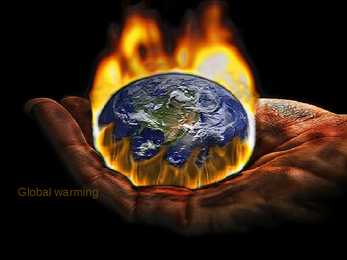
Global Warming One of the biggest issues our planet and its inhabitants are facing nowadays is global warming. Global warming, also often referred to as the greenhouse effect, has not always been a problem. However, over the last centuries, since the Industrial Revolution things have changed. Polar regions are melting, species are dying, climate zones are shifting, migration patterns for animals such as polar bears and birds are being disrupted our world as we know it is changing. Some scientists believe that the climate will reach a tipping point, a point at which even a tiny additional increase would throw the system into violent change.
Humans are changeing the planet with their ordinary life. The principle cause of climate change is the increase in carbon dioxide concentrations in the atmosphere. The main cause of that is the burning of fossile fuels. This is leading to the global warming. People have discovered a way to reduce the amount of CO2 in the atmosphere. It is possible to seperate the CO2 from the other gases by adding liquid which is very good at absorbing CO2. Then it can be pumped to underground. Scientist came up with this idea because methane gas has been down there for thousands of years and it has not come up
But people produce much refuse and ways of recycling are getting old. Water pollution is also a problem in Estonia. We have factories that let their waste run into rivers. One of the biggest problems in Estonia is air pollution. Our air is polluted by exhaust fumes, because today we have a lot of cars, buses and other machines. In 2009 we had 407 cars to thousand inhabitants, which is lower than European Union average, but this number is still high. Because cars produce gases that contain carbon dioxide. This carbon dioxide in the air causes global warming, which is the result of the greenhouse effect. Tallinn wants to fight against it by offering public transportation for free, to Tallinn citizen. So that people would use more public transportation than their own car. Furthermore, it will change our climate. In addition our air is polluted by hydrogen sulfide from plants and factors (Especially in Kohtla- Järve and Maardu). Other big environment problem is garbage
In the end, they were shocked to see how much money Jules' energy using habits cost compared to Les' habits. USES OF ENERGY The United States is a highly developed and industrialized society. We use a lot of energy - in our homes, in businesses, inindustry, and for traveling between all these different places. The industrial sector uses almost one-third of the total energy. The residential and commercial sectors combined use 39 percent of all energy. These two sectors include all 4 types of buildings, such as houses, offices, stores, restaurants, and places of worship. Energy used for transportation accounts for more than a quarter of all energy. Picture 2.1. Share of energy consumed by major selectors of the economy (2007) 2.1 Uses of energy in homes The ability to maintain desired temperatures is one of the most important accomplishments of modern technology
1980.Each of the last three decades has been successively warmer at the Earth's surface than any preceding decade since 1850. More than 90% certain that most of global warming was being caused by increasing concentrations of greenhouse gases produced by human activities.In 2010 that finding was recognized by the national science academies of all major industrialized nations. Affirming these findings in 2013, the IPCC stated that the largest driver of global warming is carbon dioxide (CO2) emissions from fossil fuel combustion, cement production, and land use changes such as deforestation. Its 2013 report states:Human influence has been detected in warming of the atmosphere and the ocean, in changes in the global water cycle, in reductions in snow and ice, in global mean sea level rise, and in changes in some climate extremes. Initial causes of temperature changes Greenhouse gases
PROJECT Things You Can Do To Protect the Environment changing. We need to help it change for the better and we're asking for your help to do that! There are a lot of things that affect our planet in a bad way but the good news is that everyone can help
interesting applications for this gas which appeal to people who are interested in sustainable energy and the health of the environment. The basis for biogas is organic material such as food scraps and feces which are held in an anaerobic area, which can range from a storage tank which is not ventilated to a device which is specifically designed to produce gases. The conditions attract anaerobic bacteria, which start to break down the organic material, producing methane and carbon dioxide as a by-product. Another type of biogas which includes hydrogen, nitrogen, and carbon monoxide can be obtained through the gasification of biomass such as wood or rice husks, a technique which is used to manufacture gas industrially. The gases produced through anaerobic fermentation or gasification are combustible in addition to having a strong smell which makes them stand out to the human nose. Methane leaks from landfills are an ongoing problem, as is the
water pollution and recycle problem. Also we have, for example, deforestation problem and traffic jams, for instance, in Tallinn in rush-hour. Nevertheless, those problems are not so significant than previous. One of the biggest problems in Estonia is air and water pollution. One example of air pollution is exhaust fumes. Today we have a lot of transport: cars and buses, in the main in our capital. Gases which are produced by cars contain carbon dioxide. This carbon dioxide in the air causes global warming, which is the result of the green house effect. Furthermore, it will change our climate. In addition our air is polluted by hydrogen sulfide (H2S) from plants and factors. Substantially, in Kohtla-Järve and Maardu. Our water is also polluted. We can't drink it, because there are a lot of chemical ingredients. In some cities water is chlorine a lot. As I know a lot of waste waters are putting out to see, near in the beach
Acid Rain Acid rain is any precipitation that is unusually acidic. It possesses elevated levels of hydrogen ions(it has low pH level). Acid rain is caused by emissions of carbon dioxide, sulfur dioxide and nitrogen oxides, which react with water molecules. Distilled water(doesn't contain CO 2), has pH level 7. Liquids with pH level less than 7 are acidic, liquids with pH level greater than 7 are alkaline. Unpolluted rain has a pH level over 5.7, so it is slightly acidic. Affected areas Places significantly impacted by acid rain around the globe include most of eastern Europe from Poland northward into Scandinavia, the eastern
The Greenhouse Effect: Scientists are sure about the greenhouse effect. They know that greenhouse gases make the Earth warmer by trapping energy in the atmosphere. Climate Change: Climate is the long-term average of a region's weather events lumped together. For example, it's possible that a winter day in Buffalo, New York, could be sunny and mild, but the average weather the climate tells us that Buffalo's winters will mainly be cold and include snow and rain. Climate change represents a change in these long-term weather patterns. They can become warmer or colder. Annual amounts of rainfall or snowfall can increase or decrease. Global Warming: Global warming refers to an average increase in the Earth's temperature, which in turn causes changes in climate. A warmer Earth may lead to changes in rainfall patterns, a rise in sea level, and a wide range of impacts on plants, wildlife, and humans. When scientists talk about the issue of climate change, their
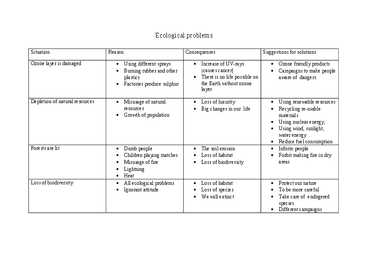
Situation Reason Consequences Suggestions for solutions Areas disappearing under *Trees cut down- soil erosion *Wild animals loose their *Make more limitations for water (small islands) and fertility habitats and drown also people deforestation. *Greenhouse effect. loose their houses. * Change ignorant attitude to Small islands don't pollute the our surroundings. Earth so much than continents. * Entered sunlight can't get out of atmosphere anymore. So air goes warmer and finally may
Answers for the IPCC Summary. 1.Radiative forcing is a measure of the influence that a factor has in altering the balance of incoming and outgoing energy in the Earth-atmosphere system and is an index of the importance of the factor as a potential climate change mechanism. 2.The three main things that alter the energy balance of the climate system are the changes in the atmospheric abundance of greenhouse gases and aerosols, in solar radiation and in land surface properties. 3.The two sources for the increased concentration of CO2 in the atmosphere are production, distribution and consumption of fossil fuels and as a by-product from cement production. 4.The two main sources of methane pollution are agriculture and fossil fuel use. 5
*The mayor advantage of hydroelectricity is eliminating the cost of fuel. You don't have to fear about the increasing cost of fossil fuels like oil and natural gas. *The second advantage is that hydroelectric plants last longer than fuel-fired plants. Some hydro plants have been operational about 100 years. *Operating labor costs are low as well because the plants are automated. *And Because the hydroelectric dams do not burn fossil fuels, they do not directly produce carbon dioxide. *The reservoirs can also provide facilities for water sports, and become tourist attractions themselves. In many countries farming fish in the reservoir is common. Also large dams can control floods. The reservoirs can also improve transport. on the other hand there are some Disadvantages *Hydroelectric projects can be disruptive to surrounding ecosystems both upstream and downstream. For
are also suited to small off-grid applications, sometimes in rural and remote areas, where energy is often crucial in human development.Kenya has the world's highest household solar ownership rate with roughly 30,000 small (20100 watt) solar power systems sold per year. Some renewable energy technologies are criticised for being intermittent or unsightly, yet the market is growing for many forms of renewable energy. Climate change concerns coupled with high oil prices, peak oil and increasing government support are driving increasing renewable energy legislation, incentives and commercialization. New government spending, regulation, and policies should help the industry weather the 2009 economic crisis better than many other sectors. Costs Renewable energy systems encompass a broad, diverse array of technologies, and the current status of these can vary considerably
Päikesepaneelide tootmine on kallis ning selleks on vaja spetsialiseeritud tööjõudu Pikk tasuvusaeg ilma täiendavate toetusteta The benefits of solar electricity Cut your electricity bills: Sunlight is free, so once you've paid for the initial installation, your electricity costs will be reduced. cut you cartbon footprint: Solar electricity is green renewable energy and doesn't release any harmful carbon dioxide or other pollutants. A typical home solar PV system could save over a tonne of carbon dioxide per year – that's more than 30 tonnes over its lifetime. sell electicity back to the grid: If your system is producing more electricity than you need, you can sell the surplus back to the grid through the Feed-in Tariff scheme.
plastics and pharmaceuticals. Petroleum is used in manufacturing a wide variety of materials, and it is estimated that the world consumes about 88 million barrels each day. The use of fossil fuels such as petroleum can have a negative impact on Earth's biosphere, releasing pollutants and greenhouse gases into the air and damaging ecosystems through events such as oil spills. Concern over the depletion of the earth's finite reserves of oil, and the effect this would have on a society dependent on it, is a field known as peak oil. Etymology The word "petroleum" comes from Greek: πέτρα (petra) for rock and Greek: ἔλαιον (elaion) for oil. The term was found (in the spelling "petraoleum") in 10th-century Old English sources. It was used in the treatise De Natura Fossilium, published in 1546 by the German mineralogist Georg Bauer, also known as Georgius Agricola. In the 19th
The aim of the experiment To determine the molar mass of carbon dioxide in three different ways; 1) using the Ideal Gas Law equation, 2) using the molar volume of a gas at NTP, 3) using the relative density to air Equipment CO2 tank, a flask with a rubber stopper (300 cm 3), technical balance, measuring cylinder (250 cm3), thermometer, barometer. Method 1. Determine the mass (m1= mflask+stopper+air) of the dry flask with a rubber stopper by weighing on a technical balance. Draw a line on the flask at the bottom edge of the
million years ago at rates 1000 to 10,000 times faster than normal. • The 2012 update of the IUCN Red List of Threatened Species shows that of the 63,837 species examined worldwide, 19,817 are threatened with extinction - nearly a third of the total. • If present trends continue, scientists warn that within a few decades, at least half of all plant and animal species on Earth will be extinct, as a result of climate change, habitat loss, pollution, acidifying oceans, invasive species, over- exploitation of natural resources, overfishing, poaching and human overpopulation. Lower Life Expectancy in the Fastest Growing Countries • According to a Harvard study, "Over the next forty years, nearly all (97%) of the 2.3 billion projected increase will be in the less developed regions, with nearly half (49%) in Africa." Already strained with relentless population explosion, many developing
the tundra a miserable place to be in the summer. Mosquitoes can keep themselves from freezing by replacing the water in their bodies with a chemical called glycerol. It works like an antifreeze and allows them to survive under the snow during the winter. The marshy tundra is a great place for migratory birds like the harlequin duck, sandpipers and plovers. The tundra is one of Earth's three major carbon dioxide sinks. A carbon dioxide sink is a biomass that takes in more carbon dioxide than it releases. Carbon dioxide is a greenhouse gas that contributes to global warming. During the short summer tundra's plants take in carbon dioxide, sunlight and water in the process of photosynthesis. Plants normally give off carbon dioxide after they die and decompose. But because of the short, cool summer and freezing winter temperatures, plants can't decompose. Remains of plants thousands of years old have been found in the tundra permafrost
Acid rains Stefani Nimtsuk What is acid rain? Rain or any other form of precipitation that is unusually acidic It can have harmful effects on plants, aquatic animals, and infrastructure through the process of wet deposition Acid rain is caused by emissions of compounds of ammonium, carbon, nitrogen, and sulfur which react with the water molecules in the atmosphere to produce acids History Since the Industrial Revolution, emissions of sulfur dioxide and nitrogen oxides to the atmosphere have increased In 1852, Robert Angus Smith was the first to show the relationship between acid rain and atmospheric pollution in Manchester, England Though acidic rain was discovered in 1852, it was not until the late 1960s that scientists began widely observing and studying the phenomenon
Margit Tepner k0848752 Sustainability aspects of biofuels 1. Introduction The literature review will discuss the sustainability aspects of biofuels. Food production will be the main concern as it is the most debated issue, but other aspects, such as land use change and water consumption will be also considered as they are essential aspects in the biofuels sustainability criteria. The review will discuss the viability of biofuels based on the current technologies. Second-generation biofuels are not yet commercially viable and therefore will not be discussed; although they could significantly improve the sustainability of biofuels when they break through to the industrial scale. 2. The scale of biofuels production 2.1
items Make more space for grazing lands Solution To enforce their anti-logging laws Provide alternatives to poor farmers Use less firewood and paper products Recycle old furniture and wood Educate yourself Ari Pollution Second largest environmental problem Industrial activities are the major causes Urbanisation Vehicular gas emissions dropped by 94% Burning trees Solution of air pollution Use more public transport To limit emissions of carbon dioxie Recycle different products Need to stop or low burning trees Clear the rainforests Use of wind power Use solar energy Waste disposal Brazil produces an enormous amounts of solid waste More than 161 000 tons of waste per day Recycles only 13% of waste Output of harmful gases Takes a lot of place from free lands All waste can get in water Solutions Not throw waste on streets Recycle Compost waste Conclusion
Global warming Global Warming effects on the natural balance of environment Climate significant change day by day What causes it? Greenhouse gases Fuel burning Ozone layer Deforestation traffic clogging up the city streets rapid growth of unplanned industries the use of CFCs in packaging and manufacturing products Detergents Overpopulation Killing animals like birds, big cats, lions, tigers What it causes? Temperature raising Melting polar ice sheets Currents change its circulation e.g. The Gulf Stream El nino Pollution sea-water to swell up. Natural system Animals deaths Sea level rise reduce mankind's ability to grow foods, destroy wildlife. Agriculture, forestry and fishery damaged Is it dangerous is very dangerous for our existence and survival. sun's scorching heat comes to earth in a direct way the earth's surface becomes seriously heated. What should we do to prevent the dangerous effects of GW? We should not cut off trees
("Nuclear technologies timeline," ) · 1955- First nuclear power plant that provides electricity to the whole town. (Borax-III) ("Nuclear technologies timeline," ) · 1986- Chernobyl- nuclear disaster in Ukraine ("Nuclear technologies timeline," ) · 1986-...- The use of nuclear energy is growing all over the world Nuclear Energy Pros and Cons Pros: · Less carbon dioxide and other greenhouse gases are released into the atmosphere when nuclear energy is used, so it has lower impact on the environment (Buzz, 2009) · Relatively low operating costs (Buzz, 2009) · Developed technology is ready for market and doesn't take much time to start producing (Buzz, 2009) · Can produce large amounts of power and is able to "feed" industrial and city needs. It can create power for heavy manufacturing (Buzz, 2009)
Land is used for a nonforest use. Click to edit Master text styles Second level Third level Fourth level Fifth level Causes The main reason is agriculture. 48 % is subsistence farming. 32 % is commercial agriculture. 14 % is logging. 5 % is fuel wood removals. 1 % other causes Atmosphere the climate and geography. global warming. greenhouse effect. Hydralogical The water cycle much drier climate. landslide, erosion and flooding ensue. reforestation In many parts of the world Especially Asia 1 million hectars in 5 years The arbor day foundation Economics Shortterm economic gains. Loss in longterm. Illigal woodcutting. History Easter island 11001500 AD Wester Europe Massive use of charcoal. Steam engine and steamboats. References http://environment.nationalgeographic.com/environment/globalwarming/defores http://en.wikipedia
25% of CO2 produced by humans. The ocean acidity has increased by the last 250 years but by 2100, it may shoot up by 150%. The main impact is on shellfish and plankton. Acid Rain: Acid rain occurs due to the presence of certain pollutants in the atmosphere. Acid rain can be caused due to burning of fossil fuels or erupting volcanoes or rotting vegetation which release sulphur dioxide and nitrogen oxides into the atmosphere. Acid rain is a known environmental problem that can have serious effect on human health, wildlife and aquatic species. FIND OUT 5 WAYS HOW TO REDUCE OCEAN ACIDIFICATION AND 5 WAYS THAT WOULD HELP TO PREVENT ACID RAIN POLLUTION. 8. Water Pollution: Clean drinking water is becoming a rare commodity. Water is becoming an economic and political issue as the human population fights for this resource. One of the options suggested is using the process of desalinization. Industrial development is filling our rivers, seas and oceans with toxic
themselves to one or two slices. Eating fat The majority of the students eat margarine. Four students prefer butter, and another four eat neither. Conclusion It is noticeable that the eating habits of schoolleavers of Freedonian Secondary School are not very healthy. Moreover, there are no students who have both breakfast and school lunch, eat more than four slices of brown bread per day, and avoid fat. The surface of the Earth seems to be warming as a result of the greenhouse effect, created by a build-up of harmful gases in the atmosphere. Greenhouse gases can occur naturally; however, human activity add to the levels of these gases, causing more problems. Scientists estimate that the average air temperature could climb a few degrees Celsius in twenty years. Global warming will affect humans, animals, and even plants. Obviously, our `precious home' is undergoing dramatic alterations in weather patterns, leading to significant changes in the
6. Sources What is carbonated beverages? Click to edit Master text styles Second level Third level Fourth level Fifth level Composition of carbonated drinks Sweetners Carbonated water Acids Caffeine Sweetener Effect · cane sugar · help combat the sour flavor · high fructose corn syrup · lead to a number of health · form of sugar substitute concerns Carbonated water Effects · Combination of water and · produces the effervescence carbon dioxide gas produces the effervescence Acids Effect · citric acid · preserving agent · acting as a buffering agent to
The soil microflora largely depends on the type of soil, temperature, moisture, plant growth, nutrients, pH, and many other factors which may vary between locations but also within a single plot and over very small distances (OECD, 2007). Nevertheless of the quantity of microflora, biomass of all microorganisms living in soil play an important role in the functioning of entire soil ecosystems because their enormous biochemical activity (Barabasz et al. 2002). Soil microflora cycles carbon, nitrogen, phosphorus, and sulfur, plays a role in soil structure formation, decomposition of organic matter, toxin removal, promoting plant growth, and in changes in vegetation (Canbolat at al. 2005 and Martin et al. 2012). Therefore, soil microflora plays a major role in preservation and the balance of life. Because of active role of soil micro- population, the diminution in microbial activity is always alarming (Barabasz et al. 2002). Factors influencing soil microflora
Green Technologies - innovation and climate change sustainagility Scientists can examine ice, but they cannot tell out anything about our future. Even if scientist has lived thousand years he won't be able to do it. The graph in video shows that the amount on carbon dioxide rises and then rises the temperature, but it is not so, it is exactly the opposite. One way to save energy is to build better buildings, because big headquarters are built to last only for 30-35 years. Building them up and pulling them down needs a lot of energy and about 30% of building energy is spent on it. It is thought that if in Tokyo 50% of all roofs are green it will save 1 million dollars a day of Tokyo businesses in cooling costs
 annaabi.ee