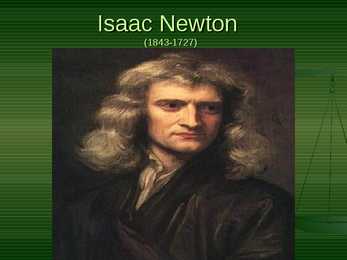
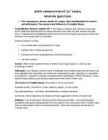
Sir Isaac Newton 4. jaanuar 1643 31. märts 1727 Erialad Füüsik Astronoom Alkeemik Matemaatik Filosoof (tolle aja kohta) Teosed Method of Fluxions (1671, trükiti 1736) De Motu Corporum (1684) Philosophiae Naturalis Principia Mathematica (1687) Opticks (1704) Reports as Master of the Mint (1701-1725) Arithmetica Universalis (1707) The Chronology of Ancient Kingdoms, Amended 1728. Varajane elu Kahe aastaselt vanema hoole all Esimene kool "Grantham" Kinnisvara ei tundnud huvi 1661 5 juuni Cambridge Täname Vaatamast Karl-Johannes Tikenberg & Manfred-Markus Kalma
· Indo Iranian Languages- Hindu and Iranian · Italic Languages-Latin Romance Languages( Spanish, Italian, French) · Celtic Languages- Celtic (Rarely spoken now) · Germanic Languages- English and German · Armenian Languages- Armenian · Tocharian Languages- Extinct( Form of Greek) · Balto Slavic Languages- Slavic, Latvian, Lithuanian In Depth Look into Every Country with a Indo European Language Migration of Indo European Language Chronology · The origin of Indo European languages go back about 8500 years Hetiidid Väidetavalt esimene indo-euroopa rahvas ,kes jõudis riikluse ja tsivilisatsiooni tasemele Kuningal aitas valitseda autoriteetne sõjaline ülikkond. Sõjaline ülikkond jagunes kaheks : tulia(kuninga lähikondlased) ja pankus(muud tähtsamad tegelased) Mugavdasid enda keelde babüloonia kiilkirja Tähtsaim tööstusharu oli põllumajandus
Chronology of Christopher Columbus · Buried in Seville (officially) · Written sources in Spain, Italy, France and United States · Born in 1451 · Birthplace: Genoa · Parents: Domenico Colombo ( worked as a master wool weaver, he also kept a tavern, dabbled in real estate and was a partisan for the mighty Fregoso family, who gave Domenico a gatekeeper's job.) and Susanna Fontanarossa · Christopher helped his father from work, he learned to trade · Learned to write in young age · In 1479- a lawsuit over a sugar, where Columbus was a Genoese agent in transaction with Portugal · In 1470- Columbus starts as a seafarer (merchant). Also he predicted storms, winds. He developed in sea area (reading charts, calculating complex time-speed-distance equation). · He was interested in Galaxy ( Zodiac signs, planets etc) · In 1476, Columbus almost had drown when the pirate ship attacked the...
suhe on antud keskkondade paari jaoks konstantne suurus ega sõltu langemisnurgast. Teosed Tema peamised tööd ilmusid tema teostes "Loodusfilosoofia matemaatilised alused" (1687) ja "Optika" (1704). Method of Fluxions (1671, trükiti 1736) De Motu Corporum (1684) Philosophiae Naturalis Principia Mathematica (1687) Opticks (1704) Reports as Master of the Mint (17011725) Arithmetica Universalis (1707) The Chronology of Ancient Kingdoms, Amended 1728. Lõbus lugu kuulsast teadlasest Suur matemaatik ja ülemaailmse gravitatsiooniseaduse avastaja Isaac Newton oli tavatult hajameelne. Kodunt lahkudes riputas ta harilikult uksele papptahvli kirjaga "Ei ole kodus". Kord, minnes ühe oma sõbra juurde, meenus Newtonile tee peal, et ta oli unustanud võtta kaasa sealt laenatud raamatu, mida ta oli tahtnud omanikule tagasi viia. Ta pöördus tagasi koju, tõusis trepist
Valio Eesti takes responsibility for the environment in front of procuring technology to reduce the environmental impact of using a sustainable raw materials and energy, and encourages energyefficient and recyclable packaging use. Valio's environmental objectives for the coming years will focus on the reduction of wastewater, water, energy use, and reducing household waste. VALIO`S CHRONOLOGY 1905 In Finland, Valio Oy was founded 1968 Dairy Product Factory was founded in Võru 1992 In Laeva Tapila Dairies Ltd was founded, which is the forerunner of Valio Eesti 1993 Valio entered the Lithuanian market 1996 Estonia's bestloved brand in the dairy industry Alma was born 1999 First LGG ® lactic acid enriched dairy product Kefir Valio Gefilus reached Eestonian consumers
magistrikraadi saamist maastikuarhitektuuris, töötas mees erinevates maastikuarhitektuuri büroodes, seal hulgas oli ka üks büroo EDAW loojatest. Eckbo kasutas aedade ja teiste projektide loomisel teadust ja kunsti, samas aga pani rõhku terviklikkusele, otstarbekusele, elamiskõlblikkusele ja mugavusele. -8- Kasutatud kirjandus A Biography of Garrett Eckbo; http://www.gardenvisit.com/biography/garrett_eckbo Biographical and Professional Chronology of Garrett Eckbo; http://publishing.cdlib.org/ucpressebooks/view?docId=ft6g50073x&chunk.id=d0e5413&toc.d epth=1&brand=eschol Eckbo, Garrett 1950. ,,Landscape for Living" Haxton, Ralph 2009. ,,Garrett Eckbo's Vision Part I" ; http://gregoryainparkplannedhomes.blogspot.com/2009/06/garrett-eckbo.html ,,History of Landscape Design"; http://fthats.wordpress.com/2009/04/20/history-of-landscape- design-week-6-parkways-modern-design-and-brownfields/ Hobhouse, Penelope 2006. ,,Aianduse ajalugu"
Record Breaking Performance Swimwear A Chronology of Racing Swimwear 1900’s 1930’s 1950’s 1970’s 2000’s 2008 Elasticated Composite Wool Cotton Nylon Full Body Fibers Material Suits Suits Suits suits Suits Suits Arena: always at the edge of technological power
mälu ei töötanud enam korralikult. Pärast haigusest paranemist, tegutses Newton veel mõnda aega Cambridge´is, kuid 1703.a. ütles ta end ülikoolist lõplikult lahti. Newtoni teosed · Method of Fluxions (1671, trükiti 1736) · De Motu Corporum (1684) · Philosophiae Naturalis Principia Mathematica (187) · Opticks (1704) · Reports as Master of the Mint (1701-1725) · Arithmetica Universalis (1707) · The Chronology of Ancient Kingdoms, Amended (1728) Newtoni viimased eluaastad Kuigi sündides ja lapseeas oli Newton üsna nõrga tervisega, elas ta kõrge vanuseni ja kuni 80. eluaastani oli ta tervis erakordselt hea. Elu lõpuaastail tuli tal aga siiski võidelda ka haigustega. 1725.a. jaanuaris haigestus Newton kopsupõletikku. Selle tagajärjel asus ta elama Londoni lähedusse, Kensingtoni, kus õhk oli parem. Ja tõepoolest - Newtoni tervis paranes kiiresti ja märgatavalt
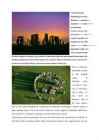
Stonehenge Stonehenge is a prehistoric monument located in the English county of Wiltshire, about 3.2 kilometres (2.0 mi) west of Amesbury and 13 kilometres (8.1 mi) north of Salisbury. One of the most famous prehistoric sites in the world, Stonehenge is composed of earthworks surrounding a circular setting of large standing stones. Archaeologists had believed that the iconic stone monument was erected around 2500 BC, as described in the chronology below. However one recent theory has suggested that the first stones were not erected until 2400-2200 BC,[1] whilst another suggests that bluestones may have been erected at the site as early as 3000 BC (see phase 1 below). The surrounding circular earth bank and ditch, which constitute the earliest phase of the monument, have been dated to about 3100 BC. The site and its surroundings were added to the UNESCO's list of World Heritage Sites in 1986 in a co-listing with Avebury
Newtoni teosed: · Method of Fluxions (1671, trükiti 1736) · De Motu Corporum (1684) · Philosophiae Naturalis Principia Mathematica (1687) · Opticks (1704) · Reports as Master of the Mint (1701-1725) · Arithmetica Universalis (1707) · The Chronology of Ancient Kingdoms, Amended 1728. Kasutatud kirjandus http://www.hot.ee/hothotrauno/isaac.html http://et.wikipedia.org/wiki/Isaac_Newton http://www.ttkool.ut.ee/nupuvere/f/varia45.html www.hot.ee/iffcool/Newton.doc
One of the most famous sites in the world, Stonehenge is composed of earthworks surrounding a circular setting of large standing stones. It is at the centre of the most dense complex of Neolithic and Bronze Age monuments in England, including several hundred burial mound. Archaeologists have believed that the iconic stone monument was erected around 2500 BC, as described in the chronology below. One recent theory however, has suggested that the first stones were not erected until 24002200 BC, whilst another suggests that bluestones may have been erected at the site as early as 3000 BC (see phase 1 below). The surrounding circular earth bank and ditch, which constitute the earliest phase of the monument, have been dated to about 3100 BC. The site and its surroundings were added to the
perspective EU member states? 4. Which are the areas of cooperation and evaluation in the ENP that overlap with the EU accession criteria? Which are the fields that the ENP does not cover and only Copenhagen Criteria assesses? 5. Which are the most updated EU documents to describe ENP and EaP policy goals and tools? https://moodle.ut.ee/file.php/1219/2dets_Traderun_ENP_2011.pdf http://www.epl.ee/news/eesti/article.php?id=51163525 http://eeas.europa.eu/delegations/russia/eu_russia/chronology/index_en.htm http://en.wikipedia.org/wiki/Russia%E2%80%93European_Union_relations#Trade http://trade.ec.europa.eu/doclib/docs/2006/september/tradoc_113440.pdf
Ise Rosi kommenteeris oma filmi kui ,,mitte dokumentaalne filmi tegevuseviis, vaid dokumenteeritud viis". (LarkeWalsh 2019) Giuliano ilmub filmis elava inimesena väga lühidalt, selline rezissööri kujutlemisviis tekitab mulje, et Giuliano iga lühike eluaspekt oli kaetud saladusega. Laura Wittman oma essees ,,The Visible, Unexposed: Francesco Rosi's Salvatore Giuliano" kirjeldas Rosi avangardse redigeerimise stiili nii: "jumbled chronology meant not only to provoke discomfort but also to induce skepticism towards any linear interpretation" (Regna 2011: 213). Teiste sõnadega öeldes, Laura arvates Rosi tegi sündmuste kronoloogiat segaseks selleks, et lisada skeptitsismi lineaarse tõlgendamise suhtes. Rosi pakub publikule alternatiivset variandi Giuliano loost, mida on juba inimestele nii tuttavalt teada. Ta kujutab Giuliano lugu minimaalselt moraliseerides ja politiseerides seda.
191). The travel genre addresses, of course, the readers of the author's home: Ireland and Britain in Murphy's case, the USA and Britain in Hoffman's. The writers' narratives follow closely the linear chronology of any voyage that has a beginning, a development Á with an inevitable number of adventures and climactic points Á and an (open) ending. Yet, the general perspective is somehow reinforced by the narrators' re- crossing of borders, one year after their first visit.
· Fragmentation · Multiple narrative points of view (parallax) Thematic characteristics(8) · Breakdown of social norms and cultural sureties(veendumus) · Dislocation(nihestus) of meaning and sense from its normal context · Valorization of the despairing individual in the face of an unmanageable future · Disillusionment (silmade avamine, illusioone purustama) · Rejection of history and the substitution of a mythical past, borrowed without chronology · Product of the metropolis, of cities and urbanscapes · Stream of consciousness · Overwhelming technological changes of the 20th Century Stream of consciousness: The flow of thought in the waking mind. The continuous flow of character's mental process. In traditional books, descriptions are built on artificial, life is not like this, an ordinary mind does not think that now I'm going to think thought a or thought b. Ordinary
Brought to novels vivid narrative technique and wide knowledge of the ways of the world. Paints mid-Georgian society. Laurence Sterne: A sentimental Journey – fictionalised account od Sterne’s travels in Italy and France. Tristram Shandy – a gloriously chaotic yet great comic work with a mastery of the realistic presentation of fleeting thoughts, feelings and gestures, flexible handling of time which prefigures the break with the tyranny of chronology which came in the 20th C. Tobias Smollett: wrote seemingly traditional novels. Concentrated on picaresque novels, low-born character would go through endless series of adventures. The Adventures of Ferdinand Count Fanthom, The Adventures of Roderick Random. Goldsmith: In one generation novel from being a narrative of adventure to exploring man’s inner life. 26. Augustan patriotism and a drive to forge an authentic English national culture
Stiililiselt on Blues palju rikkam ja värvikam, kui meie praegu tunnis võtame. Kuna vastav tund on Rütmimuusika ajalugu ning pigem Jazzmuusika ajalugu siis peab tegema valikuid. Blues on olnud vajalik et sai kujuneda jazz ja pop ning kõik muu. Kuid on ise infoküllasena vägemalt sama mahukas, kui jazzmuusika ajalugu ise. ,,I spent most of my teens and early twenties studying the blues the geographyof it and the chronology of it, as well as how to play it, " Eric Clapton 10 MUUSIKA KUULAMINE: 1.Mamie Smith Crazy Blues (http://www.youtube.com/watch?v=OiJrBgbwsJw) 2.Bessie Smith St Louis Blues (http://www.youtube.com/watch?v=jNWs0LsimFs) 3.Louis Armstrong and his All-stars Back o'town Blues (Take It Satch) Vinüül 4.Louis Armstrong St. James Infirmary (Gold Standard Series, 1957) Vinüül 5.Louis Armstrong West End Blues (New Orleans to New York, 1957) Vinüül 6
and perceptions, and violation of grammar/logic – more grammatically correct than SoC), reference to the character’s psychic reality, instead of external surroundings. The book is a revolution in literary style and composition – title, breaks chronology, selects the most characteristic moments and portrays those – only the instrumental in the development of Stephen’s consciousness. Ulysses – hardly has any plot; Dublin, June 16, 1914; majority of the events take place in the characters minds. T.S
XXVII. THE SPECIFIC FEATURES AND TRENDS OF ESTONIAN NATIONAL SYMPHONISM. XXVIII. THE PERFORMANCES OF SYMPHONIC MUSIC: THE ORCHESTRAS OF TARTU AND TALLINN. XXIX. ESTONIAN SYMPHONISTS ABOUT CREATIVITY. CONCLUSION APPENDIXES APPENDIX A. SELECTED PUBLICATIONS ON ESTONIAN HISTORY AND CULTURE IN GENERAL. APPENDIX B. BIBLIOGRAPHY OF ESTONIAN SYMPHONIC MUSIC APPENDIX C. RECORDINGS OF SYMPHONIC MUSIC. APPENDIX D. SCORES OF SYMPHONIC MUSIC PUBLISHED. APPENDIX E. CHRONOLOGY OF ESTONIAN SYMPHONIES. APPENDIX F. SOUND TAPES OF ESTONIAN SYMPHONIES IN THE ESTONIAN MUSIC INFORMATION CENTRE AT THE COMPOSERS UNION. APPENDIX G. SOME PROGRAMMES WITH ESTONIAN MUSIC AND CONDUCTORS. APPENDIX H. INDEX OF PERSONAL NAMES. APPENDIX I. SELECTION OF PHOTOGRAPHS. APPENDIX J. MUSICAL EXAMPLES. PIANO ARRANGEMENTS AND SCORE SAMPLES. APPENDIX K. USEFUL ADDRESSES. ABOUT THE AUTHOR ESTONIA AND THE ESTONIANS
nological possibilities are marvelous, we must be careful not to get out of balance, and yield too much of our humanity to the chemical and mechanical possibilities that will come our way in the future. T h e fact that Anakin has no natural father leads him to be alternately seeking and rebelling against father figures, and helps explain how he is able to become the monstrous, more-than-half-machine that is D a r t h Vader. T h e complex chronology of the films places the watcher of the prequels in a curious position. On the one hand, young Anakin seems to be doing the archetypal job of the hero, as the primary active character and someone whose fate we should care about. But it's very difficult to identify fully with a character who we know will turn out to be a science fiction equivalent of Hitler or Genghis Khan, even if we know he will be ultimately redeemed. T h o u g h the prequel films performed extremely
letter. Remarkable and important as this is, however, it is overshadowed by what follows— the first exposition on cryptanalysis in history. It appeared in full maturity in Qalqashandi's paraphrase of Ibn ad- Duraihim, but its beginnings are probably to be found in the intense and minute scrutiny of the Koran by whole schools of grammarians in Basra, Kufa, and Baghdad to elucidate its meanings. Among other studies, they counted the frequency of words to attempt a chronology for the chapters of the Koran, certain words being considered as having been used only in the later chapters. Lexicography advanced this. In making a dictionary, considerations of letter-frequency and of which letters go or do not go together virtually thrust themselves upon the lexicographer. For example, the Arabs recognized early that za' was the rarest letter in Arabic and, contrariwise, that the omnipresence of the definite article "al-
 annaabi.ee