 50 punkti
Autor soovib selle materjali allalaadimise eest saada 50 punkti.
50 punkti
Autor soovib selle materjali allalaadimise eest saada 50 punkti.
 ~ 8 lehte
Lehekülgede arv dokumendis
~ 8 lehte
Lehekülgede arv dokumendis
 2015-05-04
Kuupäev, millal dokument üles laeti
2015-05-04
Kuupäev, millal dokument üles laeti
 1 laadimist
Kokku alla laetud
1 laadimist
Kokku alla laetud
 0 arvamust
Teiste kasutajate poolt lisatud kommentaarid
0 arvamust
Teiste kasutajate poolt lisatud kommentaarid
 Renate Eensalu
Õppematerjali autor
Renate Eensalu
Õppematerjali autor
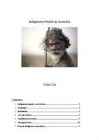
Tartu 2010 contents Introduction – page 3 History – page 3-4 Religion – page 4-7 Society - page 7-9 The British – page 9-10 Conclusion – page 10-11 Resources – page 11 Appendix – page 11-14 2 Introduction I selected this theme because it was the most interesting one for me. Aborigines have interested me for a long time now so doing this essay is really fun for me. Australian Aboriginal culture is one of the world's longest surviving cultures. Australian Aborigines, also known as Indigenous Australians , are the native people of Australia . Many of them suffered when white people from Britain arrived in Australia, because of disease, the loss of their hunting lands, and unfair laws.
In my essay I will describe the most characteristic features of the Maori people and the aborigines. I will divide the essay in 3 parts the Maori people, the aborigines and their comparison. Maori are the host people of New Zealand. Their name is derived from Ma-Uri which means the children of heaven. The arrival of the Maori people to New Zealand is considered to be somewhat of a mystery. It is known that first Polynesians arrived to New Zealand about 1000 years ago, when navigator Kupe discovered the land in 950 AD. He named it Aotearoa The Land of the Long White Cloud. Although these facts can be
of the United Kingdom but also Queen of Australia and New Zealand, where the Queen's Birthday is a public holiday celebrated on a Monday but on different dates. In Australia, except in the state of Western Australia, it is celebrated on the second Monday of June. The holiday also marks the start of the Australian ski season. In Western Australia, the Queen's Birthday holiday is celebrated in late September or early October. Aborigines The Aborigines probably came to Australia as modern human beings 40,000 to 60,000 years ago. Some people beleive that the Aborigines have existed on Australia for 120,000 to 150,000 years, but have not been able to find conclusive evidence to support their theories. It is not known from where the Aboriginals began their journey, but it is certain that people with some kind of water craft crossed the 100 - 160 kilometres stretches of water between the islands to the north; and reach the southern continent
the summer months. The outback receives almost no rainfall. Tasmania is cooler and wetter than the rest of Australia. The only places where snow falls are in the southeast and Tasmania. History Sixty million years ago Australia and its nearby islands were separated from the rest of the world by a great upheaval. They were cut off from Asia by the ocean. Almost no animals and few people visited Australia before the English colonists. The first people in Australia were the Aborigines. They came there more than 50,000 years ago. They were the only inhabitants. They were living in the Stone Age. Their only weapons were simple spears and boomerangs. They raised no crops and had no heards of tame animals. For food the hunted, fished and gathered wild fruit and nuts. Their tribes had very well worked out customs. Chinese sailors visited Australia 2,500 years ago. Australia remained unknown for Europeans until 400 years ago and no European settled there until 1788
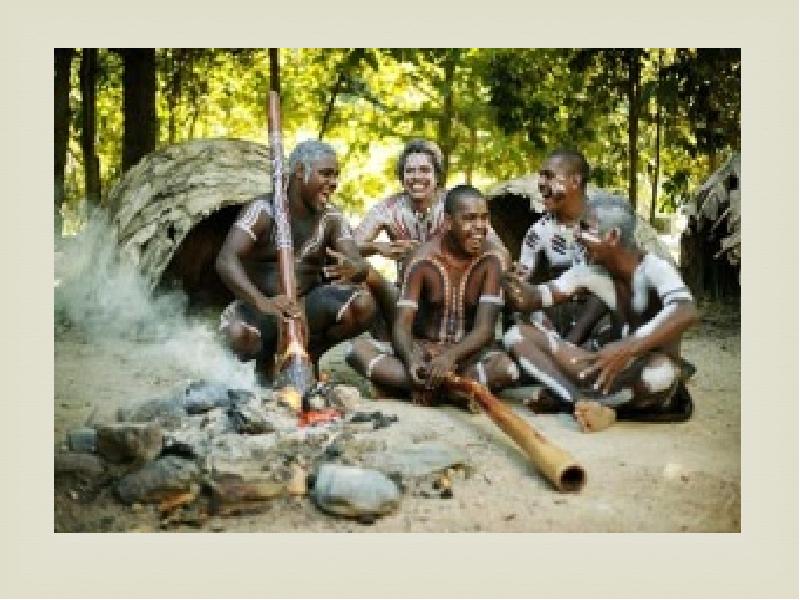
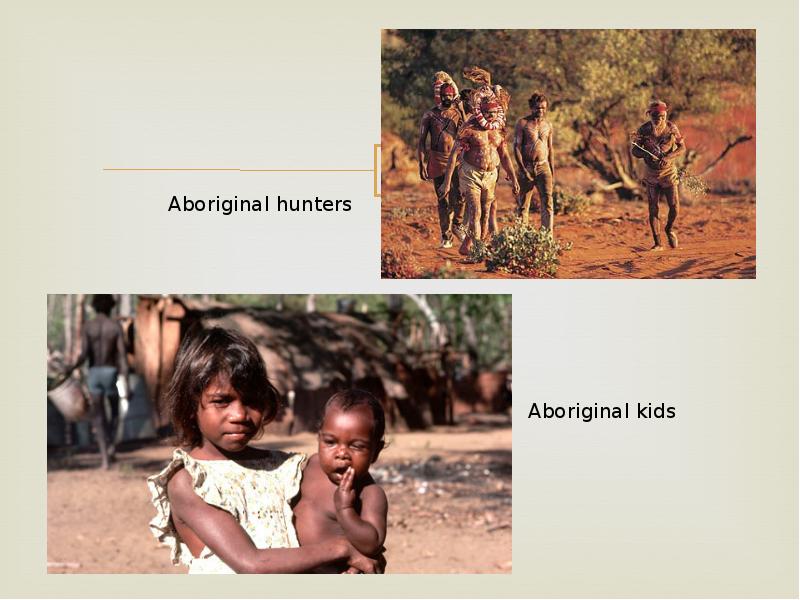
1. The formation of the continent Australia, a continent of geographic and biological diversity (mitmekesisus), has an amazing range of animal and plant life, as well as one of the world's oldest ethnic groups. After the last Ice age, when sea rose considerably (märkimisväärselt kasvanud), Australia and its largest island Tasmania, became isolated form the rest of Asia. 2. The earliest inhabitants The earliest humans living in Australia are called Aborigines and they are descended (pärinevad) from among the earliest humans in the world. For thousands of years Aborigines lived as hunter-gatherers along the coast and in the inland desert areas, following the same lifestyle as their ancestors. 3. Finding food and water Aboriginal tribes obtained water from trees and roots and even squeezed water out of the bodies of frogs. Women collected anything that grew or moved, including fruit, lizards, snakes, roots, grass, etc
The biggest of them is Western Australia, which is almost one third of the whole Australia. The biggest towns are all in the eastern part of Australia. Sydney, with the population of 4,3 million people and Melbourne, with 3,9 million people. The capital of Australia is Canberra, although it's not as populated, but only about 340 000 people living there. Outback refers to remote arid areas of Australia. There are not very many people living there, and those who do, are Aborigines. Industry, minerals and power: Agriculture is the major industry in Australia. People grow grain and bred sheep. The Australian wool industry is widely recognised as producing the finest quality Merino wool. Eastern Australia is the biggest farming region. Australia is rich in many minerals; mining has been an important branch of Australia's industry. Minerals are found and mined in most states, but Western Australia has become the
Yunupingu, Mandaway Musician, teacher, activist Saunders, Captain Reginald First Indigenous commissioned army officer [faithinterface] Interesting facts: · When a mother gives birth to her baby, the father is not allowed to be there. · In some tribes, the father asks a "message stick" for the sex of the baby. If the stick is long, it is a boy and if it is short, it is a girl. · A baby does not get its name until it is one year old. Before the naming the Aborigines say the baby is not a real person. · Some Aboriginal people will avoid eye contact with you. This is especially so if the person is male and you are female and vice versa · Each time the word Aboriginal is written, it is to have a capital letter. This also refers to Aborigine. Used materials: http://en.wikipedia.org/wiki/Indigenous_Australians http://www.infoplease.com/spot/aboriginal1.html http://www.faithinterface.com
as Australian English. It is the only language in the home for around 80% of the population. The next most common languages spoken at home are Chinese, Italian and Greek. An Aboriginal language remains the main language for about 50,000 people. Population Its population is around 20 351 000 people and is a rich blend of various ethnic groups, with substantial populations from Italy, Greece, former Yugoslavia, the Far East and Africa. There are 120 000 Aborigines. The density is 2.8 persons per km2. Climate Because of the country's great size, the climate in australia ranges from tropical regions of the Northern Territory to the cool temperate conditions in the southeast and Tasmania, where it often snows in winter. In the north, half the year is wet and half is dry. And its a popular place for winter holidays in the sun. Western has dry, hot, deser climate. Eastern has temperate, wet,
 annaabi.ee








Kõik kommentaarid