RETSENSIOON Ansambli Tallinn Baroque Barokk-kontsert Koostaja: Martin Appo Juhendaja: Imbi Umbleja See barokkontsert toimus 23. Septembril Tõrva Gümnaasiumi saalis. Ansambliks oli Tallinn Baroque, esines neli liiget: laulis Liina Saari, Tõnu Jõesaar mängis keelpille, Raivo Tarum mängis puhkpille ning Imbi Tarum klavessiini. Esinemine oli väga värvikas ja tõetruu, sest nad kõik kandsid barokiaegseid riideid. Alustuseks rääkis keelpillidemängija kitarrilaadsest pillist mis kandis nime viola da gamba. Ta rääkis, et paljud tänapäeva bandid on võtnud oma viisid barokiajast ning meile võrdluseks mängis ta ühe Abba loo ning ühe barokiaegse loo, mis olid väga sarnased. Imbi tutvustas muusika saatel meile ka tantsusid, mis pärinesid tollest ajast. Neid tantse oli erinevaid kuid nad olid üsna lihtsad ning kergesti õpitavad. Siis esitati klavessiinil ja ...
Tallinn Baroque `'Rõõm muusikast'' 31.jaanuaril esines meie koolis vanamuusika ansambel `'Tallinn baroque'' kavaga `'Rõõm muusikast''. Ansambli koosseisus on Liina Saari (vokaal, sopran), Raivo Tarum (zink, krummhorn, barokktrompet) ja Imbi Tarum (klavessiin). Raimo Kivistik on organiseerija ja tegeleb transpordiga. Liina Saari on saanud laulja diplomi Tallinna Konservatooriumist 1981. a., kus ta õppis Ester Lepa ja Linda Sauli käe all. Ta on täiendanud end Lydia Styx-Agosti (Itaalia) ja Harry van der Kampi (Holland) meistrikursustel. Liina Saari on olnud aastaid Estonia Teatri solist, solistina kaasa teinud samuti Tallinna Kammerkoori, Tallinna Keelpillikvarteti ja mitme teise ansambli kontsertidel, ka paljudes välisriikides. Tema repertuaari kuuluvad peamiselt renessansi- ja barokiajastu teosed, sh suurvormidest Bachi "Johannese passioon", Missa h-moll ja nn luteri missad, Händeli "Messias" ja "Belsatsar", Pergolesi "Salve Regina...
Kontserdi retsensioon Tallinn Baroque Ansambli Tallinn Baroque barokk-kontsert toimus 3. detsembril 2012 Tallinna Kristiine Gümnaasiumis. Selles vanamuusika ansamblis esinesid 4 liiget: laulis Liina saari, keelpille mängis Tõnu Jõesaar, puhkpille Raivo Tarum ning klavessiini Imbi Tarum. Teoseid, mis kontserdil esitati oli mitmeid. Nendeks oli Michael Praetorius, Diego Ortiz, Jean-Philippe Rameau, Adriano Banchieri, Giovanni Gastoldi, William Brade ning Georg Friedrich Händel. Esinemine oli väga värvikas ja huvitav, sest nad kandsid barokiaegseid riideid, mis andis palju silmailu. Kuulda sai õukondlikku galantset tantsumuusikat, imitatsioonilist kirikumuusikat, programmilisi sooloteoseid ja kammermuusikat Alessandro Scarlatti, Alessandro Stradella, Georg Böhmi ja teiste tuntud heliloojate sulest. Kavva kuuluvate autorite seas on ka Georg Friedrich Händel, ...
Kontserdianalüüüs (I poolaasta) Meie koolis käis esinemas ,,Tallinn Baroque" ansambel. Esinejateks oli neli inimest: Liina Saari, Imbi Tarum, Raivo Tarum ning Tõnu Jõesaar. Nad esitasid 17.-18. sajandi ehk barokkajastu muusikat. See muusika oli täis erilisi kaunistusi ja ilustusi. Esinemine oli värvikas, sest kõik esinejad kandsid barokiaegseid riideid. Tänu huvitavale muusikale ja barokiaegsetele riietele loodi minu arvates väga suursugune ja mõnus atmosfäär. Kontserdi käigus tutvustati meile vanaaegseid pille. Imbi Tarum mängis klavessiinil. Mulle meeldis selle pilli kõla ning natuke terav toon. Veel mängiti ja tutvustati viola´t, fiidel´it, zink´i, krummhorn´i ning barokktrompet´it. Viimane neist on tõeliselt nauditava kõlaga pill, mis sobib pidulikele üritustele mängimiseks. Pillide tutvustus oli väga huvitav, kuna mina nägin ja kuulsin mitmeid instrumente esimest korda. Liina Saari hääl oli muidugi võ...
1. Fat Margareta - 16. Cent. Tallinn's most impressive defensive structures, the Great Coastal Gate (Suur Rannavärav) and Fat Margaret's Tower. They were built not only to defend the city from the seaward side of town, but also to impress any visitors arriving via the harbour. Fat Margareta used to be a prison. It is a town wall's building. Now it's home to the Estonian Maritime Museum, which provides a detailed look at the nation's seafaring past. 2. The Great Coastal Gate - with the Viru Gates, are the last of six gates that controlled access to the town in Medieval times. 3. Kolm Õde - a hotel. In 2003, three of Tallinn's splendid merchant houses, built in 1362, were renovated and united to create The Three Sisters, which now offers modern amenities with great design and a backdrop of medieval history. 4. Oleviste church baptism. Believed to have been built in the 12th century a...
Largest towns in Estonia Tallinn Tallinn is located at the coast of Gulf of Finland. Tallinn is the capital of Estonia. It is one of the best retained medieval European towns. The ,,Old Town" is located at the middle of the city and the Town Hall is the best-preserved Medieval town hall in Northern Europe. Tartu The university town, museum-rich and Hanseatic city of Tartu lies on the banks of the River Emajõgi. The capital of sothern Estonia is the second largest city in the country and the oldest in the Baltic States. Tartu is a modern city with a rich historical heritage and culture. One of Tartu ´s most important historical monuments is the St. John´s Church with it´s thousand terracotta sculptures. Narva As In the past, Narva remains a melting pot for nations, periods and cultures, old and new. This is what makes the town so special. The 13th century castle, a beautiful baroque Town Hall, the best pres...
What Might Attract Tourists to Estonia? What might attract tourists to Estonia? Definately sightseeing. Estonia is a beautiful country and theres alot to see. Tallinn is the most popular place for tourists to visit. Tourists will also like the friendly people of Estonia, and ofcourse they will like the beautiful girls in here too. Tallinn, as the capital of Estonia, has alot of tourist attractions. For instance tourists can take tours in Tallinn or visit the Old town and its colorful shops. In Tallinn tourists can see the beautiful Kadriorg park with its Swan Pond and the Baroque Catharina Palace. Not far from Kardiorg is the Song Festival Grounds. In Pirita they can see the Forest Cemetery, where many important Estonian public figures are buried. Tourist can also visit the ruins of St.Brigitta's Convent in Pirita, Maarjamae Palace, Russalka and the Memorial Monument of Estonia's Shipwreck. Popular places where tourists go are also ...
Tallinn Tallinn is a beautiful city in NorthEstonia. It is washed and influenced by the Gulf of Finland in the north. Tallinn has a lot on sights and I'm going to introduce some of them. Town Hall Square the square in front of Tallinn's Town Hall functioned as a marketplace for centuries, dating back to times even before the Town Hall itself was built. Through the years this served as a place of celebrations as well as executions. St. Olav's Church was the tallest church in Medieval Europe. The earliest data on St. Olav's Church come from 1267. Little is known about the building of this Gothic style church and its early years. Church of the Holy Ghost is the only sacred building from the 14th century in Tallinn that has preserved its original form. The simple, humble Church of Holy Ghost was completed in the 1360's, but for the exception of the baroque spire, it h...
Planning of Cultural Landscapes Viktor Skunov Eesti Maaülikool Kadriorg Park which celebrated its 293th birthday on July 22 is the largest park in Tallinn and the richest in various species. One of the most important event of foreign policy took place in Kadriorg PalaceThe important men of Russia and Austria discussed the possibilities of destroying Prussia. One of the most important visitor from Russia in Kadriorg was Katarina II. On June 28 1764, a fancydress ball took place in the Kadriorg Palace for about five hundred persons,dedicated to the celebration of the anniversary of Katarina II´s accession(astumine) to the throne. 1908.on July 15 the greece crown princess Alice came to see Tallinn.She was only few days in here but still loved it. The first trip through the air in Estonia that was done with the balloon by Mr.Berg w...
Kadriorg Park which celebrated its 293th birthday on July 22 is the largest park in Tallinn and the richest in various species. One of the most important event of foreign policy took place in Kadriorg Palace-The important men of Russia and Austria discussed the possibilities of destroying Prussia. On June 28 1764, a fancy-dress ball took place in the Kdriorg Palace for about five hundred persons,dedicated to the celebration of the anniversary of Katarina II´s accession(astumine) to the throne. 1908.on Jluy 15 the greece crown princess Alice came to see Tallinn.She was only few days in here but still loved it. The first trip through the ai rin Estonia that was done with the balloon by Mr.Berg who had come here from St.Peterburg.he managed to rise about 1500 metres from the surface.A lo of people,who were with him in the air were frightened,so after an hour they landed far away in Lasnamäe. Kersti Lootus.Kadriorg today Landscapes arc...
2 Towns (Upper & Lower Town) Tallinn used to be divided into 2 parts - Upper Town where lived the aristocracy, gentry and the clergy; and Lower Town with traders, craftsmen and merchants. Legend says the Toompea Hill is actually the tumulus mound of the great Kalev. Linda carried rocks to his grave. It is a naturally- formed limestone hill. Lower Town was a merchantile centre, Tallinn also belonged to the Hansaetic League (1285). It is often referred to as the town of citizens. Any grown-up, married and economically independent person, born in a legal marriage between two free people and having lived in the town for at least 3 months, could apply to the Magistracy for citizenship. Serfs could escape from serdom after having successfully hidden in town for a year and a day. Two parts remained separated until the end of the 19th century. Four Names Lyndanise - mentioned by Henricus de Lettis in his Chronicle; derives from the name Lind...
Tallinn English College English Sergo Vainumäe 9A TALLINN Report Supervisor: Inge Välja Tallinn 2006 Order of contents: 1.Introduction 2.Toompea 3.Lower Town 4.Kadriorg and Pirita 5.Museums 1. Introduction Tallinn, the capital of Estonia, lies on the Baltic Sea. It is on almost the same latitude east St. Petersburg in Russia, Stockholm in Sweden and Stavanger in Norway, and covers 158 sq km. Tallinn was first marked on a map of the world by the Arab geographer al-Idrisi in 1154, its name then being Kolyvan (probably derived from the name Kalev). In the 13th-century Chronicle of Henricus de Lettis the town was called Lyndanise. Later came Reval (presumably after the old county of Rävala), the name used by the Germans who ruled the country for seven centuries. Russians then modified Reval...
Art Museum of Estonia Art Museum of Estonia was founded on November 17th, 1919, but it was not until 1921 that it got its first permanent building the Kadriorg Palace, built in the 18th century. In 1929 the palace was expropriated from the Art Museum in order to rebuild it as the residence of the President of Estonia. The Art Museum of Estonia was housed in several different temporary spaces, until it moved back to the palace in 1946. In September, 1991 the Kadriorg Palace was closed, because it had totally deteriorated by then. At the end of the year the Supreme Council of the Republic of Estonia decided to guarantee the construction of a new building for the Art Museum of Estonia in Kadriorg. Untill then the Knighthood House at Toompea Hill served as the temporary main building of the Art Museum of Estonia. The exhibition there was opened on April 1, 1993. Art Museum of Estonia premanently closed down the exhibitions in that buildi...
NARVA EESTI GÜMNAASIUM 12. KLASS Karina Repetun Kontserdiarvustus Juhendaja Tuuliki Jürjo 2013.õ.-a. TALLINN BAROQUE Liina Saari - sopran; Raivo Tarum - barokktrompet,; Imbi Tarum klavessiin. Liina Saari on saanud laulja diplomi Tallinna Konservatooriumist 1981. a., kus ta õppis Ester Lepa ja Linda Sauli käe all. Ta on täiendanud end Lydia Styx-Agosti (Itaalia) ja Harry van der Kampi (Holland) meistrikursustel. Liina Saari on olnud aastaid Estonia Teatri solist, solistina kaasa teinud samuti Tallinna Kammerkoori, Tallinna Keelpillikvarteti ja mitme teise ansambli kontsertidel, ka paljudes välisriikides. Tema repertuaari kuuluvad peamiselt renessansi- ja barokiajastu teosed, sh suurvormidest Bachi "Johannese passioon", Missa h-moll ja nn luteri missad, Händeli "Messias" ja "Belsatsar", Pergolesi "Salve Regina" ja "Stabat mater", Charpentier' "Te Deum" jt, ta on esitanud Vivaldi, Melani ja M...
TALLINN History Tallinn is one of the oldest cities in the Baltic Sea region. Tallinn was first mentioned in written sources of the 1154th, when the Arabian geographer Al Idris took a world map the city 'Kaleveny "/ Kolõvan. Through the years, the city of Tallinn had several names: Lindanisa, Kolõvan, Reval and eventually Tallinn. Tallinn was granted the Lübeck law in 1248 and became the member of the Hanseatic League in 1285. General Data l Country - Estonia l County - Harju County l First appeared on map - 1154 l Town rights - 1248 l Mayor - Edgar Savisaar l Aera - Total 159.2 km2 (61.5 sq mi) l Population - (1 Mar 2012) Total - 416,470 Denisty - 2,614.0/km2(6,766.6/sq mi) Tallinn Coat of arms Flag Top 5 Attractions 1. Kiek in de Kök Visitors to the museum will see examples of Medieval firepower, displays detailing how the city's system of walls and towers devel...
Introduction Tallinn, the capital city of the Republic of Estonia and of the Harju county, is a town in North Estonia on the coast of the Gulf of Finland. It has nearly half a million inhabitants and covers an area of almost 160 sqkm. It is also an important economic and cultural centre and one of the main ports in the Baltic States. Tallinn is one of the oldest cities on the Baltic Sea. It is unique for its well-preserved architecture from the 13-15 centuries. In contrast to the ancient town-walls and towers, Tallinn of today offers modern hotels, restaurants, sport and cultural centres. Every five years national song and folk dance festivals take place in Tallinn. The yachting regatta of the 1980 Moscow Olympic Games was held at Pirita. History Tallinn means in English "Danish town". The place is believed to have been settled by Finno-Ugric people about 2500 BC. It was first marked on a map of the world by the Arab geographer al-I...
TALLINN TOWN HALL Tallinn Town Hall is the only surviving Gothic town hall in Northern Europe. Built in the heart of Tallinn, next to a marketplace, the Town Hall has witnessed trade and social activities for over 700 years. It has still remained the most important representational building in town. The building history of the Town Hall goes back to the 13th century, but it acquired its medieval appearance in 140204. It was as early as 1248 when King Eric IV Ploughpenny of Denmark granted the Lübeck Charter to Tallinn. Relying on that document a town council was elected from amongst merchants of the Hanse and started convening in the Town Hall. It is possible to state on the basis of research findings that a meeting place of the magistracy and a goods depot in the form of a small, fortified town hall, constructed of local limestone, existed in its present location already in the mid-13th century. The town hall first mentioned in a re...
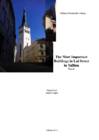
Tallinna Mustamäe College The Most Important Buildings in Lai Street in Tallinn Report Supervisor: Ingrid Teigar Tallinn 2014 Table of Contents Introduction.............................................................................. 3 Lai Street in general.................................................................. 4 The origin of the name "Lai"...................................................... 4 1 Lai Street / 4 Nunne Street...................................................... 5 17 Lai Street............................................................................. 6 23 Lai Street............................................................................. 6 27 Lai Street............................................................................. 8 29 Lai Street...........................................................................
... Gümnaasium English Project Sights of Estonia Student: .............................. Class: 6 ... Teacher: ............... Harjumaa 2011 1 1. Steamer-icebreaker Suur Tõll The ship was built in 1914 in Stettin (Szczecin) by Vulkan-Werke A. G. Suur Tll is the only pre-war steam ship of the Republic of Estonia remained up to now and, at the same time, the biggest icebreaker in the world preserved through two world wars. All the 3 original steam engines as well as most of the original arrangement of space and late Jugendstil interior of the officers' rooms are preserved. In 1914 the first home port of the ship was Tallinn. The ship ensured a regular winter sea navigation for Tallinn up to the end of the independency period. 2. The Tallinn Song Festival Grounds The Tallinn Song Stage was built in 1959 for arranging the Song Festivals....
THE DOMINICAN St. CATHERINE`S MONASTERY One of the best-kept secrets of Tallinn is to be found in the very center of the city. Located near Viru Street, between Müürivahe and Vene Streets, is a medieval Dominican monastery which reveals a fascinating dimension of the city's history. The Dominican Order was founded by a Spaniard, Saint Dominic Gusman, in 1216. Up to that moment only bishops were permitted to preach, but their performance was inadequate beause of the time they had to devote to the administrstion of their dioceses. The result was that many Christians heard the Word of God rarely if at all . Dominic envisioned the creation of a body of trained theologians who would scatter throughout Europe and proclaim the gospel in the most remote areas. The nordic countries appear very early on the Dominic anagenda. To reach Tallinn the friars followed the trade route along the southern coast of the Baltic Sea, and reached Estonia some 7...
Straitland Historical Facts Straitland has served as a junction of international trade routes for Vikings. Long struggle of power with foreign intruders has left ancient strongholds in Valjala, Lihula and Soontagana. The churches in Muhu, Valjala, Mustjala, Karja and Kihelkonna are honorable and elderly because Straitland was the one to bring Christianity to Estonia. The castle of Kuressaare is still standing proudly, but in Lihula only ruins can be seen. The patterns of national dresses and the churches bring memories of secret sign cultures of Medieval Times. Good knowledge of singing and facilit...
Poeetikast ja Aristotelesest Poeetika Õpetus luulekunstist, selle olemusest ja mõjust, tema vormidest, vormi ja kujunduse seaduspärasustest ja väljendusvahenditest. Poeesia teooriana kuulub ta kirjandusteaduse alla, meelisklusena kunstiteoste olemusest esteetikasse, kuna poeesia väljendusvahendite uurimises osas on tal puutepunkte stilistika ja retoorikaga. Normatiivne poeetika toob ära reeglid, millest selle poeetika arvates peaksid kirjanikud juhinduma Deskriptiivne poeetika kirjeldab olemasolevat kirjandust ja tuletab sellest kirjanduse seaduspärasused Immanentne poeetika Aristotelese Osaliselt säilinud käsitlus "Luulekunstist" on ilmselt esimene teos, mis süstemaatiliselt käsitleb poeesia probleeme. Teos on tõenäoliselt kirjutatud Aristotelese viljakaimal perioodil alates aastast 336. e.m.a. Ilmselt on tegemist teosega, mis oli mõeldud kitsamale ringile lugemiseks (esoteeriline), võib-olla midagi loengukonspektilaadset. Teoses o...
Reimo Oja 11c klass Rudolf Tobias Kantaat "JOHANNES DAMASKUSEST" kontserdiarvustus Esitajateks olid: Eesti riiklik sümfooniaorkester, tütarlastekoor Ellerhein, dirigent Tiia- Ester Loitme, Eesti rahvusmeeskoor, Solistid: Aile Asszonyi (sopran), Helen Lokuta (metsosopran), Oliver Kuusik (tenor), Uku Joller (bariton), Märt Jakobson (bass), Natalia Lomeiko (viiul, Venemaa), Dirigent Mihhail Gerts. Nikolai Aleksejevi ja ERSO esimene ühine kontsert toimus 1983. aasta jaanuaris, tihedam koostöö sai alguse 1995. aastal, hooajal 1997/1998 oli Nikolai Aleksejev ERSO esimene külalisdirigent ning alates 2001. aasta sügisest on ta orkestri peadirigent ja kunstil...
ROKOKOO Referaat Sisukord Sissejuhatus................................................................................................... Arhitektuur...................................................................................................... Maalikunst...................................................................................................... Skulptuur........................................................................................................ Tarbekunst..................................................................................................... Muusika.......................................................................................................... Mood.............................................................................................................. Kokkuvõte...................................................................................................... Pilte............
Tallinn Mustamäe College G2K Jaana-Kristiina Jõgevest The Four oldest churches of Tallinn Report Supervisor: Ingrid Teigar Tallinn 2009 The Dome Church The Danes began fortification of Toompea after the conquest of Tallinn in 1219 and probably also built the first church there. It was presumably a wooden building located at the site of the present cathedral. However, a serious conflict with the Order of the Brothers of the Sword broke out soon as the latter wanted to gain control of the entire Estonia. The order succeeded in subordinating Tallinn and the whole of North Estonia to its rule in 1227. The monks of the Dominican Order began the construction of a stone church in Toompea in 1229. The first written data on the cathedral date back to 1233, the date of a battle...
Haabersti vene Gümnaasium 10 klass Motzarti fenomen Uurimistöö Juhataja: Irina Bljaskina Tallinn 2013 Sisukord Sissejuhatus I. Teoreetiline osa 1.1 Mozarti elulugu 1.2 Elu algusaastated 1.3 Viimased eluastased ja surm 2. Mozarti käsikirjad Eestis 3. Muusikastiil 4. Kompositsiooni kirjutamise meetod 5. Mozarti muusika efekt 5.1 Mõju ajutegevust 5.2 Mõju arengule laste ja imikute II. Uurimuslik osa 2.1 Uurimuse metodid ja kontingent 2.2 Küsitluse analüüs Kokkuvõte Kasutatud kirjandus Lisad Lisa 1 Lisa 2 Sissejuhatus Pärast Mozarti surma on olnud rohkem kui 200 aastat ja tema klassikaline töö naudib suurt edu inimestega erinevatest rahvustest ja vanusest kuni tänapäe...
UNO SOOMERE ESTONIAN SYMPHONIC MUSIC. THE FIRST CENTURY 1896-1996. AN OVERVIEW With a Historical and Cultural Summary IN MEMORY OF THE GREAT ESTONIAN COMPOSERS CONTENTS ESTONIA AND THE ESTONIANS FOREWORD IN THE FOLD OF TSARIST RUSSIA. EMERGENCE AND FIRST STEPS ON THE CLASSICAL-ROMANTIC PATH. HISTORICAL INTRODUCTION I. MUSICAL LIFE IN TARTU AT THE TURN OF THE CENTURY. TRAILBLAZERS: ALEKSANDER LÄTE, RUDOLF TOBIAS, ARTUR KAPP. II. THE FIRST DECADE OF THE 20TH CENTURY. ARTUR LEMBA: THE BEGINNING OF ESTONIAN SYMPHONY AND OPERA. III. NEW DEVELOPMENTS IN CULTURAL AND MUSICAL LIFE: THE END OF THE TSARIST PERIOD. THE INDEPENDENT REPUBLIC OF ESTONIA: THE INTRODUCTION OF INNOVATIONS FROM WESTERN ART AND THE EVOLUTION OF NATIONALLY ORIENTED MUSICAL TRENDS. IV. THE TWENTIES. ARTUR KAPP: ROMANTICIST AND DRAMATIST. V. THE INFLUENCE OF NEW WESTERN MUSIC...
 annaabi.ee