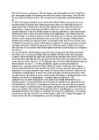
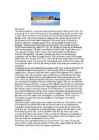
everyday dining. Lingonberry — Sweden’s favorite sauce Just like ketchup and mustard, lingonberry sauce is widely used to accompany a variety of dishes, from meatballs and pancakes to porridge and blood pudding. But despite its sweetness, it is rarely used on bread. Thanks to the Right of Public Access (Allemansrätten), which gives everyone the freedom to roam and enjoy nature, many Swedes grow up picking lingonberries in the forest, and using these tiny tart red fruits to make the jam-like preserve. Open sandwiches When you order a sandwich, don’t be surprised if it involves just a single slice of bread. The concept of open sandwiches dates back to the 15th century when thick slabs of bread were used as plates. In Sweden, the shrimp sandwich (räksmörgås) remains the option fit for a king
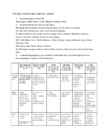
· Earliest Arab coins from 786 CE Century, regressed from town into a mere · Controlled trade along Volkhov and was fortress major East/West hub · Burnt in 860 possibly in domestic strides of · Ladoga/Volkhov route started Rørik and other old Dukes. substituting Daugava route in 7th Century · Attempt to conquer by Swedes 1164 · Exact population composition unknown, · Burnt in 1313 by Swedes but included Finnish, Scandinavian and later also Slavonic elements · Finnish component included Karelian, Veps, Votic and probably Estonians and maybe even other tribes, but not known to which degree they had by that time acquired separate linguistic/cultural identities beyond the one deriving from their home area CORE FINDINGS 8001300 CE
partly acting on behalf of the Hanseatic league The island was part of Swedish Estonia from 15631720, after which it passed to the Russian as part of the Governorate of Estonia, although Dagö's Swedish population kept most of their privileges. Most of the island's previously numerous Swedish speaking population emigrated or were "Estonia" during the period of Imperial Russian rule, although a small minority remains to this day. Estonian Swedes are also known as "aibofolke" (meaning island people in Swedish) or "rannarootslased" (meaning coastal Swedes in Estonian). Transport Road transport from Estonian mainland to Hiiumaa involves a 90-minute (28 km) ferry crossing from Rohuküla to Heltermaa, which is 25 km by road from Kärdla. There are about 10 ferry departures a day. In the summer weekends, getting car space on the ferry usually requires advance booking.
It's also situated between the sea and the Pärnu river. Pärnu was first mentioned in the 12th century, so it is older 700 years old. In the middle ages Pärnu was a very important trading centre. It was a member of the Hanseatic League. Pärnu became a resort town in the 1830s when a group of businessmen founded the first bathing establishment. Before that today's Beach Park's area was just wet pasture. In the 1930s Pärnu cecame especially popular with Finns, Swedes, Latvians and Lithuanians. In Soviet times, however, people from the west were not allowed to stay in Pärnu for the night. Pärnu's sanatoria were full of holiday-makers from the s.u.
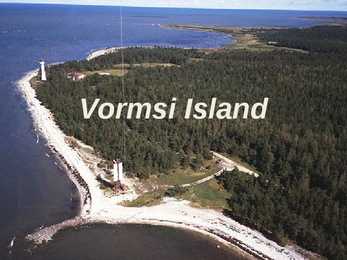
Vormsi Island Location Located between Hiiumaa and the mainland Fourth largest Estonian island Covering 92 square kilometres The meaning of "Vormsi" Known as "snake island" Derived from the German name "Worms" or it's Swedish name "Ormsö", both meaning snake island History Vormsi was inhabited by coastal Swedes 2500 people lived there before WWII During the Soviet occupation Vormsi was a closed border-zone Blend of Soviet and Swedish history mixed with unspoilt nature Nowadays Celtic crosses from the 13th century in Vormsi cemetery Vormsi is for people interested in mixed Soviet and Swedish history and rare nature Landscape Juniper fields Seaside meadows Erratic borders Lighthouses Forests Bays Lagoons To get to Vormsi
The Estonians established a Second level settlement in Toompea Third level The Estonians have been in Fourth level Fifth level a battle with Danes, Russians and Swedes Sightseeing Many interesting museums: Click to edit Master text styles KUMU, Ahha Second level the Old Town Third level double-deckers with a tour Fourth level guide Fifth level old architecture objects: Toompea, town wall
architecture. The stronghold construction, widening and reconstruction went on throughout several centuries, with architecture changing according to the development of weapons. The fortress achieved its final dimensions area of more than 3 hectares, thickness of the wall between 1.2 and 1.8 meters, and maximum height over 10 metres under the reign of Bishop Johannes IV(fourth). In the 17th century, the castle was no longer used as a defensive building by the Swedes who now ruled the Swedish Estonian Province. In the course of the Great Northern War in 1710 (seventeen ten), Estonia fell under Russian rule and the walls were partially demolished at the command of the Peter I of Russia, turning the castle in effect into ruins. It was at this time that the fortress that once displayed seven towered circular wall 803 (eight hundred free) meters long and 12 (twelve) meters high became a pile of ruins.
Why should tourists visit Estonia? I have always though of my country as a huge ,,multicultural city". We have so many different cultures from different places put into a little place all together that you could almost say we are a huge city not a country. And that has influenced us in a very remarcable way. Since the time we can remember we have been under Danes, Swedes, Germans, Russians, Polans and other. We have taken their traditions into our daily lives and forgotten ours. But still despite the fact that we bearly know our own language structure or our old traditions,we try to awake them once again. Estonia is one of the worlds wealthiest countries when it comes to forests. Almost half of the country is covered with the divercity of trees.Also we have many big rivers.
Sometime about 1050 A.D. a fortress was built atop the hill, the first of many. In 1219 the Danes showed up as part of the Northern Crusade to subjugate the Baltics and convert the local pagans to Christianity whether they wanted to or not. The Danes improved the fortifications and expanded the town, which became part of the Hanseatic League, a trading organization of a hundred northern cities. The Danes sold Tallinn to the Livonan Order, a branch of the Teutonic Knights, in 1346. The Swedes came next in 1561. Tallinn weathered plague and the Great Northern War and became part of Russia in 1710. In 1918, Estonia declared independence from Russia and fought a bitter war against Bolshevik Russia. Independence didn’t last long, however, and the fledgling nation fell first to the Nazis and then the Soviets during World War II. Despite all this conquering, Tallinn’s historic core has survived remarkably intact. Much of the 14th century city wall still stands, including a couple of
give the people the right to determine who will be the leader of their nation, who will make the laws and what the laws will be. The Constitution also guarantees individual freedom to all. In 1492, Christopher Columbus discovered the New World. Within a few years, the more powerful nations of Europe were claiming great areas there and establishing colonies to support their claims. Most of the colonists were English, but there were also Germans in Pennsylvania, Swedes in Delaware and Dutch in New York. Some of the early British colonists had come to the New World in hopes of enriching themselves, some came because Britain forced them to leave and some because of the opportunity , which did not exist for them in Europe, to own land or practice a trade. But there were also reasons, which had great influence on the shaping of the political system of the USA. For example, William Penn, a
The castle was systematically under siege for the first time in 1463 but without any result. The castle surrendered to the Russian forces only in the Livonian War, after a siege of three weeks, on June 30, 1558 and was controlled by them till the end of the war. According to the conditions of the Jam Zapolski peace treaty the castle was surrendered to Poles in 1582. Vastseliina castle repeatedly featured in the wars of the 17th century. During that time, in 1625, it came under the control of Swedes for a longer period. By that time Vastseliina castle had lost most of its former significance.
jalgas, rannas>randas. insular dialect The absence the Õ-vocal, instead Ö is used, but in addition to Ö can also E, A, O and U be used instead of Õ Eg: sõber>söber, kõik>keik, sõnad>sanad, jõulu>jõulu, lõhki >luhki The vowels O, E and Ä will change if they are in front of H, to either U or I eg: kohad>kuhad, mehe>mihe, teha>tiha pähe>piha. Has a singing intonation that is belived to come from the swedes Northeastern coastal dialect Absense of the letter Õ Impersonal da-infinitiive Plural is i-plural: puhaste kätega>puhti käsiga Tartu dialect Commonly used the,,na" indirect speech identifier: olevat>olna, kirjutavat>kirjutana de-liiative ending : pudelisse>pudelide Strong i-plural : lehtedest>lehtist Mulgi dialect Instead of E the presence of A : kirjutama>kirjuteme Words don´t start with H :hobune>obene, haukama>aukame
Catholics PS! Civil War settlers • immigrants (HI) East-Europe (MD) • retirees • Mexican manny of them • Engl. population is Am.s came in search Protestants (PA) less than in population is of religous Dutch, Swedes Midwest sparse liberty population is western cities growing rapidly are known for their
Peter made a temporary peace with the Ottoman Empire that allowed him to keep the captured fort of Azov, and turned his attention to Russian maritime supremacy. He sought to acquire control of the Baltic Sea, which had been taken by the Swedish Empire a half-century earlier. Peter declared war on Sweden, which was at the time led by the young King Charles XII. Sweden was also opposed by DenmarkNorway, Saxony, and the PolishLithuanian Commonwealth. Russia was ill-prepared to fight the Swedes, and their first attempt at seizing the Baltic coast ended in disaster at the Battle of Narva in 1700. In the conflict, the forces of Charles XII, rather than employ a slow methodical siege, attacked immediately using a blinding snowstorm to their advantage. After the battle, Charles XII decided to concentrate his forces against the Polish-Lithuanian Commonwealth, which gave Peter time to reorganize the Russian army.
and introduced Christianity and Western European culture to Estonia. While Denmark took the northern part of Estonia, the knights occupied the southern portion. In 1346 the Danes sold their territory to the order, and Estonia remained under the rule of the knights and the Hanseatic merchants until the order's dissolution in 1561. Northern Estonia was then passed to Sweden, the rest was briefly held by Poland but was transferred to the Swedes by the Treaty of Altmark in1629. It ended the first Polish-Swedish war. German nobles--the Baltic barons--kept their sway over the Estonian peasantry until the eve of the 1917 Russian Revolution. Industrialization proceeded during the 19th century. The republic became heavily interlaced with railroads, and the port of Tallinn grew in importance. Russification took place and it caused rebellion and considerable emigration mostly to the United
long and rainy autumn. Other larger cities: Tartu, Narva, Kohtla-Järve, and Pärnu. 14.History People have lived in Estonia since the Stone Age. Various tribes migrated to Estonia and settled in the country after the retreat of the continental glaciers about eleven thousand years ago. The settlement of Estonia is considered to be among the most permanent in the whole of Europe. Estonians resisted the assaults of Vikings, Danes, Swedes and Russians before the 13 th century. In 1346, the Danes, who possessed northern Estonia, sold the land to the Teutonic Knights of Germany, who already possessed Livonia (southern Estonia and northern Latvia). The Teutonic Knights reduced the Estonians to serfdom. The Estonian capital city of Tallinn was founded by Danish and German crusaders and merchants. In the mid-fourteenth century the Danes sold their possessions in
program and an at least 3-year-long Doctorate program. The French speaking Quebec has a slightly more complex system for pre-work trainings, but the university system is quite similar. 43. USA – early settlers. The strip of land along the eastern seacoast was settled primarily by English colonists in the 17th century along with much smaller numbers of Dutch and Swedes. The first successful English colony, Jamestown, was established in 1607 on the James River in Virginia. New England was initially settled primarily by Puritans. The Pilgrims established a settlement in 1620 at Plymouth Colony, which was followed by the establishment of the Massachusetts Bay Colony in 1630. The Middle Colonies, consisting of the present-day states of New York, New Jersey,
middle of the night so that an evil eye would not ruin the important act. for 350 years, Christmas Peace has been declared in Estonia?Each year on December 24, the President of Estonia declares Christmas Peace and attends a Christmas service. The tradition was initiated by the order of Queen Kristina of Sweden in the 17th century.Traditional Estonian Christmas food is pork with sauerkraut or Estonian sauerkraut (mulgikapsad), baked potatoes and swedes with hog's head, white and blood sausage, and brawn, also potato salad with red beet and pté are eaten. From desserts gingerbread and marzipan among others are very popular. The most highly regarded drinks during this holiday have been beer or mead, but today also mulled wine has become a popular drink. If you wish to celebrate Christmas the Estonian way, try some traditional Estonian recipes. http://www.vm.ee/estonia/kat_459/pea_174/2829.html
This qualification gives a holder the opportunity to undertake an original piece of research. It usually takes at least three years of full-time study to complete. Throughout the course, candidates are expected to work independently, with guidance from a supervisor. 32. The media British watch a lot of telly and are also reported to be the worlds most dedicated home-video users. They are also the worlds third biggest newspaper buyers after the Japanese and Swedes. 8 Nearly 80% of all households buy a copy of one of the main newspapers every day. There are more than eighty local and regional papers. The only non-national papers with significant circulation are published in the evenings, when they do not compete with national papers, which appear in the mornings. Most local papers do not appear on Sundays, so that day
Five years after the influential little book was published, Sweden set up a cryptologic bureau. It was headed by Colonel C. G. Warburg, a gentleman who had fallen off a horse, broken both arms and legs, and needed a sinecure. He proved as incompetent in cryptology as in equitation, and was replaced by a naval officer who won the respect of the experts who later served under him. During the late 1930s Gylde'n gave many talks on cryptanalysis to Swedes. He also sowed the seeds of a valuable cooperation With the other Scandinavian countries when he lectured in Oslo and stimulated Captain Roscher-Lund to set up Norway's first cryptologic office. In 1939, during a 12-hour war game, Gylden headed the cryptanalytical office that solved 38 of the 56 rather simple cryptograms transmitted by the "invaders." Sweden's preparations extended to recruiting talks at Uppsala University, where coeds were
& 2. Solar (päikese)süsteemist. Üldine välimus on sama, mis tüüp 1-l, kuigi sõrmede asetus ja nägu on natuke teistsugused. Need Hallid on komplitseeritumad kui tüüp 1. Neil on mingil määral terve mõistus (common sense) ja nad on mingil määral passiivsed. Nad ei vaja eritisi nagu tüüp 1. Hallid, tüüp 3 Kerge kloon tüüpidest 1 ja 2. Nende huuled on kitsamad või huuli ei ole üldse. Nad on 1. ja 2. Hallide tüübile orjalikud. Nordics, Blondes, Swedes (Põhjamaised, Blondid, Rootslased) Tuntakse kõigi nende nimede järgi. Nad on meile sarnased. Blondid juuksed, sinised silmad (osadel on tumedad juuksed, pruunid silmad ja nad on kasvult lühemad). Meid aidates järgivad nad Mittesekkumise Seadust. Nad sekkuvad ainult siis, kui Hallide tegevus mõjutab meid otseselt. Nordic Clones (Põhjamaised Kloonid) Nad sarnanevad meile, kuid nende nahk on halli varjundiga
languages and means East). The Estonians, our Finno-Ugric forefathers settled here in approximately 5,000 BC from northern Russia and the Urals, as fishermen and hunters. They called themselves “rural people”, the term “Estonians” started to spread three centuries ago, taking firm root in the middle of the 19th century. From the 13th century onwards the ancient Estonians had to continually fight for their freedom, against the Danes, Germans, Swedes, Poles and Russians. The Russians annexed the Estonian territory from Sweden after the Great Northern War in 1721 by the Treaty of Nystad. After the fall of Tsarist Russia in 1917, Estonians fought for their independence, and in 1918 the Republic of Estonia was established and endured until 1940. In the summer of that year the Soviet Union occupied all three Baltic states. As a result of the deep inner crisis within the Soviet Empire it became possible
form reciprocity is unnecessary and undesirable in certain long-term relationships such as families or established friendships. In these "communal" relationships 2Interestingly enough, a cross-cultural study has shown that those who break the reciprocity rule in the reverse direction-by giving without allowing the recipient an opportunity to repay-are also dis- liked for it. This result was found to hold for each of the three nationalities investigated-Americans, Swedes, and Japanese (Gergen, Ellsworth, Maslach, &: Seipel, 1975). RECIPROCAL CONCESSIONS Guilt-Edged Exchange oft the mark Mark Parisi Even the stingiest people feel the pull of the I'M A. LOUSY -rIPPER AND I'D reciprocity rule. But, the rule can also be used by LIKE" YOUR RUDEST WA-rRE.SS SO restaurant servers to increase their tips. One
 annaabi.ee