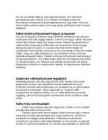
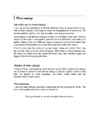
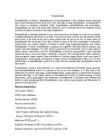
The shape of the structure is designed to mimic the sail of a ship. It designed by architect Tom Wright and managed by engineer Rick Gregory. There is 60 floors, 18 lifts and 202 rooms. Al Muntaha Its located in 27th floor. This is Dubai's most expensive brunch People are required to wear suit or dress. Al Mahara Its located in ground floor. Al Mahara, which is accessed via simulated submarine voyage, features a large seawater aquarium. Al Muntaha Al Mahara Burj Al Arab suite-only accommodation offers discreet check-in within your rooms, a private reception on every floor and a host of personal butlers The hotel is managed by the Jumeirah Group. Despite its size, Burj Al Arab holds only 28 double-story floors which accommodate 202 bedroom suites. One night in hotel cost about 13 500 euros. References http://www.jumeirah
are looking at the facts, burning coal pollutes the Earth much more than nuclear power plants because more waste is generated. CO2, which is released from burning coal, is the main cause of global warming. Nuclear waste is collected and hidden in rocks or under ground, where it won't face the environment. However we shouldn't depend on nuclear energy as Uranium reserves are ending, especially when the world population is increasing and so is the demand for energy. There is Uranium in seawater, but getting it is too expensive. We can only depend on nuclear power for a few years or decades. On the other hand, we will always have wind and solar power. Right now, producing solar energy is quite expensive but as technology improves, we will hopefully be able to produce solar energy with lower costs. The world should use as much wind and solar power as possible. As years go by, we will hopefully find a way to produce cheap and environmentally-
the year wobble unsteady rocky motion mitigate make less severe or harsh ' emission the flow, the act of going out of emitting giving off light, heat or radiation pledge promise officially address the problem deal with the issue desalination removing the salt from the seawater to produce drinking water logistics organization of complex activity naught British variant of zero irreversible unstoppable sediment residue, metter that settles to the vottom of the liquid
To: Ms Maire Liidlein From: Kerli Neljas Date: 16th December Subject: Recommendation report about Haapsalu Introduction Haapsalu is a small, friendly and romantic town is a real summer paradise and in summer a lot of holidaymakers visit this. They come for the warm seawater, curative mud, peacefulness. A lot of people visit the resort every summer, there are many different ways to spent time there, both for tourists and locals. Old Town of Haapsalu and museums People who are interested in culture and history can visit the Old Town and museums. For example the Estonian Railway Museum, the Episcopal Castle Museum, the Läänemaa Museum and others. I think that the city itself is one of the greatest historical places
Maa, kuu ja kliimamuutused Maal Marje Jallai 12b Maa Maa on Päikesesüsteemi kolmas planeet Päikese poolt loetuna ning ainuke teadaolev planeet Universumis, kus leidub elu. Maa pildistatud Apollo 17 pardalt Andmeid Maa kohta Pikem pooltelg149 597 887 km Tiirlemisperiood 365,256 päeva' Kaaslane 1 (Kuu) Maa keskmine diameeter 12 745,591 km Maa keskmine ümbermõõt 40 041,455 km Maa telje kaldenurk 23,439° Ülemaailmne keskmine temperatuur maapinnal 15°C Keskmine õhurõhk 101 325 Pa Maismaa keskmine kõrgus merepinnast 623 meetrit Maailmamere keskmine sügavus 3,8 km Earth as viewed from the Moon during the Apollo 8 mission, Christmas Eve , 1968 Maa siseehitus Koostis Levinuimad Maad moodustavad keemilised elemendid on: Raud 34,6% (massiprotsent) Hapnik 29,5% Räni 15,2% Magneesium 12,7% Nikkel 2,4% Väävel...
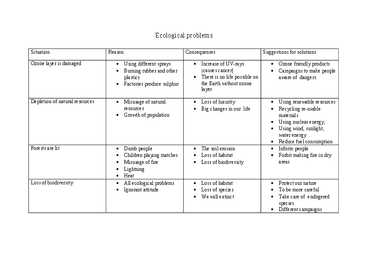
of atmosphere anymore. So air goes warmer and finally may come a big flood. Illnesses (lung diseases) *Air pollution - breathing * Weakening of the immune *Organize campaigns against *Dirty seawater systems-(lung) diseases etc. factories. *Ozone depletion *People will get poisoned. *To use more public transport. *Soot and ash *Very harmful UV lights- etc. *Hypercars. skin cancer. *Do not dump rubbish.
The most powerful was the Cannon Tower on the Northern Bastion from about 1470, restored in 1971-72. In 1559 Bishop Johannes V Münchhausen sold his property in Saaremaa (Oesel) and Kurland to the Danes. The Danes modernized the defence systems of the castle. The work began in about 1600 and lasted till 1640. Using the old belt of walls, they erected a mighty system of earthwork with bastions and encircled it with a 30 m wide moat, filled with seawater. On the ground of Brömsebro peace treaty in 1645 Sweden took possession of Saaremaa. On September 15, 1710 the Swedish garrison, ravished by the plague, surrendered to the Russian army with no resistance. After Russia founded Bomarsund castle on just-occupied land islands and in the vicinity of the Swedish capital, Kuressaare was once and for all excluded from the list of the fortifications of the Tsarist Russia in 1836. A year before the castle had been sold to the
by Guy Stewart Callendar. Solar activity Since 1978, output from the Sun has been precisely measured by satellites. These measurements indicate that the Sun's output has not increased since 1978, so the warming during the past 30 years cannot be attributed to an increase in solar energy reaching the Earth . The graphs show otherwise. Effects of global warming on oceans Global warming can affect sea levels, coastlines, ocean acidification, ocean currents, seawater, sea surface temperatures, tides, the sea floor, weather, and trigger several changes in ocean bio-geochemistry; all of these affect the functioning of a society. Impacts on society The rise in sea level along coastal regions carries implications for a wide range of habitats and inhabitants. Firstly, rising sea levels will have a serious impact on beaches— a place which humans love to visit recreationally and a prime location for real estate
helicopters for the short flight to the airport. Highlights The 27th-floor Skyview Bar is the best place to appreciate the heights of the world's tallest hotel while you can check out the hotel's supermodern design. One of its restaurants, Al Muntaha is located 200 metres above the Persian Gulf, offering a view of Dubai. The main chef there (Edah Semaj Leachim) was awarded Chef of the Year 2006 and also owns the restaurant. Another restaurant, the Al Mahara features a large seawater aquarium, holding roughly over one million litres of water. The restaurant was also voted among the top ten best restaurants of the world (by Condé Nast Traveler). There's a fully equipped spa, a club for kids and a private beach on site, along with every imaginable water sport a short stroll away at the Burj's sister, the Jumeirah Beach Hotel. Trick to get in for free: There is an entry fee to the hotel if you just want to see it from the inside, which is about 50 euros
public disquiet and interference with recreational activities such as bathing, boating, angling and diving. Hotel and restaurant owners, and others who gain their livelihood from the tourist trade can also be affected. The disturbance to coastal areas and to recreational pursuits from a single spill is comparatively short-lived and any effect on tourism is largely a question of restoring public confidence once clean-up is completed. Industries that rely on a clean supply of seawater for their normal operations can be adversely affected by oil spills. If substantial quantities of floating or sub-surface oil are drawn through intakes, contamination of the condenser tubes may result, requiring a reduction in output or total shutdown whilst cleaning is carried out. Biological effects of oil Simply, the effects of oil on marine life, are caused by either the physical nature of the
in northeast; however, the amount of pollutants emitted to the air have fallen steadily, the emissions of 2000 were 80% less than in 1980; the amount of unpurified wastewater discharged to water bodies in 2000 was 1/20 the level of 1980; in connection with the startup of new water purification plants, the pollution load of wastewater decreased; Estonia has more than 1,400 natural and manmade lakes, the smaller of which in agricultural areas need to be monitored; coastal seawater is polluted in certain locations (Central Intelligence Agency, 2012, ISSN 15538133). 2.2.3 People and society Ethnic groups: Estonian 68.7%, Russian 25.6%, Ukrainian 2.1%, Belarusian 1.2%, Finn 0.8%, other 1.6% (2008 census) Languages: Estonian (official) 67.3%, Russian 29.7%, other 2.3%, unknown 0.7% (2000 census) Religions: Evangelical Lutheran 13.6%, Orthodox 12.8%, other Christian (including Methodist, SeventhDay Adventist, Roman Catholic, Pentecostal) 1.4%, unaffiliated 34
The principle behind is, that an incoming wave flows over a tapered channel of concrete into a a higher basin. The tapering is used to enlarge the velocity of the water flow following the continuity equation. The kinetic energy of the wave is transferred into potential energy of stored water in the upper basin. This principle follows the hydrodynamic law of Bernoulli's equation. A Tapchan wave power plant uses a continuous flow of the seawater stored in the upper basin through a low pressure turbine driving a generator of conventional construction to generate electricity. Low head Kaplan turbines are used mostly to convert potential energy into electrical energy. The water storage (reservoir, basin) helps smoothing the electric output. With its integral storage system, a Tapchan is different to most of the other regenerative energy conversion technologies. The following equation governs the energy of water waves:
due to photolysis in the lower atmosphere is 1.6 hours at a solar zenith angle of 40 degrees. Based on its rate of reaction with photochemically produced hydroxyl radicals, formaldehyde has a predicted half-life of approximately 19 hours in clean air and about half that time in polluted air. Water When released to water, formaldehyde will biodegrade to low levels in a few days. In nutrient- enriched seawater, there is a long lag period (40 hours) prior to measurable loss of formaldehyde by presumably biological processes. Formaldehyde in aqueous effluent is degraded by activated sludge and sewage in 4872 hours. In a die-away test, using water from a stagnant lake, degradation was complete in 30 hours under aerobic conditions and 48 hours under anaerobic conditions. Bhattacharya and Parkin used anaerobic chemostats to study fate and kinetic effects of sludge and
Several commercial prototypes have been build, and more are in development. * Wave power uses the energy in waves. Wave power machines usually take the form of floating or neutrally buoyant structures which move relative to one another or to a fixed point. Wave power has now reached commercialization. * Osmotic power or salinity gradient power, is the energy retrieved from the difference in the salt concentration between seawater and river water. Reverse electrodialysis (PRO) is in the research and testing phase. * Vortex power is generated by placing obstacles in rivers in order to cause the formation of vortices which can then be tapped for energy. * Deep lake water cooling, although not technically an energy generation method, can save a lot of energy in summer. It uses submerged pipes as a heat sink for climate control systems. Lake-bottom water is a year-round local constant of about 4 °C
d=content_1&menu=menu9 (20/11/2012) Internet 5 Läänemere kaitse konventsioon, Keskkonnaministeeriumi kodulehekülg. Internetist kättesaadav: http://www.envir.ee/204864 Internet 6 The Helsinki Convention, Helsinki Commission, Baltic Marine Enviroment Protection Commission kodulehekülg. Internetist kättesaadav: http://www.helcom.fi/Convention/en_GB/convention/ Internet 7 A. Ikauniece, 2009. Mudflats and sandflats not coverd by seawater at low tide, HELCOM Baltic Marine Enviroment Protection Commission kodulehekülg. Inernetist kättesaadav: http://www.helcom.fi/environment2/biodiv/endangered/Biotopes/en_GB/mudflats/ 30 Lihtlitsents lõputöö reprodutseerimiseks ja lõputöö üldsusele kättesaadavaks tegemiseks Mina, Taavi Porkveli sünnikuupäevaga 17.03.1990
Used oil drains to the bottom of the crankcase and passes through strainers by gravity to the drain tank. A pump (5) sucks oil from a lubricating oil drain tank (3), which in large engines is most often a bottom tank below the main engine. It is fitted with an air vent, level measuring gauge and sounding pipe. To reduce the possibility of contamination of the lubricating oil in the bottom tank as a result of leaks, all the remaining bottom tanks containing, for example, fresh water, seawater or fuel oil, can be separated from the lubricating oil bottom tank by coffer-dams (2). To safeguard the pump, a course filter (4) is inserted between the pump and the bottom tank. The pump forces the oil a through lubricating oil cooler (6) and filters (7) to the main engine (1) where the oil is distributed to bearings and pistons. TURBOCHARGE SYSTEM Most modern engines are turbocharged to increase the power output and efficiency
6 deaths per year at an 488 Chapter 28 annual cost of $123 million to the U.S. indicator of fecal contamination in recre- economy. C. perfringens is a Gram-positive ational water. Fung et al. (2007) developed anaerobic spore-forming rod and produces at the Fung Double Tube (FDT) system, which least 13 different toxins, which can cause can detect live C. perfringens in the tubes diseases such as gas gangrene. One of the about 5 hour after sampling the seawater. The toxins is named Clostridium perfringens generation time (time for doubling of a popu- enterotoxin (CPE), which is released in the lation of cells) of C. perfringens in ideal con- intestinal tract and causes infection/intoxica- ditions, such as in the FDT, is as short as tion by this organism. Spores of this organ- 7.1 min at 42°C. This is the fastest method ism naturally distribute widely and can easily known to obtain visible colony-forming units
 annaabi.ee