 50 punkti
Autor soovib selle materjali allalaadimise eest saada 50 punkti.
50 punkti
Autor soovib selle materjali allalaadimise eest saada 50 punkti.
 ~ 3 lehte
Lehekülgede arv dokumendis
~ 3 lehte
Lehekülgede arv dokumendis
 2021-03-12
Kuupäev, millal dokument üles laeti
2021-03-12
Kuupäev, millal dokument üles laeti
 0 laadimist
Kokku alla laetud
0 laadimist
Kokku alla laetud
 0 arvamust
Teiste kasutajate poolt lisatud kommentaarid
0 arvamust
Teiste kasutajate poolt lisatud kommentaarid
 jansali
Õppematerjali autor
jansali
Õppematerjali autor
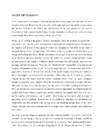
Indroduction This assignment will examine Britain's car market and shows how the external and internal environment factors influences it, mostly on Mini Ltd. External marketing environment is divided into 4 different groups; socio-cultural, economic, technological and political factors. Internal marketing evironment is divided into 6 different groups; which are customers, competitors, suppliers, distributors, employees and stakeholders. Also this assignment is provided with the SWOT analysis, where strengths, weaknesses, opportunities and threats are examined. Mini
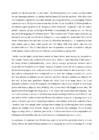
INTRODUCTION OF SUPPLY CHAIN MANAGEMENT (SCM) A supply chain is a network of facilities and distribution options that performs the functions of procurement of materials, transformation of these materials into intermediate and finished products, and the distribution of these finished products to customers. Supply chains exist in both service and manufacturing organizations, although the complexity of the chain may vary greatly from industry to industry and firm to firm. Supply chain management is typically viewed to lie between fully vertically integrated firms, where the entire material flow is owned by a single firm and those where each channel member operates independently. Therefore coordination between the various players in the chain is key in its effective management. Cooper and Ellram [1993] compare supply chain management to a well-balanced and well-practiced relay team. Such a team is more
consumer sector (between mass and prestige in the cosmetics market). This has required a new brand identity, product innovation, a new shop design, the development of a multi-channel service (The Body Shop At Home and e-commerce) and compelling values campaigns to ensure we better meet our customers' needs now and in the future. This repositioning has been underpinned by our commitment to the wellbeing of our fellow humans and the preservation of the planet which is outlined in this 2005 Values Report. There has been much successful progress on our Values this year. Our new branding incorporates "Passion Panels", which tell customers the stories behind our ingredients and our products. Our campaign to 'Stop Violence in the Home' is now making a real difference in 26 markets, and we've collected significant funds globally to support Tsunami disaster victims and promote HIV/AIDS awareness and research. We've focused our efforts on increasing internal communication of our values, through
Nowadays DeBeers have many substitutes and that is the reason why they are not a pure monopoly, but they are definitely nearly one. This is because the firm still has the bulk of world sales and controls 45% of world diamonds market. This paper examines these monopoly characterises, also how and why DeBeers diamonds monopoly still exists and what benefits they give the world. Also how the firm handled the problems which resulted from new government regulations to make the diamond industry more competitive. De Beers Diamonds is a Swizz-based company which was founded in 1888 by Cecil Rhodes, a British Business man. The company was financially supported by an Alfred Beit, who was a British South African magnate and Rotchilds multinational investment banking company. The company got its name from brothers: Diederik Arnolds and Johannes Nicholas de Beers, who were not, involved in the company, but whose farm becomes the site of the most lucrative mine
1.2. Post-Independent Ukraine. Economy and politics ............................................... 6 1.1.3. Key Macroeconomic indicators ......................................................................... 14 1.1.4. Foreign Direct Investments ................................................................................ 16 1.1.5. Demographics and labor force .......................................................................... 17 1.1.6. New emerging industry....................................................................................... 19 1.2. The Business Environment ........................................................................................ 23 1.3. Banking system.......................................................................................................... 27 1.4. Starting a business in Ukraine ................................................................................... 32 1.5
I admire the Jews immensely. They have used their brains to conquer the world in every facet of life. Through their brain power, they control how the world thinks. They are the experts in everything in this world. In fact, every time I tune to radio or television, invariably it is a Jewish individual who is called as expert to explain what had happened. Their brain power has made them financial barons of the world, the real estate moguls of the world, the titans of industry in every category. For example, George Soros, the financial wizard, made over a $billion just by anticipating rate of change in the exchange rate market. Money like that can cure a lot of the pathetic nature of Black people. That amount was made in just one day. Mr. Soros is not a military man. He is an immigrant just like the rest of Americans, but he is nonetheless a warrior for his people. He understands his role in defence of his people and other people with lesser means.
The biggest segment is North America, accounting for nearly 30% of revenue (World of Coca-Cola). Role in IPE Coca-Cola's role in international political economy is undoubtedly very great. There are not too many beverage companies that can compete with Coca-Cola and therefore it has the ruling position on international level of beverage companies. Coca-Cola company has a great power to change many factors that are important in the beverage industry. This means that in today's globalized world Coca-Cola has a lot of trailblazing work done and to do. For example the introduction of the new renewable and recyclable plastic bottle in 2009 which made many similar companies to follow the lead because the health of the planet is important to many people and therefore big companies have to be more planet friendly because otherwise many people would not buy their products and buy something more economically friendly, in this case Coca-Cola
the company at a competitive disadvantage with other QSR vendors such as KFC because the country's large Hindu majority's aversion to beef. BK hopes to use their recent non-beef products, such as their TenderCrisp and TenderGrill sandwiches, as well as other products to help them overcome this hurdle to expand in that country. At the end of its fiscal 2008 year, Burger King is the second largest chain of hamburger fast food restaurants in the world behind industry bellwether McDonald's (31,000 locations) and the fourth largest fast food restaurant chain overall after Yum! Brands (34,000 locations), McDonald's and Subway (28,400 locations). Products When the company began, its menu consisted predominantly of hamburgers, French fries, soft drinks, and desserts. In 1957, BK added its signature item, the Whopper. This quarter pound hamburger was created by Burger King founders James McLamore and David Edgerton as a
 annaabi.ee








Kõik kommentaarid