As for the problems of integration of the Russian community in the Republic of Estonia, it is very likely that the xenophobia of the local population has brought about the development of the closed Russian community. Clearly, it is a most paradoxical situation: on the one hand, xenophobia has helped us to preserve our culture and nation. On the other hand, xenophobia is by far not compatible with the contemporary ideas of a modern society. Unfortunately, the phobias and prejudices that have developed during the past centuries are hard to get over. What would be the possible ways of getting rid of the phobias and intolerance that we suffer from? In my opinion, the key to success lies in education. Compared to the old times, we are now able to use an extremely powerful information search and exchange systems. Thanks to the latest achievements of technology and the wide spread of the Internet we have got a wonderful possibility to google for data. By
Pacifist - strongly and actively opposed to conflict and especially war Presumably - by reasonable assumption Rank - a position, esp an official one, within a social organization, esp the armed forces Reign - to have control or influence Retreat - The act or process of moving back or away, especially from something hazardous, formidable, or unpleasant Stunt - an unusual or difficult feat requiring great skill or daring Subjective - of, relating to, or emanating from a person's emotions, prejudices, etc: Surrender - to give the control or use of (something) to someone else / to agree to stop fighting, hiding, resisting, etc Transatlantic on, from the other side of crossing the Atlantic Ocean Treaty - an official agreement that is made between two or more countries or groups Truce - an agreement between enemies or opponents to stop fighting, arguing, etc., for a certain period of time Unsettled - feeling nervous, upset, or worried : not comfortable
Some people have an opinion that black people don't worth anything but actually every person is human being and deserves a polite and respective attitude. This film was a sheer example that the appearance isn't the most important thing, more important is that people would accept others even when they come from different cultures and nationalities. In the film Nelson Mandela tried to do all possible to connect blacks and whites and to change their prejudices. My favourite place about this film was when the Springboks team visited young and poor children, who were deeply interested about learning rugby. This moment was really heart- warming and positive, the emotions of the team members were pure and sincere. The main characters, Morgan Freeman as Nelson Mandela and Matt Damon as Francois Pienaar, were skilled and they acted well. The only negative thing, I'd say about this film, is
The ending is really beautiful and I like it. Darcy proposes Elizabeth again and this time she accepts. They have a double wedding with joy and love. A major theme is the importance of environment and upbringing on the development of young people's character and morality. Social standing and wealth are not necessarily advantages. Pride and Prejudice, employs the narrative technique of free indirect speech. Austen invites the reader to follow events from Elizabeth's viewpoint, sharing her prejudices and misapprehensions and being surprised along with her when events prove these to be mistaken. In my oppinion, the book was really good and I liked it a lot. Though the language was quite difficult to understand sometimes, but I liked the style she has written the novel. I like the way she talks about the characters so prolixly and they were somehow still jolly. I did not like the character of Darcy in the beginning, because I thought it was too strict and was not humorous at all
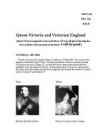
of Our Life in the Highlands' and 'More Leaves' in 1868 and 1884 respectively.) She was given religious instruction and lessons in French, Latin, German, Italian, arithmetic, drawing, music, geography and history . A young Victoria In 1837 Queen Victoria took the throne after the death of her uncle William IV. Due to her secluded childhood, she displayed a personality marked by strong prejudices and a willful stubbornness. Barely eighteen, she refused any further influence from her domineering mother and ruled in her own stead. Popular respect for the Crown was at a low point at her coronation, but the modest and straightforward young Queen won the hearts of her subjects. She wished to be informed of political matters, although she had no direct input in policy decisions. The Reform Act of 1832 had set the standard of
not in love with young Victoria, and that he entered into a relationship with her in order to gain social status (he was a minor German prince) and out of a sense of duty (his family desired the match). Whatever Albert's original reasons for marrying Victoria may have been, theirs proved to be an extremely happy marriage. [3] Early Reign In 1837 Queen Victoria took the throne after the death of her uncle William IV. Due to her secluded childhood, she displayed a personality marked by strong prejudices and a willful stubbornness. Barely eighteen, she refused any further influence from her domineering mother and ruled in her own stead. Popular respect for the Crown was at a low point at her coronation, but the modest and straightforward young Queen won the hearts of her subjects. She wished to be informed of political matters, although she had no direct input in policy decisions. The Reform Act of 1832 had set the standard of legislative authority residing in the
language is increased. This makes it easier to tell whether a person you are talking to is happy, sad, sullen or irritated. Or whether he or she is lying to you, or is impatient, or bored. You should also be able to register whether the person appears to like you, agrees or disagrees with you, is aggressive to you, or is suspicious, angry or worried. Observing hidden feelings Increased attention to body language will allow you to observe hidden feelings, prejudices and sexual intentions; all through your eyes and the other senses we use to perceive the world around us. Body language is the movements of arms and legs, body posture, the manner in which you sit, facial expressions, gait, eye movements and regular gestures such as stroking your hair, touching your nose, etc. Tilting your head signals that you are not dangerous. This is claimed to be a consequence of your mother tilting her head when she pitied you as a child
criminals people living in the West. In The Adventures of Tom Sawyer (1876), he paints a realistic picture of the life of two young boys growing up in the Mississippi area. The themes of childhood and nature recur in his masterpiece The Adventures of Huckleberry Finn (1885). In both these works Mark Twain shows his deep distrust of `respectable' society and his sympathy for social outcasts and the common man. He uses humour to criticise the practice of slavery and the hypocrisy and prejudices of his times. In his characterisations he displays a penetrating insight into human psychology. Mark Twain's use of language is also strikingly original. The stories of Tom Sawyer and Huckleberry Finn are told from the point of view of the young protagonists and contain slang, regional dialect and illogical sentence constructions that make the dialogue come to life. As a writer Twain did not emulate European models; he created a distinctly Am lit style
excellence, as it is about the interplay between observer and observed, between a traveller's own philosophical biases and preconceptions and the test those ideas and prejudices endure as a result of the journey' (2007, p. 191). The travel genre addresses, of course, the readers of the author's home: Ireland and Britain in Murphy's case, the USA and Britain in Hoffman's. The writers' narratives follow
based on, or implicitly assuming the validity, of NPM. In that sense, it is legitimate to speak of the demise of NPM, and to already investigate what stopped it all the more interesting because of the lessons this may present for standard textbook economics (STE). Because after all, NPM was a formidable, genuine paradigm, backed by the self-logic of the profession, the mightiest donors, and most importantly, the zeitgeist, the sense of "coolness" it had, and the catering to prejudices based as often on genuine grievances as on mere modern folklore against bureaucracy and the state as such. Here one can only speculate for the moment and look at the arguments against NPM presented before. One of the key reasons why it could not last is that PA is a very heterogeneous field of scholarship, combining scholars from a variety of backgrounds and a variety of contemporary disciplines, such as law, political science, and public administration proper
then analyse, if the author has her own certain stereotypes in her two writings. For this I chose two of my personal favourites from her creation: “Pride and prejudice” and “Persuasion”. In the first chapter I wrote about Austen’s life and development of her creation, in the second I compared writer’s books’ society’s backround to the real life 19th century’s England, the third and the fourth chapter is about “Pride and prejudices” and “Persuasions” themes and characterizations. In the fifth chapter I brought similar parallels between the characters and in the sixth part I prepared final analysis based on similar character-pairs. It emerged, that the two author novels have common motives, for example the main character pairs are each other’s contrast, balancing one another with it and creating a perfect harmony, which was Jane Austen’s idea of perfect marriage. There were many similar characters to compare
change. Change will never come about if the unit of change on which one focuses is the individual rather than on the institution as an organization. What is being sought is not a mere cosmetic change but a change of basic orientation. Stephen Covey brings this out in a clear manner in The 7 Habits of Highly Effective People, when he states: If we want to make relatively minor changes in our lives [and institutions], we can focus on our attitudes and behaviors [our prejudices and discriminations]. But if we want to make significant, quantum change, we need to work on our basic paradigms. To try to change our attitudes and behaviors does very little good in the long run if we fail to examine the basic paradigms from which these attitudes and behaviors flow (p. 31). This is not possible without a complete change of orientation. Human service organizations like churches and schools often tend to have an orientation toward the past, toward a "we-have-always-
This subject was chosen because the author is interested in how the role sexual minorities play in society is changing. There is little Estonian literature on the topic, so the author wants to give an overview about the problems sexual minorities face and inform about their situation. The topic is very actual, but is has not been discussed much in Estonian media. Prevailing opinions are generally not very positive and prejudices dominate among lots of Estonians. This paper is divided into three chapters: the first describes different sexual orientations, their presumable causes and the development of related terms, the second chapter gives an overview of sexual minorities in modern society and the third presents an analysis of a study conducted by the author. The main goal of the research was to study the attitudes towards sexual minorities among grade 9- 12 students in Kuressaare Gymnasium
Tsiviilühiskond tähendab sotsiaalseid ühendusi nagu perekond, kirik, kaubanduslikud ühendused ja muud sotsiaalsed ühendused. Ühiskonnas on suhete paljusus, ühiskond on kompleksne ja järjepidev. Ühiskond pole loomulik ja mõistusel põhinev kooslus, vaid on kunstlik ja ebaloomulik kooslus, mille alusteks on tavad. Inimühiskond põhineb rohkem iniminstinktidel ja kalduvustel, isegi eelarvamustel (prejudices), mitte mõistusel. Minevik Burke väidab, et kui me otsime moraali, siis vaid minevikust me saame teada, mida inimesed on kord välja mõelnud ning seetõttu on ainus moraali allikas minevik. Et meil muud peale mineviku pole, tuleb suhtuda sellesse aukartusega. Et meil muud peale mineviku pole, siis on kõige tõenäolisemalt just minevikus ja traditsioonides see, mis on õige. Ühiskonna institutsioone pole tegelikult võimalik äkki hakata ise looma ega ka ise mõtestama,
” Then look for reasons why you might be responsible.You will always find them. ■ THE TRUE GODS ARRIVE An English poet once wrote, “When the false gods go, the true gods arrive.” When you stop thinking about, talking about, and rehears- ing negative events and the emotions they trigger, the “true gods” of positive emotions will fill your mind and heart. When you let go of the thoughts, opinions, prejudices, and attitudes that make you un- happy, you will begin to experience the thoughts and emotions that make you feel good about yourself and your life. Nature is on your side. Nature wants you to be happy, healthy, prosperous, and fulfilled.Your destiny is to experience joy, harmony, love, and the greatest of all human blessings, peace of mind. And just as a gyroscope knocked off balance returns to an upright position,
Tsiviilühiskond hõlmab selliseid sotsiaalseid ühendusi nagu perekond, kirik, kaubanduslikud ühendused ja muud sotsiaalsed ühendused. Ühiskonnas tervikuna on hästi palju erinevaid suhteid, ühiskond on kompleksne ja järjepidev. Ühiskond pole loomulik ja mõistusel põhinev kooslus, vaid on kunstlik ja ebaloomulik kooslus, mille alusteks on tavad. Inimühiskond põhineb rohkem iniminstinktidel ja kalduvustel, isegi eelarvamustel (prejudices), mitte mõistusel. ,,Ühiskonda tuleb suhtuda aukartusega, sest ühiskond pole vaid partnerlus asjades, mis teenivad labast ja loomalikku, ajutist ja kaduvat olemasolu. Ühiskond on partnerlus kõigis teadustes, partnerlus kogu kunstis, partnerlus igas vooruses ja kogu täiuslikkuses. Et sellise partnerluse eesmärke ei ole võimalik saavutada paljude põlvkondade jooksul, muutub see partnerluseks mitte
"Indeed, I could not. I was uncomfortable enough, I may say unhappy. And with no one to speak to about what I felt, no Jane to comfort me and say that I had not been so very weak and vain and nonsensical as I knew I had! Oh! how I wanted you!" "How unfortunate that you should have used such very strong expressions in speaking of Wickham to Mr. Darcy, for now they do appear wholly undeserved." "Certainly. But the misfortune of speaking with bitterness is a most natural consequence of the prejudices I had been encouraging. There is one point on which I want your advice. I want to be told whether I ought, or ought not, to make our acquaintances in general understand Wickham's character." Miss Bennet paused a little, and then replied, "Surely there can be no occasion for exposing him so dreadfully. What is your opinion?" "That it ought not to be attempted. Mr. Darcy has not authorised me to make his communication public
Fatal Attraction? The Fisher King? Look at a film, play, or story of your choice. H o w does the author introduce the hero? Reveal character? Give exposition? Suggest the theme? Does the author use an image to foreshadow or suggest where the story is going? 2. In your own writing, how well do you know your hero? Do a complete biographical sketch, specifying personal history, physical description, education, family back ground, job experiences, romances, dislikes and prejudices, preferences in food, clothes, hair, cars, etc. 3. Do a timeline, specifying what the character was doing and where he was at every stage of life. Find out what was going on in the world at these times. W h a t ideas, events, and people have been the greatest influences on your character? 4. How is your story's hero incomplete? Get specific about the character's needs, desires, goals, wounds, fantasies, wishes, flaws, quirks, regrets, defenses, weaknesses, and neuroses
 annaabi.ee