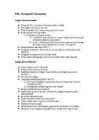
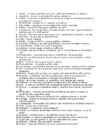
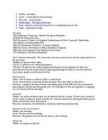
Christian belief No written literature at first Stories and poems were to be memorised Letters called "runes" carved in wood and stone Fighting everyone in sight A king's power was not hereditary, depended on the ability to win battles The power of the kingdom depended on the strength of its king in battle Danish raids In the 8th c Vikings, Norsemen or Danes invaded By 870 the kingdoms of East Anglia, Northumbria, and Mercia overthrown Preparations to overthrow Wessex Defeated by King Alfred England divided: Wessex in the south and west (Saxon law) Danelaw in the north and east (Danish law) King Alfred Alfred the Great The only monarch in English history with this title An able warrior A dedicated scholar The only English monarch for a long time afterwards who was able to read and write A wise ruler Encouraged the formation of fortified towns
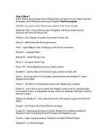
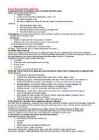
Henry II - added Ireland the British possessions John I - signed Magna Carta, the beginigs of the British constitution Edward I - conquered Wales Edward III - started 100 years war Henry V - Last great warrior king Henry VIII - Broke England away from Catholic church. Elizabeth I - laid the seeds of the British Empire, and tons of other stuff James I - Was King James VI of Scotland, inherited throne from Elizabeth I, united England and Scotland Charles I - Overthrown by Parliament and executed. Replaced by a republic Charles II - son of above, put on throne after republic turned out to be a really bad idea. Last monarch to have an independent income. After him, Parliament held tight control on monarch's money. William III and Mary II - Only husband and wife to rule equally. Signers for the Bill of Rights. George I - first King to have Prime Minister run things George III - King during American revolution. Blamed for everything, actually all
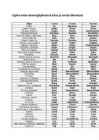
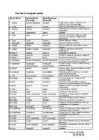
Irregular Verbs Base Form Simple Past Past Participle Tense awake awoke awoken be was, were been bear bore born beat beat beat become became become begin began begun bend bent bent beset beset beset bet bet bet bid bid/bade bid/bidden bind bound bound bite bit bitten bleed bled bled blow blew blown break broke broken breed bred bred bring brought brought broadcast broadcast broadcast build built built burn burned/burnt burned/burnt burst burst burst buy bought bought cast cast cast catch caught caught choose cho...
overdo overdid overdone overhang overhung overhung overhear overheard overheard overlay overlaid overlaid override overrode overridden overrun overran overrun oversee oversaw overseen overshoot overshot overshot oversleep overslept overslept overtake overtook overtaken overthrow overthrew overthrown overwork overworked overworked partake partook partaken pay paid paid prove proved proved, proven put put put read read read rebuild rebuilt rebuilt recast recast recast redo redid redone relay relayed relayed remake remade remade
misspell misspelled/misspelt misspelled/misspelt Vigadega kirjutama mistake mistook mistaken Eksima mow mowed mowed/mown Niitma overcome overcame overcome Üle saama overdo overdid overdone liialdama overtake overtook overtaken Mööda sõitma overthrow overthrew overthrown kukutama pay paid paid Maksma plead pled pled Paluma, väitma prove proved proved/proven tõendama put put put panema quit quit quit loobuma read read read Lugema rid rid rid vabastama
9. Succumb to give way to superior force 10.Hefty heavy, weighty 11.Abode a place in which a person resides; residence 12.Currents a flowing; something that flows; moving in a certain direction 13.Dissymmetry absence or lack of symmetry 14.Estrange to turn away in feeling or affection 15.Cathode the electrode or terminal by which current leaves an electrolytic cell 16.Impregnable not to be overcome or overthrown, unconquerable 17.Dogma an official system of principles or tenets concerning faith, moral, behavior etc. 18.Emit to send forth, to give forth or release 19.Thoroughness complete, perfect, utter 20.Compounds composed of several similar parts that combine to form a whole 21.Ore a mineral or natural product serving as a source of some nonmetallic substance 22.Extract to get, pull, or draw out, usually with special effort, skill, or force 23
Üleni katma Overrun Overran Overrun Järele või üle vaatama Oversee Oversaw Overseen Kauaks magama jääma Overslept Oversleep Oversleep Üleni katma Overspread Overspread Overspread Järele jõudma Overtake Overtook Overtaken Kukutama, kummutama Overthrow Overthrew Overthrown Osa võtma Partake Partook Partaken Maksma,tasuma Pay Paid Paid Panema Put Put Put Lugema Read Read/red Read/red Uuesti või ümber ehitama Rebuild Rebuilt Rebuilt Kärsitama, rebima Rend Rent Rent
Islam in particular, though the general subject of religion is addressed. 1920 Prometheus Unbound is a four-act poetic play concerned with the torments of the Greek mythological figure Prometheus and his suffering at the hands of Zeus. It is inspired by Aeschylus's Prometheus Bound and concerns Prometheus' release from captivity. However, unlike Aeschylus' version, there is no reconciliation between Prometheus and Zeus in Shelley's narrative. Instead, Zeus is overthrown, which allows Prometheus to be released. 1821 A Defence of Poetry is an essay, first published posthumously in 1840. It was written in response to his friend Thomas Love Peacock's article The Four Ages of Poetry, where Peacock claimed that poetry though beautiful is utterly useless. Shelley argues that poetry brings about moral good, exercises and expands the imagination, and the imagination is the source of sympathy, compassion, and love, which rest on the ability to project oneself into the
Laws are historical conventions, people can be forsed to be free. State of nature Hobes: state of nature is a state of conflict, a state of war. Locke: state of nature is peaceful, all men are equal. They treat others as themselves. Rousseau - people in the state of nature were neither good or bad. Man was like an animal not posessing any needs besides the primary ones. The bad habits of men are byproducts of ingaging in a civil society. All men are equal Sovereign Hobbes: can not be overthrown and can do whatever the fuck it wants. The best one is monarch. Locke: can be overthrown, if fails to do the job. Criticises monarch for haveing hereditary power. Prefers election for a term. Democracy? Rousseau: aristocracy, if not hereditary. (monarchy represents particular will) Authority in the social contract Hobbes: the sovereign Locke: The law over the sovereign Rousseau: The general will over the Law and over the sovereign Human life Hobbes: sovereign can take life
signification, to close the writing. This conception perfectly suits criticism, which can then take as its major task the discovery of the Author (or his hypostases: society, history, the psyche, freedom) beneath the work: once the Author is discovered, the text is “explained:’ the critic has conquered; hence it is scarcely surprising not only that, historically, the reign of the Author should also have been that of the Critic, but that criticism (even “new criticism”) should be overthrown along with the Author. In a multiple writing, indeed, everything is to be distinguished, but nothing deciphered; structure can be followed, “threaded” (like a stocking that has run) in all its recurren- ces and all its stages, but there is no underlying ground; the space of the writing is to be traversed, not penetrated: writing ceaselessly posits meaning but always in order to evaporate it: it proceeds to a systematic exemption of meaning. Thus literature (it
137. oversee oversaw overseen üle vaatama, järele vaatama 138. oversleep overslept overslept sisse magama, liiga kauaks magama jääma; mdgi maha magama 139. overtake overtook overtaken järele jõudma; (eeljooksjast) mööda jooksma, (eelsõitjast) mööda sõitma 140. overthrow overthrew overthrown ümber lükkama, kummutama, kukutama 141. partake partook partaken osa saama (of/in), (toitu) võtma, maitsma (of) 142. pay paid paid maksma, tasuma; ennast ära tasuma 143. plead pled (pleaded) pled (pleaded) (kohtus) kaitsjana esinema; kaitseks väitma, vabanduse/ettekäändena esitama;
the towns concert- and the Europe's cultural life. The Dome Church The cathedral of Saint Mary the Virgin in Tallinn .http://www.eelk.ee/~eelk109/english.htm St Olaf's Church The St. Olaf's Church is dedicated to King Olaf Haraldsson of Norway (995-1030), who adopted Christianity and established it in Norway. The traditional faith was still strong, however; the king was overthrown and killed in battle. He was canonised after death and the cult of his name spread all over Scandinavia. The earliest written record about the church date back to 1267, when Queen Margarethe of Denmark granted the female Cistercian convent of St. Michael the advowson over the St. Olaf's Church. But major reconstruction followed in the 14 th -15th centuries. The tower standing separate from the church was completed in 1364. The fire of 1433 claimed the St
The War of the Roses 1455-1485 Series of dynastic wars between the House of Lancaster(red rose) and the House of York(white rose) for the English throne. Many battles, huge massacres. Disaster for nobility. It ended with the marriage of Henry VII Tudor and Elizabeth of York which united roses into red-white Tudor rose Edward IV and Elizabeth Woodwille Edward IV was twice the king. Defeated the Lancastrians and became the Lancastrian king. Henry VI overthrown, Edward was crowned as Edward IV. Earl of Warwick(powerful supporter) was furious when king married Elizabeth secretly, he allied with kings brother George and led a revolt. They joined Henry VI´s wife Margaret of Anjou, invaded England. Edward was sent to exile, he returned and killed Warwick. Henry VI was put to death. Second reigning time was peaceful. Richard III and the princes of the tower Last Yorkist king on England. His brother
whose position had been weakened by two unsuccessful Crimean campaigns. When she learned of his designs, Sophia conspired with the leaders of the Streltsy, who continually aroused disorder and dissent. Peter, warned by the Streltsy, escaped in the middle of the night to the impenetrable monastery of Troitse-Sergiyeva Lavra; there he slowly gathered adherents who perceived he would win the power struggle. Sophia was eventually overthrown, with Peter I and Ivan V continuing to act as co-tsars. Peter forced Sophia to enter a convent, where she gave up her name and her position as a member of the royal family. Still, Peter could not acquire actual control over Russian affairs. Power was instead exercised by his mother, Natalya Naryshkina. It was only when Natalya died in 1694 that Peter, now age 22, became an independent sovereign. Formally, Ivan V remained a co-ruler with Peter, although he was ineffective
Portuguese Timor and Macau. REPUBLIC AND TURMOIL On 1 February 1908, the king Dom Carlos I of Portugal and his heir apparent, Prince Royal Dom Luís Filipe, Duke of Braganza, were murdered in Lisbon. Under his rule, Portugal had twice been declared bankrupt on 14 June 1892, and again on 10 May 1902 causing social turmoil, economic disturbances, protests, revolts and criticism of the monarchy. Manuel II of Portugal become the new king, but was eventually overthrown by the 5 October 1910 revolution, which abolished the regime and instated republicanism in Portugal. Political instability and economic weaknesses were fertile ground for chaos and unrest during the Portuguese First Republic. These conditions would lead to the failed Monarchy of the North, the 28 May 1926 coup d'état, and the creation of the National Dictatorship (Ditadura Nacional). This in turn led to the establishment of the right-wing dictatorship of the Estado Novo under
1689. aastal esmakordselt ilmavalgust näinud teos koosnes kahest traktaadist ja tervikväljaande pealkirjaks oli Kaks traktaati valitsemisest: Esimeses esitatakse ja lükatakse ümber Sir Robert Filmeri ja tema järgijate valed põhimõtted ning lähtealused. Teine on essee tsiviilvalitsuse tegelikust algusest, ulatusest ja eesmärgist (Two Treatises of Government: In the Former, The False Principles and Foundation of Sir Robert Filmer, And His Followers, are Detected and Overthrown. The Latter is an Essay Concerning The True Original, Extent, and End of Civil Government). Siin ja edaspidi tõlkija märkused. 2 Siin ja edaspidi järgitakse kaldkirja puhul autori kasutust, v.a pärisnimedes, tsitaatides ja viidetes Piiblile. Viimasel juhul, nagu ka piiblisalmide tõlgetes, kasutatakse Eesti Piibliseltsi poolt 2000. aastal väljaantud Piiblit. 3 "Esimeses traktaadis" arvustas Locke Robert Filmeri (15881653) 1680. aastal ilmunud raamatu
However, Scottish forces under King Bruce defeated King Edward II. The victory had the most important consequences. It established Robert firmly upon the throne, and settled throughout the kingdom a tranquillity formerly unknown. The crown had a greater power than it formerly had possessed. *Edward II, Queen Isabella and Roger Mortimer Roger de Mortimer was an English nobleman, for three years also the ruler of England, after leading a successful rebellion against Edward II. He was himself overthrown by Edward's son, Edward III. Mortimer was also the lover of Edward II's wife, Isabella of France, who assisted him in the deposition of her husband. Edwars was prisoned, but not killed. The Parliament decided simply to remove him from the thrown. He was replaced with his son, who was under the influence of isabella and Mortimer. Edward himself remained imprisoned. *The Hundred Yers War 1337-1453 was a prolonged conflict lasting between two royal
For 'tis a question left us yet to prove, Whether love lead fortune, or else fortune love. The great man down, you mark his favourite flies; The poor advanced makes friends of enemies. And hitherto doth love on fortune tend; For who not needs shall never lack a friend, And who in want a hollow friend doth try, Directly seasons him his enemy. But, orderly to end where I begun, Our wills and fates do so contrary run That our devices still are overthrown; Our thoughts are ours, their ends none of our own: So think thou wilt no second husband wed; But die thy thoughts when thy first lord is dead. Player Queen Nor earth to me give food, nor heaven light! Sport and repose lock from me day and night! To desperation turn my trust and hope! An anchor's cheer in prison be my scope! Each opposite that blanks the face of joy Meet what I would have well and it destroy! Both here and hence pursue me lasting strife,
a very pleasing opinion of conjugal felicity or domestic comfort. Her father, captivated by youth and beauty, and that appearance of good humour which youth and beauty generally give, had married a woman whose weak understanding and illiberal mind had very early in their marriage put an end to all real affection for her. Respect, esteem, and confidence had vanished for ever; and all his views of domestic happiness were overthrown. But Mr. Bennet was not of a disposition to seek comfort for the disappointment which his own imprudence had brought on, in any of those pleasures which too often console the unfortunate for their folly or their vice. He was fond of the country and of books; and from these tastes had arisen his principal enjoyments. To his wife he was very little otherwise indebted, than as her ignorance and folly had contributed to his amusement. This is not the
version of one that had been instituted a week earlier. All these changes the cryptanalysts followed with contemptuous ease. The increasing disorganization of the Russian armies contaminated the radio services, and as discipline relaxed, garrulity increased. One day early in 1917, the Dechiffrierdienst solved 333 radiograms, from which it inferred that the Russian secret communications were rapidly disintegrating. In March the Czar-was overthrown, in July an all-out offensive by the Russian armies collapsed, and in October the Bolsheviks, using the people's overwhelming desire for peace, seized power and took Russia out of the war. The way to this situation was opened primarily by Russia's military failure. While this resulted largely from the lack of munitions, food, and supplies that the underin-dustrialized country could not supply, the tactical defeats inflicted by the Central Powers obviously played a conclusive role
 annaabi.ee