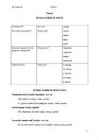
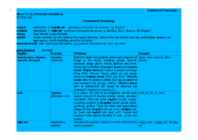
1B Grammar Week 5 Plural PLURAL FORMS OF NOUNS Nominative Pl. ? Accusative inanimate Pl. ? Accusative animate Pl. (all ? genders) = Genitive Pl.
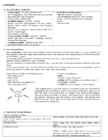
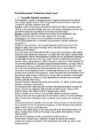
indigenous literacy in Estonia. · The oldest written records of the Finnic languages of Estonia date from the 13th century. Grammar · Typologically, Estonian represents a transitional form from an agglutinating language to a fusional language, the canonical word order is SVO. (subject-verb-object) · In Estonian, nouns and pronouns do not have grammatical gender, but nouns and adjectives decline in fourteen cases: nominative, genitive, partitive, illative, inessive, elative, allative, adessive, ablative, translative, terminative, essive, abessive, and comitative, with the case and number of the adjective(s) always agreeing with that of the noun (except in the terminative, essive, abessive and comitative) Vocabulary · Although the Estonian and Germanic languages are of very different origins, one can identify many similar words in Estonian and English
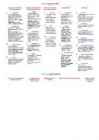
") predicate 3. CHIASMUS 3. 3. ANAPHORA "go I must"; - reserve parallelism word order of second NOMINATIVE (*... *... *...) repetition of sent-e is inverted compared to first one. 2. EXCLAM SENTENCE word or phrase at the partial: (lexical words change places but word order ATORY - contains noun or noun phrase. beginning of several - direct object remains the same
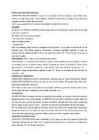
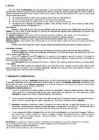
APOSIOPESIS is an unfinished sentence where the speaker or writer suddenly stops in the middle, as if unable or unwilling to proceed. A indicates strong emotions, paralyzing the speaker or his desire to conceal part of information. NT: she must leave or better yet drown herself make away with herself at some way or The speaker's strong emotions therefore inability to finish. NT: And it was so unlikely that she had stolen his wallet that... well. NOMINATIVE SENTENCES NOMINATIVE SENTENCES are just a noun-sentence, containing a noun or a nominal-noun-phrase sentence. NOMINATIVE SENTENCES strengthen the dynamic nature of the narrative. NT: London. Parks. Horse rides. Noisy streets. Noisy traffic. Policeman. Such sentences evoke a more or less isolated idea of an object without any connection with other objects. These sentences appeal to reader's imagination, and thus makes the reader active. ASYNDETON
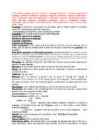
usually followed by a lexical verb. They typically help Have you been home? to denote grammatical contrasts of aspect, voice, polarity and clause type. case kääne A grammatical category that marks the function of a nominative case: the boy, he, I noun or pronoun, for example as subject (the accusative case: him, me nominative case), object (accusative case) or genitive genitive: the boy's, his, mine (possessive). clause klaus A grammatical construction that expresses the She (S) is (V) a friend of mine (C).
not a case-form either, but simply a form with added -'s: the -'s is simply another morpheme, with a statable range of positions in which it occurs. 1sg 2nd 3sg 1pl 3pl Initial I you he she it we they General me him her us them According to these revisions the former nominative pronouns are restricted to occurring as single, preverbal subjects (in most natural varieties of English). Blevins says that the distribution of these initial forms pattern with preverbal subject clitics in French: je, tu, il, ils. She likes riding horses. Who is it? It's me/him/her/us/them. Who wants to sing a song? Me!/Not me! It was me who opened the letter. b) Person: Personal, possessive, and reflexive pronouns have distinction of person
2. Aglutineerivad keeled grammatilisi vahekordi väljendatakse mitmesuguste keeleelementidega, mis liituvad üheks sõnaks ja millel on alati omaette kindel tähendus ja iseseisev olemus. Tüvesid ja lõppe kokku liimiv keel. Kasutab rohkesti seotud morfeeme, mis liituvad muutumatu sõnatüvega. Samale tähendusele vastab samakujuline tunnus/lõpp. N: türgi keel. Näide türgi sõna adam ´mees´ käänamisest (Comrie 1989) Singular Plural Nominative adam adam-lar Accusative adam-i adam-lar-i Genitive adam-in adam-lar-in Dative adam-a adam-lar-a Locative adam-da adam-lar-da Ablative adam-dan adam-lar-dan 3. Flekteerivad (fusiivsed) keeled grammatilise tähenduse muutused väljendatakse keeleelementdega, mis liituvad juurele ja sulavad sellega kokku, kuid millel pole iseseisvat olemust. Rohkesti tüvesiseseid, tähendust mõjutavaid häälikuvariatsioone. Tunnuste ja
sentence (subject or the predicate are missing). In the dialogue, ellipsis creates a colloquial tone. In the author's narrative it makes the utterance tense, emotional, or helps to stress the most important elements. (Out in the garden. Annoying father) Aposiopesis (Greek--silence) also called a break in the narrative. It is an unfinished sentence in which the speaker breaks off in the middle as if unable or unwilling to proceed. It implies strong emotion. Nominative sentence is nouns or noun phrases appearing as a separate sentence naming someting. They evoke more or less isolated idea of an object without any relation with other objects. They appeal to the reader's imagination. Hence, they ate frequent use in the exposition. Nominative sentences make the narrative dynamic. (Paris. Broad avenues. Lighthouses. People. Cafes.) Asyndeton is a deliberate omission of conjunctions between sentences disregarding the norms of literary language
('вопить, кричать') - 'screech' ('пронзительно кричать') are of Germanic ori¬gin. The first word of the pair comes down from Old English whereas the second one is a Scandinavian borrowing. Examples of native doublets are 'shadow' ('тень') and 'shade! Both are derived from the same Old English word 'sceadu'. 'Shade' is developed from the Nominative case, 'sceadu' is derived from oblique ease 'sceadwe'. The words 'drag' and 'draw' both come from Old English 'dragan' ('тащить') Etymological doublets also arise as a result of shortening when both the shortened form and the full form of the word are used: 'defense' - 'защита' - 'fence' - ''забор'; 'history' - 'история' - 'story' - 'рассказ'. Examples of ETYMOLOGICAL TRIPLETS (i.e. groups of three words of common root) are few in number: hospital (Lat
2. Aglutineerivad keeled grammatilisi vahekordi väljendatakse mitmesuguste keeleelementidega, mis liituvad üheks sõnaks ja millel on alati omaette kindel tähendus ja iseseisev olemus. Tüvesid ja lõppe kokku liimiv keel. Kasutab rohkesti seotud morfeeme, mis liituvad muutumatu sõnatüvega. Samale tähendusele vastab samakujuline tunnus/lõpp. N: türgi keel. Näide türgi sõna adam ´mees´ käänamisest (Comrie 1989) Singular Plural Nominative adam adam-lar Accusative adam-i adam-lar-i Genitive adam-in adam-lar-in Dative adam-a adam-lar-a Locative adam-da adam-lar-da Ablative adam-dan adam-lar-dan 3. Flekteerivad (fusiivsed) keeled grammatilise tähenduse muutused väljendatakse keeleelementdega, mis liituvad juurele ja sulavad sellega kokku, kuid millel pole iseseisvat olemust. Rohkesti tüvesiseseid, tähendust mõjutavaid häälikuvariatsioone.
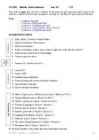
Phonetic. expr. means Synonymic repetition Trochee Prosody Lexical repetition Anapaest Orchestration Syntactic SD Dactyl Euphony Ellipsis Amphibrach Phonetic SD Aposiopesis Spondee Onomatopoeia Nominative sent. Pyrrhic Alliteration Asyndeton Rhythmic invers. Assonance Apokoinu Run-on line Rhyme: Gap-sentence link Stanza: Full Framing Heroic couplet Incomplete Anadiplosis Ballad stanza
In the author's narrative it makes the utterance tense, emotional; or helps to stress the most important elements. 2. Aposiopesis (from Gr. "silence") it is break-in-the-narrative an unfinished sentence in which the speaker suddenly breaks off in the middle as if unable or unwilling to proceed. It suggests strong emotions paralyzing the speaker or his deliberate stop to conceal the meaning. 3. Nominative sentence it is the sentence containing a noun or a noun phrase. Such sentences evoke an isolated idea of an object without any relations with other objects. Such sentences appeal to the reader's imagination, it is a kind of kaleidoscope (e.g. "London. Parks. Streets. Noisy traffic."). Such sentences strengthen the dynamic nature of the narrative. 4. Asyndeton is deliberate omission of conjunctions, which disregard norms of literary language
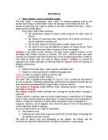
statute of a company (partnership agreement). Article 47. Management of the Company Structure, composition and the method of activity of management bodies are defined by the statute of a company. Article 51. Concept of a Joint Stock Company 1. A joint stock company is a company whose capital is divided into shares, the classification and the number of which are specified in the Statute. A share is a dematerialized nominative security which confirms the liability of a joint stock company to a partner (shareholder) and the rights of a shareholder in the joint stock company. The Statute of a joint stock company may identify the price, which is the threshold for the shares of this class during a primary sale (nominal price of shares). A liability of a joint stock company towards the creditors is limited to its entire property. A shareholder of the joint stock company is not liable for the obligations of the company
 annaabi.ee