 50 punkti
Autor soovib selle materjali allalaadimise eest saada 50 punkti.
50 punkti
Autor soovib selle materjali allalaadimise eest saada 50 punkti.
 ~ 5 lehte
Lehekülgede arv dokumendis
~ 5 lehte
Lehekülgede arv dokumendis
 2022-12-03
Kuupäev, millal dokument üles laeti
2022-12-03
Kuupäev, millal dokument üles laeti
 0 laadimist
Kokku alla laetud
0 laadimist
Kokku alla laetud
 0 arvamust
Teiste kasutajate poolt lisatud kommentaarid
0 arvamust
Teiste kasutajate poolt lisatud kommentaarid
 429845
Õppematerjali autor
429845
Õppematerjali autor
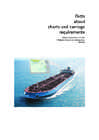
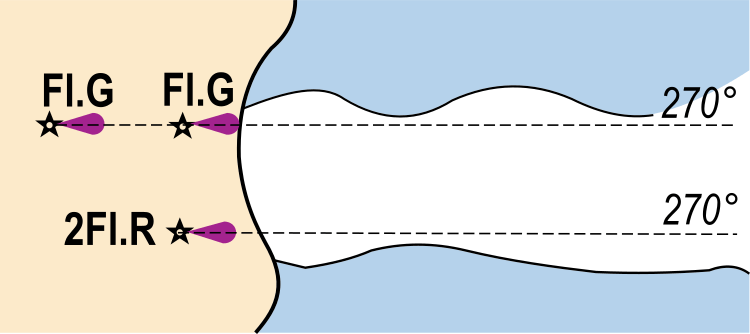
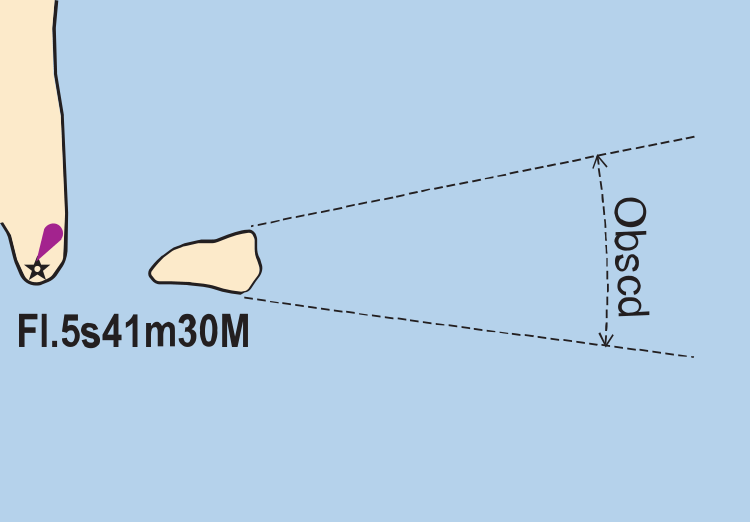
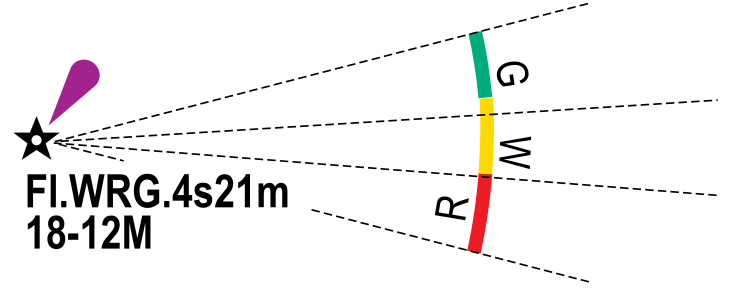
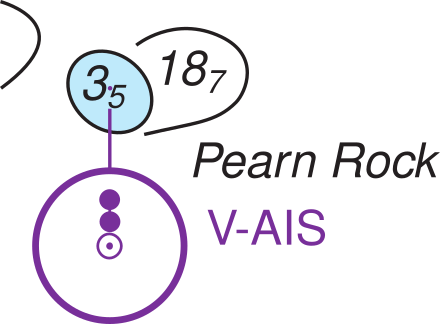
Facts about charts and carriage requirements Primar Stavanger – IC-ENC Working Group on information (PSIWG) 1st edition - November 2004 Kort & Matrikelstyrelsen Graphic design: Peter M. Bastrup, KMS This compendium may be reproduced in whole or in part provided that all extracts quoted are reproduced verbatim without adaptation and the source and date are stated. Primar Stavanger and IC-ENC shall be indentified as the originators of the compendium. 2 Facts about chart carriage reguirements CONTENTS Introduction . . . . . . . . . . . . . . . . . . . . . . . . . . . . . . . . . . . . . . . . . . . . . . . . . . . . . . . . . .4 Where are the rules for professional marine navigation written down? . . . . . . . . . . .6 What are the IMO requirements for the carriage of nautical charts? . . . . . . . . . . . . .6 What is a nautical chart? . . .
AMBER AND RUSSET - LATE COLOUR CHANGE GENES Copyright 2014, Sarah Hartwell The ancestors of the domestic cat were nondescript black/brown striped tabbies. Over the centuries, mutation produced a wide array of colours based on 2 different pigments. Eumelanin gives the blacks, browns and blues while phaeomelanin gives the reds, fawns and creams. A few other genes give further variations on those colours such silvers, colourpoints and solids/selfs. Mutations continue to occur and unexpected colours also turn up due to inbreeding where recessive genes, hidden for generations, start showing up. AMBER AND LIGHT AMBER During the 1990s, some purebred Norwegian Forest Cats in Sweden produced chocolate/lilac and cinnamon/fawn offspring. However, those colours are not found in the purebred Norwegian Forest Cat gene pool. Had the gene pool become polluted by someone, perhaps generations ago, breeding their Norwegian Forest Cat to another breed? Was it a spontaneous mutation? Crossing of those c
MÕISTED JA SELGITUSED Mõisted ja selgitused sisaldavad ka piiratud arvu tehnilisi mõisteid, mis ei esine IMO SMCP tekstis, kuid võivad osutuda kasulikuks kui konkreetse standardväljendi selgitus vajab uuendamist. 1 General terms 1 Üldised mõisted Abandon vessel (to) To evacuate crew and passengers from a vessel Laeva maha jätma Merehäda tingimustes following a distress laevapere ja reisijate laevast lahkumine Accommodation ladder Ladder attached to platform at vessel's side with Pardatrepp, Lamedate astmete ja flat steps and handrails enabling persons to paraadtrepp käsipuuga laeva emba
REPORT & USER MANUAL TR A F F I C L I G H T S C O N TR O L S Y S T E M ALEXANDER TARANENKO ANASTASSIJA MOROZOVA Tallinn University of Technology March 2013 INTRODUCTION The following system consists of two Mitsubishi AL2 controllers that control two crossroads, a pedestrian crossing and a parking lot. The following implementation divides the task between the two, but keeps controller one the main one and controller two the secondary one. The system can work in two modes, automatic and manual, the latter of which can also work in two separate sub- modes that must be selected for each crosswalk individually. DESCRIPT
1. (a) (i) gene length of DNA; codes for a (specific), polypeptide / protein / RNA; max 1 allele alternative form of a gene; found at a, locus / particular position on, a chromosome; max 1 (ii) assume allele refers to coat colour allele (coat colour) gene / alleles, only on X chromosome; A no (coat colour), gene / allele, on Y chromosome male cats, XY / only have one X chromosome; males have only one (coat colour) allele / cannot have two (coat colour) alleles; need black and orange alleles for tortoiseshell colour; 2 r r w w (b) parental genotypes C C × C C ; r w gametes C , C ; F1 genotypes and pheno
Voyage Planning Voyage Planning The key elements of the Voyage Plan are: Appraising all relevant information Planning the intended voyage Executing the plan taking account of prevailing conditions Monitoring the vessel’s progress against the plan continuously Planning The detailed voyage or passage plan should include the following factors: 1) the plotting of the intended route or track of the voyage or passage on appropriate scale charts: the true direction of the planned route or track should be indicated, as well as all areas of danger, existing ships' routeing and reporting systems, vessel traffic services, and any areas where marine environmental protection considerations apply; 2) the main elements to ensure safety of life at sea, safety and efficiency of navigation, and protection of the marine environment during the intended voyage or passage; such elements should include, but not be limited
Inconvenient Non-ionizing indoor climate Poor radiation lighting (magnetic fields) PHYSICAL HAZARDS Risk of fire and Noise in the working environment: electrical shock Physical Part I – Inconvenient indoor hazards Risk from climate sharp objec
Review questions English lexicology Size of English vocabulary. Average speaker 45,000-60,000 words, a total of about 200,000. Core and periphery. English has been heavily influenced by other languages. 31.8 % comes from Old English, 45% comes from French, 16,7% comes from Latin, 4,2% other germanic languages and 2,3 other languages. The very core is mono-syllabic (93 of the first 100 words and the other seven are two-syllabic). The core vocabulary is predominantly germanic. Native and foreign element. Native words belong to very important semantic group (modal verbs-shall, will, can, may; pronouns- I, you, he, my, his; preps- in, out, under; numerals and conjunctions::but, till, as. Native words are head, arms, back; mother, brother, son, wife; snow, rain, wind, sun; cat, sheep, cow; old, young, cold, hot, dark; do, make, go, come, see. Many native words have developed many meanings (nt, hand, man, head). Most native words have become parts of set expressions, borrowed words haven't.
 annaabi.ee




























Kõik kommentaarid