attacked Muslims and Christians took no Jews to gain the land new territory. for Christians. 3rd Crusade (1189-1192) o Richard I, Philip II, Frederick Barbarossa set out. o Along the way Frederick drowned. o Phillip went back home. o Richard won several victories but couldn't retake Jerusalem. o The English had to give up and head home. o Richard was taken prisoner . Richard Lionheart (1157-1199) Richard was a king of England son of Henry II 4 Crusade th Other Crusades Decided to take over Five other crusades Constantinople instead were all also failures. Another failure. By 1291, the Muslims had driven the Christians out of the Holy Land. Thank you for your attention!! 2. slide During the middle ages,
King Stephen King Stephen was king of England (and not Normandy), although he was born in France. He was crowned at Westminster Abbey, like his father before him.Stephen was nephew of Henry I and grandson of William I, and was elected to be king in 1135 - although he presumed Henry I daughter Matilda would take the thrown. This decision was made by a council that threw the country into civil war. King Richard I the Lionheart Richard I was known as Richard the Lionheart. He was given this name as he was known for being a brave warrior king. Richard I (The Lionheart) was the oldest surviving son of Henry II. Another king that spent little time in England, only 10 months in his 10 year reign as king. King James II King James II was king of England and Scotland (as James VII) from 1685 when he was crowned. King James II was only 15 when he escaped to France in 1648 disguised as a young girl
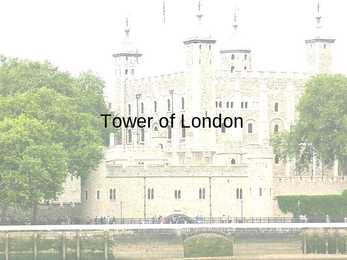
second massive curtain wall, which has five towers. The tower is manned by the Yeomen Warders (known as Beefeaters), who act as tour guides, provide security, and are a tourist attraction in their own right. Every evening, the warders participate in the Ceremony of the Keys as the Tower is secured for the night. History The Tower of London was founded in 1078 by William the Conqueror. In the 12th century, King Richard the Lionheart enclosed the White Tower with a curtain wall and had a moat dug around it. The fortification was completed in 1280 by Edward I, who built the outer curtain wall. The Tower today is principally a tourist attraction. Besides the buildings themselves, the British Crown Jewels and a remnant of the wall of the Roman fortress are on display. Primary Functions The tower's primary function was a fortress, a royal palace, and a prison for
Ghosts, mythic kings and magical monsters are more to Raggi's liking. He has filled the band's debut album, My Head Is an Animal, with such mystical things. Trumpeter, Ragnhildur Gunnarsdóttir, joined in the 2012 tour, and is simply a session player. The band has not commented on interest to eventually bring her into the band. Albums Debut album : My head is an animal , released: September 20, 2011 (Iceland): "Little Talks" "Dirty Paws" "Mountain Sound" "King And Lionheart" EP Into the woods, released: December 20, 2011 (United States) - An extended play (or EP) is a musical recording that contains more music than a single, but is too short to qualify as a full studio album.
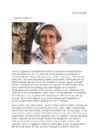
Astrid disregarded the barriers that came her way and went straight to strike for what she believed in. Pippi jumped right into the world of boys and grown-ups without any permission. She was bold and gave her opinion on anything to anyone. Pippi would never just sit and wait for her prince charming to come riding on his white stallion. She had her own horse. Lindgren has also challenged conservative codes of children’s literature in later works. Her novel The Brothers Lionheart brought up the taboo of the death and the doctrine of reincarnation. Mio, min Mio, a classical story dealt with good and evil, which has sources from the Bible, folk tales, and lyric poetry. Lindgren had considerable public influence, however, she used it scarcely. Her constant concern with animal welfare was active in passing a new law in 1988 controlling factory farming, which put Sweden among the most developed countries on this issue. Lindgren’s humor and love for humanity
power - Constitution of Clarendon Becket was sent to exile Henry II's wife, Eleanor of Aquitaine, and his sons rose against him but failed His third son, Richard I, defeated Henry II in 1189 and became the King Richard I was a devoted Christian and a soldier - Massacres of Jews in London and York - Third Crusade - Married Berengaria of Navarre and became King of Cyprus - Received the nickname of Richard the Lionheart for fighting bravely for the rights of Christians While he was on the crusade and in caption, his brother John almost became the king but was stopped by the return of Richard who later named John as his heir due to having no children of his own Died in 1199 Richard the Lionheart on the Third Crusade In 1199 the throne was claimed by King John - Known by the nickname Lackland or as the enemy of Robin Hood
Teda vangistati tagasiteel koju, mis oli majanduslikult halb riigile, sest lunaraha oli suur. Sellise vapra ja suursuguse mehe jaosk tuli surm imelikul viisil, kuid ta halastas oma tapjale, andes talle vabaduse. 4 Kasutatud kirjandus http://et.wikipedia.org/wiki/Kolmas_ristis%C3%B5da http://www.themiddleages.net/people/richard_lionheart.html http://blog.templarhistory.com/2010/03/king-richard-i-the-lionheart/ http://www.nndb.com/people/426/000093147/ http://www.historic-uk.com/HistoryUK/England-History/RichardTheLionHeart.htm http://en.wikipedia.org/wiki/Richard_I_of_England http://et.wikipedia.org/wiki/Richard_I http://www.postimees.ee/080907/esileht/ak/281749.php 5
Stephen acted quickly and claimed the throne to himself. Matilda invaded England a few years later. That led to a terrible civil war. Neither side could win so Matilda agreed to let Stephen be king, but her son Henry would be next. Stephen died the following year and the both countries were united under one king again. Henry II managed to put together a big empire but he fought a lot with his sons and wife. He was followed by his son Richard the Lionheart. When he died, the French king took some parts of Richards French land to himself. Richard was followed by his brother John who was already very unpopular for being greedy. In1204 he became even more unpopular because the French king invaded Normandy and the English nobles lost their land there. He was a failure as a king. He had taken the nobles money but couldn't protect their lands. In 1215 the nobles made him sign a new agreement Magna Carta. Magna Carta and the decline of feudalism.
empty. His companion was gone as well the horses. The man was seriously scared now, but since he was one of the Royal Solders fear was not allowed to be shown in public. So he drew his half-iron, half-silver sword and decided to go back to the field, but then he thought: "Alec told me to run...It means I mustn`t return to That place anymore...What should I do?" Suddenly the cloudy autumn sky turned red and the rider heard some wild animal roaring. This was unacceptable to his brave lionheart and he ran off to the forest not looking back even once. He wandered pointlessly many hours thinking of his friend whom was taken away by some mysterios beast. "Maybe the Devil really exists?" he whispered anxiously to the trees, but they didn`t give him an answer, they only swayed in the chilly wind. Finally there was light ahead, so the rider thanked the Queen and hurried towards an unexpected destination. He hoped it to be a village or even better a small city
· Problems: Philip II of France (much weaker, but technically Henry II's overlord for his French lands) was stirring up trouble and revolts · Henry II had problems with the Archbishop of Canterbury, Thomas Becket · Once his close ally · Several disagreements · The bishop tragically murdered by four overly eager knights (1170) Richard I · Henry II's older son · Ruled 1189-1199 · Known as Richard the Lionheart · Reputation as a great military leader and warrior · A central Christian commander during the Third Crusade · Put down rebellions against his father before becoming king · Spent very little time in England · Seen as a pious hero · One of the few Kings of England remembered by his epithet John Lackland · Ruled 1199-1216 · Got into trouble · Quarrel with Pope Innocent III · Excommunicated
o Most common motifs: disappointed love, jealousy, revenge, sudden disaster, adventure, war and death, the supernatural · The most famous group of ballads the Robin Hood cycle. He is said to have been a yeoman but his real life is overshadowed by the ballads. Characters: o Friar Tuck o Little John o Maid Marian o The Sheriff of Nottingham feudal authorities o Guy Gisborne o King Richard I AKA Richard the Lionheart o Prince John · The cycle represents the growing tensions between the farmers and the feudal lords. · Other ballads: o Historical ballads - "Chevy Chase" A rivalry between an English and a Scottish family o Love ballads "Childe Waters" Celebrates the eternal love of Ellen for Childe Waters who doesn't love her and treats her cruelly. In the end he falls in love with her and marries her.
Matilda of ordered by Bishop of Bayeux, William´s brother The most important pictural image of 11 C, priceless value The Domesday Book Historical record, based on the great survey of England which was drwan up on the orders of King William I Describes landholdings, resources of late 11 C Was written in latin, consisted of two books- Great Domesday, Little Domesday The House of Anjou Henry II 12 C Richard I Lionheart 12 C John I 12-13 C Henry III 13 C Edward I 13-14 C Edward II 14 C Edward III 14 C Richard II 14 C House of Lancaster House of York Henry IV 14-15 C Edward IV 15C Henry V 15 C Edward V 15 C Henry VI 15 C Edward VI 15 C Henry II and Thomas a Becket Henry II was the king of England, duke of Normandy, Aquitaine and count of Anjou Potentially the most powerful ruler in Europe The founder of the English Common Law
The Domesday Book forms a remarkable record of the state of England in the mid-1080's. *The House of Anjou/the Plantagenets/the Angevins (kings, centuries) was a royal house founded by Henry II of England. The First Angevin Dynasty also called the House of Plantagenet, ruled England from the reign of Henry II, in the beginning 12th century, until the House of Tudor came to power when Richard III fell at the Battle of Bosworth Field. Richard I Lionheart had a reputation as a great military leader and warrior. John I (13 th century) is known for sealing Magna Carta, a document limiting his power. Henry III, Edward I (14 th century), Edward II, Edward III, Richard II (14th century). *Henry II and Thomas a Becket Henry was a good administrator, but he had a terrible temper, which would get him into trouble. Becket was Henry's friend and chief administrator.
 annaabi.ee