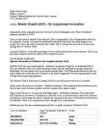
Bhakti Sastri Online Modul 1, lesson 2 Student: Madhuri Radhika dd (Almviks Gard, Sweden) 11th of January 2014 VIDEO: Bhakti Shastri (002) - Sri Isopanisad Invocation Isopanishad written originally as series of articles by Srila Prabhupada in his "Back to Godhead" magasine published by 1944. There is most mystical address of the Absolute Truth in Isopanishad. Style of Isopanishads isthat they are enigmatic, because it is meant for intellectuals and intellectuals don't like whne things are too simple, they like to speculate and stretch their minds. This is catering this need and at the same time leading them to Ultimate Truth. Concept of infinity if you take something out from infinity infinity still remains the same. Even if you take many infinities out of one infinity, still it remains the same. INVOCATION OVERVIEW Supreme Personality of Godhead is the Complete Absolute Truth Absolute Truth has many manifestations Brahman, Paramatma, Bhagavan
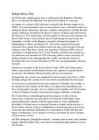
Eiffel Tower Introduction · The Eiffel Tower is a wrought iron lattice tower in Paris, France. It is named after the engineer Gustave Eiffel, whose company designed and built the tower. · Constructed from 188789 as the entrance to the 1889 World's Fair, it was initially criticized by some of France's leading artists and intellectuals for its design, but it has become a global cultural icon of France and one of the most recognisable structures in the world. · The Eiffel Tower is the most-visited paid monument in the world. Introduction · It's 324 metres tall, what maks it the tallest building in Paris(It's about as tall as a 80-storey building!). · Its base is square, measuring 125 metres on each side. · During its building, the Eiffel Tower surpassed the Washington
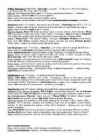
Independence Day On 24 February, Independence Day is celebrated in the Rebublic of Estonia. This is the day that the Manifesto was declared in Tallinn 91 years ago. In responce to a period of Russification initiated by the Russian empire in the 1890's, Estonian nationalism took on more political tones, with intellectuals first calling for greater autonomy, and later, complete independence from the Russian empire. Following the Bolshevik takeover of power in Russia after the October Revolution of 1917 and German victories against the Russian army, between the Russian Red Army's retreat and the arrival of advancing German troops, the Committee of Elders of the Maapäev issued the Estonian Declaration of Independence in Pärnu on February 24, 1918. after winning the Estonian
continental influences (Dutch and French); new forms: fiction and journalism Restor. theatre: comedy of manners, plays are socially mixed, women allowed to perform; heroic drama example: "The Country Wife" by William Wycherley Restor. prose: religious writing philosophical writing; instability of government political writing empiricism and scientific method Enlightenment (late 17th century) a cultural movement of intellectuals Writers: John Milton ("Paradise Lost", poems; "Areopagitica", defense of free speech; personal freedom and knowledge of self, contemporary urgent issues of both religious and political nature; high time during Civil War; "Eikonoklaste"); John Dryden (heroic couplet as new standard in poetry, satiric verses; influenced many 18th century writers; "Absalom & Achitophel") Augustan Age (early 18th century) admired and emulated the original Augustan Age
the Armenian name." The next thing that they did was take a vote regarding the extermination of the Armenians. The results were disastrous for the Armenians when they voted that not a single Armenian should be left alive. (Angelfire, 2011) (Wikipedia, 2011) 1.3. Young Turks and the Young Turk Revolution Young Turk Revolution found place in 1908-1909, it was the first bourgeois revolution in Turkey. The Young Turks were a group of intellectuals of different ideological backgrounds who united against the authoritarian regime of Sultan Abdulhamid. (Stjepanovi, 2006) The main revolution struggles took place in the areas of ecclesiastic politics in Jerusalem. With its Armenian and Greek Patriarchates and the Chief Rabbinate, Jerusalem became a central point of the struggles among the Jews, Armenians, and Greeks in the Ottoman Empire. (Matossian, 1994) 1.4. Armenian Genocide, 1905-1917 period
By the end of the 19th century, the peasants in South Estonia (Livonian province) possessed over 80% and in North Estonia (Estonian province) 50% of the available farmland. Influenced by the French Revolution, the ideas of Romanticism and the newly emerging German national consciousness, the mid-19th century also witnessed the national awakening of the Estonians. The leading force in the Estonian national movement was the new elite -- primarily the emerging intellectuals aspiring to better their social position, the middle layer consisting of civil servants, merchants and artisans, and, increasingly, the ethnic Estonian clergy. The low social status and the lack of the right to make any decisions, a result of the Russian central power and the Baltic German-dominated cultural situation, motivated the elite of the `awakened peasants' to build up their own independent nation and national society
Fathers and Sons is set in between Russia's defeat in the Crimean War and the Emancipation of the Serfs a socially challenging area. Mid-19 th century Russian intellectual life was characterized by a radical split between the `fathers' and `sons'. The older generation was young during the heavily oppressive rule of Tsar Nikolai I. For them, Tsar Alexander II's reforms were very anticipated and progressive. However, the `sons' or younger intellectuals saw these reforms were not fast or far-reaching enough. Thus, the generation of fathers is seen in the prevailing gentry, `', who ruled over the serfs and lands. Turgenev himself states, that « . , , . , . , : , ? -- , ». (Pisma IV, 380). Accordingly, Sukikh (1971:312) agrees that the progressive thinkers of the forties had lost their edge. This evaluation by the author
Some Muslim organizations began using the media to promote the message of Islam. The first Islamic satellite network hosting a 24-hour service worldwide was MTA International, established by the Ahmadiyya Muslim Community in 1994. Zakir Naik, head of the Islamic Research Foundation, established another 24-hour Islamic international TV channel (Peace TV) in 2006. In the 21st century Muslims face questions relating to their faith, the nation state, science, and every day life. New Muslim intellectuals are beginning to arise, and are increasingly separating perennial Islamic beliefs from archaic cultural traditions to resolve these issues. Liberal Islam is a movement that attempts to reconcile religious tradition with modern norms of secular governance and human rights. Its supporters say that there are multiple ways to read Islam's sacred texts, and stress the need to leave room for "independent thought on religious matters". Women's issues receive a significant weight
class England; they aimed to be uncompromisingly honest in personal and artistic life. For 30 years after her death, Virginia was considered an aesthete and eccentric. This changed in the 1970s – rediscovered by the feminist movement. No university education. Family of intellectuals. Married to Leonard Woolf – a marriage of the minds, no children. Together they ran Hogarth Press. WWII brought pressures for their company and after the death of her brother Virginia began to experience more and more mental instability, which eventually lead to her suicide.
The poet himself is the subject of other poems in which he explores his own feelings, perceptions and intuitions, and his task as a poet of giving voice to his people. He also deals with physical love and the celebration of the body. His frank openness about sexual matters and his exaltation of both male and female body shocked contemporary audiences. Reputation At the time of its first publication in 1855, only a handful of intellectuals expressed favourable opinions about Leaves of Grass. The average reader was shocked and outraged both by Whitman's innovative form and controversial content. In many respects he was half a century before his time. The changes in social and lit attitudes which took place towards the turn of the cent led to a reappraisal of his work. Today he is considered to be the father of Am poetry, a daring innovator, and a major influence on later poets.
A troubled life on the verge of madness. Creative voice on the verge of madness: emotionally unstable, never making a slightest attempt to hide it. 'madness' as a part of creative process. Any writer is 'mad' to a degree=wouldn't submit to the established conventions of sanity. The role of the unconscious-part of the Modernist programme-in order to have one's voice heard, one has to scream A troubled life: born at a wrong time-no university education. Right place-a family of intellectuals. Intellectual atmosphere. Large family, inner contradictions. Early psychological trauma, harassment by half brother. Bloomsberries-lively evening gatherings, convestations sparkled, discussed their own writing and other writing, painting, love and politics. Challenged strict victorian norms: sexual freedom, bisexual relations. Woolf's suicide: anxities, tensions underneath, liveliness of Bloomsury group. Peculiarities of Woolf's stream of consciousness
In its essence this became a spiritual manifestation of national potential. The success of the festival led to more choirs and bands being organised in Estonia. The following year the society would found the first amateur theatre. Dr. Friedrich Reinhold Kreutzwald (1803-1882) was the compiler of the national epic poem, Kalevipoeg, the first Estonian literary work to achieve international recognition, published in sequels between 1857 and 1861; he was a strong influence on the young Estonian intellectuals, a writer, a practising physician, and a member of foreign societies (the Finnish Literary Society and the Hungarian Academy of Sciences). Dr. Karl August Hermann (1851-1909) was a philologist, the most prominent figure in the music life during the National Awakening, and the publisher of the first Estonian music journal Laulu ja Mängu Leht (Newspaper of Song and Play).1 The early Estonian nationalists fought for civil rights, the democratisation of
Washington DC., Florida, New York, San Fransisco, Los Angeles. 17. The economic and social status of Asian Americans. The reasons for their relative success. Have all the groups of Asian Americans been equally successful? *Chinese Americans = · The first Chinese immigrants 1820 · 1849 California gold rush · Immigration and Nationality Act 1965 beginning of large-scale Chinese immigration · Highly educated intellectuals, scientists and engineers image of "model minority" · ABCs American-born Chinese "bananas" · FOBs recent immigrants "fresh off the boat" *Chinatowns in New York, Manhattan etc. *Education = · Comparatively greater investments in children's education · Disproportionately highly represented at top universities · Often take more difficult courses in mathematics and sciences
320 R. Dimitriu In Hoffman's account, besides accidental encounters, there are also carefully planned ones, as well as more formal meetings. Hoffman's sociological inquiry involves many intellectuals, a number of politicians, and some of the most important Romanian literary critics and novelists of the time. Magda Groza, the subsequent Romanian translator of Hoffman's (1989) novel Lost in Translation is also present and acts as an interpreter for the meetings with the literary figures
America helped Europe to rebuild itself. The famous Marshall's plan. America was ready to give money to Europe to stop the communists. a lot of military bases were organized in Europe. Gradually the cold war developed between the former allies-USA and USSR. The result of the cold war, there began intellectual terror, in USA and USSR. The intellectual terror is embodied in the character Senator McCarthy, very odeous figure, suspected that many American intellectuals were secret communists. he organized modern whichhunts. He ruined the lives and careers of very talented Americans. Existentsialism became dominent philosophies-choices, no happiness, if we choose authentic life. Another important influence is Freudism, pragmatism. According to freud the conflict between society and individual is inevitable. Also everyone is a sexual pervert, if we start analyzing dreams as Freud did. Another important feeling or perhaps quality is alienation
Transcendentalists believed that society and its institutions--particularly organized religion and political parties--ultimately corrupted the purity of the individual. They had faith that people are at their best when truly "selfreliant" and independent. It is only from such real individuals that true community could be formed. Transcendentalism was in many aspects the first notable American intellectual movement. It certainly was the first to inspire succeeding generations of American intellectuals, as well as a number of literary monuments. Rooted in the transcendental philosophy of Immanuel Kant (and of German Idealism more generally), it developed as a reaction against 18th Century rationalism, John Locke's philosophy of Sensualism, and the predestinationism of New England Calvinism. Its fundamental a variety of diverse sources such as: Vedic thought, various religions, and German idealism.
Whether we regard him from the point of view of art, of science, or of literature, he occupies in each department the position of precursor, pioneer, and indicator. Always original and always fertile, he prophesied of lands he was not privileged to enter, leaving the memory of dim and varied greatness rather than any solid monument behind him." Polyalphabeticity took another step forward in 1518, with the appearance of the first printed book on cryptology, written by one of the most famous intellectuals of his day. This was Johannes Trithemius, a Benedictine monk whose dabbling in alchemy and other mystic powers made him one of the most revered figures in occult science, while his more solid scholarship won him the title of "Father of Bibiliography." In 1518, a year and a half after his death, his Polygraphiae libri sex, loannis Trithemii abbatis Peapolitani, quondam Spanheimensis, ad Maximilianum Caesarem ("Six Books of Polygraphy, by Johannes Trithemius, Abbot at
 annaabi.ee