 50 punkti
Autor soovib selle materjali allalaadimise eest saada 50 punkti.
50 punkti
Autor soovib selle materjali allalaadimise eest saada 50 punkti.
 ~ 2 lehte
Lehekülgede arv dokumendis
~ 2 lehte
Lehekülgede arv dokumendis
 2010-12-08
Kuupäev, millal dokument üles laeti
2010-12-08
Kuupäev, millal dokument üles laeti
 45 laadimist
Kokku alla laetud
45 laadimist
Kokku alla laetud
 0 arvamust
Teiste kasutajate poolt lisatud kommentaarid
0 arvamust
Teiste kasutajate poolt lisatud kommentaarid
 OneWayluv
Õppematerjali autor
OneWayluv
Õppematerjali autor
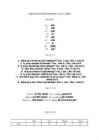
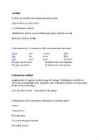
Unit 1/ Present Simple be /lihtolevik + - ? I am your teacher I'm not am I German? Yes- I am, you are, she/she/it is, we are, You are in room 13 you aren't am you German? you are, they are. He is jane he/she/it isn't Is he/she/it German? No I'm not, you aren't, he/she/it isn't, we aren't, She is marta we aren't are we German? you aren't, they aren't. It is a school. you aren't are you German? We are students they aren't are they German? You are in class 12 They are teachers Unit 2 / present simple + - ? yes- I do, you do, he/she/it does. I work I don't work Do I work no
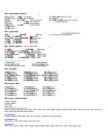
1. Active/Passive Active - the professor teaches the students. Passive - The students are taught by the professor 2. Present Simple [VERB] + s/es in third person. Tegevus on korduv või tavapärane. You speak English. I play tennis. Cats like milk. The train leaves tonight at 6 PM. I am here now. Active= Once a week, Tom cleans the car. Passive= Once a week, the car is cleaned by Tom. 3. Present Continuous [am/is/are + present participle]. Tegevus toimub/ei toimu praegusel hetkel. You are watching TV. You are learning English now. I am studying to become a doctor. I am meeting some friends after work. Active= Right now, Tom is writing the letter. Passive= Right now, the letter is being written by Tom. 4. Past Simple [VERB+ed] or irregular verbs. Tegevus algas/lõppes minevikus täpsel ajal. . You called Debbie. I saw a movie yesterday. I finished work, walked to the beach, and found a nice place to swim. I lived in Brazil for two years. I studied French when I was a child. Active
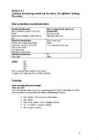
Book 1 BASIC ENGLISH BASIC ENGLISH GRAMMAR GRAMMAR BASIC ENGLISH GRAMMAR Book 1 Book 1 Younger students at beginning to intermediate levels will greatly benefit from this step-by-step approach to English grammar basics. This is the ideal supplement to your language arts program whether your students are native English speakers or beginning English language learners. Skill-specific lessons make it easy to locate and prescribe instant reinforcement or intervention. · Illustrated lessons a
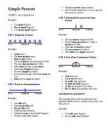
Windows are not made of wood. Simple Present · · New York is a small city. It is not important that this fact is untrue. [VERB] + s/es in third person USE 3 Scheduled Events in the Near Examples: Future · You speak English. · Do you speak English? · You do not speak English. USE 1 Repeated Actions Examples: · The train leaves tonight at 6 PM. · The bus does not arrive at 11 AM, it arrives at 11 PM. ·
Me ei käi pühapäeval koolis. They met on Friday. Nad kohtusid reedel. 4) söögiaegade nimetustega We have dinner at two. Me sööme lõunat kell kaks. They have breakfast at 9. Nad söövad hommikust kell 9. 5) tänavate ja väljakute nimetustega They live near Central Square. Nad elavad Keskväljaku lähedal. They live in New Street near Central Square. Nad elavad Uuel tänaval Keskväljaku lähedal. 6) keelte nimetustega Can you speak English? Kas te oskate rääkida inglise keelt? We speak Estonian. Me räägime eesti keelt. 7) nimisõnadega father, mother, uncle, aunt ja teiste perekonnasuhteid väljendavate nimisõnadega, kui neid tarvitavad sama perekonna liikmed: Is mother in the garden? Kas ema on aias? Ask Father to come here. Palu, et isa siia tuleks. Väljendeid ilma artiklita at school koolis to school kooli in town linnas
50 9.15 10.45 19.05 6.15 7.45 20.15 19.40 14.30 16.29 23.25 5.49 8.02 13.55 17.09 18.22 Addresses Aadressidest rääkides kasutatakse eessõna at, kui öeldakse ka korteri või maja number, ning eessõna in, kui öeldakse ainult tänava nimi. They live at 5 Oxford Street. She got a job in Weston Road. Ameerika inglise keeles kasutatakse tänavatest rääkides eessõna on. He lives on Penn Street. What's the address? Do you know the address? Practise asking and saying addresses: Süda 1, 10118 Tallinn Akadeemia tee 311 Kentmanni 25-91 Saue, Harjumaa, 76402 Jõgisoo MODULE 5 Word order A Verb + object I like children very much. Did you see your friends yesterday? Ann often plays tennis.
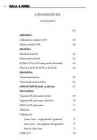
WOULD LIKE 92 IT IS 92 THERE IS / ARE 92 EESSÕNA Ajamäärused: eessõnaga ja ilma eessõnata 93 Eessõnad kohamäärustes 94 ARVSÕNA Põhiarvsõnad 95 Järgarvsõnad 95 60 KUUL UULAA & KORD KORDA ORDA ARTIKKEL Inglise keeles on 2 artiklit: 1) umbmäärane artikkel - A või AN 2) määrav artikkel - THE Umbmäärane artikkel - A / AN Esemete või olendite esmamainimisel kasutatakse tavaliselt artiklit A või AN. A kasutatakse kaashäälikuga algava sõna ees. AN kasutatakse reeglina siis, kui sõna algab täishäälikuga või kui hääldus algab täishäälikuga: an apple (üks) õun
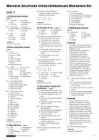
Maturita Solutions Upper-Intermediate Workbook Key Unit 1 2 members of the royal family, politicians, reality TV contestants, 4 1 2 had known had been waiting singers and TV presenters 3 had enjoyed/had been enjoying 1A Talking about people
 annaabi.ee








Kõik kommentaarid