Elistvere Animal Park One Sunday in October I visited Elistvere Animal Park. There are wild animals in the park that naturally live in Estonian wild nature. Unlike most zoos there animals live in as natural conditions as possible. In Elistvere I saw elks, lynxes, foxes, wild boars and many more animals that we can come across in nature. Also I saw there animals who don't live in Estonian nature but they can easily live in our climatical conditions, for example European buffalos and reindeers. There is a terrarium house where are smaller and exotical animals but unfortunately it was closed that day. Most of all I like lynxes and brown bear.There are also hiking trails where you can walk and enjoy Estonian nature's beauty or have a picnic. Day in Elistvere Animal Park was very exciting despite of the fact that there were constructional works and trails were very muddy
Accommodation in Lahemaa region Introduction Lahemaa region consists of tree rural municipalities Kuusalu, Vihula, Kadrina and one small town Loksa, in North-Estonia. Accommodation in Lahemaa represents almost all allowed types according to Estonian tourism law. There are some differences between accommodation types in Estonia and Great Britain. Comparison of the accommodation ways in Lahemaa and Great Britain The types of accommodation in Lahemaa are: villa, guesthouse, hotel, tourist farm, bed and breakfast, manor hotel, hostel, motel, cottage, campsite, caravan and lodge. Officially in Estonia there are no accommodation types like lodges and caravans, caravans belong under the accommodation type campsite. Lodges in Estonia, also in Lahemaa are managed by State Forest Board (RMK) and are meant to be independently used free of charge by any tourists. If there is a lodge in a tourism farm, it is considered to be an alternative a...
Women writer's influence on our society Kärolin Puusild 10th grade Overview History doesn't go far back Most aren't very famous Slaves Only rich people could get education Marie Heiberg Lived 1890 -1942 Marie Heiberg Lived 1890 -1942 First Poem collection - ,,Mure-lapse laulud" (Problem child's songs) Marie Heiberg Lived 1890 -1942 First Poem collection - ,,Mure-lapse laulud" (Problem child's songs) Talent was noticed Marie Heiberg Lived 1890 -1942 First Poem collection - ,,Mure-lapse laulud" (Problem child's songs) Talent was noticed Penury Marie Heiberg Lived 1890 -1942 First Poem collection - ,,Mure-lapse laulud" (Problem child's songs) Talent was noticed Penury In 1919 was diagnosed...
Estonia is divided into 15 counties which are divided in turn into 207 rural municipalities and 47 towns. The Republic of Estonia, the northernmost and smallest of the three Baltic countries, is located on the eastern shores of the Baltic Sea in the north-east of Europe. Lying between East and West, it has served as junction of international trade routes for centuries. Moreover, Estonian neighbours are Russia and Latvia. Estonia is accessible, both from a logistical and social point of view - Tallinn is within 3 hours flight from major European capitals and the power distance is very low. In the west, the coast of Estonia is washed by the Baltic Sea. It is a land of great natural beauty with a long and varied history and rich culture. That's their nature especially concerning national symbols such as their music or their language. Even if Estonia is tiny, it still offers a breathtaking amount of nature. It is safe or safer than most pl...
Estonian Environmental Strategy According to the article in constitution, every person in Estonia is obliged to preserve environment and to compensate for damage they cause. In the last fifty years, the use of natural resources has been irrational. The result is that there are turned out many environmental problem areas and preconditions for environmental crisis. Estonian environment was significantly polluted by Soviet army and it takes decades to eliminate this. After Estonia regained its independence, Estonia has moved towards a liberal and free market economy. Different enterprises and various funds have financed large investments to address enviromental problems. The main object of environmental protection is to provide everybody wtih a healthy environment and natural reources without causing damage to nature. The other goal of protection is to preserve biodiversity. Estonian National Enviromental...
How to produce bioenergy from agricultural resources without harming the environment Jürgen Aosaar Jaak-Albert Metsoja Ahto Oja BOVA cource on biogas from biomass March 3-7 2008 Tartu Deciduous tree species on abandoned agricultural land Current situation • The long term development plan of the Estonian energy industry foresees a reduction in the use of fossil fuels and an increase in the share of biofuels: by the year 2010 renewable energy must account for 5.1% of total energy consumption Current situation (2) • In Estonia we have abandoned arable land about 400 000 ha, part of it is overgrowing naturally, and another part has been afforested • For short-rotation forestry in Estonia, ecologically and economically the most suitable tree is probably grey alder, which is a highly productive and soil improving species Grey alder...
Estonia officially the Republic of Estonia, is a country in the Baltic region of Northern Europe. It is bordered to the north by the Gulf of Finland, to the west by the Baltic Sea, to the south by Latvia and to the east by Russia. Across the Baltic Sea lies Sweden in the west and Finland in the north. The territory of Estonia covers 45,227 km2, and is influenced by a humid continental climate. Estonia is a democratic parliamentary republic divided into fifteen counties, with its capital and largest city beingTallinn. With a population of 1.3 million, it is one of the least-populous member states of the European Union. The Estonians are a Finnic people, and the official language, Estonian, is a Finno-Ugric language closely related to Finnish The history of Estonia is a part of the history of Europe. Estonia was settled near the end of the last glacial era, beginning from around 8500 BC. Before the Germans invaded in the 13th century pro...
GEOGRAPHY Estonia lies of the eastern coast of the Baltic sea. Total area of Estonia is approximately 45000 square kilometer and the population is about 1.5 million . Estonia is one of the most sparsely populated country in Europe. With 35 people per square kilometer. Nearly 1/3 of the nation live in the capital Tallinn. Along the coast of Estonia lies many bays and peninsulas. Lots of islands lie off the west- and north coast. The largest of them are Saaremaa and Hiiumaa. Geographically Estonia can be divided into 4 parts: North-, South-, West-, and East-Estonia. North-Estonia is relatively flat. Here is a nice coastline with coves, capes and a high coast. South-Estonia is more hillier, but there aren't any mountains or mountain ranges. The highest peak in Estonia is Suur Munamägi and its 318m above sealine. The largest industrial areas are situated in East-Estonia. There are beautiful nature parks in Wes...
Estonia Location Estonia officially the Republic of Estonia is a state in the Baltic region of Northern Europe. It is bordered to the north by the Gulf of Finland, to the west by the Baltic Sea, to the south by Latvia and to the east by the Lake Peipsi and the Russian Federation. Across the Baltic Sea lies Sweden in the west and Finland in the north. Size and population The territory of Estonia covers 45,227 km2 Estonian population is 1.34 million Largest cities of Estonia 1. Tallinn (Estonian capital city) 2. Tartu 3. Narva 4. Kohtla-Järve Tallinn Tartu Narva Kohtla-Järve Largest islands of Estonia There are 1521 islands. 1. Saaremaa 2. Hiiumaa 3. Muhu 4. Vormsi Hiiumaa Saaremaa Vormsi Muhu Longest river of Estonia 1. Võhandu 2. Pärnu 3. Põltsamaa Võhandu river Põltsamaa river Pärnu river Estonian seasons There are four se...
Konrad Mägi Konrad Mägi was born at Hellenurme, Tartu on November 1, 1878. He was an Estonian landscape painter and a teacher. He has also participated in the foundation of the art association and school "Pallas". He was one of the most colour-sensitive Estonian painters of the first decades of the 20th century, and Mägi's works on motives of the island of Saaremaa are the first modern Estonian nature paintings. As well as nature paintings, he also painted flowers and portraits. He always used sky in his paintings. His favourite colour was cadmium red, which is quite light and warm red tone. Mägi received his elementary art education from the drawing courses of the German Artisans' Society of Tartu. Mägi continued his art education in Saint Petersburg, where he was expelled due to his participation in revolutionary activities. Then he spent the summer on the islands of Åland in Finland and after tha...
Good morning my dear classmates and teacher. I'm here to talk about one reason why is good live in Estonia. Estonia is a state in the Baltic region of Northern Europe. Estonia is a very beautiful country because of its versatility. I can read a lot of reasons for living here. We have a very beautiful nature, which will take many speechless. We have also a lack of mineral resources, which is very important to us. These reasons may be very much to read. Each person has their own reason why he likes to live in Estonia. For me personally the most important thing is our language. Estonian language have very many rules that make it very difficult to learn for some people. If leave those rules aside, is the Estonian language in terms of its sound very nice, that even many foreigners are admired that and are happy to listen it. Here I would like to ask, is the Estonian important for you? Rise your hand for whom it's important. Thank you, it...
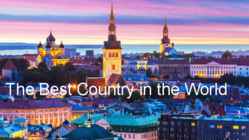
The Best Country in the World The Best Country in the World Estonia ● Area: 45,227 km² ● Population: 1,36 million ● Capital city: Tallinn (405 000 inhabitants) Sport ● Kiiking ● Kelly Sildaru ● Wife carrying Fun facts ● Tallinn is the city of the first Christmas tree ● Free public transport ● The first country to introduce online political voting ● Skype was invited in Estonia ● Estonian education system is the best in Europe ● 75.7% are irreligious ● 16% say that they believe in God Estonian nature History ● Human settlement was around 11 000 years ago ● Has been under Danish, Swedish, German and Russian ruling ● Achieved independence 24th of February 1918 ● Re-independence 20. August 1991 ● Regained its independence without a war ● Baltic Way Baltic Way The Estonian Song and Dance Festival https://youtu.be/ieKfoxVWUSo
„Birds of Estonia“ E. Leibak, V. Lilleleht, H. Veromann Nimi Eesti Maaülikool, Tartu 2014 Introduction: v Bird protection in Estonia v Bird habitats of Estonia v Examples of Estonian birds • Grasshopper Warbler • Brambling • Common Kingfisher Bird protection in Estonia: v The first bird sanctuary Vaika, 1910 v The first Nature Conservation Act in Estonia, 1935 v Estonian Red Data Book v Protection nowadays v Bird habitats of Estonia: v Estonian climate v More than 1400 lakes v Estonian rivers v Estonian islands v Forests v Natural or seminatural grasslands Grasshopper Warbler (võsa- ritsiklind): v Breeder, transit migrant v Medium-sized v Insectivorous v Colour: adult – brown back, gray underparts v Consevation status – least concern v Eggs and nest v The song Brambling (põhjavint): v Breeder, transit m...
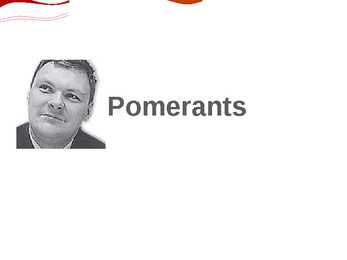
Marko Pomerants Marko Pomerants was born in 24.09.1964,in Tamsalu,in West-Virumaa. Personal status: Married,two sons Estonian Military monumental- medal "10 years of recovered military " 2001 Border Guard badge "Sword and Lynx" 2002 Lifesaving service goldencros s 2002 Border Guard favourcros s II class 2000 Tamsalu Secondary School 1982 Tartu University, Geology 1989; open management degree 2002 Party:Isamaa and Res Publica Union 2002 Room L 149 Jobs: Parliament 2007 Parliament 20052007; Minister of Social Affairs of Estonia 2003-2005 West-Viru county governor 19952003 West-Viru county goverment elementchapter's leader Funniest speaking. Estonian Parliament's member Marko Pomerants (IRl) performs preposal that in case of republic's jubileeyear should estonians take down 900 000kg together. Creational Activity: articles in Estonian journalism, in newspaper "Postimees" Activitys: volleyball,nature and family. ...
estonian culture The culture of Estonia incorporates indigenous heritage, as represented by the country's rare Finno-Ugric national language Estonian, with mainstream Nordic and European cultural aspects. Due to its history and geography, Estonia's culture has been influenced by the traditions of the adjacent area's various Finnic, Baltic, Slavic and Germanic peoples as well as the cultural developments in the former dominant powers Sweden and Russia. Traditionally, Estonia has been seen as an area of rivalry between western and eastern Europe on many levels. An example of this geopolitical legacy is an exceptional combination of nationally recognized Christian traditions: a western Protestant and an eastern Orthodox Church. Like the mainstream culture in the other Nordic countries, Estonian culture can be seen to build upon the ascetic environmental realities and traditional livelihoods, a heritage of ...
Women writer's influence on our society Estonian women writer's history doesn't go far back. The reason for that is that people were slaves back then. Even if there were writers, then most weren't famous and they wrote poems and stories more for themselves. Also being a woman and a writer wasn't considered as a decent job for a woman at that time. The stories that we have from that time were given to one another by talking and mostly we don't know who were the authors. Education was also very expensive so only rich people could get it and Estonians, who were just farmers, mostly didn't have money for that. First I am going to talk about Marie Heiberg. She lived 1890-1942. Her first poem collection was ,,Mure-lapse laulud" in translation ,,Problem child's songs". Her talent was noticed, but she didn't have a change to really become famous. She was in a great penury that made her life really though and she had a ...
Estonian University of Life Sciences What can be learnt? • A lot of subjects, which are connected of life sciences • Examples: • Veterinary Medicine • Horticulture(aiandus) • Forestry(metsandus) • Environmental Protection(keskkonnakaitse) • Nature tourism What are the requirements to get in? • Estonian exam • Math exam(narrow/wide) • Average mark • Admission exam(vastuvõtueksam) Facilities • Library • Dormitories(ühiselamud) • Sport facilities • Different institutes • Võrtsjärve Learning centre • Animal clinic • Organic centre Fees • Depends: • 1.Free • 2. 650 – 3900 euros per semester • Dormitories 80 – 150 euros a month What work can you do later? • Vet • Gardener • Farmer • Officer(ametnik) • And so on What makes the university special • The Estonian University of Life Sciences is one of top 100 universities in the world in the field of agriculture and forestry What would I like to learn there? • It i...
Weather and Nature in Estonia. I want to tell about Estonian weather.Estonian weather is very different.It can be in winter ime around 30C and half a year later there will be +30C. Best time, of course, is July.Then is a quite warm.Temperature is about +25C.But in fact, there is no summer at all.This is because Estonia is rather wet,windy,rainy and cloudy country. Spring is usual, rather cold, but sun is already shines.On March and April can happen that during ay there is five degrees below zero until 10 degrees in same day just early monings are really icy but afternoon if sun is high it is already nice and warm. Autumn is very similar to spring.There are rather icy and wet. Winter is very crafty, some days temperature can be around 5 degrees below zero, but sometimes can be 20 degrees below zero.If you like skiing then winter in Estonia is a best time for it. In my opinion, summer time is a be...
Sightseeing *Haanja Nature Park Haanja Nature Park (area about 17,000 ha) is situated on the Upland of Haanja and was established for the protection of the highest region of Estonia and the Baltic States In addition to the beautiful domed hills, deep valleys and picturesque small lakes old villages, customs and cultural traditions have been preserved * Timmas Nature Reserve Timmas Nature Reserve(the Reserve) is taken under the protection of natural forest and meadow colonies of protected species Reserve land and water protection regime is divided into the character and the degree of economic control of two special management zones and limited. *Suur Munamägi The highest point of the Baltic States Suur Munamägi (318 m, from foot to summit 62m) is situated in the Southern part of the Village of Haanja, 18km South from Võru There is...
ESTONIA VS AUSTRALIA Today, I shall compare the Baltic country, Estonia, and the largest country in Oceania, Australia. Largely they are going to be very different but still sharing little similarities. This essay will go in- depth about what makes these two nations so different. First I'm going to write about Estonia, a country within Europe. Estonia is quite small when compared to the other its neighbours with a land of 45.227 square kilometres and a population estimated at 1.3 million. The Estonian people largely speak Estonian but many of them also speak Russian and English, Russian more common as a secondary language. As being Estonian we know that less is always more. Best to be concise and to the point. Talking a lot and taking centre stage is considered rude and disrespectful. Estonians are known as hardworking, responsible, rule-obedient simple people. For example there is law that after 18...
Estonia Where it is? Republic of Estonia is a state in the Baltic region of Northern Europe .It is bordered to the north by the Finland, to the west by the Baltic Sea, to the south by Latvia (343 km), and to the east by lake Peipus and Russia (338.6 km). Across the Baltic Sea lies Sweden in the west and Finland in the north. Towns Tallinn is the capital and the largest city of Estonia. It lies on the northern coast of Estonia, along the Gulf of Finland. There are 33 cities and several town-parish towns in the country. In total, there are 47 linna, with "linn" in English meaning both "cities" and "towns". More than 70% of the population lives in towns. History • Estonia was settled near the end of the last glacial era, beginning from around 8500 BC. Before the German invasions in the 13th century proto-Estonians of the Ancient Estonia worshipped the spirits of n...
3) Milliseid meetodeid kasutatakse lindude individuaalseks eristamiseks / märgistamiseks? Milliseid tingimusi ja piiranguid tuleb sobiva meetodi valikul arvestada? Levinuim viis lindude märgistamiseks on rõngastamine. Selleks kasutatakse näiteks kaela-, jala- ja tiivarõngaid. Eelistatavalt võiks rõngas olla värviline, kuna seda võimalik märgata kaugemate vahemaade tagant kui tavalist alumiinium rõngast. Värviliste rõngaste puhul ei ole vaja linde hiljem loendamiseks uuesti kinni püüda. Rõngastamisel tuleks silmas pidada konkreetse linnuliigi eluviise, näiteks tuleks eelistada kaelarõngaid jalarõngastele, selliste linnuliikide puhul, kes toituvad kõrges rohus (näiteks haned ja luiged). Samuti peab olema linnuliigi märgistamiseks kasutatav rõngas linnule paras, st. liiga suur rõngas on linnule koormav või libiseb jalast lihtsalt ära, liialt väike rõngas hakkab linnu jalga painama ning naha ja rõnga vahele võib hakata kogunema ...
Picure0 Fauna Picture1 Contents · Facts · Mammals · Imphibians · Birds · Summary · My opinion · Fish · References · Insects · Reptiles · Danger Facts · Animals living mostly in forests · Birds first animals in Estonia · 135,600 species of incents · 350 species of verebrates Mammals · 65 different species of mammals · No endemic species Picture2 · Tremendous amount Picture3 · Specific mammals in Estonia · Importance Picture4 Picture5 Imphibians · Most common: grassfrog · Good conditions · Benefit · Nature protection Picture6 Birds Picture7 · 329 different species · Barn swallow · 100 species under nature protection Picture8 · Breeding sites Fish ...
Jõgeva maakond Endla nature reserve It is located on the borderline of Järva, Jõgeva and West-Viru counties. It is mostly known for various marshes, fens, quaking bogs, lakes, canebrakes, wellsprings, rivers, fen forests, fens and mesotrophic mires, marsh forests, meadows, diverse flora and fauna. Jõgeva town The small town of Jõgeva town is located on the eastern side of Middle-Estonia. You won't find large buildings or breathtaking architecture here, but an overwhelming sense of togetherness and plenty of cultural events, the majority of them geared towards younger people. Jõgeva town was born 130 years ago, thanks to the Tapa-Tartu railway: this is where the first train stopped and a village formed around the railway station. Just half a century later, Jõgeva earned its town rights. There are about 6500 people living in Jõgeva. Jõgeva events · The festival year in Jõgeva starts with a music f...
Estonian Economy Estonians earn about half of the average European income, despite the fact that the economic growth during the recent years has been very fast and the differences have been diminishing. Although the extremely vigorous period of economic reforms is now over, the changes that Estonia is presently going through are far more extensive than those in the developed countries. The Estonian economy is diverse industry and transport, as well as commerce and different branches of services are all equally important. Due to the available natural resources Estonian economy largely relies on the branches related to the forest; Estonian energy sector is based on oil shale, a resource quite rare elsewhere in the world. Finland and Sweden are the most important trade partners. The Estonian economy profits significantly from the business generated by more than 2 million tourists a year, most of who...
Estonia and what you know about it By Anšiel and Liza National symbols • The flag is blue, black and white horisontal lines, It represents the blue sky, the dirt, purity or snow. • The national bird is a swallow. • The national flower is a cornflower. History • The first settelments in Estonia came by supposedly about 11 000 years ago. • In the past most Estonians worshipped spirits of nature and their beliefs were seen as unholy by christian crusaders. Taara is believed to have been the name of the old Estonian god. • Starting with the Northern Crusades in the Middle Ages, Estonia became a battleground for centuries where many countries fought their wars over controlling the important geographical position of the country as a gateway between East and West, despite this the country has survived. • Estonia first got it’s independence in 1918 wich lasted 22 years. • The first president of Estonia during this period was Kon...
Mailis Kokla MT-09A Pärnu is a West-Estonian resort with well-established traditions that has held the title of summer capital and heart-warming town for over ten years. Pärnu is also a former Hanseatic town and it host the 30th International Hanseatic Days medieval festival in 2010. During the sunny summer period, the beautiful, sandy beaches invite people to come to Pärnu. Amazing nature, as attractive as the beach, can also be found throughout Pärnu County, which boasts a 242 km coastline. Tallinn Gate The so called Tallinn Gate used to mark the beginning of the postal road from Pärnu to Tallinn and was built during the Swedish period in the 17th century. The medieval fortification system of Pärnu was almost fully destroyed in the preceding Livonian War. Ammende Villa Villa Ammende is one of the best examples of early art nouveau style in Estonia. The grand villa with a large garden ...
The area of Estonia is 45 227 sq km it's bigger than Denmark, Switzerland and Holland. Population an estimated 1 364 100 people and 30 people per sq km. Capital of Estonia is Tallinn. Population in Tallinn is about 397 150 people over a third of the nation. The biggest cities are Tartu, Narva and Pärnu. 70% of Estonians live in towns. All of the towns are old. · Estonia has 7000 rivers and streams. · Forests comprise slightly under half on Estonia's territory. · Scots pine, spruce, birch, aspen and alder are the most popular in the forest. · There are also a lot of animals: elks, roe deers, boars, brown bears, wolves etc. · About 10% of Estonia is a nature reserve. Estonians speak Estonian. It is used as a mother tongue by just under 1.1 million people. Estonian is one of the world's smallest cultural lan...
The Republic of Estonia Estonia lies on the shores of the Baltic Sea. Its nearest neighbours are Finland, Sweden, Latvia and Russia. The total are of Estonia is 45,215 square kilometres. Estonia is one of the most sparsely populated countries in Europe. It has population neraly 1.4 million. There are lot of bays and peninsulas along the coast of Estonia.It has about 1,200 islands, the largest of which are Saaremaa and Hiiumaa. Nort-estonia is relatively flat and low-lying. There is a nice coastline here. Sout- estonia is hilly, but there are no high mountains in Estonia. The highest point is Suur-Munamägi, is only 318 meters above sea level. The largest industrial urban areas are in East-Estonia and there are some beautiful nature reserves in West-Estonia. Estonia is mainly agricultural country. Estonia is famous for its thousands of lakes and beautiful nature. One of the most interesting sights is...
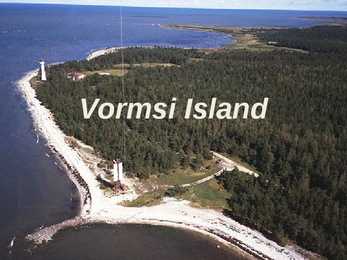
Vormsi Island Location Located between Hiiumaa and the mainland Fourth largest Estonian island Covering 92 square kilometres The meaning of "Vormsi" Known as "snake island" Derived from the German name "Worms" or it's Swedish name "Ormsö", both meaning snake island History Vormsi was inhabited by coastal Swedes 2500 people lived there before WWII During the Soviet occupation Vormsi was a closed border-zone Blend of Soviet and Swedish history mixed with unspoilt nature Nowadays Celtic crosses from the 13th century in Vormsi cemetery Vormsi is for people interested in mixed Soviet and Swedish history and rare nature Landscape Juniper fields Seaside meadows Erratic borders Lighthouses Forests Bays Lagoons To get to Vormsi You have to take a ferry (12 km, 45 min.) from Rohuküla port Public transportation bet...
ESTONIA ·Republic of Estonia is a country in Norhern Europe. Our president is Toomas Hendrik Ilves ·Territory of Estonia is 45,227 ( square kilometer) km² ·Population is 1.4 million. Estonia is one of the least-populous members of the European Union. ·The capital and largest city is Tallinn wich is in North-Estonia ·We are special because we have own language estonian ·Estonia is bordered to the north by the Gulf on Finland, to the west by the Baltic Sea, to the south by Latvia and to the east by Russian Federation ·Estonia is divided into 15 counties (maakond) ·In Estonia are 33 cities and several town-parish towns in the country. More than 70% of the population lives in towns. ·Estonia has summer capital it's Pärnu, autum capital it's Türi, winter capital it's Otepää ·The Estonia Theatre is an opera house and concert hall in Tallinn . It was built on 1913 ·The oldest records of...
1. Estonian literacy is really young. It dates back to only 19th century, but since then we have had really outstanding poets and writers. They have changed our traditions and shown us the beauty of our homecountry through their writings. There are more man writers in Estonia, but still each of them are astonishing. 2.Marie Under 18831980. She lived in Moscow for a while and then returned to Estonia and started writing. Founded Estonian Literary Society and was the honour member of it. She wrote poems in Germany at first, but them got inspiration to write poems in Estonian, working in newspaper ,,Teataja". She was the first writer in estonia to express emotions in erotic ways so her openminded poems were new to estonia. Her poems have been translated into many different languages. Heljo Mänd was born in 11.February, 1926 and writes bookes for children. Like magazine ,,Täheke" and book ,,Karu Aabits" that children have leart from. K...
What Pleases Me about Life in Estonia Many peole have said, that they do not like living in Estonia. I am one of them, although many people have tried to persuade me to think otherwise. I have loved on both sides of Europe both on the eastern and on the northern part. But there are, of course, some advantages in living in Estonia, too. The first one is definately my family and friends. It is good to live in a country when you know, that you have your loved ones by your side. They can help you in every situation or even when you have nothing to do and you need some entertainment. Also, when your problems seem to grow over your head and you feel that you need to share them with someone. The second good thing about living in Estonia is the nature. We have many beautiful places in our amazing country the best example are the forests. In many European countries, the biggest forest you can find is the size if Hiiumaa, but half of our cou...
Project ESTONIA MAP OF ESTONIA Southern Viljandimaa The southern part of Viljandi county catches the eye with its sublime scenery. The area today lies in the very heart of the historical Mulgimaa the home of hills, deep valleys and lakes brought together by a beauty spot Halliste primeval valley. According to several folk tales, it is also in these valleys, woods and bogs that Old Nick found refuge.The great variety displayed in the nature is also reflected in the local cultural heritage. At the beginning of the 19th century growing linen spread and became the basis of the legendary wealth of Mulgi farms. The ancient barn-dwellings and decaying manor houses are the mute witnesses of those times. The riches and cultural heritage of Mulgimaa owe to the diligence and tenacity of the local people. Village handicraftsmen and masters have always been honoured. Mulgikapsad (stewed sauerkraut with barley gro...
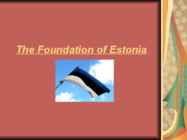
The Foundation of Estonia Estonia The history of Estonia The history of Estonia is a part of the history of Europe. Estonia was settled near the end of the last glacial era, beginning from around 8500 BC. Before the Germans invaded in the 13th century proto-Estonians of the Ancient Estonia worshipped the spirits of nature. Since the Northern Crusades Estonia became a battleground for centuries where Denmark, Germany, Russia, Sweden and Poland fought their many wars over controlling the important geographical position of the country as a gateway between East and West. Being conquered by Danes and Germans in 1227, Estonia was ruled initially by Denmark in the north, by the Livonian Order, an autonomous part of the Monastic state of the Teutonic Knights and Baltic German ecclesiastical states of the Holy Roman Empire. From 1418–1562 the whole of Estonia was part of the Livonian Confederation. A...
Elina Kangas 2014 Sweden Scandinavian country in Northern Europe. Sweden borders Norway and Finland Sweden is the third-largest country in the European Union by area, with a total population of about 9.6 million. Ways of getting there By plane By ship Essential baggage The Swedish climate is similar to Estonian, so you have to take the same clothes. Take documents and money . Places to visit Gröna Lund, because it has over 30 attractions including 5 rollercoasters Souvenirs Salty liquorice Old Swedish ceramics or other antique trinkets I like Sweden, because of the friendly peoples and beautiful nature Thank you!
Minu ema lemmik eesti film ,,Kevade'' on valminud Oskar Lutsu samanimelise jutustuse alusel, mille tegevus toimub möödunud sajandi lõpuaastate Eesti külas. See on lugu ühe kihelkonnakooli laste eluolust õppeaasta kestel sügisest kevadeni. Tegelased on meile kõigile tuttavad ja igiomased..: mõtlik Arno, vembumees Toots, pidevalt süüa mugiv Tõnisson, punase peaga mammapoeg Kiir, heledate lokkidega kannelt mängiv Imelik, elutark kellamees Lible, südamlik õpetaja Laur ja kärkiv-paukuv köster ehk Julk-Jüri. Rääkimata juba pika heleda patsiga armsast, ent tujukast Raja Teelest, kes poiste südamed põksuma paneb. ,,Kevade'' on haarav koolilugu mis pakub lusti ja nalja kui mõtisklusi elu põhiväärtuste üle. Kevade on erakordselt ilus aeg igas mõttes, nii looduses kui inimeste elus kus noorust võrreldakse kevadega- just kõik see kutsub filmi uuesti ja uuesti vaatama. My mother's favorite Estonian film, Spring '' has been produced on the basis w...
Minu ema lemmik eesti film ,,Kevade'' on valminud Oskar Lutsu samanimelise jutustuse alusel, mille tegevus toimub möödunud sajandi lõpuaastate Eesti külas. See on lugu ühe kihelkonnakooli laste eluolust õppeaasta kestel sügisest kevadeni. Tegelased on meile kõigile tuttavad ja igiomased..: mõtlik Arno, vembumees Toots, pidevalt süüa mugiv Tõnisson, punase peaga mammapoeg Kiir, heledate lokkidega kannelt mängiv Imelik, elutark kellamees Lible, südamlik õpetaja Laur ja kärkiv-paukuv köster ehk Julk-Jüri. Rääkimata juba pika heleda patsiga armsast, ent tujukast Raja Teelest, kes poiste südamed põksuma paneb. ,,Kevade'' on haarav koolilugu mis pakub lusti ja nalja kui mõtisklusi elu põhiväärtuste üle. Kevade on erakordselt ilus aeg igas mõttes, nii looduses kui inimeste elus kus noorust võrreldakse kevadega- just kõik see kutsub filmi uuesti ja uuesti vaatama. My mother's favorite Estonian film, Spring '' has been produced on the basis wit...
Egypt By: Eget Lina 10D weather I'd like to go when it's summer because in winter there is a lot of rain. In summer: Hot and dry climate. Temperatures average between 26.7 and 32.2 °C in summer I love the sun Expensive, money Currency- Egyptian pound (EGP) One Euro()= 9.45 EGP Comparison: Estonian (museums) ticket price is usually-5 euros Egypt (museums) ticket price is usually-417.82 EGP= 44.20 Abu Simbel temples Beautiful nature Beauty of temples Very famous Giza Necropolis One of the most known Chephreni sfinks Miracle of the world Egyptian Museum History of Egypt King Tutankhamun Pharaohs Thank you for listening
National symbols of Estonia Estonia Blue cornflower The Estonian Coat of Arms blue: vaulted blue sky above the native land; black: attachment to the soil of the homeland as well as the fate of Estonians for centuries black with worries; white: purity, hard work, and commitmen One of the mighty limestone structuresToompea Castle and Tall Herman, Tallinn The Barnswallow-- Estonia's National Bird http://estonia.eu/about-estonia/country/estonian-nature-wildlife.html 25.03.13 http://www.nationsonline.org/oneworld/estonia.htm 25.03.13 http://www.tartu.ee/?lang_id=2 30.03.13 http://www.visitestonia.com/en/holiday-destinations/city-guides 30.03.13 http://en.wikipedia.org/wiki/Estonia30.03.13 http://en.wikipedia.org/wiki/National_symbols_of_Estonia 30.03.13 http://en.wikipedia.org/wiki/List_of_cities_and_towns_in_Estonia 30.03.13
· Suuremõisa Castle. Suuremõisa Castle was built in the second half of the 18th century on the initiative of Countess EbbaMargaretha Stenbock (17041776). The wings are erected in 1772. There are 64 rooms in the Castle. 6 ponds were dug in the grounds of the Castle and a park and a garden established. In 1796 the Castle was sold to Baron UngernSternberg. The attic of the Castle has doubleceiling, where the Baron used to hide the treasures stolen from ships that had sunk in the Näkimadalad. On 19 October 1802 the Baron killed Karl Johannes Malm, the Captain (of Swedish origin) of his ship "Brig Morian", in this Castle. For this the baron was deported to Siberia. There are currently two schools in the Castle: Suuremõisa Gymnasium and Suuremõisa Technical School. In the latter one can also study how to become a ship's captain. · The Estonian Railway Museum is located in the s...
The county of Saaremaa Siiri Tabri Kaia Vask Saaremaa - an exciting island Saaremaa - the biggest island of Estonia is known as a good recreation place with unique nature and a lot of sights. Saaremaa has retained its uniqueness due to its location and insulation. Junipers, dolomite, windmills and the famous local home- brewed beer are considered the symbols of Saaremaa. Rich nature. Because of its mild maritime climate and soil rich in lime, Saaremaa has very rich flora and fauna. In Saaremaa a great number of Roman snails, rare butterflies and beautiful orchids can be found. Each year hundreds of thousands of migratory birds visit Saaremaa and a great number of them are under protection, e.g. barnacle goose and mute swan. Besides Viidumae and Vilsandi Nature Reserves, there are over two hundred single nature objects under protection - parks,...
Estonia lies on the eastern shores of the Baltic Sea on the level northwestern part of the rising east European platform. Estonia is a flat country covering 46 226 square kilometers.Estonian's neighbours are Finland, Sweden, Latvia and Russia. Estonia is rich in islands. The two largest are Saaremaa and Hiiumaa . Saaremaa is famous for its big meteorite crater called Kaali and Hiiumaa is famous for its nature and plants. The countries highest point Big Egg hill ( Suur- Munamägi) reaches 318 meters above sea level. Estonia has many uplands too. The uplands are: Pandivere upland, Otepää upland, Vooremaa upland, Karula upland Haanja upland, Sakala upland. Estonia is covered by about 18 000 square kilometers of forest. Estonia is also rich in lakes and rivers The largest lake is Peipsi and the second-largest lake is Võrtsjärv. The largest river is Võhandu whinch is 162 meters long. Estonia has many national parks. A national park is a p...
Tallinna Inglise Kolledz Estonia Topic Alice Tärk, 9b Tallinn 2007 FACTFILE Area: 45 228 sq km Poplulation: under 1.4 million Capital: Tallinn Language: Estonian Currency: Eesti kroon (EEK) Main religion: Lutheran National holiday: 24 February (anniversary of the republic) National flower: Cornflower National bird: Barn Swallow National stone: Limestone LOCATION The Republic of Estonia is the northernmost and smallest of the three Baltic States. It is located on the eastern shores of the Baltic Sea in the north east of Europe. To the east the country borders Russia. Latvia is the countries neighbour to the south. From the west the coast of Estonia is washed by the Baltic Sea and from the north by the Gulf of Finland. The length of the coastline is approximately 3 800 km. The longest distance from east to west is 350 km, while nort...
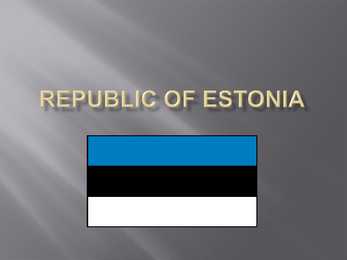
Estonia Topic Tallinn 2007 2 List of Contents page Facts and figures 3 Geography 3 Climate 3 Nature 4 History 5 Economy 6 Culture 6 Biggest towns 7 Language 8 3 Facts and figures The Republic of Estonia is a small country. Covering only 45, 228 sq km it is slightly bigger than Denmark, Belgium or Switzerland. Estonia's population is under 1.4 million. The official language is Estonian but since very many Russians live here Russian is also wide spread. The capital of Estonia is Tallinn. The currency used in Estonia is Eesti kroon. The Estonian national flag is blue-black-white. It was originally the flag of the Estonian Students' Society. The flag was first consecrated in Otepää Church in 1884. For a while, during the Soviet occupation, the flag was banned but it was again seen in p...
Valgamaa,Estonia Merilin Kõrnas, Johanna Pärn Location It´s in the south of Estonia and Valga´s city is next to the Latvian border. It´s next to Tartu , Viljandi , Põlvamaa , Võrumaa county . History of Valgamaa Back in 1783 counties 9 parishes from 11 were on Latvian area , only small pieces of Valgamaa`s 11 parishes Luke and Härgmäe were on Estonian area. were: Valgamaa´s people spoke Latvian. Koivaliina Härgmäe Luke Aluliina Apekalns Palsmane-Aumeisteri Gulbene Smilt...
A single nation. A million voices. The fall of and empire. Main events in Estonian history NIMI Ancient Estonia · Begins from around 8500 BC. · Worshipped the spirits of nature. · Own gods. · 5 periods: mesolithic, neolithic, bronze age, iron age, early middle ages. Click icon to add picture Click icon to add picture Estonian crusade · One of the last corners of medieval Europe to be christianized. · Against pagans in Estonia. ...
ESTONIA Strelnikova Viktoriya ESTONIA AT A GLANCE • Area: 45 227 square km • Climate: humid-temperate • Number of islands: 1 521. Largest islands are Saaremaa, Hiiumaa and Muhu. • Estonia is a green land, forests cover 55% of the country. • Estonia is a country of thousand of lakes, largest of these are Lake Peipsi and Lake Võrtsjärv. • Highest point: Suur Munamägi (Great Egg Hill), 318 m • The capital of Estonia is Tallinn (439 517 inhabitants (01.01.2016) or approx. 32% of the total population). Other large cities and population (thousands): Tartu - 103 300 Narva - 65 900 Kohtla-Järve - 44 500 Pärnu - 44 000 PAIDE TOWN IS THE HEART OF ESTONIA Paide town is located right in the centre of Estonia, earning it the nickname of “the Heart of Estonia”. A long historic background, beau...
UNO SOOMERE ESTONIAN SYMPHONIC MUSIC. THE FIRST CENTURY 1896-1996. AN OVERVIEW With a Historical and Cultural Summary IN MEMORY OF THE GREAT ESTONIAN COMPOSERS CONTENTS ESTONIA AND THE ESTONIANS FOREWORD IN THE FOLD OF TSARIST RUSSIA. EMERGENCE AND FIRST STEPS ON THE CLASSICAL-ROMANTIC PATH. HISTORICAL INTRODUCTION I. MUSICAL LIFE IN TARTU AT THE TURN OF THE CENTURY. TRAILBLAZERS: ALEKSANDER LÄTE, RUDOLF TOBIAS, ARTUR KAPP. II. THE FIRST DECADE OF THE 20TH CENTURY. ARTUR LEMBA: THE BEGINNING OF ESTONIAN SYMPHONY AND OPERA. III. NEW DEVELOPMENTS IN CULTURAL AND MUSICAL LIFE: THE END OF THE TSARIST PERIOD. THE INDEPENDENT REPUBLIC OF ESTONIA: THE INTRODUCTION OF INNOVATIONS FROM WESTERN ART AND THE EVOLUTION OF NATIONALLY ORIENTED MUSICAL TRENDS. IV. THE TWENTIES. ARTUR KAPP: ROMANTICIST AND DRAMATIST. V. THE INFLUENCE OF NEW WESTERN MUSIC...
Eesti linnud 4. Nimeta linnuliike, -seltse ja nähtusi Eestis, mis pakuvad erilist huvi Lääne-Euroopa linnuturistidele. Kus Eestis ja mis aastaajal neid kohata võib? (see võib eri liikide puhul erineda!) Sügisel võib Matsalu kandis näha tuhandeid linnuhuvilisi, kes kurgede rännet kaema tulnud nõndaks, et kõik 9 torni saavad kõvasti kasutust. Kumari Reisid on ainuke reisikorraldaja Eestis, keda reklaamivad Inglise ja Saksa loodusturismile spetsialiseerunud reisibürood ka oma kataloogides. (Ilves 2005) Alates 2003. aastast edukalt välis- kui siseturul tegutsev Estonian Nature Tours (ENT) on Eestis ainulaadne reisikorraldaja, mis on spetsialiseerunud linnu- ja loodusreisidele. Meie teenus on mõeldud inimestele, kes looduses liikudes oma ümber olevast rohkem teada sooviks ja nii aastaringselt. Juhendajateks on spetsialiseerunud linnu-, taime- ja loomatundjad. (Estonian Nature Tours) Loodus- ja linnuturistide kohale meelitamiseks on Eest...
 annaabi.ee