Leidsid 33 sarnast õppematerjali, mis on seotud failiga "English is the only foreign language worth learning". Need materjalid aitavad sul teemat sügavamalt mõista.
english, language, other, speak, languages, important, foreign, learning, know, chance, work, russian, different, around, career, traveling, best, almost, everywhere, mother, live, thanTallinna Mustamäe Humanitargümnaasium Valeria Jefremenkova ENGLISH AS A GLOBAL LANGUAGE INGLISE KEEL KUI ÜLEMAAILMNE KEEL Research work Supervisor: Jevgenija Kozlova Tallinn 2016 1 Table of Contents СONTENT…………………………………………………………………………………...2 INTRODUCTION…………………………………………………………………………...3
Everyone should be made to learn English Everybody knows their own language, but it is useful to know foreign languages. In present society we have to, at least, know basic English, because nowadays it plays a major international role and everything is based on English. Nowadays you can go almost everywhere and you can (make through everything when you know some English. For example; It is a whole lot easier to find a job, read English literature in the original. If you know the language of the country, where you're travelling to, it will be easier to go there. Knowledge of foreign languages helps us to develop friendship and understanding among the other people and it is easy to find and visit such camps and speak with people who do not know Estonian. Also you can read something and also understand films without any help. I find that English connects different people and helps us to feel like a big
Me and languages Nowdays it is very common that one person can speak more than one language. There are people who have to learn different languages at school and people who do it , beacause they want to educate themselves. I think that every person should speak at least 3 languages. My mother tongue is Estonian. I can speak and write it very fluently. I like to read books in estonian and listen songs in Estonian. I know some people who prefer to do it in English. But for me it is more enjoyable to do it in my mother tounge. English is one of the most common languages in the world. Therefore it is very important to speak it. I started learning English in the third grade like most of the students. Before the lessons at school I had already learned the basic of English. My sister is older than me and I was really interested in studying with her. Also very helpful things were cartoons and hollywood films. In everyday life I use English very
To Protect or not Protect Minor Languages Minor language is a language that is spoken in a minor area in a territory. For example Estonian is a minor language, because it has so little amount of speakers, just over a million comparing to German that has at least 100 million native speakers. Many minor languages have been mixed together or been developed from other languages. I think that the minor languages should be protected, because with languages come with a part of culture and if we terminate the variety of cultures that have developed throughout the evolution of mankind then the world would be boring. There would be no languages to learn, no foreign songs to sing and no joy of knowing that you can speak to a foreigner in his mother tongue. Also people are more friendly and open to you if they can speak freely in their mother language. But not protecting the minor languages can also be a good thing. As we know the world is
Me and languages. To begin with, language is a congrecation of thoughts and feelings through a system of signals, such as voice sounds, gestures, or written symbols. Communication or language is a process every child learns from birth and during our life we will usually learn many different languages. Due to the fact that both of my parents are Estonians , my mother tongue is Estonian, therefore I can speak and write in it very fluently. I also prefer read the books in Estonian. I know that some people like to do it in some other languages, in English for instance. I am really amused by the Estonian literature. I like to read books and stories from Andrus Kivirähk and F.R. Kreutzwald. English is one of the world most spoken language. You can hear it everywhere, no matter which part of the world are you in. In the third grade of elementary scool I started to
Why we learn the english language? It is necessary to learn foreign languages. That´s why the pupils have such subjects as a foreign language at school. Everybody knows his own language, but it is useful to know foreign languages. I learn English, because I understand that I can use it. For example, if I go to England I shall be able to speak English there. If I go to the USA, I shall speak English too, because English is used not only in England, but also in other parts of the world. I leran English because I want to read foreign literature in the original. I know and like such English as Ch.Dickens, M.Twain, L.Carroll and others. I understand that I must learn English. If I know English well, shall be able to go to the library and take books by English and American writers in the original. I like to travel. But it is difficult to visit countries, when you don´t know the language of these countries
My languages I love different languages. I mean, I really, really love different languages. I also believe and have been told that I pick them up rather easily. That might be true, although I did not pick any Greek up in Greece but that might have been because they spoke so damn fast that I could not tell if it was a word or an entire sentence. The first foreign language I learned was Russian. Considering I was ten when Estonia became a Republic, it makes sense. We began studying Russian in first grade, though it was simplified – "koška" instead of "kot", "medvešonok" instead of "medved", "saichik" etc. Did not make much sense and we mostly played some games in Russian (Tare-tareke etc). Learned as much playing outside, since we had Estonian-Russian kids around as well. Not that we played with them. It's sad
Why Languages? Languages are very important nowadays. There are more than seven thousand languages in the world. Some of the languages are more widely spread than others like English, German and Mandarin language. It is important to learn languages because people travel a lot and then the communication is easier. In the world there are so many languages and it is impossible that we could speak them all. That's why there are some dominant languages. I think one of the most spoken languages is English, because so many people in the world can speak it. Some foreign languages are taught in very young age children. For example in Estonian children learn in school German, Russian and English. Main is English. Main reason why English is so widely spread is because many young people learn English. So when you travel, English is main language you should speak. And it´s good when there are
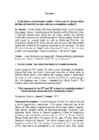
English is the only foreign language worth learning Many people think that English is the only language what is worth learning. I strongly disagree. First of all, there is so many countries , which have their own language. I do not see a problem talking in multiple languages. It only helps us develop and communicate with so many other language speaking people. Intercourse is what connects us, but to communicate with others we need to understand one another. What is more, we do not need to be so similar. Speaking some other language makes us more intriguing. Foreign languages are like crayons, all in different colours. Imagine if all the crayons would be in the same colour. If we paint a picture, we need a variety of colours to make the picture interesting. That is why we need to learn not only English, but many others
They can help and assist us if we need some technological help. Another thing is that in schools, in classes generally students are not allowed to use their appliances, so it means they have to communicate verbally as well. I think that teachers should be creative to blend so-called digital learning/teaching with old-fashioned learning/teaching. · Sir Ken Robinson: Do schools kill creativity? Sir Ken Robinson claims in the clip that " creativity in education is as important as literacy, we should treat it with the same status." I totally agree with all what he said. We have very strict education systems that don't allow a room for mistakes and they categorize people based on their achievements in exams. There is nothing like potentials, creativeness, possibilities or even 2nd chances. Families put high expectations on academic achievements and they always compare their kids with other's kids. A minority in
To give an answer by topic I decided to hear the views of other people. I was published a topic in Facebook. The theme was "How to survive in Estonia. Guide for foreigner". Analyzing the answers I see the stratification of society, where one side is set extremely negative, but I am glad that there are positive opinions about living in Estonia. But everything in order: The first group of people are inclined to say that in Estonia is difficult even for local people and what to say about those who come from abroad
Why learn foreign languages Everyone knows that nowadays English is the most common language in the world. For that reason, it is extremely important for young people to improve their skills and to learn as much as they can of, this important language. To begin with, speaking foreign languages allows you to travel wherever you want without any problems. If you are visiting a place far away, it would probably be useful for you to know a little bit of English or some other languages. For example, if you get lost in a strange country you could ask somebody for information without any problems. Furthermore, having a good knowledge of different languages could help you to find jobs. These days, it is always more common to find businesses which are looking for a good English or some other languages speaker. In addition, it could be important for you to learn language if you are interested in studying abroad. For instance, a good knowledge of English is required to
English in my life People in Estonia basically use two languages. The main language and also our mother tongue is Estonian. Also Russian is a commonly spoken language because almost one-third of the population in Estonia is formed by Russians. Besides those two languages many Estonians are quite good at English. We are visited by many tourists from Finland, Sweden, Latvia and many other countries. Tourists from the Scandinavian countries and from other places of Europe don't speak in Estonian. So it is quite important for us to speak itEnglish an international language. It also goes the other way around when we go traveling somewhere in Europe or even further - then we mainly use English to communicate with people. Over the last 10 years the use of English has grown a lot in Estonia. We have many new TV channels in English. Also some Estonians work abroad because of the salary or better working conditions
had been independent for three years under the great Osagyefo Kwame Nkumah. It was a time for celebrating Africa’s coming of age, as more and more African countries received their independence either from Britain or France. It was especially a poignant time for Africa, as then British Prime Minister Harold McMillan articulated his now famous “winds of change” sweeping Africa. We had high hopes for Africa, for the Black race, that the insidious imposition of foreign rule on us, the looting of Africa’s natural resources by our colonial masters accorded us would be things of history. That is more than forty years ago. Unfortunately, the promise of independence has not been fulfilled. Today, Africa has become more desolate; there is more starvation, diseases and non-provision of essential services than when we got our independence. There are all kinds of wars in Africa than the rest of world put together.
Essey How does the United States influence Estonia? The United States of America with it's global economic and political superpower is one of the most influential countries in the world and therefore it’s influence can also be felt in Estonia. Fluctuations in Estonia’s status as an independent country have had significant impact on the amount of influence from other countries, whether it is the language, eating habits or lifestyle. But how has United States influenced Estonia after we gained our independence? Estonia is not economically dependent on the United States as they are not one of our most important trading partners, but as the economics of the United States has a great influence on the world economy, they can still indirectly have an influence on Estonian economy. In Estonian politics the influence of the United States can be seen the most in relations with NATO
Maturitní otázka c. 23. Means of communication Introduction A few centuries ago people knew only a few kinds of communication. They could speak to each other, they could send their message from one place to another by smoke signals, they used mail. Later on, they also had some newspapers. The first expansion of media was when the radio and television were invented. The second and the biggest boom started in 1960s when the first communication satellite was launched into orbit. There are 4 main media: Newspapers, TV, Radio and the Internet. Today's people take this as an ordinary thing and we don't realise that we nearly can't live without it.
Roman politician, philosopher & translator. Theory ‘‘word-for-word’’ & ‘‘sense-for-sense’’. • Martin Luther – his role in the history of translation studies. Lived during the 15th century. He was a priest, theologian & translator. During that time, the Bible’s were only available in either Latin or Hebrew, which made it very difficult for common people to understand. He came out with a radical plan to translate the Bible into local languages (the first language was German – translated by Martin Luther). This inspired many other translators during that period. • What happened in the 19th and 20th century in translation studies? When and who created the term ‘translation studies’? Translation Studies – James S. Holmes - 1972 Ferdinand de Saussure – Lived during the 19th and 20th century. He was a Swiss linguist and a semiotician. He is widely considered one of the
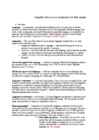
English structure revision for the exam 1. Terms Language → A systematic, conventional (tavakohane) use of sounds, signs or written symbols in a human society for communication and self-expression. Human language at all levels is rule- or principle- governed (valitsema) meaning that language corresponds to the grammar. Natural language is usually spoken, while language can also be encoded into symbols (such as letters, morse etc) For example: Estonian, English. Linguistics → The scientific study of human natural language. Broadly, there are three aspects to the study which are Pragmatics (studies the use of language → interested in the gap between the sentence’s meaning and the speaker’s meaning). Semantics (concerned with the meaning of the language aspects and the way they change, also how objects and language and thinking and language are related).
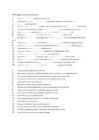
Fill the gaps with the correct tenses. 1. I (learn)................................ English for seven years now. 2. But last year I (not / work) ........................................ hard enough for English, that's why my marks (not / be) ............................. really that good then. 3. As I (pass / want) ............................... my English exam successfully next year, I (study) ............................... harder this term. 4. During my last summer holidays, my parents (send) ..................................... me on a language course to London. 5. It (be) ............................ great and I (think) .................................. I (learn) ................................... a lot. 6. Before I (go) .................................. to London, I (not / enjoy) ............................
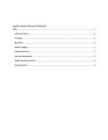
...................... 2 Global Problems ........................................................................................................................................ 3 Health and fitness ..................................................................................................................................... 3 Jobs and employment ............................................................................................................................... 3 English speaking countries ........................................................................................................................ 3 Food And Drink ......................................................................................................................................... 4 Exam House and Home I live in the center of Tallinn. In villardy street, it is near Kristiine. I have a very nice flat there with four rooms
"Learning and speaking foreign languages can open doors in my private life and professional life" The process of learning foreign languages can be very difficult and time-consuming, but knowing them is certainly very useful and important. Where and how is the ability of speaking foreign languages good for us? Speaking foreign languages in professional life is very important. Why should an employer prefer you to the other workers when you`re in the same level with them? Speaking foreign languages besides your native language helps you to stand out from the others workers and it gives you the advantage. I have noticed that if you searching a job in Estonia it ´s important to knowing foreign languages like english, russian and finnish, in many places it`s even compulsory. Knowing the foreign languages gives you the opportunity find the better job that you will love.
English is the only foreign language worth learning English is quite far-spread language all over the world. Lots of people believe that English is only foreign language what is need to be learned. I strongly agree with this view for a number of reasons. First of all, nowadays English is the most widely spoken and undrestood language in the business world. International companys and other organsations uses English as their communication language. What is more, when students would like to go studying abroad then English is necessery and sufficient. Usually the studies are in English and being on abroad usually you can speak in English. Furthermore, travelling in foreign country is not a problem when you can speak and undrestand a little bit English. Being in tourist region like somewhere in USA, England or other you can communicate everybody in English. All in all, I believe that English is one of the most important language to learn
Diplomat Diplomat's job isn't that easy. You have to be well educated. Knowledge in languages have to be high and you have to speak the language very well if not fluently. Everytime you change country, it is required to know basic things about it, like language, history, differences and so many other important things. In Estonia you can learn how to be a diplomat in Diplomatic School. It is very difficult to get in because every year they accept only around 30 students. You have to be flexible in your working hours because probably with the job you have to attend a lot of meetings or gatherings in the evenings. Conditions might be different depending on the country you are staying, like in America you'll probably have very good
As there would not be any duplicating, allowing much faster development of new technologies and faster production. In addition recourses would not pile up in one place because they would be diverted to places where the need is greatest. But there is a downside to a world government. Through unification of people and countries, smaller nations would lose their identity. It means smaller nationalities would simply fade away, they would be dissolved. Because the influence of other cultures would be too great. A world government is necessary if we wish to thrive in the future. Although it comes with the cost of losing the identity of smaller nations. Problems of 21th century city The cities of the 21th century are the biggest mankind has created besides incorporating newest technological innovations, however, even despite all the advanced technological applications, modern metropolises have many of the same problems as cities 200 years ago.
) We'd better ask John to help us. 11. Use the present progressive am playing, is raining etc to talk about things that are continuing at the time of speaking. I'm playing very badly today. (NOT I play very badly today.) Look! It's raining! (NOT Look! It rains!) 12. Use for with a period of time. Use since with the beginning of the period. for the last two hours = since 9 o'clock for three days = since Monday for five years = since I left school I've been learning English for five years. (NOT I've been learning English since three years.) We've been waiting for ages, since eight o'clock. 13. Don't separate the verb from the object. VERB OBJECT She speaks English very well . (NOT She speaks very well English.) Andy likes skiing very much. (NOT Andy likes very much skiing.) 14. Don't use the present perfect have/has seen, have/has gone etc with words that name a finished time. I saw him yesterday. (NOT I have seen him yesterday.)
They say it's unimaginable, boring, tasteless, it's chips with everything and totally overcooked vegetables. The basic ingredients, when fresh, are so full of flavour that British haven't had to invent sauces to disguise their natural taste. What can compare with fresh pees or new potatoes just boiled and served with butter? Why drown spring lamb in wine or cream and spices, when with just one or two herbs it is absolutely delicious? If you ask foreigners to name some typically English dishes, they will probably say "Fish and chips" then stop. It is disappointing, but true that, there is no tradition in England of eating in restaurants, because the food doesn't lend itself to such preparation. English cooking is found at home. So it is difficult to a good English restaurant with a reasonable prices. In most cities in Britain you'll find Indian, Chinese, French and Italian restaurants. In London you'll also find Indonesian, Mexican, Greek..
for a particular purpose. No warranty may be created or extended by sales representatives or written sales materials. The advice and strategies contained herein may not be suitable for your situation. The publisher is not engaged in rendering professional sevices, and you should consult with a professional where appropriate. Neither the publisher nor author shall be liable for any loss of profit or any other commercial damages, including but not limited to special, incidental, consequential, or other damages. For general information on our other products and services, please contact our Customer Care Department within the United States at (800) 762-2974, outside the United States at (317) 572-3993 or fax (317) 572-4002. Wiley also publishes its books in a variety of electronic formats. Some content that
Why I have to learn English? English is very important and useful language because a lot of people in the world can speak it. You need English language example when you are traveling and want to talk with local people. You need English also in Estonia when some tourist or other person who is visiting Estonia ask you to help her to find some place or wants to talk with you. You need to learn English when you want to go to some other country to study. It is usual that there are Universities in different countries in the world where is possible to learn in English. I don't know if there is any other university outside Estonia where you can learn in Estonian. You need to learn English when you would like to find new friends outside of Estonia. Today a lot of young people are speaking English and there are good opportunities to relate with people trough like MSN, Skype and Facebook.
ENGLISH IDIOMS Nõmmik Vilian Apprentice 10 "A" class Ahtme Gymnasium Kohtla-Järve Relevance of the topic Ø The English language becomes the means of international communication, the language of trade, education, politics, and economics. People have to communicate with each other. It is very important for them to understand foreigners and be understood by them. Goal of my research work Ø Goal of my research work is to prove that idioms in the English language are integral part of it, which make our speech more colorful and authentically native. Tasks I like to achieve the following tasks: 1. To classify idioms; 2. To study the problem of the translation of idioms; 3. To understand the aim of the modern usage of
'How are you?' Very often people expect you to say something positive. Here's a breakdown of how you can express how you really are without complaining too much. · Fine, thanks. / On top of the world, thanks. · OK, thanks · Not so bad, thanks. / Can't complain, thanks. · So so, thanks. / So and so, thanks. · Not so good, actually 1 The English alphabet Spelling Work with your partner and spell out first your name and then some names of places. Write down each letter as you hear it, and then say the word. The English alphabet on the phone: You might find the following alphabet (used by international airlines) useful when trying to spell a word on the telephone. A Alpha O Oscar Ä Alpha-Echo Ö Oscar-Echo
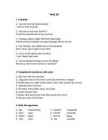
Test 16 1 Translate. 1 Mul olid varemalt pikad juuksed. I used to have long hair. 2 Kas see on teie kooli direktor? Is that the head teacher of your school? 3 Peaaegu igaüks räägib võõrkeelt aktsendiga. Almost everyone speaks a foreign language with an accent. 4 Ära muretse, sinu inglise keel on suurepärane. Don´t worry, your English is excellent. 5 Ma ei suuda taluda valju muusikat. I can´t stand loud music. 6 Kas sa tahaksid töötada ruumis või väljas? Would you like to work indoors or outdoors? 2 Complete the sentences with a job. 1 Vets look after sick animals. 2 Lifeguards work on the beach and help swimmers in danger. 3 Childminders look after small children when their parents are at work. 4 Teachers work at school. 5 Plumbers mend baths, sinks, and leaks. 6 Cooks prepare food.
Bilingualism The two most important languages on planet Earth these days are English the language of international commerce and of the media and Chinese, which is spoken by one of every six humans. The second tier of importance includes Spanish and Arabic and French for their wide use and Japanese, from Japan's economic influence. The third tier of importance covers Portuguese (for Brasil), German, and Russian. The remaining languages are essentially regional or minor. Success in business in the global economy requires fluency in one or more of the languages in Tier One or Tier Two, no matter where you live.Business operations reception, customer service, sales, websites, advertising that entail use of one or more languages provide access to major additional segments of the global economy. Likewise, the executive or office worker or retail clerk with multi-fluency has the edge over co-workers and competitors who do not
Tests Superstar 1 Luke Prodromou Test 1 Name____________________ Class_______ Use your English 1 Complete these sentences using the correct form (present simple or present continuous) of the verb in brackets. _ 1 She is in a band and she _________________________________ (record) a CD at the moment. _ 2 She is an actress and often _________________________________ (appear) on television. _ 3 At the moment she _________________________________ (have) a rest because she is tired. _ 4 Mike is a doctor and he _________________________________ (live) in Manchester.
 annaabi.ee