Photography Laura Tervonen 9A What is photography? φωτός (phōtos), γραφή (graphé) • Light is used to record a picture • Drawing with light • Communication, visual expression • Snapshots • Conveying information Brian Duffy • The man who shot the sixties • Fashion photography • Quit his job • Pulmanory fibrosis • http://vimeo.com/9141202 “The thing about the photograph is that theres’s no smell and in a sense it tells the truth and yet it is a lie” Alari Kivisaar • Started in 2005 • Macro photography • Two books • In 2005, he was infected with the virus of the nature photography and there are no signs of improvement
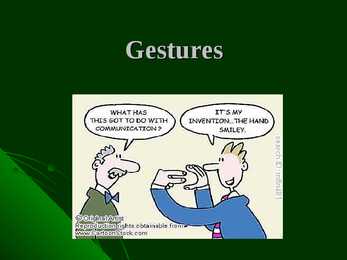
suggests indifference. Legs and feet pointed in a particular direction: the direction where more interest is felt. Crossed arms: indicates submissiveness. Facial expressions A facial expression results from one or more motions or positions of the muscles of the face. These movements convey the emotional state of the individual to observers. Facial expressions are a form of nonverbal communication. They are a primary means of conveying social information among humans, but also occur in most other mammals and some other animal species. Thank you for listening !
stored in a cargo container, and stacked on the deck. Sea tankers are used for large shipments of liquid or granular goods such as oil, grain and coal. 5.Rail Businesses use rail transportation for delivery of a wide range of goods including post, coal, steel and other heavy goods. 6.Pipelines Pipeline is a method of transportation in which liquid, gaseous or solid products are moved over long distances throught pipelines. It is used mainly for conveying natural gas, petroleum and solid materials 7.Conclusions ● Trucking very flexible to your needs, but prone to accidents. ● Ocean inexpensive, but slow. ● Rail most economic, but limited in final desti- nations. ● Air moves at the speed of business, but with a cost. Thank you! Information: https://en.wikipedia.org/wiki/Main_Page http://www.businessdictionary.com/ http://www.c2es.org
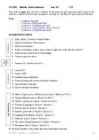
16. Capability - võimekus 17. Capacity võimsus 18. Caution - Ettevaatlikus 19. Certainly kindlasti 20. Citizen kodanik 21. Coalition - koalitsioon 22. Coherent sidus 23. Collegue - kolleeg 24. Common tava 25. Complex keeruline 26. Conduct- läbi viima 27. Confront- vastu astuma 28. Consequense - tagajärjed 29. Consortia - konsortium 30. Continent maailmajagu 31. Contribute- kaasa aitama, soodustama 32. Conversely - ümberpööratult 33. Conveying - Edasitoimetamine 34. Couraging julgustama 35. Credibility- tõsiseltvõetavus, usutavus 36. Criticism - kriitika 37. Data andmed 38. Debt võlg 39. Declare - deklareerima 40. Decrease - vähendama 41. Define- määratlema 42. Degree kraad 43. Delicate delikaatne 44. Demonstrate demostreerima, näitama 45. Development - areng 46. Differentiate- eristuma 47. Discretion Valikuvabadus 48. Dissatisfaction - rahulolematus 49. Divide - jagama 50
Finally, the most prevalent form of rhetorical device is emotive language. Emotive language is found throughout the entire speech and develops the passion, anger and love that is found in this speech. A good example of this language is found in the sentence: ’’The whirlwinds of revolt will continue to shake the foundations of our nation until the bright day of justice emerges’’. The descriptive words used bring emotions of determination, anger and desire to the audience. He’s conveying his feelings to the listener by painting a picture with words. Words like ‘’whirlwinds’’, ‘’revolt’’, ‘’shake’’, ‘’foundations’’ show the power and the rage behind the movement. To conclude, Martin Luther King made use of a variety of rhetorical and literary devices in his ‘’I have a dream’’ speech. He used metaphors, repetitions and emotive language to make the speech more persuasive.
2004). Lifestyles are central to debates about consumer culture and are often ‘articulated in relation to shifts identified with post-Fordism and/or postmodernism’ (Bell & Hollows, 2006, p. 1). Historical shifts from mass to specialised production in the context of urbanisation saw western class distinctions begin to destabilise and a concurrent rise in niche consumption practices as a means of symbolically conveying personal style (ibid). With a decline in identities based on logics of production and tradition, Shields (1992) suggests selves are instead increasingly fashioned and differentiated through aesthetic consumption practices. Distinctive consumption becomes a life project wherein ‘the particularity of the assemblage of goods, clothes, practices, experiences, appearance and bodily dispositions’ are designed together into a lifestyle (Featherstone, 1987, p. 59)
a certain winner a sure sign b) Amplifiers: scale upwards from an assumed norm, and are central adjectives if they are inherent and denote a high or extreme degree: a complete victory ~ The victory was complete. Great destruction ~ The destruction was great. On the other hand, when they are noninherent, amplifiers are attributive only: a complete fool *The fool is complete firm friend *The friend is firm Amplifiers are only attributive when they are used as emphasizers, conveying principally emphasis rather than degree. c) Downtoners: have a lowering effect. Usually scaling downwards from an assumed norm. They are relatively few (eg: slight in a slight effort, feeble in a feeble joke). Restrictive adjectives: restrict the reference of the noun exclusively, particularly or chiefly. Examples, within noun phases, include: a certain person his chief excuse the principal objection the exact answer the same student the sole argument
principles of this most ancient material in his masterpiece bridges of stone, the 279ft (85m) span Pont Adolphe in Luxembourg (1903) and the bridge at Plauen, Germany (1905), which was the longest ever achieved in stone masonry, with a span of 295ft (90m). The beginning of concrete as a major material of bridge construction dates from 1865, when it was used in its mass, unreinforced form for a multiple-arch structure on the Grand Maître Aqueduct conveying water from the River Vanne 94 miles (151km) to Paris. Engineers in the late 19th century demonstrated the possibilities of reinforced concrete as a structural material. With concrete resisting compressive forces and wrought iron and steel bars carrying tension, bridges of dramatic sweeping curves evolved. Today's long-span reinforced- concrete bridges are descended from French gardener Joseph Monier's flower pots and his numerous bridge patents granted between 1868 and 1878. He is
g. "And in 20 years do you know what those people would be? "Society," she said blackly (shows speaker's negative attitude). "Society" becomes negatively because of "blackly"). FGI 1081 Stylistics (I. Ladusseva) 6 Cases of negative AC are far more numerous than those of positive AC, and the reason is that in English we have a great number of words for conveying positive attitude and not so many of those expressing negative evaluation. Positive adherent connotation 1. The closeness and neighbourhood of words with inherent positive overtones (e.g. "She kissed my hands. They are beautiful, she said, big, and red, and brutal." "beautiful" is positively charged and so it influences "big" and "brutal"). 2. We may have comparison a part of which the word becomes (e.g. O. Wilde "Youth is so
by recapitulation). The beginning is pensive, the first theme presented by the flute: Example 30. The image is not dolorous. In the first section a mild and spiritual tone is prevalent: Beauty is dreaming, invoking and displaying itself. The musical metre is unusual: it enables a phrase to be housed in a bar. No strict tonality is fixed; augmented fourths in harmony render effable desires. The second section begins with a dancing and mischievous theme, conveying the image of Satan and his rough and obtrusive world: Example 31. An active pulsating movement begins: the world and its Master become all the more seductive. The theme is extended in the following developmental section and its transformation at the end of the recapitulation is barely recognisable due to its almost ascetic minor air. The transformations have been masterfully worked out, illustrating Oja’s refined and subtle way of thinking
er approaches the information service. The information service officer: · Finds out whether the vehicle is on the territory of the CCZ by the plate number of the vehicle and the name of the importer; · Gets connected with the administrative officer in order to find the driver. The of- ficer passes the information to the driver. Otherwise, he leaves a sticker on the vehicle conveying the request for the driver to come up to the information service. 3. Request of the importer to visually examine or/and physically inspect the commodity with the help of experts prior to submission of a declaration of the goods l Prior to submission of a declaration the importer is entitled to request a visual examination and/or physical inspection of the goods by the experts. For this purpose the importer approaches an operator of the information service. The operator:
100-101 defenses against, 200 Physical attractiveness, 45-49 Rove beetles, 11 influence of, examples of, 20-21, Running, Steve, 211 146-148 142, 164 Ryan, Leo R., 128 _INDEX Sabbatists, 103 Singapore, bank run in, Stomach signs, regard- Sabin, Robert, 132 13 6- 137 ing undue influ- Sadat, Anwar, 68 Size, conveying status, ence, 89-91 St. John, Kevin, 211 185-186 Streisand, Barbra, Salovey, Peter, 200 Social proof principle, 182 Sanka coffee, 183, 184, 99 Styron, William, 79 191- 192 advertising and pro- Suicide Saturday Night Fever, motion uses of, mass, 128-131 221 99-102,142 social proof principle
with everything else, but also with the Source of all life out of which it came. Even a stone, and more easily a flower or a bird, could show you the way back to God, to the Source, to yourself. When you look at it or hold it and let it be without imposing a word or mental label on it, a sense of awe, of wonder, arises within you. Its essence silently communicates itself to you and reflects your own essence back to you. This is what great artists sense and succeed in conveying in their art. Van Gogh didn’t say: “That’s just an old chair.” He looked, and looked, and looked. He sensed the Beingness of the chair. Then he sat in front of the canvas and took up the brush. The chair itself would have sold for the equivalent of a few dollars. The painting of that same chair today would fetch in excess of $25 million. When you don’t cover up the world with words and labels, a sense of the miraculous returns to your life that was lost a long time ago when
able belief about somebody else's bizarre understanding of the word). But in the case of what I am calling conveyed meaning, there is no pathology; it is a perfectly normal conversational phenomenon. Suppose you ask me whether Smedley is a good philosopher, and I say: (1a) Smedley summarizes texts pretty accurately and has very nice handwriting, or, less subtly: (1b) Smedley is very good at ping pong. Clearly, what I am conveying to you is not what my sentence literally means. What my sentence means may or may not be true, but that is immaterial. What I convey is something different, that Smedley is very bad or at least not very good at philosophy. My hearer should grasp that immediately; and indeed, competent hearers do grasp such conveyed meanings without ever realizing that that is what they are doing. Here, then, we have come upon another linguistic phenomenon that (like
thrust of his long, thick cock. "Do you want me, Gideon?" I asked hoarsely, needing to ride his thrusting fingers, but hampered by how far I had to reach to grab the strap. "More than my next breath." His lips moved over my throat and the top of my shoulder, the warm velvet of his tongue sliding seductively across my skin. "I can't go long without you either, Eva. You're an addiction...my obsession..." His teeth bit gently into my flesh, conveying his animal need with a rough sound of desire. All the while he fucked me with his fingers, his other hand massaging my clit, making me come again and again from the simultaneous stimulation. "Gideon!" I gasped, when my damp fingers began to slip from the leather. His hands left me and I heard the erotic rasp of his zipper lowering. "Let go and lie on your back with your legs spread."
had written to her since her being in Kent. They contained no actual complaint, nor was there any revival of past occurrences, or any communication of present suffering. But in all, and in almost every line of each, there was a want of that cheerfulness which had been used to characterise her style, and which, proceeding from the serenity of a mind at ease with itself and kindly disposed towards everyone, had been scarcely ever clouded. Elizabeth noticed every sentence conveying the idea of uneasiness, with an attention which it had hardly received on the first perusal. Mr. Darcy's shameful boast of what misery he had been able to inflict, gave her a keener sense of her sister's sufferings. It was some consolation to think that his visit to Rosings was to end on the day after the next--and, a still greater, that in less than a fortnight she should herself be with Jane again, and enabled to contribute to the recovery of her spirits, by all that affection could do.
to 60%. is brought about by boiling off the refriger- An immersion freezer is made up of a tank ant, the essential difference being the tem- with a cooled freezing liquid that can be any perature required for boiling. As well as nontoxic salt, sugar, or alcohol solution in using the latent heat absorbed by the boiling water, and a means of conveying the wrapped liquid, sensible heat is absorbed by the result- meat through the tank. The freezing process ing cold gas. Due to very low operating tem- is often completed in an air blast system. Ice peratures and high surface heat transfer slurries are being considered as an alternative coefficients between product and medium, to conventional immersion liquids. Such cooling rates of cryogenic systems are often
 annaabi.ee