Berlin, situated in the Soviet zone, was also divided. In 1948 Stalin enforced a blockade of Berlin and so Germany was divided into the Federal Republic of Germany( West Germany) and the German Democratic Republic (East Germany). The Allies responded with the `Berlin Airlift and for eleven months supplies were flown into Berlin by the Allies aircraft. The blockade was ended in May 1949 when Stalin gave up. 4. a) Marshal Tito also known as Josip Broz Tito was the Communist regime leader in Yugoslavia. He was very patriotic and party thanks to him Yugoslavia managed to keep its independence. Yugoslavia managed to fight back the Nazis almost single-handed.Tito resented taking orders from outsiders and when Stalin suggested to join Russias and Yugoslavias bank he refused. Many non- communist Yugoslavs supported Tito for patriotic reasons. b) NATO or also known as the North Atlantic Treaty Organization was formed in April 1949. It
Tartu Kutsehariduskeskus Toitlustus ja teenindusosakond AUSTRAALIA Liisi Vaasa K208 Juhendaja: Anneli Reino Tartu2010 Population: The population of australia is 22 106 112 persons. Australia population composition reflects immigration. About 91% of the population is from Europe, 6% from Asia, only 2,2% are indigene. 85% of the whites are British or Irish, a lot of immigrants are from Yugoslavia lands, like Croatia (800 000), Greek (600 000), Italy (600 000) and Polish (200 000) . Government: Federal parliamentary democracy and constitutional monarchy, monarch is Queen Elizabeth II, Governor General is Quentin Bryce and Prime Minister is Kevin Rudd. Climate: Most part of Australia is located in tropics zone. Equatorial climate rules in Queenslands north, and tropical monsoonclimate rules West-Australia and north territory, and queenlands north-western. Subtropical climate
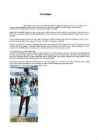
Petra Majdic Petra Majdic was born on December 22, 1979 in Ljubljana, Yugoslavia. She is an Olympic cross country skiing specilizing in the women's individual sprint discipline. Majdic is representing her home country of Slovenia in the 2010 Winter Olympics in .Vancouver, British Columbia Majdic has made 169 World Cup starts in her career, with 15 victories and 31 podiums to her credit. In her first start on the circuit on January 9, 1999, she finished 69th of 75 skiers in a 10 km cross country event held in Nove Mesto, Czech Republic.
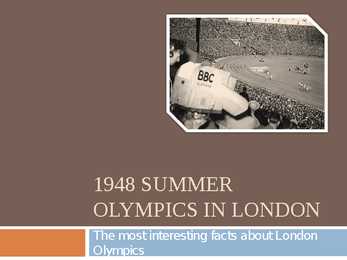
for men and 9 for women. 4 of these were making their debut - the men's 10km walk, the women's 200 meters, long jump and shot put Duncan White won the first ever medal for Sri Lanka in Ahtletics Basketball: 23 nations entered the competition. The United States defeated France 65-21 in the final. Brazil was the third Football: 18 teams were contested. The shiniest medal was claimed by Sweden, who defeated Yugoslavia 3-1 in the final. Denmark won the bronze medal Hockey: 13 nations participated. Surprisingly, the gold medal went to India, who won Great Britain. It was the first medal for India as an independent nation Swimming: 11 events were contested, 6 for men and 5 for women. USA won 8 gold medals, and 15 medals in total London was the first Olympics to have a politican deflection: Marie Provaznikova, who won a gold medal with Czechoslovakian gymnastics team,
NATO founding members were committed to defend each other in case of military aggression against any of the members. The Soviet Union collapsed in winter 1991 and the antagonism to the Soviet Union disappeared. As a result, countries of Eastern and Central Europe became partners of NATO, later member states (e.g. Czech Republic, Hungary and Poland joined NATO in 1999). However, new threats such as regional conflicts brought about by national and religious tensions arose in former Yugoslavia and some other part of the Soviet Union. These conflicts were a threat to others and therefore NATO set itself a new goal - to safeguard peace and stability in Europe. This caused a restructuring of the organisation and an establishment of new goals like crisis management, peacekeeping missions and defence liability. In addition to a few partners, cooperation with other organisations as the European Union (EU), the Organization for Security and Co-
English is the offical language, and is spoken and written in a distinct variety known as Australian English. It is the only language in the home for around 80% of the population. The next most common languages spoken at home are Chinese, Italian and Greek. An Aboriginal language remains the main language for about 50,000 people. Population Its population is around 20 351 000 people and is a rich blend of various ethnic groups, with substantial populations from Italy, Greece, former Yugoslavia, the Far East and Africa. There are 120 000 Aborigines. The density is 2.8 persons per km2. Climate Because of the country's great size, the climate in australia ranges from tropical regions of the Northern Territory to the cool temperate conditions in the southeast and Tasmania, where it often snows in winter. In the north, half the year is wet and half is dry. And its a popular place for winter holidays in the sun
Even today the big country is far from crowded. It is about the size of Unitad States, but its some 20 million population is less than four times as big as Chicago's. There are about 160,000 aborigines. More than half of all the people in Australia live in its eight biggest cities. Sydney and Melbourne are the two largest. Each one has about 3,000,000 people. Australia is a rich blend of varous ethnic groups, with substantial populations from Italy, Greece, former Yugoslavia, the Far East and Africa. The Political System Australia is still closely tied to its mother country. It is an independent nation, but it belongs to the British Commonwealth of Nations. The political system is a federation of six states (Queensland, New South Wales, Tasmania, Western Australia, South Australia and Victoria). Australia is a parliamentary democracy. Queen Elizabeth II is formally the head of the state,
After his remarks caused an outcry in Spain, the Italian sought to distance himself from his comments, explaining that he was not praising totalitarianism. He said: "I just wanted to say that Spain is better that Italy in some respects and provide a political context. I would never dream of praising dictatorships. My father conceived me after having been imprisoned in Nazi concentration camps." Born in 1946 in a village in the northern Italian province of Gorizia, near the border with the then Yugoslavia, Capello insists a hardworking upbringing and the encouragement of his father to pursue his footballing dreams are the roots of his success. His father played for an Italian third division side and an uncle was so good that he played for the national side. Not only was football in the genes but it also provided an escape from the Cold War pressures in a part of Italy where there was constant fear that the borders could be redrawn and his family forced from their home. Citing the
- German reunification - Potential need for increased coordination Common foreign & security policy - 1992 - 2nd pillar – intergovernmental & unanimity in council 3 sources of external relations: - Member states outside of CSFP - Member states within framework of CFSP – joint position and action - Commission – trade policy Amsterdam Treaty 1997 - IGC and European Council in June Themes and context - Review procedure for CFSP - Post-yugoslavia – diverse member states’ attitudes - Seeks to bring external relations of the EU to brussels Key features - Introduction of ‘constructive abstention’ - Creation of High representative for CFSP - Creation of policy unit for military and securtiy Towards Defence & security policy - Bringing defence to core of European agenda - Led by uk and France - Highlighted importance of the big 3 3 elements of EDSP:
Editor's Note: Alex Strojnik's Aviation articles on laminar flow in in all cases of new designs. He writings and aircraft designs have lightplane design, Alex designed also believes load testing may be in appeared in Sport Aviation many and built a very low drag powered order in a number of instances times in the past decade. A native sailplane, the S-2 (Sport Aviation, involving composite airframes. of Yugoslavia, Alex has very April 1982), which would become While there has been no history of impressive academic credentials. the first homebuilt motorglider in structural failure in composite He holds a degree in electrical engi- which International FAI Silver, Gold homebuilts that have been con- neering, a Ph. D. in aerodynamics .. and Diamond badges would be structed according to the . and made his way to the the U. S
needed). E.g. Zanzibar and Tanganyca merged and out came Tanzania, or Egypt + Syria (which then collapsed and became separate countries again) A + B > A; Countries merge but in the end there will be one of the original countries left, it got bigger. E.g. Eastern and Western Germany merged. A > B + C; Collapse of the country, country can be divided into completely new countries (recognition needed for new countries). E.g. Yugoslavia in the late stages when only two countries were left, Tsehhoslovakkia, Soviet Union (Baltic States, Belarus, Moldova, Ukraine, Russia, Armenia, Azerbaidjan, Georgia, Kasaksthan, gergistan, usbekistan, Turkmenistan +1) A > A + B; Collapse of the country, a part of the country leaves and the country remains (recognition for the new country). E.g. Yugoslavia in the early stages when some countries
· British Virgin · Kazakhstan · United Islands · Kiribati Kingdom & · Brunei · Korea Northern · Bulgaria (Republic of) Ireland · Comoros · Latvia · United States · Islands · Lesotho of America · Cook Islands · Liberia · Venezuela · Croatia · Liechtenstein · Wallis & Futuna · Cyprus · Lithuania · Yugoslavia · Czech · Luxemburg Republic · Macao · Denmark · Macedonia · Djibouti · Malawi · Dominica · Malta · Ecuador · Marshall · El Salvador Islands · Estonia · Mauritius HOW TO START BUSINESS IN GEORGIA - 15 Useful Appendix #10 Contact Information GEORGIAN NATIONAL INVESTMENT AGENCY
specific sense such as the modern European nation state ; it does not make them obsolete, but rather more necessary than they ever were, because some form of institution must structure and make habitable the environment created as a "spill-over effect" by Globalization. But even if we take a more narrow definition of state, if the 1990s have shown anything, it is the remarkable resilience of the state. Indeed, since 1989, we have more states than ever; the breakup of the Soviet Union and Yugoslavia, as well as of Czechoslovakia, are striking European examples. What one thus has seen, at least in part, is the re-emergence not only of statehood, but even of the nation state. Moreover, the EU, paradigm for times to come in all of Europe, is a state structure, constitutional crisis or not. There is a complex discussion about the legal "stateness" of the EU, but it certainly is a state if one uses a functional definition, which is what matters for PA and which is what is done here
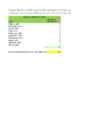
Latvia 30.16 Lithuania 28.29 Luxembourg 66.87 Malta 49.76 Moldova 14.54 Netherlands 56.43 Norway 62.11 Poland 19.43 Portugal 40.25 Romania 13.98 Russia 18.27 Slovak Republic 25.86 Slovenia 36.4 Spain 40.32 Sweden 67.93 Switzerland 66.09 TFYR Macedonia 20.38 Turkey 25.04 Ukraine 18.56 United Kingdom 54 Yugoslavia 20.58 Australia 50.45 Austraalia ja Okeaania Fiji 9.19 French Polynesia 23.04 Guam 45.31 Kiribati 3.06 Micronesia 7.56 New Zealand 48.57 Papua New Guinea 1.07 Samoa 5.06 Solomon Islands 1.93 Tonga 7.9 Vanuatu 2.57 1.93 #NAME? #NAME? 32.1 järelikult oli Eesti 3. neljandikus suurim maksuvõl Protsentiili
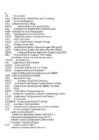
KEYBSF Foreign language KEYBoard program - Swiss-French KEYBSG Foreign language KEYBoard program - Swiss-German KEYBSL Foreign language KEYBoard program - Czechoslovakia (Slovak) KEYBSP Foreign language KEYBoard program - Spain KEYBSU Foreign language KEYBoard program - Finland KEYBSV Foreign language KEYBoard program - Sweden KEYBUK Foreign language KEYBoard program - United Kingdom KEYBUS Foreign language KEYBoard program - United States KEYBYU Foreign language KEYBoard program - Yugoslavia KHz Kilohertz KIF Knowledge Interchange Format KIPS Kodak Internet Print Service [Kodak] KIS Knowbot Information Service [Internet] KMZ Keyhole Markup Language KPI Kernel Programming Interface KQML Knowledge Query and Manipulation Language KRS Knowledge Retrieval System KSDS Keyed Sequential Data Set KSH Korn Shell (program) [Unix] KSPH Keystrokes Per Hour KSR Keyboard Send Receive KVM Keyboard, Video, Mouse (switch) + Kilobyte Virtual Machine L...
cryptanalyzed information as critical in a specific event. Finally, and most important, Germany lost the war, reducing all the Pers z efforts in the final analysis to nullity. "As I am accustomed to say," said Schauffler, "a bridge builder can see what he has done for his countrymen, but we cannot tell whether our life was worth anything." Yet they read the secret communications of the British Empire, Ireland, France, Belgium, Spain, Portugal, Italy, the Vatican, Switzerland, Yugoslavia, Greece, Bulgaria, Rumania, Poland; Egypt, Ethiopia; Turkey, Iran, China, Japan, Manchukuo, Thailand; the United States, Brazil, Argentina, Chile, Mexico, Bolivia, Colombia, Ecuador, Peru, the Dominican Republic, Uruguay, Venezuela. Not every code of every country was always read, but the solution of the codes of 34 nations of the earth suggests that, whether or not the Pers z cryptanalysts' life was "worth anything," the reckoning cannot involve whether they had done their duty. That they had
~iYfIZ Ml I ~ a . is la n ds . 97 74'OO 'N S7'OO'E Patagonia. region 79 46' OO'S 70' OOW Puerto Vallarta, MeXICO 76 20'3S'N lOS'l SW Russia, country 84 S9'oo'N 4S'OO'E Argentll1a 78 27'48'S M'16W S2"28'E )ad, Yugoslavia. 84 4S' IS'N 19'5rE Patras, Greece.. 84 38'16'N 2I' 44'E Puget Sound. bay. 54 48' oo'N I23'OOW Ruvuma, nver 91 12' OO 'S 38"OO'E Santo Domingo, 40'4 2'E lbct.Jnetsk. Russia . , . 96 S3' 46'N 87'11'E Pavlodar, Kazakhstan , 96 S2'20'N 76' SS'E Punta Arenas, Chtle. 78 S3'08'S 70' SSW Ruwenzon Mts
Estonia, Finland, Hungary, India, Iran, Ireland, Israel, Italy, Kazakhstan, North Korea, South Korea, Kyrgyzstan, Kuwait, Latvia, Lebanon, Lithuania, Macedonia, Moldova, Mongolia, the Netherlands, Oman, Pakistan, Poland, Qatar, Rumania, the Russian Federation, Saudi Arabia, the Slovak Republic, Slovenia, the Republic of South Africa, Sweden, Switzerland, Syria, Tajikistan, Thailand, Turkey, Turkmenistan, Ukraine, the United Arab Emirates, Uzbekistan, Venezuela, Vietnam and Yugoslavia (effective for Serbia). Belarus also signed a double tax treaty with Libya, but it has not been ratified yet. Belarus has double tax treaties as a legal successor to the USSR with the following countries: Denmark, France, Japan, Malaysia, Spain, Great Britain and the USA. According to the Ministry for Taxes and Levies, the treaties with Canada and Norway are no longer in force. Appendix 5 summarizes withholding tax rates for different types of income and countries. Source: Ernst & Young
12 i100 - informaatika tulevik0 Informaatika tulevik Millest juttu tuleb? •Mis on informaatika? •Milline võiks olla arvuti areng? •Milles võiks seisneda informaatika tulevik? ITK 2007, Kalev Pihl Sissejuhatus informaatikasse 2 Paul Graham informaatikast: •I've never liked the term "computer science." The main reason I don't like it is that there's no such thing. Computer science is a grab bag of tenuously related areas thrown together by an accident of history, like Yugoslavia. At one end you have people who are really mathematicians, but call what they're doing computer science so they can get DARPA grants. In the middle you have people working on something like the natural history of computers--studying the behavior of algorithms for routing data through networks, for example. And then at the other extreme you have the hackers, who are trying to write interesting software, and for whom computers are
The new generation of artists had started to lead the changes in the Sixties: painters and graphic artists Jüri Arrak (b. 1936), Malle Leis (b. 1941), painters Henn Roode (1924-1974), Enn Põldroos (b. 1933), and others. In painting the boundaries become flexible, the pure landscape with other images included (Olev Subbi, b. 1930). The first foreign exhibition of Estonian applied art in Soviet times was held in Helsinki 1960. Later international exhibitions in Poland, Yugoslavia, Italy and other countries won recognition and appreciation. The search for novel forms, free conception and an independent status of colours was far reaching. Deviation from the prototype became meaningful. Abstract experiments and Cubist deformation of form became just as important as other Western models. This was the time of rising activity in all the arts. A pure aesthetic approach was looked on with suspicion by the young. At the same time a counter-attack against
 annaabi.ee