 10 punkti
Autor soovib selle materjali allalaadimise eest saada 10 punkti.
10 punkti
Autor soovib selle materjali allalaadimise eest saada 10 punkti.
 ~ 1 leht
Lehekülgede arv dokumendis
~ 1 leht
Lehekülgede arv dokumendis
 2010-10-09
Kuupäev, millal dokument üles laeti
2010-10-09
Kuupäev, millal dokument üles laeti
 4 laadimist
Kokku alla laetud
4 laadimist
Kokku alla laetud
 0 arvamust
Teiste kasutajate poolt lisatud kommentaarid
0 arvamust
Teiste kasutajate poolt lisatud kommentaarid
 Stina Adermaa
Õppematerjali autor
Stina Adermaa
Õppematerjali autor
russet kittens have off-white faces (possible due to Burmese sepia gene in the mix), which are the first part to go red (rather than the last as in ambers), and pale undersides. The russet colour change appears to be slower than the amber colour change. Russet kittens to date have been larger at birth than their siblings and somewhat on the large side as adults. RECESSIVE BROWN - THE ENIGMATIC BARRINGTON BROWN GENE Copyright 2010 Sarah Hartwell This page pulls together what is known about Don Shaw's Barrington Brown gene, a form of recessive brown/colour dilution only reliably recorded in a colony of laboratory cats, none of which are believed to have left the laboratory. To make this comprehensible to the non- genetics expert I have referred to "copies of genes" or "versions" of genes although the correct terminology is "alleles". There is also a brief guide to Shaw's terminology at the end as Shaw's writing pre-dated modern "standard" symbols and terminology.
"I am become death, the destroyer of worlds." So said the physicist Robert Oppenheimer, who helped to invent the atomic bomb. The two bombs dropped on Hiroshima and Nagasaki in 1945 killed around 200,000 Japanese people. No other species has ever wielded such power, and no species could. The technology behind the atomic bomb only exists because of a cooperative hive mind: hundreds of scientists and engineers working together. The same unique intelligence and cooperation also underlies more positive advances, such as modern medicine. But is that all that defines us? In recent years, many traits once believed to be uniquely human, from morality to culture, have been found in the animal kingdom (see part one in this two-part series). So, what exactly makes us special? The list might be smaller than it once was, but there are some traits of ours that no other creature on Earth can match
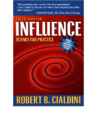
More praise for Influence: Science and Practice! "We've known for years that people buy based on emotions and justify their buying decision based on logic. Dr. Cialdini was able, in a lucid and cogent manner, to tell us why this happens." --MARK BLACKBURN, Sr. Vice President, Director of Insurance Operations, State Auto Insurance Companies "Dr. Cialdini's ability to relate his material directly to the specifics of what we do with our customers and how we do it, enabled us to make significant changes. His work has enabled us to gain significant competitive differentiation and advantage" -LAURENCE HOF, Vice President, Relationship Consulting, Advanta Corporation "This will help executives make better decisions and use their influence wisely ... Robert Cialdini has had a greater impact on my thinking on this topic than any other scientist."
- follows from - etc. Two remarks on indicators: 1. The occurence of an indicator does not suffice. We need to find also an inferential relationship. a. Since yesterday, it did not stop raining (temporal meaning) b. Since it is raining, I will take my umbrella (logical meaning) 2. Sometimes, there are no indicators. It is then necessary to inquire the implicit inferential relationshio between the statements in order to identify what statement follows from the other(s). This might be tested by mentally inserting the world “Therefore” and assessing whether it fits. a. I really need some money. I should get a job. b. I really need some money. Therefore, I should get a job. Non-arguments Not all passages are arguments. Examples: Simple non-inferential passages where nothing is said to be proved. ● Be careful! (Warning or piece of advice)
into its smallest parts (e.g. genes, neurotransmitters or proteins). This approach is sometimes criticized for being overly simplistic, but it is important to have detailed information of the components of human behavior in order to understand the interaction of several factors. Kasamatsu and Hirai studied a group of Buddhist monks who went on a 72-hour pilgrimage to a holy mountain in Japan. During this time the monks did not eat, drink or speak and were exposed to cold, autumn weather. About 48 hours later they started to have hallucinations, often about their ancestors. The researchers took blood samples from the monks before the ceremony and immediately after the monks reported seeing hallucinations. They found that serotonin levels had increased in their brains. Serotonin activated the hypothalamus and the frontal cortex resulting in hallucinations. They concluded from this study that sensory deprivation triggered the
It is only knowledge produced with difficulty that we truly value. To what extent do you agree with this statement? Session: May 2017 Word count: 1212 It is only knowledge produced with difficulty that we truly value. To what extent do you agree with this statement? To be knowledgeable is to have an understanding about how things are and how things work. Knowledge is the combination of facts, information, and/or skills that when put together create a whole picture enabling us to fully understand a subject or situation. We, as ordinary people, can acquire knowledge either from our first hand experiences (personal knowledge) or from education and research (shared knowledge). Difficulty depends on how much effort or skill must be implemented for the information to be
With this in mind, the revolution in science which emerged [ kerkis esile ] in the 16th and 17th centuries has appeared as a watershed in world history. The long term effects of both the Scientific Revolution and the modern acceptance and dependence upon science can be felt today in our daily lives. And not with standing some major calamity science and the scientific spirit will be around for centuries to come. There are numerous questions we could ask ourselves about the Scientific Revolution: why it occurred? what forces produced it? why was it so revolutionary? why was it stronger in the Protestant North? But to my mind, before we can even begin to cope with these questions we must ask a much more basic question: What is science? [ On mitmeid küsimusi, mida me võiksime küsida endalt selle revolutsiooni kohta: Miks see toimus? Mis seda mõjutasid? Miks oli see nii revolutsiooniline
the devil to signify that this pact had been made. Witches were most often characterized as women. It was believed that a witch often joined a pact with the devil to gain powers to deal with infertility, immense fear for her children's well-being, or revenge against a lover. The long-term result of amalgamation of distinct types of magic-worker into one is the considerable present-day confusion as to what witches actually did, whether they harmed or healed, what role they had in the community, whether they can be identified with the "witches" of other cultures and even whether they existed as anything other than a projection. Present-day beliefs about the witches of history attribute to them elements of the folklore witch, the charmer, the cunning man or wise woman, the diviner and the astrologer.
 annaabi.ee






Kõik kommentaarid