Human overpopulation Liis Lukk MJ15 What is overpopulation? • Overpopulation is an undesirable condition where the number of existing human population exceeds the carrying capacity of Earth. • Human overpopulation is among the most pressing environmental issues • Overpopulation can result from an increase in births, a decline in mortality rates, an increase in immigration, or an unsustainable biome and depletion of resources • Human population has been rising continuously since the end of the Black Death, around the year 1350 • The most significant increase has been since the 1950s, mainly due to medical advancements and increases in agricultural productivity • The recent rapid increase in human population over the past three centuries has raised concerns that the planet may not be able to sustain present or future numbers of inhabitants. Loss of Fresh Water
people living in this catchment area. [1] The sources of marine pollution are municipal and industrial waste inputs directly into the sea or rivers, and atmospheric inputs mainly from traffic and farming. Originating from cellulose producing and from paper mills, large amounts of poisonous chlorinated compounds are polluting the coastal waters of Sweden and Finland. Most of this material is still present in sediments of the central Baltic Sea and can be terminated by near bottom currents. [2] Unsustainable factory farming made the Baltic Sea one of the world's most polluted seas. A really bad year was 2010 unprecedented potentially toxic algae bloom covered almost 377,000 square kilometers. This is an area larger than Germany. This affects marine ecosystems and can cause important disturbance to them. [3] In my opinion, people should stop all the companies that spread toxic pollutants into the Baltic Sea. We could help cleaning it by supporting companies like: http://helcom
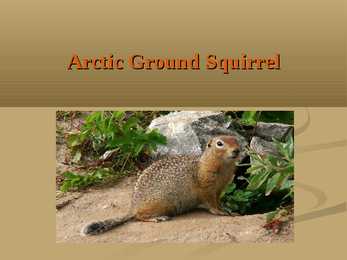
Arctic ground squirrels are usually active between four in the afternoon and nine or ten at night. On rainy and cloudy days, they will stay in their burrows. Colony is made up of burrows that are dug about three feet under the ground. The burrows are connected with a series of tunnels. Arctic ground squirrels are very vocal. They are called "sik-sik" by the Inupiat Eskimos in Alaska because of the sounds they make. Threats Unsustainable hunting for skins for local trade. Habitat degradation through grazing by increasing numbers of livestock. Drying of water sources and droughts. Bigger animals like arctic foxes and wolves, grizzly bears, lynxes, eagles and wolverines. Melting ice, which is caused by global warming. Thank you for listening !
degradation (degrödašon) to the system. Overfishing is a non-sustainable use of the oceans. WHAT IS CAUSING OVERFISHING?: Worldwide, fishing fleets are two to three times as large as needed to take present day catches of fish and other marine species (spiišis) and as what our oceans can sustainably support. On a global scale we have enough fishing capacity (cäpaseti) to cover at least four Earth like planets. On top of the overcapacity many fishing methods (methouds) are unsustainable in their own way. These methods have a large impact on the basic functioning of our marine ecosystems (ikousistem). These unselective fishing practices and gear cause tremendous destruction on non target (taaged) species. Bycatch and discards and bottom trawling destruction are two examples of this. WHY IS OVERFISHING A PROBLEM?: To explain why overfishing is a problem we first have to get an idea on the scale of the problem. This is best done by looking at repord published by the Food and
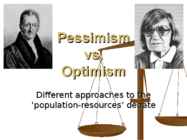
yields from these processes allowing more people to be fed. Limitations of Boserups theory Based on closed communities, which apart from the globe, is not the case as migration occurs. Therefore difficult to test these ideas as migration occurs in areas of over-population to relieve population pressure, which according to Boserups’s theory leads to technological innovation. Also Over-population can lead to unsustainable farming practices which may degrade the land e.g. desertification in the Sahel. In addition-The Club of Rome (Scientists and Administrators): Predicted in 1972 through the use of computer models, that if the then present trends in Population growth and resource utilization continued, then a sudden decline in economic growth would occur within the next century. There is a need for a global equilibrium to include stabilization of population growth, use of resources,
Palm oil can be present in a wide variety of products, including: baked goods, confectionery, shampoo, cosmetics, cleaning agents, washing detergents and toothpaste. A large proportion of palm oil expansion occurs at the expense of biodiversity and ecosystems in the countries it is produced. Currently, a third of all mammal species in Indonesia are considered to be critically endangered as a consequence of this unsustainable development that is rapidly encroaching on their habitat. There are over 300,000 different animals found throughout the jungles of Borneo and Sumatra, many of which are injured, killed and displaced during deforestation. In addition, palm oil development increases accessibility of animals to poachers and wildlife smugglers who capture and sell wildlife as pets, use them for medicinal purposes or kill them for their body parts
FIND OUT 5 WAYS HOW TO STOP POLLUTION. 2. Global Warming: Climate changes like global warming is the result of human practices like emission of Greenhouse gases. Global warming leads to rising temperatures of the oceans and the earth surface causing melting of polar ice caps, rise in sea levels and also flash floods, excessive snow or desertification. FIND OUT 5 WAYS HOW TO STOP GLOBAL WARMING. 3. Overpopulation: The population of the planet is reaching unsustainable levels as it faces shortage of resources like water, fuel and food. Population explosion in less developed and developing countries is straining the already scarce resources. Intensive agriculture practiced to produce food, damages the environment through use of chemical fertilizers and pesticides. FIND OUT 5 WAYS HOW TO STOP OVERPOPULATION. 4. Waste Disposal: The over consumption of resources and creation of plastics are creating a global crisis of waste disposal
On 5 July 2004, José Manuel Barroso, then Prime Minister of Portugal, was nominated President of the European Commission, the most powerful office in the European Union. On 1 December 2009, the Treaty of Lisbon entered into force, after had been signed by the European Union member states on 13 December 2007 in the Jerónimos Monastery, in Lisbon, enhancing the efficiency and democratic legitimacy of the Union and improving the coherence of its action. Economic disruption and an unsustainable government debt in the wake of the late-2000s financial crisis led the country to negotiate in 2011 with the IMF and the European Union, through the European Financial Stability Mechanism (EFSM) and the European Financial Stability Facility (EFSF), a loan to help the country stabilise its finances. IV. The nature of Portugal GEOGRAPHY The territory of Portugal includes an area in the Iberian Peninsula (referred to as the
In 2009, Asia passed the EU, but together they still accounted for 55 percent of exports. Fast-growing Asian economies are now the basic consumers of Ukrainian metallurgy products, and Russia's exports of oil and gas suffer from low growth in Europe more than Ukraine's exports do. Meanwhile, the price of gas remained low. In 2008, the price paid by Ukraine for gas was still less than half of that paid by Western European countries. Over a longer period, this growth pattern was bound to be unsustainable. This is the most important single fact of Ukraine's economic prospects. The improving terms of trade of the 2000s were a positive windfall, but Ukraine did not know how to use that windfall wisely. Ukraine's economy and its growth prospects ultimately suffered from its nationalism and inefficiency. The windfall Ukraine enjoyed meant that industry did not have to diversify or become more sophisticated--two characteristics that are necessary for competition in today's markets. In
QWC – clear, well organised using specialist terms; 1 award the QWC mark if four of the following are used in correct context biodiversity transpiration deforestation water cycle carbon reservoirs / sinks sustainable photosynthesis nutrient deficient (c) ban on import of wood from, tropical rain forests / unsustainable sources; introduce labelling system for wood; trade sanctions on countries that continue to remove rain forests; schemes / financial support, for setting up of sustainable use of rain forests; development of ecotourism; educate local population as to importance of rain forests; forest reserves established; AVP; AVP; e.g. debt relief fair trade schemes
2x a week.... I have been doing this for almost three months. In the rst 3 weeks I lost almost 20 pounds but since have regained about 7 pounds. I also complete a variety of exercises targeting various muscles groups (2x/week for my legs, hips, arms, etc) The seven pounds could have been muscular gain, which is good, but she was spending more than 12 hours a week in the gym. I suspected her problem, which I'd seen in others, was unsustainable overtraining and related "reward" eating: I suspect you are overtraining and actually losing muscle, given your description. This will lower your basal metabolic rate and then cause you [to] stall with fat loss. Try the diet with no more than 23 short weight training workouts per week [if you even choose to exercise; it's not mandatory] and remember to track bodyfat % and not just weight. Doing too much will not only not help, it will reverse your progress, as it also leads to
 annaabi.ee