 5 punkti
Autor soovib selle materjali allalaadimise eest saada 5 punkti.
5 punkti
Autor soovib selle materjali allalaadimise eest saada 5 punkti.
 ~ 1 leht
Lehekülgede arv dokumendis
~ 1 leht
Lehekülgede arv dokumendis
 2014-04-03
Kuupäev, millal dokument üles laeti
2014-04-03
Kuupäev, millal dokument üles laeti
 1 laadimist
Kokku alla laetud
1 laadimist
Kokku alla laetud
 0 arvamust
Teiste kasutajate poolt lisatud kommentaarid
0 arvamust
Teiste kasutajate poolt lisatud kommentaarid
 jmlogina
Õppematerjali autor
jmlogina
Õppematerjali autor
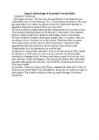
Mass Media What is Mass Media? Statistics show that there are few things which impact the human mind more than mass media. The advice of teachers, parents and relatives may fall on deaf ears, but the mass media influence holds us all spellbound! At this point, it becomes necessary to define mass media. Mass media may be defined as any form of communication which is meted out to the people at large, through the various forms of communication. What modes of communication are we talking about? Well there can be no static definition for the
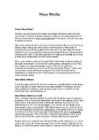
New Media Economy Social media information and data collection and security In this brief essay, i would like to focus on the social media platforms in our moren society. How people use them, what kind of information we give away, what companies will do with this. Information sharing and data protection has become very popular theme in the recent few years. People care more about their privacy and avoid „big brother“ foreshadowing. It is important to know what social media platforms promise and are they really going to keep it. Users should think about what they share and what kind of information they generate. Because it is all recorded and some info can be traced back to real people. Privacy and data protecion topics are becoming more and more important and the amouts of data generated is becoming larger. When wrongly access this kind of data, a lot damage could be done by criminals. Users privacy settings should be reviewd and fixed when needed.
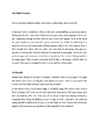
former colonial masters for the abject poverty in our respective countries. We blame the wars ravaging several African sectors on the interference of our former colonial masters on “our internal affairs.” Ha! – some kind of independence! In the 32 years I have been in America, I have never had a discussion with any of my brothers or sisters without it resorting to the African (Black)/Caucasian (white) relationship. When we decide to buy a house in a Caucasian neighbourhood, we blame the people for refusing to sell to us because of their 1 belief that we spend more time and money on visible luxurious and ultimately worthless items, than in maintaining our property, which to everyone but us is a major part of their investment and retirement and retirement portfolio. The blame game has become a permanent part of our lives to the exclusion of any other solution that could be more viable in solving our problems
More praise for Influence: Science and Practice! "We've known for years that people buy based on emotions and justify their buying decision based on logic. Dr. Cialdini was able, in a lucid and cogent manner, to tell us why this happens." --MARK BLACKBURN, Sr. Vice President, Director of Insurance Operations, State Auto Insurance Companies "Dr. Cialdini's ability to relate his material directly to the specifics of what we do with our customers and how we do it, enabled us to make significant changes. His work has enabled us to gain significant competitive
Relaying my own experience is easy: I had a standard classroom approach, supplemented by inordinate reading. In only the briefest and least memorable instances did I receive any individual tutoring. Education is commonly thought of as the job of schools. Adults cry "educate our children!" Everyone has opinions about the best way to do the job. It is of urgent importance, and all the numerous factors are much studied, debated, and new (or old) ideas continually tested or retested. Some people say "it's as simple as . . . " and then name their pet peeve or passion. My view is not of an education specialist, but of one who loves sharing what I learn, and owes much to educators. Since I don't have an educational theory neatly worked-out, nor an outline of my perceptions, my intent is to address each educational ingredient that comes to my mind. After I've said what I think about each topic, readers may have a fair comprehension of my philosophy. First comes sensitivity
samples from the monks before the ceremony and immediately after the monks reported seeing hallucinations. They found that serotonin levels had increased in their brains. Serotonin activated the hypothalamus and the frontal cortex resulting in hallucinations. They concluded from this study that sensory deprivation triggered the release of serotonin, which actually altered the way the monks experienced the world. The application of such research has improved the lives of many people, because drugs have been developed stimulating or blocking certain neurotransmitters. Psychologists however, consider the role of neurotransmitters on behavior, but do not solely rely on it to explain behavior. Brain technology has developed rapidly during the past century and is now used extensively in neuropsychology because it provides an opportunity to study the active brain. EEG Prints out brainwaves, registers patterns of voltage change in the brain.
... I thought so! Nowadays it would be hard to find a person who hasn't heard of Facebook. One in every 13 people on Earth is on Facebook right now. It is equal to oxygen for millions and millions of people. It currently has 800 million members and the numbers are going up as we speak. It would be fascinating to know, what caused such kind of phenomenon. At present I believe I could say that life has gathered into the Facebook. We can track in real time what people are doing, who they are communicating, what their marital status is and what mood they're in. Even businesses are promoting and seeking for new potential customers- through different public games where you can win from fancy dinners to fully paid trips to Hawaii. And it has been made so simple- you only have to click like and share. I think that Facebook is a good way to boost one's ego. I see people posting well selected pictures of their trips and parties
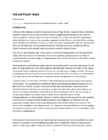
The possibility of such a transformation has been the central message of the great wisdom teachings of humankind. The messengers – Buddha, Jesus, and others, not all of them known – were humanity’s early flowers. They were precursors, rare and precious beings. A widespread flowering was not yet possible at that time, and their message became largely misunderstood and often greatly distorted. It certainly did not transform human behavior, except in a small minority of people. Is humanity more ready now than at the time of those early teachers? Why should this be so? What can you do, if anything, to bring about or accelerate this inner shift? What is it that characterizes the old egoic state of consciousness, and by what signs is the new emerging consciousness recognized? These and other essential questions will be addressed in this book. More important, this book itself is a transformational device that has come out of the arising new consciousness
 annaabi.ee








Kõik kommentaarid