Leidsid 33 sarnast õppematerjali, mis on seotud failiga "TALLINN". Need materjalid aitavad sul teemat sügavamalt mõista.
baltic, kadriorg, centre, towers, built, location, europe, north, county, previous, reval, first, 1154, rule, started, member, league, danes, sold, order, toompea, castle, medieval, listed, unesco, heritage, 13th, 16th, centuries, surrounded, walls, narrow, square, 1402, oldest, region, heightTallinn English College English Sergo Vainumäe 9A TALLINN Report Supervisor: Inge Välja Tallinn 2006 Order of contents: 1.Introduction 2.Toompea 3.Lower Town 4.Kadriorg and Pirita 5.Museums 1. Introduction Tallinn, the capital of Estonia, lies on the Baltic Sea. It is on almost the same latitude east St. Petersburg in Russia, Stockholm in Sweden and Stavanger in Norway, and covers 158 sq km. Tallinn was first marked on a map of the world by the Arab geographer al-Idrisi in 1154, its name then being Kolyvan (probably derived from the name Kalev). In the 13th-century Chronicle of Henricus de Lettis the town was called Lyndanise. Later came Reval (presumably after the old county
TALLINN History Tallinn is one of the oldest cities in the Baltic Sea region. Tallinn was first mentioned in written sources of the 1154th, when the Arabian geographer Al Idris took a world map the city 'Kaleveny "/ Kolõvan. Through the years, the city of Tallinn had several names: Lindanisa, Kolõvan, Reval and eventually Tallinn. Tallinn was granted the Lübeck law in 1248 and became the member of the Hanseatic League in 1285. General Data l Country - Estonia l County - Harju County l First appeared on map - 1154 l Town rights - 1248
My Town I live in Tallinn. It's the capital and main seaport of Estonia. Tallinn is a very beautiful city that lies on the Baltic Sea. It covers 158 square kilometres. The Mayor of Tallinn is Jüri Ratas. The population of our capital is about 400000 people. About 55% of them are Estonian, 37% Russians and the other 8% are from different nations. The people here are mostly engaged in industry- mainly the food industry (23%), trade (16%) and transport and communication (14%). History. Tallinn has a great history. It was first marked on a map of the world
Introduction Tallinn, the capital city of the Republic of Estonia and of the Harju county, is a town in North Estonia on the coast of the Gulf of Finland. It has nearly half a million inhabitants and covers an area of almost 160 sqkm. It is also an important economic and cultural centre and one of the main ports in the Baltic States. Tallinn is one of the oldest cities on the Baltic Sea. It is unique for its well-preserved architecture from the 13-15 centuries. In contrast to the ancient town-walls and towers, Tallinn of today offers modern hotels, restaurants, sport and cultural centres. Every five years national song and folk dance festivals take place in Tallinn. The yachting regatta of the 1980 Moscow Olympic Games was held at Pirita. History Tallinn means in English "Danish town". The place is believed to have been settled by Finno-Ugric people about 2500 BC
2 km2 with a population of 416,470. It is situated on the northern coast of the country, on the shore of the Gulf of Finland, 80 km south of Helsinki, east of Stockholm and west of Saint Petersburg. Tallinn's Old Town is in the list of UNESCO World Heritage Sites. It is ranked as a global city and has been listed among the top 10 digital cities in the world.The city was a European Capital of Culture for 2011, along with urku, Finland.Tallinn is the oldest capital inNorthern Europe. The city was known as Reval from the 13th century until the 1920s. http://en.wikipedia.org/wiki/Tallinn Old Tallinn The Old Town can historically be divided into two distinct areas: Toompea Hill and the Lower Old Town, which were separated by a dividing wall since medieval times. The elevated area of Toompea Hill with its castle was occupied by the residences of Tallinn's rulers and gentry. The Lower Old
A limestone cliff runs through the city. It is exposed, for instance, at Toompea and Lasnamäe. However, Toompea is not a part of the cliff, but a separate hill. Coastline is 46 kilometres long.The highest point of Tallinn, at 64 meters above the sea level, is situated in the district of Nõmme, in the south-west of the city. The first human steps, that archeologists found, are about 5000 years old. Tallinn`s first fortress was built in Toompea, in 1050. As an important port for trade between Russia and Scandinavia, it became a target for the expansion of the Teutonic Knights and the Kingdom of Denmark during the period of Northern Crusades in the beginning of the 13th century when Christianity was forcibly imposed on the local population. Danish rule of Tallinn and Northern Estonia started in 1219. In 1285 the city became the northernmost member of the Hanseatic League - a military alliance
Kunda Ühisgümnaasium Tallin Old Town Report Student: Kristin Karu Teacher: Kristi Aron Kunda 2012 The Alexander Nevsky Cathedral The Alexander Nevsky Cathedral is an orthodox cathedral in the Tallinn Old Town,Estonia. It was built to a design by Mikhail Preobrazhensky in a typical Russian Revivalstyle between 1894 and 1900, during the period when the country was part of theRussian Empire. The Alexander Nevsky Cathedral is Tallinn's largest and grandest orthodox cupola cathedral. It is dedicated to Saint Alexander Nevsky who in 1242 won the Battle of the Ice on Lake Peipus, in the territorial waters of present-day Estonia. The late Russian patriarch, Alexis II, started his priestly ministry in the church.
glass. ● The statue of Liberty, 2009; represents freedom, Estonia has been under many foreign powers, starting with Danes, Sweden, German and Russia. The clock of liberty, 2004. Kiek in de Kök ● The cannon tower, founded in 1475-1483. Kiika kööki, peek into the kitchen, from up there it was possible to peek into the enemy’s kitchen. The walls are 4 m thick, can see the cannons stuck in there. Tallinn City Museum. ● Town Wall (Unesco) - one of the greatest towers of Tallinn’s Town Wall, Old Town declared the UNESCO World Heritage Site in 1997 Toompea ● Toompea is a limestone hill in the central of Tallinn. It towers about 30-40 metres above the surrounding areas. According to the legend, its the tumulus moundn over the grave of the national hero Kalev, erected stone by stone by his grieving wife Linda. While we don’t want to question this wonderful theory, there is an alternative version which
2 Towns (Upper & Lower Town) Tallinn used to be divided into 2 parts - Upper Town where lived the aristocracy, gentry and the clergy; and Lower Town with traders, craftsmen and merchants. Legend says the Toompea Hill is actually the tumulus mound of the great Kalev. Linda carried rocks to his grave. It is a naturally- formed limestone hill. Lower Town was a merchantile centre, Tallinn also belonged to the Hansaetic League (1285). It is often referred to as the town of citizens. Any grown-up, married and economically independent person, born in a legal marriage between two free people and having lived in the town for at least 3 months, could apply to the Magistracy for citizenship. Serfs could escape from serdom after having successfully hidden in town for a year and a day. Two parts remained separated until the end of the 19th century. Four Names
The Historic Centre (Old Town) of Tallinn is an exceptionally complete and well-preserved medieval northern European trading city on the coast of the Baltic Sea. The city developed as a significant centre of the Hanseatic League during the major period of activity of this great trading organization in the 13th-16th centuries. The combination of the upper town on the high limestone hill and the lower town at its foot with many church spires forms an expressive skyline that is visible from a great distance both from land and sea. The upper town (Toompea) with the castle and the cathedral has always been the administrative centre of the country, whereas the lower town preserves to a remarkable
Old Tallinn Old Town, a medieval walled city filled with old buildings and fortifications. The sheltered bay and the easily defended Toompea Hill made it a natural place to settle. Sometime about 1050 A.D. a fortress was built atop the hill, the first of many. In 1219 the Danes showed up as part of the Northern Crusade to subjugate the Baltics and convert the local pagans to Christianity whether they wanted to or not. The Danes improved the fortifications and expanded the town, which became part of the Hanseatic League, a trading organization of a hundred northern cities. The Danes sold Tallinn to the Livonan Order, a branch of the Teutonic Knights, in 1346. The Swedes came next in 1561
Tallinn is a small port town in which the population is 371 000 people, and the area is only 159,2 km².( square kilometers). Tallinn, the capital of Estonia, is named after taani linnus, which means Danish castle. The Castle in question was built by King Waldemar of Denmark in the 13th century. The settlement quickly developed itself into a busy port. -The Old Town In medieval age Tallinn was called Reval and it was as big as the Tallinns Old Town is now. Uniqueness of Tallinn is that it is one of very few European cities, where the historical lay-out is kept in it's original form , and has a lot of monuments of that time. Thanks to that in 1997 Old Tallinn has been included in the list of a world heritage of UNESCO.
It occupies an area of 159.2 square kilometers with a population of 413,000. It is situated on the northern coast of the country, on the banks of the Gulf of Finland, 80 km south of Helsinki, east of Stockholm and west of Saint Petersburg. Tallinn was founded in the 12th century and has been under the rule of Denmark, Sweden, and Germany as well as Russia, and all left their mark on the city's architecture. It is one of the best preserved medieval towns in northern Europe, and makes a beautiful impression from the sea, with its ancient city walls, church spires, and red-tile roofed homes. Tallinn has previously been named as Kolõvan, Lindanise and Reval. Most well-known sights in Tallinn are Freedom Square, Kadriorg Palace, Rotermann Quarter, Tallinn Song Festival Grounds, Toompea Castle and Town Hall Square, the Old Town of Tallinn and many more. Tallinn's Old Town is in the list of UNESCO World Heritage Sites.
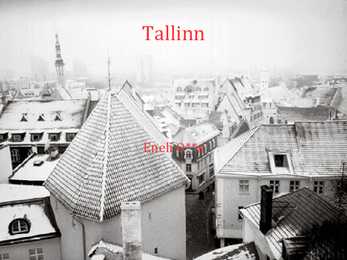
Tallinn Old Town It was built up from the 13th to 16th centuries, when Tallinn was a thriving member of the Hanseatic trade league. It is built on a big hill and is surrounded with big walls. There is a lot of medieval style houses and inns, courtyards, churches and museums and a lot more. Many have described Tallinn Old Town as mystic and addictive. Unlike other capital cities in Europe, Tallinn has managed to preserve the completeness and structure of it's medieval and Hanseatic origin. Even after 7 centuries, Town Hall Square still remains as the social heart of the city and is hosting many concerts and fairs. Town Hall on Town Hall square is the only intact Gothic town hall in Northern Europe, now operates as a museum and concert hall.On top of the Town Hall tower, you will see a beloved guard of Tallinn Old Town Vana Toomas.One of the most impressive churches in Old
Topic Estonia, Tallinn The Republic of Estonia is the northernmost of the three Baltic States on the eastern shore of the Baltic Sea. To the east Estonia borders on Russia and Lake Peipsi and on the south on Latvia. The area of Estonia is 45 100km2, its coastline is 774km long. The geography of the land is surprisingly varied. Islands make up 9,2 per cent of Estonian's total territory, the largest islands are Saaremaa, Hiiumaa and Vormsi. The highest point is Suur Munamägi, which is 317m high. Estonia has a surprisingly mild climate for an area so far north. Sea winds keep the weather from becoming very cold or hot.
Estonia Estonia, officially the Republic of Estonia, is a state in the Baltic region of Northern Europe. It is bordered to the north by the Gulf of Finland, to the west by the Baltic Sea, to the south by Latvia, and to the east by Lake Peipus and Russia. Across the Baltic Sea lies Sweden in the west and Finland in the north. The territory of Estonia covers 45,227 km 2, and is influenced by a humid continental climate. The Estonians are a Finnic people, and the official language, Estonian, is a Finno-Ugric language closely related to Finnish, and distantly to Hungarian and to the Sami languages. The population of Estonia is 1.5 million. Of this number 62 per cent are Estonians. The geography of the land is surprisingly varied
... Gümnaasium English Project Sights of Estonia Student: .............................. Class: 6 ... Teacher: ............... Harjumaa 2011 1 1. Steamer-icebreaker Suur Tõll The ship was built in 1914 in Stettin (Szczecin) by Vulkan-Werke A. G. Suur Tll is the only pre-war steam ship of the Republic of Estonia remained up to now and, at the same time, the biggest icebreaker in the world preserved through two world wars. All the 3 original steam engines as well as most of the original arrangement of space and late Jugendstil interior of the officers' rooms are preserved. In 1914 the first home port of the ship was Tallinn
Tallinn Eneli O**a History City rights were given to Tallinn on May 15, 1248 Independent since 1991 Covers the area of 159.2 km2 Old Town of Tallinn Tallinn's Old Town is one of the most well- preserved old towns in northern Europe The golden era in lies in the period between the early 15th and mid 16th centuries It has three parts: Lower Town, Upper Town + Town Wall, Towers and the Gates Lower Town/Upper Town Town Hall Square Toompea Castle & Tall Tallinn Town Hall Hermann's Tower Town Hall Pharmacy Cathedral of Saint Mary the Virgin Great Guild Hall Danish King's Garden House of the Brotherhood of Black Heads Other Attractions
Kildu Basic School Viljandi by Eisi Kõiv Supervisor: Margit Kirss Kildu 2008 Our 700 years old Viljandi Viljandi is a town (24,000 inhabitants) in Estonia, 160 km south of the capital Tallinn. The town is the administrative capital of the county with the same name as the town. In Viljandi there is theater Ugala, cinema Rubiin, museum, art gallery. Give a concert in Culture centre, Jaani- and Pauluse church, but in Cultureacatemy, too. Folk Summer in Viljandi culminates with the annual folk music festival. The Viljandi Folk Music Festival is a music festival in Estonia with a central focus on European folk music.In the year 2006, over 24,000 people attended the concerts, but many more just came to take part in the festivities
INTRODUCTION Tallinn is the capital and largest city of Estonia. It occupies a surface of 159.2 km2 in which 404,000 inhabitants live. It is situated on the northern coast of the country, on the banks of the Gulf of Finland, in north-western Estonia. Tallinn is the location of many institutions of higher education and science. As an important port for trade between Russia and Scandinavia, it became a target for the expansion of the Teutonic Knights and the Kingdom of Denmark. Historically, the city has been attacked, sacked, razed and pillaged on numerous occasions. Although extensively bombed by Soviet airforces during the latter stages of World War II, much of the medieval Old Town still retains its charm.
Tallinn, general overview Prepared: Hanna Bergmann 16.04.2011 Tallinn's Old Town is in the list of UNESCO World Heritage Sites. Tallinn is ranked as a global city and has been listed among the top 10 digital cities in the world. Tallinn is a European Capital of Culture for 2011, along with Turku, Finland. Location Tallinn is situated on the northern coast of the country, on the banks of the Gulf of Finland, 80 km south of Helsinki, east of Stockholm and west of Saint Petersburg. Tallinn is situated on the southern coast of the Gulf of Finland, in north-western Estonia. Tallinn Population The registered population of Tallinn is 412,341 (as of 1 Dec 2010). According to Eurostat, in 2004 Tallinn had the largest number of non-EU nationals of all EU
Tallinn 2007 FACTFILE Area: 45 228 sq km Poplulation: under 1.4 million Capital: Tallinn Language: Estonian Currency: Eesti kroon (EEK) Main religion: Lutheran National holiday: 24 February (anniversary of the republic) National flower: Cornflower National bird: Barn Swallow National stone: Limestone LOCATION The Republic of Estonia is the northernmost and smallest of the three Baltic States. It is located on the eastern shores of the Baltic Sea in the north east of Europe. To the east the country borders Russia. Latvia is the countries neighbour to the south. From the west the coast of Estonia is washed by the Baltic Sea and from the north by the Gulf of Finland. The length of the coastline is approximately 3 800 km. The longest distance from east to west is 350 km, while north to south Estonia stretches 240 km. THE NAME The name EESTI was apparently derived from the word AISTI, the
TOOMPEA Toompea (from German Domberg – Cathedral Hill ) is a limestone hill with an area of about 7 hectares in the central part of Tallinn. It towers about 30-40 m above the surrounding areas. According to the legend it´s the tumulus mound over the grave of the national hero Kalev, erected stone by stone in his memory by his grieving wife Linda. It is the birthplace of Tallinn - a place where in 1229 the Knights of the Sword built a fortress instead of the wooden Estonian stronghold. Toompea Castle is also one of the most potent symbols of the reigning power. Today Toompea is the seat of the Government of Estonia as well as the Riigikogu, both of which are often simply colloquially referred to as Toompea. For centuries there was only one access to Toompea - Pikk Jalg - but there is also another way leading up to Toompea - Lühike Jalg, which was made in the 14th century
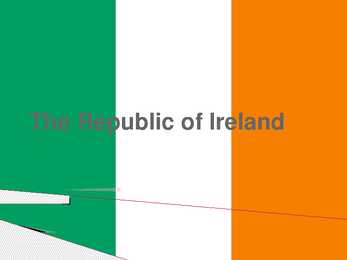
Capital: Dublin Patron Saint: St Patrick The second largest of the British Isles 60 million people outside Ireland claim Irish ancestry Landscape and climate Ireland is low in the middle and high at its edges. Not very high mountains; highest is Carrantuohill (1,040 m) in the southwest At Moher, you can look 200m straight down into the sea Green fields, full of flowers, wide and empty beaches All landscape types are represented Climate is damp Ireland is one of the wettest countries in Europe History St Patrick converted the Irish to Christianity In mid16th century Henry VIII declared himself King of Ireland and broke away from the Roman Catholic Church In 1601, Queen Elizabeth I defeated the Irish army at the battle of Kinsale and the land was dominated by Protestants The Act of Union in 1801 made England and Ireland one country with one parliament in London By 1900 Catholics could vote and speak in Parliament and there were Catholic schools and churches
Juhendaja: 2010 CONTENTS 1. Contents 2. Introduction 3. Compendium about Prague 4. Important about Czech Republic and Prague 5.-7. History 8. Independence 9. Main sights 10. the Czech Republic 11. List of famous people from Prague 12. Geography 13. Weather and climate 14. Population 15. Culture 2 INTRODUCTION The Czech Republic lies at the heart of Central Europe and at its center is the beautiful and historic city of Prague. With a population of some 1.3 million residents, the city lies on either side of the Vltava River in the middle of Bohemia that is one of the three historic Czech territories; the others being Moravia and Silesia. The city has seven "Chapter Divisions" or districts. 3
THE CITY OF LONDON History The City of London occupies one square mile in the middle of the capital. It once made up entire town of London, surrounded by the wall first built by Romans. The Romans also built a bridge over the Thames and there has been one in the same area ever since. The Roman Londinium grew up on the northern side of the bridge. In AD 61 the native Celtic tribe, led by Queen Boudicca, rose up against the Romans. They burnt down Londinium to the ground and killed most of its inhabitants. Roman armies eventually defeated Boudicca and Londinium was rebuilt. At the end of the fourth century AD the Roman Empire began to crumble and the Roman armies
Tallinn Mustamäe College G2K Jaana-Kristiina Jõgevest The Four oldest churches of Tallinn Report Supervisor: Ingrid Teigar Tallinn 2009 The Dome Church The Danes began fortification of Toompea after the conquest of Tallinn in 1219 and probably also built the first church there. It was presumably a wooden building located at the site of the present cathedral. However, a serious conflict with the Order of the Brothers of the Sword broke out soon as the latter wanted to gain control of the entire Estonia. The order succeeded in subordinating Tallinn and the whole of North Estonia to its rule in 1227. The monks of the Dominican Order began the construction of a stone church in Toompea in 1229
Old Market square (Vanaturg) is the former market square in Tallinn old town. Five streets meet here: Vene, Viru, Suur Karja and Kuninga streets, and Vana Turu Kael sidestreet. The market location perfectly suited for trade: five trade routes started there. The square is connected to Town Hall Square by a short sidestreet. Town Hall Square Was used as marketing place, for festivities as well as for executions. In summer it is filled with outdoors cafes In winter it becames a magical christmas market The L-shaped sigh There has been a town hall in Tallinn since at least 1322. Town Hall Built in 13th century
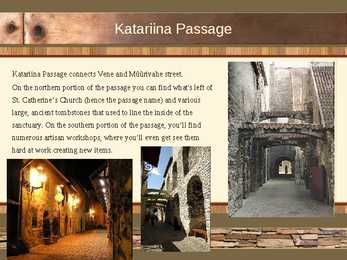
On the northern portion of the passage you can find what's left of St. Catherine's Church (hence the passage name) and various large, ancient tombstones that used to line the inside of the sanctuary. On the southern portion of the passage, you'll find numerous artisan workshops, where you'll even get see them hard at work creating new items. City wall Tallinn's medieval city wall is a sub-facility that was built to protect the lower Tallinn and upper Tallinn (Toompea). The building of the city wall began in 1310th years, and by improving over time it formed the city wall with defensive buildings (towers). It was finished by the end of the 1561. Then it was 2.35-kilometer-long circular wall, which had 27 wall gate, 8 tower gate and 21 other stone fortifications. Many parts of the town wall have survived until today Great Coastal Gate (Suur Rannavärav) and Fat Margaret's
a german Occupation. But in 1945 there was a Soviet occupation again. In 1991 on the 20th of August we got our independents back. In 1992 Estonian kroons were put in use. In 1994 last Russian troops leave Estonia in 2004 Estonia joined European Union. Tallinn is the capital of Estonia. It is situated on the southern coast of the Gulf of Finland. The territory of Tallinn is 182,4 square kilometers. 46 % of the Tallinns territory has been built up. Parks and forests cover 31% and water-bodies 8% of the land. In Russia Tallinn was called Koluvan. In Scandinavia it was known as Lindanise. The Germans called in Reval and that name was in use until 1917. Estonians themselves called it Tallinn. Tallinn is a very old town, and numerous of legends were connected with it. They spoke about Old Toomas keeping watch on the top of the tower of town hall. Toompea is the oldest part of the city. The toompea Palace
Project ESTONIA MAP OF ESTONIA Southern Viljandimaa The southern part of Viljandi county catches the eye with its sublime scenery. The area today lies in the very heart of the historical Mulgimaa the home of hills, deep valleys and lakes brought together by a beauty spot Halliste primeval valley. According to several folk tales, it is also in these valleys, woods and bogs that Old Nick found refuge.The great variety displayed in the nature is also reflected in the local cultural heritage. At the beginning of the 19th century growing linen spread and became the basis
London History The Romans AD 43- AD 410 The Romans finally invaded Britain in AD 43 from Kent. The Romans lead by Julius Caesar attempted to invade Britain twice before that in 55 and 54 BC but the invasions were unsuccessful. They made their way to the river Thames and sailed up it. The Romans knew it was important to control a crossing point at the river Thames, so they decided to build a settlement on the north bank. Although small settlements had been built on the banks of the Thames, the Romans were the ones who built the first city. They called their city Londinium. The Roman engineers noticed that the point where the swampy river narrowed would make an ideal crossing point, they built London Bridge. Less than 20 years later the native Iceni tribe, led by Queen Boudicca, rose up against the Romans in revenge for mistreatment and burnt Londinium to the ground. The well disciplined Roman army defeated her forces and Londinium was rebuilt
the medieval times connected with the area forming the foundation of current Old Town.The frist settlements on the coast of Northern Estonia appeared at the end of the 10th century,when the Estonians established a stronghold in the neighborhood of a favorable port- on the hill of Toompea. The dominants of that time are preserved in their medieval from : churches, public buildings,the Town Hall with the square in of it and the order castle on the hill of Toompea. The O ld Town is the spiritual centre of Estonia with the most important shrines,museums and its historical heritage. The Old Town has surprise for the one-day tourist as well as for its own citizens who have walked the streets of the medieval city for decates. Ten face of the Old Town Vibrant old town The Old Town Has Never become a museum exhibit of frozen time or dusty walls. Musical city Music fits into old town.During the Old Town Days you can find musicians everywhere. Forever – young city
 annaabi.ee