Moreover, Estonia’s own workforce is leaving the country for better job options and money. Main countries of destinations are besides of Finland also other European countries. Because of the aging population and youngsters travelling out of country all the time, Estonia might face the lack of workforce at some point. Estonia is a really supportive country towards entrepreneurship and enterprises. For instance, people are invited to be more productive and enterprising, subsidies are offered for companies who had started at their own initiative and most schools offer even business courses. However, to really break through, it only works for large companies who have already established temselves on the market. For small traders it is very hard to begin and even more harder to stay on the market because of the high competition. Estonia wants to be modern and successful very fast but it should also take into account rescources what are in front of us
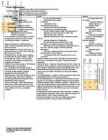
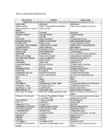
the expansion of organic farming, although this is still on a very small scale. However, partly in reaction to these concerns, and partly because of costs, the trend is now towards lower chemical use in farming. Agricultural policy includes schemes to encourage farmers to take land out of agricultural production to adopt more environmentally kind, but less productive methods of farming to impose production quotas on certain products, like milk, and to reduce subsidies on others. EXERCISE. Complete the table with suitable words from the column on the right. Comparison of farming in the north-west and south-west of Britain. to the North-west to the South-east Physical factors Physical factors ........................ summers, ........................ and cold / cool / mild / ........................ winters, ......................
http://www.delfi.ee/teemalehed/jaatmekaitlus https://ceairwithaworldtour.wordpress.com/ https://www.linkedin.com/pulse/why-europe-has-less-water-problems-than-asia-philip-teoh http://trinomics.eu/project/expert-assistance-with-indicators-analysis-and-assessment-in-support-of-mon itoring-the-7th-environmental-action-plan-via-an-annual-eea-report-phase-3-2/ http://www.ingurumena.ejgv.euskadi.eus/r49-4155berr/en/contenidos/informacion/ihitza44/en_def/gaia. html http://www.welcomeurope.com/european-subsidies-sector-Environment.html http://emodnet-blacksea.eu/the-policy-framework/ http://www.slideshare.net/chryssy/koloogilised-globaalprobleemid https://www.envir.ee/sites/default/files/elfinder/article_files/globaalsed_keskkonnaprobleemid.pdf http://www.zujiwangluo.org/overview/ Kaasik, T. (1990). Keskkonnasündmus 1983-1987 Yarrow, J. (2009). Kuidas vähendada oma ökoloogilist jalajälge
MODERN ALTERNATION OF GENERATIONS BR and DR quite low, close to zero Different age complement (vanuse kooslus): -working age 51... % -children 25...% -elderly ...20% BR influenced by: Women: -the number of women at fertile age -the age of women giving birth to a baby -religion -the availability of the contraceptives -the possibility of abortion -traditions of living together (cohabitation) -values: how people take the role, society's influence -role of society: different subsidies, supports or not -traditions: how many children are so called normal -role of men and women in the society -economic situation of the society (democratics, military reigme) DR influenced by: -age -povery and famine -different diseases, bad healthcare -unhealthy ways/habits of living (drinking, smoking etc) Well developed countries: -diseases of heart and blood vessels -cancer -accidents and suicides -HIV/AIDS -natural disasters Less dev. countries: -famine -AIDS/HIV
provincial/local level very much on firing line · Virtually no independent regional/state power through PDS/Left link to recent NYT article separate parties or formal interests. · Defining self-interest: Boundary tensions over provincial boundaries · Local/regional issues have been promoted by social keep the subsidies flowing esp where cities lie on/near borders suggests movements. that provinces do `matter'; lots of resources Tensions in federal-state relations. Still highly centralized though committed to these struggles, including legal states are not controlled by same parties as federal government challenges and violence necessarily.
"One size fits all" means that CO2 would thus be subject to national regulations, and the Bush administration couldn't cut deals with every industry individually. Oh, the affront to democracy. *Hilariously, Bush said that such incentives "should be technology-neutral because the government should not be picking winners and losers" - not noticing, apparently, that elsewhere in the speech he promised billions in subsidies to "clean" coal, nuclear power and biofuels. *Ultimately, the speech itself was a sideshow. No one cares what Bush thinks about climate, and nothing he does will particularly constrain the next administration. But the subtle shaping of the debate, the themes, the buzzwords, are not unique to him. They are the means by which the American conservative movement will continue to protect its corporate backers at the expense of the public. http://www.state.gov/g/oes/rls/fs/46741.htm
Fiji experienced a period of rapid growth in the 1960s and 1970s but stagnated in the 1980s. The coup of 1987 caused further contraction. Economic liberalization in the years following the coup created a boom in the garment industry and a steady growth rate despite growing uncertainty of land tenure in the sugar industry. The expiration of leases for sugar cane farmers (along with reduced farm and factory efficiency) has led to a decline in sugar production despite a subsidized price. Subsidies for sugar have been provided by the EU and Fiji has been the second largest beneficiary after Mauritius. Urbanization and expansion in the service sector have contributed to recent GDP growth. Sugar exports and a rapidly growing tourist industry -- with 430,800 tourists in 2003[24] and increasing in the subsequent years -- are the major sources of foreign exchange. Fiji is highly dependent on tourism for revenue. Sugar processing makes up one-third of industrial activity. Long-term
entrepreneurship. The "National Income and Expenditure Accounts" divide incomes into five categories: - Wages, salaries, and supplementary labour income - Corporate profits - Interest and miscellaneous investment income - Farmers' income - Income from non-farm unincorporated businesses These five income components sum to net domestic income at factor cost. Two adjustments must be made to get GDP: - Indirect taxes minus subsidies are added to get from factor cost to market prices. - Depreciation (or capital consumption) is added to get from net domestic product to gross domestic product. Components of GDP by Expenditure GDP (Y) is a sum · Consumption (C), · Investment (I), · Government Spending (G) and · Net Exports (X - M). Y = C + I + G + (X - M) C (consumption) is normally the largest GDP component in the economy, consisting of
Giant Pin Wheels? Any Studies done? · It is said that wind · Bentek Energy did the energy is suppose to Study and used about bring down costs and 1/3 of the US population reduce the in the air. for 2 years. · Well Forbes found a · The claims of cutting CO emissions were study on this and actually less than half of wrote an article about what was stated. it. · Subsidies (government · Forbes said "no" money) to the wind sector is more than 200 times as great as those given to oil and gas sector. Oh and the wind has to blow. Hydropower Power to the Water · By using earth's · 90% energy water cycles and efficient compared running water used to natural gas
lessening, as is shown in the affair of believed in his guilt (1594). Dr. Lopez, her trusted physician. Elizabeth, during the last years of her reign, came to rely on granting monopolies as a cost-free system of patronage rather than ask Parliament for more subsidies in a time of war. This same period of economic and political uncertainty, however, produced an unsurpassed literary flowering in England. The first signs of a new literary movement had appeared at the end of the second decade of Elizabeth's reign, with John Lyly's Euphues and Edmund Spenser's The The notion of a great Elizabethan age Shepheardes Calender in 1578. depends largely on the builders,
diets to meat and dairy diets. Meat production requires times more biomass in the form of animal feed and that puts further pressures on natural resources. As food production is very energy intensive, it is closely linked to global energy consumption. Global fuel consumption has grown 50-fold since the end of the 20th century and it is projected to increase by another 55% by 2030 (Umbach, 2010). That is the reason why new resources for fuel are being sought and biofuels receive subsidies, and investment in development. In addition, transport sector is one of the largest primary energy consumers, and as the travel and car ownership is predicted to increase, more fuel needs to be dedicated to transport (Karp, 2011. There are many reasons why biofuels are necessary, but at the same time, they are controversial for a number of reasons. 2.2. Biofuels' feedstock and future projections There are mainly two types of liquid biofuels, which have significantly grown in the last
35. Aeration õhutus 36. Aesthetics esteetika 37. Agressive pace- agresiivne tempo /kiire 38. Agricultural techniques- põllumajanduslikud tehnikad 39. Airiness-õhulisus 40. Ambience-väliskeskkond 41. Ambitious design ambitsioonikas disain 42. Amenities mugavused 43. Amenity roof katus puhkealadega 44. Amenity value puhkamisväärtus 45. An area for sitting puhkeala/istumisala 46. An array of subsidies hulk toetust 47. An established garden- rajatud aed 48. An eyesore silmariivav objekt 49. An outdoor living area elamiseks, pikemaks ajaviimises eluruum 50. Annual- aastane (taim) 51. Apparent näiv, ilmne 52. Approach meetod, lähenemine 53. Appropriate assessment asjakohane hinnang 54. Aquatic life- veeorganismid 55. Aqueduct- akvedukt, veejuhe 56. Arcade- kaaristu, kaarkäik 57. Arched kaarduv 58
Networking measures – support for clubs, foresight to build common visions, co- location in incubators, Science-parks etc. Demand-side measures Systemic policies – cluster policies, Supply chain policies, Regulation – use of regulations & standards to set innovation targets, Technology platforms to coordinate development. Public procurement – R&D procurement, Public procurement of innovative goods. Support of private demand – Demand subsidies, Tax incentives, Articulation of private demand, Awareness and Training Catalytic Procurement Examples of innovation policy measures to develop specific sectors in different countries (based on group work presentations) South Korea’s example UNIVERSITIES OTHER GOVERNMENT RESEARCH INSTITUTES (GRIs) GOVERNMENT & REGULATION BUSINESS ORGANIZATION •The chaebol system, that seems to have been a driving force in the success of Korean electronics industry, has over time also revealed
Riigi sisevõlg Internal ND Riigivõla refinantseerimine Refinancing the national dept default Rahvusvaheline kaubandus. Maksebilanss. Valuutakurss Absoluutne eelis Absolute advantage Suhtelised eelised Comparative advantage Väärtuse suurendamine Appreciation Väärtuse kadu depreciation vahetuskurss Exchange rate eksporditoetused Export subsidies valuutaturg Foreign exchange market Leontief’i paradoks Leontief paradox Kasu kaubandusest Gains from trade „Hollandi haigus” Dutch disease General Agreement on Tariffs and Trade, GATT Import quota Most-favoured nation clause Multinational corporation Non-tariff barriers
püüdma edendada internaliseerimisega keskkonnaalaste kulude ja majanduslike vahendite kasutamine, võttes arvesse põhimõtet, et saastaja peaks põhimõtteliselt kandma saastuse, võttes nõuetekohaselt arvesse avalikku huvi ning kahjustamata rahvusvahelist kaubandust ja investeeringuid. Majandusmeetmete liigid : Maksud, tasud ja hüvitised (taxes, charges and tax exemptions), Laenud, toetused ja subsiidiumid (loans and subsidies), Müüdavad saasteload (marketable/tradeable permits), Sisse- ja tagasimaksete skeem (deposit/refund scheme), Ökomärgistamine (eco-labelling). Laenud, toetused, subsiidiumid : Kaht tüüpi lähenemine. Keskkonnakaitselised projektid, mis ei ole ettevõtjatele piisavalt kasulikud!? Taastuvenergia toetused, Kindlate tehnoloogiate toetamine, Subsiidiumid energia- ja ressursimahukale tööstusele ümberorienteerumiseks!? Uued tehnoloogiad või vana säilitamine? Moonutavad konkurentsi
legislation, incentives and commercialization. New government spending, regulation, and policies should help the industry weather the 2009 economic crisis better than many other sectors. Costs Renewable energy systems encompass a broad, diverse array of technologies, and the current status of these can vary considerably. Some technologies are already mature and economically competitive (e.g. geothermal and hydropower), others need additional development to become competitive without subsidies. This can be helped by improvements to sub-components, such as electric generators. The table shows an overview of costs of various renewable energy technologies. For comparison with the prices in the table, electricity production from a conventional coal-fired plant costs about 4¢/kWh. Though in some G8 nations the cost can be significantly higher at 7.88p (~15¢/kWh).Achieving further cost reductions as indicated in the table below requires further
aimed at precision and intensity; in such an atmosphere the artistic and scientific creation of all- human value can proven to be possible.1 In 1925 Eesti Kultuurkapital (Estonian Cultural Endowment) was established by governmental decree for the general advancement of all Estonian cultural life, distributing grants to six foundations that subsidised literature, journalism, music, fine arts, theatre, and sports. It helped them to share subsidies and prizes, to buy works of art, and arrange exhibitions (both home and abroad). Several writers and artists used the state subsidies to study abroad. There was also a special fund for publishing Estonian 1 ”Pilk tulevikku” (A Glance into the future) Looming (1923): 292-293. music, but the subsidy was small and the publishers had to confine themselves to chamber music. The Estonian novel strode along the path of progress. Anton Hansen Tammsaare
financing that was crucial in helping Ukraine through the Great Recession. In particular, it helped to prevent a banking crisis. In many respects, however, Ukraine reneged on its commitments, and the program went off-track very soon, as a 2011 IMF evaluation concludes. This holds for fiscal, exchange rate, and monetary policies, but in particular for the energy sector. In 2008, Ukraine committed itself to phasing out all gas subsidies in three years, but little was done on that front. For some specific industries, gas prices were actually decreased in 2009. Ukrainian households still pay traditionally extremely little for the gas their everyday life depends on. At end of the year, gas prices for households accounted for about one-fifth and those for utilities for one-third of import prices. Officially the low gas prices are justified
 annaabi.ee