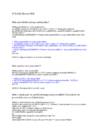
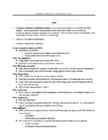
read > #Mitu proovitükki on kogu andmestikus > puud2015=read.csv("puud2015.csv",sep=";",dec=",") #Impordin andmed > puud2015$D=ifelse(puud2015$D2>0,(puud2015$D1+puud2015$D2)/2,puud2015$D1) #Lisan tulba D > length(table(puud2015$PRT)) #Vaatan mitu proovitükki on kogu andmestikus loetledes read [1] 229 VASTUS: Kogu andmestikus on 229 proovitükki. Mitu puud on sinu proovitükil? #Mitu puud on sinu proovitükil? PRT332=subset(puud2015,PRT=="332") #Teen eraldi andmestiku PRT332-st length(table(PRT332$PUU)) #Loetlen puude arvu PRT-l > #Mitu puud on sinu proovitükil? > PRT332=subset(puud2015,PRT=="332") #Teen eraldi andmestiku PRT332-st > length(table(PRT332$PUU)) #Loetlen puude arvu PRT-l [1] 121 VASTUS: Minu proovitükil on 121 puud Mitu 1. rinde puud on puuliikide kaupa sinu proovitükil? Esita tabel vaid proovitükil esinevate liikide kohta. #Mitu 1. rinde puud on puuliikide kaupa proovitükil.
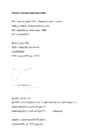
Kodutöö: Lineaarne regressioonanalüüs PD <- read.csv("puud15.CSV") # parameeter sep="," ja dec="." PD$d_k<-with(PD, ifelse(d2>0,(d1+d2)/2, d1)) PD.<-subset(PD, prt==642 & aasta==2001) PD.<-droplevels(PD.) plot(h~d_k,data=PD.) PD.H <- subset(PD., h>0 & hv>0) table(PD.H$pl) PD.KU<-subset(PD.H, pl=="KU") par(mar=c(4.5,4.5,1,1)) plot(NULL,xlim=c(0,40),ylim=c(0,25),xlab="diameeter, cm", ylab="kõrgus, m") abline(v=seq(0,40,10),lty=3,col="grey75") abline(h=seq(0,25,5),lty=3,col="grey75") # abijooned points(h~d_k,data=subset(PD.KU),lwd=1) with(subset(PD., pl=="KU"),rug(d_k)) 1. Sirge h=a+b*d M1 <- lm(h~d_k, data=PD.KU) summary(M1) D<-0:40 M1.pred <- predict(M1,newdata=data.frame(d_k=D)) lines(D,M1.pred, col="red") coefficients(M1)[1]
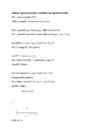
Mitmene regressioonanalüüs ja mittelineaarne regressioonanalüüs PD <- read.csv("puud15.CSV") PD$d_k<-with(PD, ifelse(d2>0,(d1+d2)/2, d1)) PD.1<-subset(PD, prt==642 & aasta==2001 & h>0 & hv>0) PD.2<-subset(PD, prt==642 & aasta==2006, select=c(puu,rin,d_k,h,hv)) names(PD.2)<-c("puu","rin_2","d_k2","h_2","hv_2") PD.1.2<-merge(PD.1,PD.2,all.x=T) with(PD.1.2, table(rin,rin_2)) PD.1.2$rin12<-with(PD.1.2, paste(rin,rin_2,sep="")) table(PD.1.2$rin12) PD.1.2E<-subset(PD.1.2, rin12 %in% c("11","22")) # rinnaspindala juurdekasv PD.1.2E$ig5<-with(PD.1.2E, (d_k2^2 - d_k^2)*pi/4) hist(PD.1.2E$ig5) # M0: ig5 = a M0<-lm(ig5~1,PD.1.2E) summary(M0) # mean(PD.1.2E$ig5); sd(PD.1.2E$ig5) # R2: 1-(sd(PD.1.2E$ig5)/var(PD.1.2E$ig5))^2 # Md: ig5 = a + b*d Md<-lm(ig5~d_k,PD.1.2E) summary(Md) # Mh: ig5 = a + b*h Mh<-lm(ig5~h,PD.1.2E) summary(Mh) # Mhv: ig5 = a + b*hv Mhv<-lm(ig5~hv,PD.1.2E) summary(Mhv) # Mdh: ig5 = a + b1*d + b2*h
Skepticism skeptitsism Skript käsikiri Slapped on lajatama Slightly kergelt Sniffing nuuskimine Specs spekulatsioon Spectator vaataja, pealtnägija Spin tiirlema Spokespeople rääkijad inimesed Spouse abikaasa Spread levima Spreadsheets arvutustabelid Spreed hinnavahe Straw õlekõrs Struggling majanduslikes raskustes Subset alamhulk Subtle peen Suburbs äärelinnad Superstitious ebausklik Sustain jõusse jätma, taluda T Talerman jutumees Taps kraanid Telemarketer telemüüja Telltale click tundemärgiga klikk Terrific vinge Thrive edenema Tidbits lühisõnumid, maiuspalad Transcendental üleloomulik Transform muundama
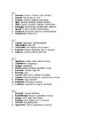
13. Label- märgis, sedel, etikett, silt 14. Display- laiali laotama, välja panema, esile tooma Lk 13 1. Persnickety- nõudlik 2. Formula- valem, formula, eeskiri 3. Tidbit- maiuspala, eriline lühisõnum 4. Narrative- jutt, jutustus 5. Brand- kaubamärk, firmamärk 6. High-margin- kõrge marginaal 7. Measure- mõõt, määr, mõõdupuu 8. Compare- võrdlema, samastama, kõrvutama 9. Raw ingredient- toores koostisosa 10. Certain- kindel, kahtlematu, vaidlematu 11. Subset- osarühm Lk 14 1. Ubiquitous- kõikjaldane, kõikjalolev 2. Offbeat- rõhutu taktilöök, ebatavaline, harilik 3. Resonate- resoleerima, kaasa võnkuma, vastu helisema 4. Idiosyncratic- idiosünkraatiline, isikuomane 5. Mesh- võrgusilm, nõelasilm, võrk, püünis 6. Fictional- väljamõeldud, luulrtatud, ilukirjanduslik 7. Saturate- küllastama, küllastumuseni täitma, läbi immutama 8. Hippy- hipi 9. Nutritious- toitev 10. Advantage- paremus, hüve, eelis, soodustus, kasu 11
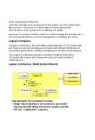
·Warehouse Database integrated, subject-oriented, multidimensional ·Data Warehouse management data administration, changes/modifications, etc., process administration ·Data Access and Delivery reporting, analysis, data mining and discovery, data marts 25. Data Mart Development ·A data mart is similar to a data warehouse ·Designed for a specific department ·A data mart focuses on a single functional area ·Built from a subset of tables in the transaction database or warehouse ·Two basic types of data marts: dependent and independent Independent Data Marts ·Gets it data directly from the transaction systems ·Does not have the features of data integration, consistency, and cleansing ·Cannot support the information requirements of enterprise-wide decisions ·Many data warehouse efforts begin with independent data marts ·Some data marts have both dependent and independent features Dependent Data Marts
A corollary is that you have to keep out the biggest developer of all: the government. A government that asks "How can we build a silicon valley?" has probably ensured failure by the way they framed the question. You don't build a silicon valley; you let one grow. Nerds If you want to attract nerds, you need more than a town with personality. You need a town with the right personality. Nerds are a distinct subset of the creative class, with different tastes from the rest. You can see this most clearly in New York, which attracts a lot of creative people, but few nerds. What nerds like is the kind of town where people walk around smiling. This excludes LA, where no one walks at all, and also New York, where people walk, but not smiling. When I was in grad school in Boston, a friend came to visit from New York. On the subway back
- aktsionär, osanik, sidusgrupp (Cambridge Dictionary) 127. STEP CHANGE - a significant change, esp an improvement - hüppeline muutus (dictionary.com) 128. STRAIN - Make severe or excessive demands on kurnama (Oxford Dictionary) 129. SUBSCRIPTION - the right to receive a service or access text online for a certain period of time - tellimine, tellimus, abonement (dictionary.com) 130. SUBSET - a set (= a group of similar numbers, objects, or people) that is part of another - alajaotis, alamhulk, osahulk (Cambridge Dictionary) 131. SURVEILLANCE - continuous observation of a place, person, group, or ongoing activity in order to gather information - järelvalve, seire, valve (dictionary.com) 132. TAMPER-PROOF - Made so that it cannot be interfered with or changed. võltsimiskindel, muutmiskindel (Oxford Dictionary) 133
combination generator, the correlation-immunity order 𝑘 of the combining function determines the minimal number of LFSRs which must be considered in a correlation attack - the smallest number of LFSRs involved in a correlation attack must be 𝑘 + 1. 9 Definition 4.3. A Boolean function 𝑓 on 𝔽𝑛2 is said to be correlation immune of order 𝑘, where m satisfies 1 ≤ 𝑘 ≤ 𝑛 , if the values of 𝑓 and any subset of 𝑘 input variables are statistically independent. If a function is correlation immune of order 𝑘, it is also correlation immune of order 𝑘 − 1. There is a strong connection between correlation immunity and the Walsh transform of a function. Theorem 4.2. A Boolean function 𝑓 on 𝔽𝑛2 is correlation-immune of order 𝑘 if and only if 𝑊𝑓 (𝑢) = 0 for all vectors 𝑢 ∈ 𝔽 𝑛2 , such that 1 ≤ 𝑤𝑡(𝑢) ≤ 𝑘.
Automated Essay Scoring 18 Delivery features can most easily be extracted from the state of the speech recognition system, while language use is more difficult to address, given the constraints of recognition accuracy. Of course, the appropriate development of the topic is even more challenging to assess without an accurate transcript of the response. Most of the features actually used in SpeechRater address the delivery aspect of the TOEFL speaking construct in one way or another. A subset of the features do, however, relate to the Language Use dimension of the construct as well. The statistical model SpeechRater uses to predict the score on the basis of these features is a multiple linear regression, although promising experiments have been performed using decision trees as well. Currently, SpeechRater is in operational use to score the TOEFL Practice Online speaking section only. It provides the examinee with a predicted score for the entire
JSON is an easier-to-use alternative to XML. The following JSON example defines an employees object, with an array of 3 employee records: JSON EXAMPLE {"employees":[ {"firstName":"John", "lastName":"Doe"}, {"firstName":"Anna", "lastName":"Smith"}, {"firstName":"Peter", "lastName":"Jones"} ]} o Süntaks The JSON syntax is a subset of the JavaScript syntax. JSON syntax is derived from JavaScript object notation syntax: Data is in name/value pairs Data is separated by commas Curly braces hold objects Square brackets hold arrays JSON eelised: XML eelised: Saab parsida standard JS funktsiooniga, XML IS HUMAN READABLE parsimine lihtsam JSON is much easier for human to read than
the effect they have on the precision of the estimates. Three of the four cornerstones refer explicitly to the fact that surveys typically collect data from a sample, a fraction of the population of interest. Coverage error occurs when some members of the population have a zero probability of being selected in the survey sample. For example, the sample list (frame) may fail to cover all elements of the population to which one wants to generalize results. Sampling error occurs because only a subset of all elements (people) in the population is actually surveyed. Sampling error is statistically well understood provided that probability samples are used: in general the amount of sampling error is a direct function of the number of units included the finaal sample. For a clear discussion of coverage and sampling, see Lohr (Chapter 6). Nonresponse error occurs when some of the sampled units do not respond and when these units differ from those who do and in a way relevant to the study
Kanbani ideoloogia "Lean" Keskendu sellele, Mida klient vajab Don't build features that nobody needs right now Don't write more specs than you can code Don't write more code than you can test Don't test more code than you can deploy Väldi Inimeste või ressursside ülekoormamist Väldi Ebaühtlast töökoormust Väldi Tegevusi ,Mis ei lisa väärtust Minimal Marketable Feature (MMF) A minimal marketable feature (MMF) is a chunk of functionality that delivers a subset of the customer's requirements, and that is capable of returning value to the customer when released as an independent entity Think of it this way: Gather up all the stories that share the same SO THAT clause representing the GOAL -- That is your MMF! Kanbani võimalikud eelised Scrumi ees Lihtsus! Puudub suurte backlogide haldamine Puudub "time boxing" Sprint Backlogide jaoks Puuudub Arendamise edukuse hindamine ja mõõtmine Scrum vs. Kanban
Kanbani näide: 131. Minimal Marketable Feature (MMF) Kanban kasutab samade asjade kohta erinevaid termineid. Näiteks MMF (Kanban) = Potentially Shippable Product Increment, Feature (Scrum) ● A minimal marketable feature (MMF) is a chunk of functionality that delivers a subset of the customer’s requirements, and that is capable of returning value to the customer when released as an independent entity ● Think of it this way: Gather up all the stories that share the same SO THAT clause representing the GOAL — that is your MMF! ● Eesmärk väljendab MMFi. Kokku on need kasutuslood, millel kõigil on üks ja
without any intervention from a network administrator or from a configuration protocol. In other words, bridges are self-learning. For increased reliability, redundant alternate paths from source to dest are created. To prevent frames cycling, spanning trees are used. In the spanning tree protocol, bridges communicate with each other over the LANs in order to determine a spanning tree, that is, a subset of the original topology that has no loops. Ethernet switches are in essence high-performance multi-interface bridges. As do bridges, they forward and filter frames using LAN destination addresses, and they automatically build routing tables using the source addresses in the traversing frames. The most important difference between a bridge and switch is that bridges usually have a small number of interfaces (i.e., 2-4), whereas switches may have dozens of interfaces
) If a proposition is in this way construed as a set of possible worlds, then we do, after all, obtain nontrivial explanations of the meaning facts. Two sentences will be synonymous if and only if they are true in just the same worlds. A sentence will be ambiguous if there is a world in which it is both true and false but without contradiction. And the possible-worlds construal affords an elegant algebra of meaning by way of set theory: For example, entailment between sentences is just the subset relation. S1 entails S2 if and only if S2 is true in any world in which S1 is; that is, the set of worlds that is S2's meaning is a subset of S1's meaning. Thus, the implementation of truth conditions in terms of possible worlds saves this sophisticated version of the Proposition Theory from Harman's objection 3 (chapter 5), for it tells us what a "proposition" is, in terms that we can work with independently: A proposition is a set of worlds. (One may
Good heat transfer is dependent on product regularly shaped products with large flat sur- thickness, good contact, and the conductivity faces with plate systems, and the need to of the product. Plate freezers are often limited wrap and wash off the immersion liquid in to a maximum thickness of 50 to 70 mm. immersion systems. Good contact is a prime requirement. Air Cryogenic freezing is essentially a subset spaces in packaging and fouling of the plates of immersion freezing, in that it directly uses can have a significant effect on cooling cryogenic refrigerants, such as liquid nitro- time; for example, a water droplet frozen gen or solid carbon dioxide. The method on the plate can lengthen the freezing time of cooling is essentially similar to water-
 annaabi.ee