Environmental Problems and Sustainability The environment is our physical surroundings. This includes both human (man- made), social and physical (natural) features. Natural features include soil, the atmosphere, vegetation and wildlife. Human features include things such as culture, language and political systems. Geographers are concerned about human action in the environment. Human interference with the environment causes problems such as soil erosion, global warming and acid. You may ask how we as individuals can have an impact on the environment. Our actions can help to increase the problems highlighted above. For example turning off lights that are not being used helps to reduce global warming. Until recently, concern about the environment revolved almost exclusively around local and national problems. Over the past two decades, however, scientists have increasingly focused attention on more far-reaching environmental threats,...
The organic way to mulching By the Editors of Organic Gardening and Farming Robert Rodale Jerome Olds M. C. Goldman Maurice Franz Kaidi Kask Eesti Maaülikool 2014 Mulching aim · Build and maintain nature's soil pattern · The best way to make most efficient use of the available moisture in producing crops. What is mulch? · Layer of material · Conserve moisture · Hold down weeds · Improve soil structure and fertility · Mulching will improve any type of soil · Wonderful dew-catcher Mulch acts · Protects plants · Protector of the topsoil · Guardian against weather extremes and comfortable · Bruise-saving cushioner under ripening produce · Back aching jobs Mulch acts · Regulating the temperature · Insulator · Prevents competitions Organic mul...
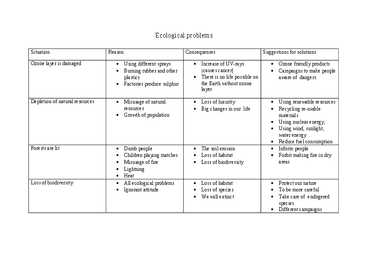
Ecological problems Situation Reason Consequenses Suggestions for solutions Ozone layer is damaged · Using different sprays · Increase of UV-rays · Ozone friendly products · Burning rubber and other (causes cancer) · Campaigns to make people plastics · There is no life possible on aware of dangers · Factories produce sulphur the Earth without ozone layer Depletion of natural resources · Misusage of natural · Loss of luxurity · Using renewable resources ...
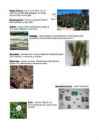
Regrowth forest -taastuv mets. Mets, mis ise uuesti üles kasvab peale põlenguid või loodus katastroofide toimel langeb. Rotation period rotatsiooni periood. Periood metsa asutamise ja raie vahel. Salinity - soolsus. Soola konsetratsioon mullas ja vees, mida mõõdetakse mg/l kohta. Seedlings seemik(seemnest kasvatatud taim). Noored puud, mida kasutatakse ettevalmistatud maade taasmetsastamiseks. Silviculture metsakasvatus. Kunst ja teadus mis kontrollib puude kasvu, koostist, tervisehoidu ja kvaliteeti. Soil erosion - pinnase erosiooni. Uhutakse ära mulla pealmine viljakas kiht paduvihmade ja üleujutuste mõjul. Sustainable forestry - säästev metsandus. Weed umbrohi. Taimed, mis kasvavad haritud maal inimese tahte vastaselt.
EROSIOON Erosioon mullastiku looduslik ärakanne Pinnase erosiooni põhjustavad: · Sademed · Vooluvesi · Tuul · Temperatuuri kõikumine Erosiooni soodustavad/kiirendavad: · Liigkarjatamine · Metsade hävitamine · Väärad maaharimisviisid [1.] Erosiooni tagajärjed Maakera viljakamaimatel põllualadel läheb kaduma umbes 26 miljardit tonni mulda aastas. · Mulla produktiivsuse ja veesidumisvõime vähenemine [1.] · Veekogude reostumine [2.] · Väheneb muldade orgaanilise aine sisaldus · Muutuvad mulla füüsikalis-keemilised omadused [3.] · Mullamassi ja pinnase ümberpaigutamine kumeratelt reljeefielementidelt nõgusatesse [4.] Veeerosioon [5.] Tuuleerosioon [5.] Erosiooni ennetamine · Mulda säästvad põlluharimisviisid, näiteks mittekünnimeetod · Järsematel nõlvadel terrasspõllundus · Segaviljelusmeetmed, näiteks ribapõllundus · Külvikordade rakendamine · Orgaanilised väe...
Forestry Importance: · Environmental-protective importance Oxygen Cleans the air/soils/ground water Protects the soil from erosion · Timber Firewood Woodwork Building materials Timber cellulose paper · Mushrooms/berries/juices · Habitat of different species Measuring the amount of forest: · Fixing the area under the forests (ha/%) -> In Estonia 47.4%, 2.143 mil/ha It doesn't take into account the amount of timber · To measure the amount of timber (m3) -> 352.7 mil/m3 It doesn't take into account the annual increase · To fix different species of trees (%) -> Pine 40%, Birch 30%, Spruce 20% · To measure the annual increase of timber (m3, ha, year) -> 9 mil. m3/ha/year Main principle of the economy of forests: Annual cutting should be equal to annual increase. Trees are divided into: · Precious trees (ebony, mahagony, sandalwood) · Hard-br...
Weed Management Handbook Summarized by: Student X Introduction • What is a weed? • Disadvantages and advantages • Seed bank • Different ways to deal with weeds • Resistance of herbicides What is a weed? • Older definitions: -a plant not valued for its use or beauty -a plant whose virtues have yet to be discovered • Modern definitions: -plants that are considered undesirable by producers -unwanted plant which in some way hinders or interfers with human activity. (Crops may at some point also be weeds) Weed disadvantages • Reduces crop yield – weeds and crops have to share resources such as light, water and nutrients • Reduces crop quality and health – increases moisture and disease levels • Delay harvesting – conservation of moisture may delay ripening Beneficial effects of weeds • Valuable indicators • Help against erosion • Many weeds are used as herbs for flavo...
Tundra Tundra is the world's youngest biome. It was formed 10 000 years ago. Located at latitudes 55° to 70° North. Almost all tundras are located in the Northern Hemisphere, encircling arctic desert and extending south to the coniferous forests of the taiga. The ecotone (ecological boundary region) between the tundra and the forest is known as the tree line or timberline. Tundra comes from the Finnish word tunturi, meaning treeless plain. It is noted for its frost-moulded landscapes, extremely low temperatures, little precipitation, poor nutrients, and short growing seasons. Dead organic material functions as a nutrient pool. The two major nutrients are nitrogen and phosphorus. Nitrogen is created by biological fixation, and phosphorus is created by precipitation. The most distinctive characteristic of tundra soil is its permafrost, a permanently frozen layer of ground. The average winter temperature is -28°C, but the average summe...
2. Where is prairie, pampas, steppe, and veldt situated? EurasiaSteppe, North America-Prairie, South AmericaPampa, South AfricaVeldt 3. Using the climate diagram describe the climate of the region. Temperate deciduous forest -Well-defined seasons with a distinct winter characterize this forest biome. Moderate climate and a growing season of 140-200 days during 4-6 frost-free months distinguish temperate forests. Temperature varies from -15° C to 25° C. Precipitation (750-1500 mm) is distributed evenly throughout the year. Temperate grassland- Semiarid, continental climates of the middle latitudes typically have between 25 cm and 50 cm of precipitation a year. Much of this falls as snow, serving as reservoir of moisture for the beginning of the growing season. Warm to hot summers are experienced, depending on latitude. In the winter, grassland temperatures can be as low as -40° C, and in the summer it can be as high 20° C. There are t...
Savanna A savanna is a grassland ecosystem with scattered trees or shrubs. In savannas trees are small or widely spaced so that the canopy does not close. It is often believed that savannas are characterized by widely spaced, scattered trees, however in many savanna communities tree densities are higher and trees are more regularly spaced than in forest communities. The open canopy allows sufficient light to reach the ground to support an unbroken herbaceous layer consisting primarily of C4 grasses. Savannas are also characterised by seasonal water availability, with the majority of rainfall being confined to one season of the year. Savannas can be associated with several types of biomes. Savannas are frequently seen as a transitional zone, occurring between forest and desert or prairie. Although the term savanna is believed to have originally come from a Native American word describing "land which is without trees but with ...
Palm oil Kristiina Pällo LU1 EMÜ 2016 • Edible vegetable oil that is derived from the palm fruit • Oil palm trees are grown in tropical areas • Widely used in food industry due to its semi-solid state in room temperature and long shelf-life • It is in a lot of everyday products – makeup, shampoo, soap, biodiesel. Also in food – sweet treats (chocolate, biscuits etc), margarine, nut butters, crisps. The Two kinds of palm oil • Palm oil comes from palm fruit. It is rich in vitamin E and it has a red colour due to beta-caroten in it. High in saturated fats. Used mostly in food industry • Palm kernel oil comes from palm fruit seed. Also high in saturated fats. Used mostly in products such as shampoos, makeup, biofuel etc Ingridient list • Vegetable Oil, Vegetable Fat, Palm Kernel, Palm Kernel Oil, Palm Fruit Oil, Palmate, Palmitate, Palmolein, Glyceryl, Stearate, Stearic Acid, Elaeis Guinee...
How to Stop Water Pollution Water pollution is one of the biggest threats to the environment today. There are several sources of water pollution ranging from sewage and fertilizers to soil erosion. The impact of water pollution on wildlife and their natural habitat can be immense. While it may seem like preventing water pollution can be an overwhelming subject to tackle, there are also a number of things that the average person can do to help stop water pollution. Tips on Preventing Water Pollution The best solution for water pollution is prevention. While pollution that has already occurred is a current threat to all life on Earth, attempts to clean it up may cause even more harm.There are several steps that can be taken to help prevent water pollution from getting worse. Keep Machinery in Good Working Order The oil used to lubricate engines in all types of machines needs to be change...
Water pollution Attention for water pollution exploded in the 1980s. The oil spill of the Exxon Valdez showed many around the world just how horrible the effects of water pollution could be. However, even the Exxon Valdez spill barely touched the surface of the problem of water pollution. The ship spilt only 5% of the oil spilt that year, and oil is just one of many pollutants that people dump into the water every year. Every year, 14 billions pounds of sewage, sludge, and garbage are dumped into the world's oceans. 19 trillion gallons of waste also enter the water annually. The problem of ocean pollution affects every nation around the world. This is especially true because water is able to transport pollution from one location to another. For many years, chemicals were dumped into bodies of water without concern. While many countries have now banned such behavior, it continues to go on today. As the world has industrialized and i...
THE IMPORTANCE OF THE RAINFOREST The beauty, majesty, and timelessness of a primary rainforest are indescribable. It is impossible to capture on film, to describe in words, or to explain to those who have never had the awe-inspiring experience of standing in the heart of a primary rainforest. Rainforests have evolved over millions of years to turn into the incredibly complex environments they are today. Rainforests represent a store of living and breathing renewable natural resources that for eons, by virtue of their richness in both animal and plant species, have contributed a wealth of resources for the survival and well-being of humankind. These resources have included basic food supplies, clothing, shelter, fuel, spices, industrial raw materials, and medicine for all those who have lived in the majesty of the forest. However, the inner dynamics of a tropical rainforest is an intricate and fragile system. Everything is so i...
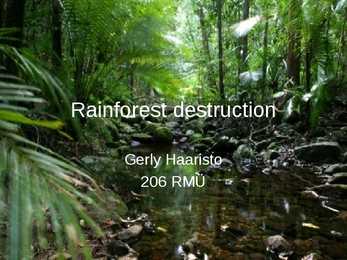
Rainforest destruction Gerly Haaristo 206 RMÜ The Disappearing Rainforests Kaduvad Vihmametsad · Rainforests once covered 14% of the earth's land surface; now they cover a mere 6% and experts estimate that the last remaining rainforests could be consumed in less than 40 years. · Vihmametsad katsid kunagi 14% maapinnast, praegu katavad nad ainult 6% ja eksperdid arvavad et viimased alles olevad vihmametsad nö. tarvitatakse ära vähema kui 40 aasta pärast. Causes of rainforest destruction Vihmametsa hävitus põhjused. · Logging · Agriculture · Fuelwood- küttepuud · Large Dams- suured tammid · Mining and industry- kaevandus ja tööstus. · Tourism turism. · Poverty and overpopulation vaesus ja ülerahvastatus. · Colonialism kolonialism. Why save it? · The rainforest is home to over · Vihmamets on koduks rohkem fifty perc...
Pessimism vs. Optimism Different approaches to the ‘population-resources’ debate Malthus Task: View figure 13.57 (page 378 of Waugh). Draw the graph and discuss. Malthus believed that there was a finite optimum population in relation to food supply and that an increase beyond that point would lead to a decline in living standards and to war, famine and disease. An increase in the population above the optimum limit would therefore lead to war, famine and disease. A PESSIMISTIC approach Thomas Malthus (1798) proposed his work during the early stages of the industrial revolution when inadequate food and clothing were common features in England. His argument was that population increases (geometrically) or at an exponential rate if unchecked i.e. 1-2-4-8- 16-32 etc Food supply at best increases at an arithmetic rate i.e.1-2-3-4-5-6 etc ...
1. (a) (i) gene length of DNA; codes for a (specific), polypeptide / protein / RNA; max 1 allele alternative form of a gene; found at a, locus / particular position on, a chromosome; max 1 (ii) assume allele refers to coat colour allele (coat colour) gene / alleles, only on X chromosome; A no (coat colour), gene / allele, on Y chromosome male cats, XY / only have one X chromosome; males have only one (coat colour) allele / cannot have two (coat colour) alleles; need black and orange alleles for tortoiseshell colour; 2 r r w w (b) parental genotypes C C × C C ; r w ...
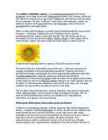
The sunflower (Helianthus annuus) is an annual(iga aastane) plant in the family Asteraceae, with a large flower head (inflorescence(õiekobar, õisik, õitseaeg, õidumine)). The stem(tüvi) of the flower can grow up to 3 metres tall, with the flower head reaching 30 cm in diameter. The term "sunflower" is also used to refer(nimetama, viitama, üle andma) to all plants of the genus(perekond, sugu) Helianthus, many of which are perennial(alaline, aastaringne) plants. What is usually called the flower is actually a head (formally(ametlikult) composite(liit-, komposiit- ; korvõieline, komposiit) flower) of numerous flowers (florets) crowded(täistuubitud, tunglev, rahvarohke) together. The outer flowers are the ray florets(pähik (õisiku osa) and can be yellow, maroon, orange, or other colors, and are sterile(steriilne, viljatu). The florets inside the circular head are called disc florets. Sunflower head displaying florets in spirals of 34 a...
Alberta The capital of Alberta is Edmonton. The population is 3.7 million people and there are many nationalities. Besides English and French there are also immigrants from Scotland, Ireland, Wales, Germany, Ukraine and Scandinavia. In Edmonton and Calgary there are also historic Chinatowns, and Calgary has Canada's third largest Chinese community. Geographical features Alberta covers an area of 661,848 square kilometres, an area about 5% smaller than Texas or 20% larger than France. This makes it the fourth largest province after Quebec, Ontario, and British Columbia. To the south, the province borders on the 49th parallel north, separating it from the U.S. state of Montana, while on the north the 60th parallel north divides it from the Northwest Territories. To the east the 110th meridian west separates it from the province of Saskatchewan, while on the west its boundary with British Columbia follows the 120th meridian west south fro...
Tallinn English College Report of Canada 8a Teacher: Merike Sisask Composer: Kärt Kalvet 2010 Canada, Kärt Kalvet 8a Canada General Information Canada is in North America. It's area is 9220970 sq km. Canada's population is 313.612.000 people. Canada is divided into 10 provinces and 3 territories. The capital of Canada is Ottawa. Canada has constitutional monarchy. The head of state in Canada's government is the Queen of England. There are two main languages in Canada: English and French. Canada's curreny is Canadian dollar (1 dollar=100 cents[Can$]). The highest peak of Canada is Mount Logan, 5959 metres. The lowest point is sea level. The longest river is the Mackenzie. The climate and geography of Canada vary greatly from temperate in the south to arctic in the north and from islands and plains in the east to mountains in the west. Location...
Margit Tepner k0848752 Sustainability aspects of biofuels 1. Introduction The literature review will discuss the sustainability aspects of biofuels. Food production will be the main concern as it is the most debated issue, but other aspects, such as land use change and water consumption will be also considered as they are essential aspects in the biofuels sustainability criteria. The review will discuss the viability of biofuels based on the current technologies. Second-generation biofuels are not yet commercially viable and therefore will not be discussed; although they could significantly improve the sustainability of biofuels when they break through to the industrial scale. 2. The scale of biofuels production 2.1. Drivers of biofuels production Lal (2010) stated that "three inter-connected challenges face humankind in the 21st century": food security, climate change, and energy security. The world...
Dear Sir/Madam, I am writing in the hope that you can help me with a problem regarding a camera that I have bought recently. On 24 April, I purchased a Canon digital SLR camera from a duty-free shop at Freetown Airport on my way from Freetown to Wondercity. The camera cost $599, and I paid for it by credit card. When I arrived at my hotel in Wondercity almost 24 hours later, I discovered that the box which contained the camera did not include the battery, and the space in the box for the charger was empty. I am now in Wondercity, and I am not returning to Freetown, so I need to get the missing parts here. I would be grateful if you could arrange for the parts to be sent to me. I attach a copy of the receipt for your information. I look forward to hearing from you. Yours faithfully, Introduction This report looks at the dietary habits of twenty students in their final year at Freedonian Secondary School. The report is bas...
Education Education is so multifaceted that it is difficult for me to know where to begin discussing it, or how to prioritize the many factors. Relaying my own experience is easy: I had a standard classroom approach, supplemented by inordinate reading. In only the briefest and least memorable instances did I receive any individual tutoring. Education is commonly thought of as the job of schools. Adults cry "educate our children!" Everyone has opinions about the best way to do the job. It is of urgent importance, and all the numerous factors are much studied, debated, and new (or old) ideas continually tested or retested. Some people say "it's as simple as . . . " and then name their pet peeve or passion. My view is not of an education specialist, but of one who loves sharing what I learn, and owes much to educators. Since I don't have an educational theory neatly worked-out, nor an outline of my perceptions, my intent is to addr...
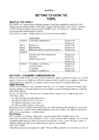
CHAPTER 1 GETTING TO KNOW THE TOEFL WHAT IS THE TOEFL? The TOEFL is a comprehensive English language examination required by more than 3,000 colleges and universities in the United States, Canada, and other parts of the world. In addition, foreign born professionals frequently need a TOEFL score for certification to practice their profession in the United States or Canada. The TOEFL is a timed test that consists of the three sections listed here. THE TOEFL Section 1 Listening Comprehension 50 questions 35 minutes Part A Statements 20 questions Part B Short Dialogs 15 questions ...
 annaabi.ee