Choices after secondary school There are lots of choices after secondary school. The main question is, which is better to do - to work or go to university. Both options give many advantages. Firstly, many young people couldn't choose the subject that they are likely to learn. Working can show if there are any of professions you're good at, as it will improve your interest in certain occupations. On the other hand, it is better not to let years between studies. Researches have shown that students, who have worked for few years after secondary school, can't concentrate on their lessons as much as those whose first choice was university. Thirdly, novadays students more often are facing financial problems. Lots of them are thinking that it is useful to work abroad in order to pay fees at university. Also, working in foreign countries is an advantage to improve your language skills. Last but not least, I think eightteen-year-old studen...
Choices after secondary school Every abiturient is gacing with big decision what do to next. Should student go to university, vocational school or to the work after secondary scool. It is big step in their life and ther is no right answer for them. Choosing the university menas thaht you have to study atleast 3 more years and usually undergrad have to work at the same time for living. It is stressful time and some of the students can't carry it through. . But also there is good points choosing the university you will get many friends, exiting undergrad life and of course education. I think that university is for them who wants to study something more. Choosing the work doesn't sound good at all, because usually you have to work places where your salary is quite low at the beginning. But also there is exceptions, some of the students who choosed the work can have a very good job, because many business educates the workers at the s...
Choices after secondary school Many people are in the secondary school. After graduation there are two choices there to go: to the university or to work. In university people will get smarter and will have better jobs I future, but if they choose to go to work they can start independent life. Firstly, in university people will gain higher education. Educated people will get better jobs with bigger income. Also they can improve on their work and make career. People who have big income can afford their family better life, because they can bay all that is necessary. Secondly, people get smarter in university. People who have graduated university are often very smart and do not get in trouble. They are very good talking partners, because they have an opinion about every problem (almost). Thirdly, people who are going to work after school can start their own independent life. Then students are going to university...
Choices after secondary school There are many things to consider before choosing a career after high school. Like go to job, university or some trade school. Both of them have positvies and negatives sides. I would like to describe both of them positvies sides. Go to the job after high school is very good idea. Especially when you do not know what you want on your life. Lots of my friends went to the job after high school because they have so tired and so sick of the school. Some of them work a year and after that they had thought clear what they want in their life. They go to the school after they had relaxed. Furthermore they study very hard because they have already aim about what they want to study. But some friends who went to the work after high school are decided to stay and they do not want to go to school anymore. This could be due to that they have found what they like and these are their dream j...
Choices after secondary school Most of teenagers choose going to High school after graduating from the high school- High school. Although, what to do next? Many young people decide to go to university, while others think that going to work is a better decision. In my opinion, everyone should think about what he wants to do in future. On the one hand going to the university is very interesting way for student and this means, that you would have lively life, travel and meet people. Moreover, you get a lot of knowledge. However, in the other hand going to university implies that you study there 4-6 years more. In addition you can not be sure that you find after graduating from university a highly paid job. The other option for a high-school graduate is to get a job. There are people who think that big positive side is that you must not study boring theories and formulas. What is more you get salary. Despite t...
Options after secondary school Im going to talk about different choices after secondary school. Firstly, a lot of students after graduating secondary school want to study more. There are two ways to continue your studies. The first choice is to continue the academic education in universities. It is the best way to educate yourself and later after graduation there will be some jobs with quite big salaries. The other way to continue your studies is to get vocational education. It includes different professions on technical field. It is a really great way to quarantee yourself a job, because after vocational school you have the necessary skills to work on certain job. In addition to that, there is one more option going to work. It is the best choice for some people who just do not want to study anymore or who do not know yet what to do with their lives. It gives them more time to figure out, who they wann...
Choices after secondary school In today's world, many young people decide to go to university after secondary school, while others think that going to work is a better decision. Firstly, the advantage of going to university after high school is that when person is willing to study and develop himself it is one of the best choices. Many young people know what they want to do with their life after high school, therefore going to university is a good idea. Also, after graduating university it is easier to find a job because then people have necessary education. However, going to work can also be a good decicion for some people. When person has never been very into studying then there is no point in going to university because there they have to study a lot. Moreover, when youngsters are still unsure about their future, it is better to skip one year, go to work and maybe also discover the w...
Choices after secondary school Many young people decide to go to university after secondary school, while others think that going to work is a better decision. But what are the advantages of both options? There are many advantages that should be pointed out. To begin with, when one is applying to university, there are some tests that should be taken. After just finishing the secondary school, brain is capable of managing the pressure of learning and it is much easier to take the test right away. In addition, if the person knows what she/he wants to study, it would be a good idea to look for the best university and start taking the first steps forward, closer to the dream job. Although, going to university is extremely essential, some people tend to go to work after graduating from high school. If the ''perfect career'' search has not given any results, it is better to go to work and give yourself a li...
Dear Mr Roberts I am writing to express my concern about the closing of the art studio and to bring out reasons why the art studio should be left open. Firstly, there are teachers at the studio, who offer tutoring for many artists. Furthermore, there are lots of necessary facilities. In addition, as the studio is located in an easily accessible area and opened around-the-clock, it is irreplaceable for lots of students. Moreover, young talents can exhibit their creations in the studio. In conclusion, it can be clearly seen that the art studio is important for many young artists, therefore we do not hesitate to even organise a protest march against closing the studio. I hope that the art department agrees and will not close donw the art studio. Yours sincerely, Mari Mets ESSAY Choices after secondary school Many young people decide to go univeristy after secondary school, while others think that...
Work or University? After finishing secondary education students have to decide vhether to go to work or continue their education at a university. If a student decides to go to work after finishing secondary school, he does not have the best advantages for getting a good job. Today employers value high-quality vocational qualifications, so it might not be as good as choice as continuing your education. However, if a student chooses to continue his education, he has many possibilities, for example, university or vocational education. At a university he can choose what he wants to study and for how long, for instance, to get a bachelors degree he has to complete three years of study at a university. And after graduating from university he can, continue with post-garduate studies to complete a masters degree and then doctoral degree. But he can also decide to continue with vocational education, whe...
Compulsory education in Britain starts at the age of 3-5. Primary (infancy) School and move to a secondary school at 11 or 12. Primary (infant) Years 1-2 Age 5-7 Primary(junior) 3-6 5-7 secondary 7-9 11-14 Secondary 10-11 14-16 Sixth form Lower sixth form 1 year 16-18 Upper sixth form 1 year A-level advanced level. Higher level academic exams that are taken mostly by people around the ae of 18 who wish to go on to higher education. GCSE general certifcate of Secondary Education. The exams taken by 15 to 16 year olds in England, Wales and Northern Ireland. Marks are iven for each subject separately. Grades are A-G. A, B and C are regarded as good Grandes. Private school ...
Estonian and British Education System Estonian and British education system is not quite different. In Estonia, the education system is based on six levels which include the: kindergarten, primary school, basic school, secondary school and university or vocational school. In Britain, the education system is also based on six levels which include the: nursery school, infant school, junior school, secondary school, 6th form and university or college. What is similar for both systems is that the first level of education starts at age of three. While in Estonia this level is called Kindergarten, then in Britain it is called Nursery school. Kindergarten is for children´s from age three to six, but Nursery school is for children´s three to four. Differently from Estonian system, at age of five to seven, British children ´s go to Infant school. This is called year one, year two and year three and all these three...
In England and Wales most school were established by private benefactors and operated as educational carities. Compulsory education was introduced in 1888. Maintained schools follow National Curriculum. National Curriculum core subjects are English, matematics and science. Foundation subjects are design and technology, history, music, art. Children in Englan begin with primary education and it may be divided into Infant and Junior school. After primary school they move secondary school. Nearly 88 pre cent of secondary school pupils in England go to comperhensive schools. After five years of secondary education students take examination in a range of subjects at the level of GCSI (general certificate of secondary edcation) and that marked by independent examination board. Following two years of study, students may take A-level examinationa, which are required for university entrance in the UK. 6-7 % of the children in England go t...
Rebellious youngsters in Viimsi Secondary School One if the biggest schools in Estonia, Viimsi Secondary School, has problems with discipline. Children vandalize school and disrespect teachers. Viimsi, which has been the wealthiest district in Estonia, for last couple of years and also has developed infrastructure, attracts young families to move there. The population has increased over the past few years by half. Today, approximately 16 000 people live in Viimsi. Therefore 164 children started first grade this year which increases students amount to 1350. Despite of the fact that Viimsi School was built only three years ago, it already needs some reparation. Many students doesn't seem to respect their school house and thrash it all the time. Walls and floors are scratched, chairs and tables scribbled and so on. Every day teachers in Viimsi Secondary School have to struggle with students, each being brought up di...
Comparison of Education in Britain and Estonia When looking into the educational systems of Britain and Estonia, several differences appear. In this essay I am going to point out some of the most distinguish features in the education of both countries. Firstly, there are dissimilarities in the age at which children go to school. In Estonia the age is 7 whereas in Britain children start their educational journey already as young as 5 years old. Primary school lasts 6 years just like in Estonia but the pupils in Britain are 2 years younger when they finish primary school than the pupils in Estonia. However, students in Britain and Estonia finish secondary school at the same age because secondary school lasts 5 years in Britain instead of 3 like it is in Estonia. Altogether, compulsory school in Britain lasts 11 years which is 2 years more than in Estonia. Moreover, there are slight differences as for the compulsory ...
To: The represantive of Aru Secondary School library From: Mari Maasikas Subject: Students’ reading interests Introduction The purpose of this report is to give an overview of Aru School students’ reading interests and recommendations for new books. The report is based on a survey that was carried out by Mari Maasikas at Aru Secondary School earlier this year. Girls Approximately one third of the female students are interested in romantic novels. Thrillers account for slightly below a quarter of the pie chart. Poetry makes up 17 percent of total and historical novels roughly 30%. Boys Slightly over than 50% of the male students prefer to read books from the thriller genre. The romantic novels account for one tenth of the chart. About 30% of the boys are interested in historical novels. Poetry makes up 9 percent of the results. Recommendations Seeing how Aru Secondary School students read books from only four different genres, I would ...
School system in the USA Education in the United States is provided by government. Each of the 50 states has its own laws regulating education. Children start school at the age of 5 or 6 and continue until the age of 18. Primary or grade school starts from the first grade up to the sixth grade. Then students attend middle school also called junior high school for three years. After middle school, students attend secondary schools, which are called "high schools" from ninth to twelfth grades. The idea of secondary school is to get a high school diploma. Students should take on average 17 or over 20 units during their studies. Public schools are free of charge and available for everybody. To which school a child attends is determined by where they live. Primary school American children start school at the age of five. The first year at school is called kindergarten. It is obligatory for all American ch...
Education Estonian Style Until the age of 7 you usually go to kindergarten, which means that you obtain preschool education. In grades 1-9 you obtain basic education. In grades 7-9 in addition to obtaining basic education, it is possible for you to get prevocational training in basic school. For persons without basic education who have passed the minimum school-leaving age (17 years) it is possible to continue their education in vocational schools on vocational training programmes (within 0,52,5 years one obtains vocational skills) or in upper-secondary schools for adults. If you have basic education, then you have choices to continue your studies: Upper-secondary school for general upper-secondary education (3 years). Vocational school for vocational secondary education (at least 3 years). If you have (general or vocational) secondary education, then you have three choices to continue your studies. Voc...
18 Sambla Street 86753 Kilingi-Nõmme Estonia London Central Secondary School 509 Waterloo Street London N6B 2PB England 20 September 2012 Dear Sir or Madam I am writing to you as I read the advertisment in Eesti Päevaleht about becoming an exchange student at a secondary school in Canada. I am 17 years old and I go to secondary school in Kilingi-Nõmme. I have good grades and I speak English well. Also I am interested in the chance to be an exchange student and improve my English. But there are few things I would like to ask you. Firstly, I was wondering about the accommadition possibilites, what it would be like, and are there any extra f...
Choices after secondary school There are lots of choices after secondary school. The main question is which is better to do - to work or go to university. Both options give many advantages. On the one hand, there are definitely some good sides to going to work. If you could not choose the subject that you would study to learn then it is better to get a job. Working can show if there are any of professions you are good at, as it will arouse your interest in certain occupations. On the other hand, many people know what they want to do with their life after secondary school and therefore going to university is a good idea. After graduating university it is easier to find a job, because you will have a necessary education then. In my opinion, it is better to go to university after high school because 18-year-old students are not ready to start their career. They do not have any profession after graduati...
Partner schools in Comenius project Targo Timak Form 7a Tartu Veeriku School Sehit Millis Nuri Ilkogretim Okulu l There are 1300 students and 43 staffs. l Students are aged 6-14. l Even though their school takes place in the urban part of the city, most of the families still have their old traditional ways of life which belong to rural areas. l Their school needs this kind of projects because pupils around the school have really low economic standards and they may not be able to find another chance to attend a high standard intercultural activity in the rest of their lives. Fichtenberg Oberschule l Fichtenberg-Oberschule is a general secondary school (grades 7-12) in Berlin-Steglitz. l Fichtenberg-Oberschule looks back at a long tradition of secondary education in Berlin-Steglitz and has been known under its present name and administrational stru...
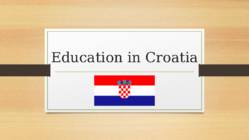
2 Educational system in Croatia divided into: 1. Early childhood education 2. Primary education 3. Secondary education 4. Higher education 3 Early childhood education There are three stages of early childhood education: • from when the child is 6 months old to when they're one • from the ages of one to three • from the age of three until the child stars attending primary school Even though these three stages are not compulsory, every child must attend kindergarten for a year prior to primary school. 4 Primary education (Children begin school at the age of 6 or 7.) There are two stages: • 1st through 4th grade, being taught by one teacher per class t...
Assessment-hinnang, määramine A child is innately wise and realistic-laps on sisemiselt tark Graduate from university-ÜK lõpetama (sünnipäraselt) Grammar school- akadeeiline 11-18 A/S Level exams-kergemad eksamid, edasijõudnutele täiendavad Hindered-takistama eksamid Infant school- eelkool 5-7 A level-riigieksam Involvement-kaasalöömine A graduate- kraad Independent schools-iseseisvad koolid A special seremony-lõpuaktus Influence-mõjutama All abilities- kõik oskused Junior school-noorem kool 7-11 Advantage when applying for job- eelis kui taotled tööd Limited-limiteeritud,piiratud Account for-selgitama Neglet-hoo...
TALLINN COLLEGE OF ENGINEERING INGLISE KEEL Essee Differences between Estonian and USA school and education systems. Juhendaja: Koostanud: 2009 Differences between Estonian and USA school and education systems. Question is, how different are our own and this big country they call United States of America's education. Or maybe there is no difference at all, and our systems about school and education are more similar than they appear at first sight. After reading all the materials and all sorts of notes about USA's education systems and their school household. All at once I realized, that they are not so different at all. Like for example USA's kids have to go to school exactly the same amount of time as our Estonian children. And basically learn same amount of same things. Like everywhere there are always ...
Education in Croatia Educational system in Croatia divided into: 1.Early childhood education 2.Primary education 3.Secondary education 4.Higher education Early childhood education There are three stages of early childhood education: · from when the child is 6 months old to when they're one · from the ages of one to three · from the age of three until the child stars attending primary school Even though these three stages are not compulsory, every child must attend kindergarten for a year prior to primary school. Primary education (Children begin school at the age of 6 or 7.) There are two stages: · 1st through 4th grade, being taught by one teacher per class that teaches every subject with the exception of foreign languages and Religion. The students stay in one classroom for the 4 years. · 5th through 8th grades, where different teachers teach different subj...
Education in Russia Table of contents Compulsory school years School stages Grading system PISA results GDP investment Literacy rate in the country Interesting facts about rules and regulations Compulsory school years Eleven-year secondary education in Russia is compulsory A student of 15 to 18 years of age may drop out of school with approval of his/her parent and local authorities Students with multiple violations may be kicked out of school at starting age of 15 School stages kindergarten (age 3 to 7) elementary (years 1-4) middle (years 5-9) senior (years 10-11) Grading system In Russia, most educational institutions use a five-point grading scale, where 5 is the highest and 1 is the lowest 5 "Excellent" 4 "Good" 3 "Satisfactory" 2 "Unsatisfactory" 1 "Very Poor" In higher education, most subjects are graded `Pass/No pass' PISA resul...
Work or university? After finishing secondary school you can take two choices. Whether you are going to work or study at the university. Now I would like to talk about their positive and negative sides. Firstly, I'd like to speak about going to work. Many people after finishing secondary school are going to work. One reason for this is that people have different abilities. Not everybody is suitable for university. The second reason is that perhaps they don't want to spend a lot of time on academic education. They are interested in particular profession which doesn't need an academic degree and want to move on with their life. Positive sides are that people can earn money and grow up faster. Negative sides are that it's not easy to get a job if doesn't have an education. Employees tend to prefer employers who have a good education and work experience. The second choice ...
The Estonian Education System The current Estonian education system consists of pre-school education, basic education, general secondary education, vocational education and higher education. Basic education is the compulsory education minimum, whics is provided by basic schools. Estonian law requires all children to be in full-time education from age of seven. In Estonia the National Curriculum is compulsory for all schools. The academic year begin on the first of September and is divided into four terms. So pupils have four holidays: a week in October, two weeks at Christmas, a week in March and three months in summer. Most Estonian children receive free education in state schools. School uniform is not compulsory. At the end of basic school pupils take three exams and at the end of twelfth form pupil take five exams. On completion of basic education, studies may be continue in a general secondary school...
Dear Sir/Madam, I am writing in the hope that you can help me with a problem regarding a camera that I have bought recently. On 24 April, I purchased a Canon digital SLR camera from a duty-free shop at Freetown Airport on my way from Freetown to Wondercity. The camera cost $599, and I paid for it by credit card. When I arrived at my hotel in Wondercity almost 24 hours later, I discovered that the box which contained the camera did not include the battery, and the space in the box for the charger was empty. I am now in Wondercity, and I am not returning to Freetown, so I need to get the missing parts here. I would be grateful if you could arrange for the parts to be sent to me. I attach a copy of the receipt for your information. I look forward to hearing from you. Yours faithfully, Introduction This report looks at the dietary habits of twenty students in their final year at Freedonian Secondary School. The report is bas...
1) Eduactional charities - Hariduslikud heategevusasutused 2) Universal education - Üldkättesaadav haridus 3) Compulsory education - Kohustuslik haridus 4) Full-time education - Päevane õpe 5) Home schooling - Koduõpe 6) Maintained schools - Riigikoolid 7) National Curriculum - Rahvuslik õppekava 8) Independent schools - Erakoolid 9) Foundation subjects - Alusained 10) School hours - Koolitunnid 11) Terms - Semestrid 12) State schools - Riigikool 13) Primary (education) - Algharidus/algkool 14) Infant - Väikelastele 15) Junior - Algaste 16) Secondary - Põhikool 17) Single-sex - Ühesoolised 18) Co-educational - Segakoolid 19) Comprehensive schools - Üldhariduskool 20) Selective - Valiv 21) General certificate of secondary education - Põhikooli lõpueksam 22) Independent examination boards - Sõltumatud eksamikomisjonid 23) Vocational college - Kutsekool 24) Technical college - Tehnikumid 25) A-Level - Riigieksamid 26) Further eduaction col...
The French education system is split into three stages: primary school (école), secondary school (collège) and high school (lycée). Primary and secondary education is free, neutral, secular and compulsory between the ages of 6 and 16. However, there are some private schools that are not subject to these obligations and particularities of the French education system. Nursery school classes accept toddlers at 2 or 3 years of age, starting in September. The children develop their basic faculties, improve their speaking skills and are introduced to the world of reading and writing, numbers and other key areas of learning. From age 6 to 11, the children attend elementary school which is mixed and freein the case of public (state) schools. The 'collège' accepts all pupils after elementary school without the need to pass an entrance exam. The teaching is structured by subject: French, mathematics, history-geography, 'civics' or civil education...
USA school system Most children enter the public education system around ages five or six. They may begin in preschoolpreschool, kindergartenkindergarten or first gradefirst grade. They normally attend 12 grades of study over 12 calendar years of primary and secondary education before graduating, earning a diploma that makes them eligible for admission to higher educationhigher education. Education is only mandatory until age 16, however. There are generally five years of primary (elementary) school, during which students customarily advance together from one grade to the next as a single cohort or "class", three years of middle school, which may have cohorts, and four years of high school. There is some variability in the arrangement of grades. In the U.S., ordinal numbersordinal numbers (e.g., first gradefirst grade) are used for identifying grades. Typical ages and grade groupings in contemporary, public and private schools may be...
Education in Estonia { The beginning The history of formal education dates back to 1314th century crusades The first schools were built near churches The first primer was published in 1575 It was possible to learn reading & writing in various guilds during the 16th century 1617th century Education in the Estonian language started after the reformation by Martin Luther During Swedish era, on Gustav Adolf II's orders, the first school and university were built in 1631 GAG in Tallinn and in 1632 the University of Tartu After The Great Northern War, as Estonia was occupied by Russia, many admiralty schools were built 18th century During the reign of Russian empress Katarina II, many great improvements were made in peasant school system and girls started going to school Estonians were quite highly educated for that time, since at least half of the folk in a parish could read and a third write In 1739, the first bible w...
Vocabulary list 1. internet service provider company that provides internet for a fee 2. globalization - or extending to other or all parts of the world 3. flash drive a portable miniature solid state drive that connects to a computer via a USB port 4. abbreviations a shortened form of a word 5. nonverbal communication communication without talking 6. social networking service that connects people who for example share interests, backgrounds or real-life connections 7. addiction - state of being enslaved to a habit or practice or to something that is psychologically or physically habit-forming 8. plagiarism presenting someone else's work as your own 9. distractor a person or thing that distracts the attention 10. cyberbullying the act of harassing someone online 11. kindergarten/nursery/preschool (2-7) 12. primary/elementary school (7-13) 13. basic/secondary sch...
CURRICULUM VITAE Personal Information Name: Sinu Nimi Date of Birth: 18.12.1092 Nationality: Estonian Address: Võidu Street 10-23, Tallinn Education and Qualifications Secondary School: Kiviõli First Secondary School Experience 2009 summer: assistant in Erra gardening and babysitter for three months Other Skills First Aid Certificate Interests sport, cars, cooking,reading,fishing 10 February 2010-02-10 Dear Sir/Madam, I am writing to apply for the position of farm worker in France which I saw advertised in The Guardian last week. I would be interested in picking grapes. I enclose a copy of my CV. I would like to work for you because I am very interested in farm work. I would also like to learn about a different culture as I feel that intercultural understanding...
07 October 2009 Work interview 1) Tell me about yourself? Let me introduce myself. My name is .... I am 25 years old, Estonian citizen. I learned in ... Secondary School, where was the direction all ready to the economy . After high school I studied at Estonian University of Life Sciences bookkeeping. I am active in sports and my hobbies are climbing and skiing. I have an optimistic feel of life and a good sense of humour. 2) Why I should hire you? I am very interested to work in your company. I have worked in several places and have some experience in different kind of works that needs an open mind and even "out of the box" thinking. I m not afraid of difficulties and stress filled work. I have recommendations from Sampo Pank and Elion, were I worked during summer holidays. 3) How did you hear about us? Aft...
British education Generally State and private schools Primary and secondary school GCSE Three terms Uniforms Terms and (holi)days Three terms Summer holiday Christmas and Easter From 8 am or 9 am til 3 pm Periods Punishments Exclusion Suspension Detention Lines Canning School uniforms A lot of influence Charity schools and poor children Rich parents making poor parents feel humble Uniform dress code School uniforms Classical British school uniform Universities 4 main categories State financed History and research output Cambridge university Used materials: http://histclo.hispeed.com http://www.archivist.f2s.com http://www.teachernet.gov.uk http://www.wikipedia.org Thank you for listening!
Võru County Vocational Training Centre Kert Kongo KBp-14 Võru County Vocational Training Centre (VCVTC or Võrumaa Kutsehariduskeskus in Estonian) is an educational institution inVäimela, Võrumaa, South-Estonia, which offers higher education, secondary vocational education and pre-training study programmes. History VCVTC was established in September 1999 as a result of a merger of two schools – Väimela Agricultural Technical School and Võru Industrial Technical School. Võru Industrial Technical School was a successor of the Võru Industrial School, established in 1925, which had been specialising in teaching the skills of wood and metal processing. Väimela Agricultural Technical School, which originates from the Võru Farming School, established in 1920 specialised in teaching agriculture. While 410 students were enrolled in 1999, today this number has risen over 900. Statistics...
Useful Vocabulary for Letters of Application In the introduction I am writing to apply for the post/ position of .....as advertised / which was advertised ( in the Times on 13 May 2010 / in the local newspaper/ on the noticeboard in my school) I am writing in response to the job which I saw advertised in (the Daily Herald) With reference to your advertisement in the Guardian (of 25 January 2003), I would like to apply for the post of ...... I saw your advertisement in...... and I would like to be considered for the job I heard about this position through my careers officer at school I believe that I have all the necessary skills and qualifications for this post I believe that I would be suitable for this post In the main body I am an 18-year-old student.../ I am 18 years old.... I am currently in the final year of ..... I am cu...
Most of the students who graduate from secondary school have a big question ahead of them whether to go to university or start working. If you go to work then you probably will not start learning in the further life but if you go to university then you have more time to think what to do with your life and how you want to live it. So, which option is wiser? If you go to university then firstly you will learn a specific job which you will probably do very well in the future. If the field of study is smartly chosen then it would be really easy to find a good job and to earn much money. Secondly, it is widely known that you will get a lot of new friends in the university and it is good to know people who like the same things you do. Futhermore, nowadays the universities have many exchange programs which let you see the world and to improve other languages. If you choose to start working right after secondary school then you ceryainly have ...
Essay United States and Estonian education systems USA and Estonian school systems are very similar. But still there are some differences. How children attend school and when? How chlidren are divided by age in USA and Estonia? The American school year traditionally begins in August or September, after the traditional summer recess, which is three months long. As well in Estonia. School year usually ends in may or june. First difference between Estonian school system and USA's is that children attend school at the age of 5-6, but in Estonia children go to school at the age of 7-8. Before going to school american children attend preschool (selectively). Years 5-6 american children attend kindergarden, which is a preparation for the first grade. Most children enter the public education system around ages five or six. Children are assigned into year groups known as grades, beg...
Curriculum Vitae Name: Vanessa Maibaum Date of Birth: 25th September 1995 Nationality: Estonian Address: 2 Mereranna Street Viimsi 74001 Email: [email protected] Mobile Tel: +372 538 892 52 Education & Qualifications 2008- Present Pirita Secondary School of Economics, Tallinn Higher Grades Include: Spanish, Business and Marketing, Micro- Economic, Macro- Economics, Business English, Data Procressing, Web Page Creation, Accounting. 2002- 2008 Merivälja School, Tallinn 6 Standard Grades Additional Information Languages: Estonian- Mother tongue English- Fluent written and spoken Russian Spanish Finnish Computer Knowledge: Experienced user of Microsoft office products. Keen user of the internet.
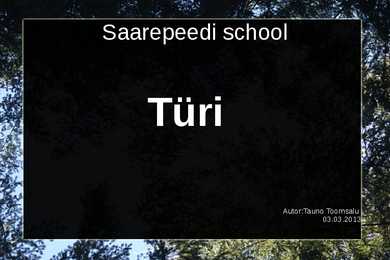
Saarepeedi school Türi Autor:Tauno Toomsalu 03.03.2013 Türi history 1347 Türi first mentioned in historical records by the name of Turgel 1687 The establishment of the first school 1900 Railway traffic (ViljandiTallinn, Türi Paide) opened Türi city 1917 Türi gains the rights of a market town 1924 The first secondary education institution in Türi opened Türi Horticultural Gymnasium 1926 The rights of a town given to Türi Türi administrative 1950 - 1959 Türi - the centre of Türi County.1997 Türi College of the University of Tartu for environmental science studies opened. 2000 Türi declared the Spring Capital of Estonia by Mart Laar, the prime minister of Estonia 2005 Türi became the administrative centre of newly formed Türi Parish. Türi museum 1995 Türi ...
Westminster School The Royal College of St. Peter in Westminster, almost always known as Westminster School, is one of Britain's leading independent schools,with the highest Oxbridge acceptance rate of any secondary school or college. Located in the precincts of Westminster Abbey in central London, and with a history stretching back beyond the 12th century, the school's notable alumni include Ben Jonson, Robert Hooke, Christopher Wren, John Locke, Jeremy Bentham, and A. A. Milne. The school traditionally encourages independent and individual thinking. Boys are admitted to the Under School at age seven, and to the main school at age thirteen; girls are admitted only at sixteen. The school has around 750 pupils; around a third are boarders, of whom most go home for the weekends, after Saturday morning school. It is one of the original nine English public schools as defined by the . The Good Schools Guide says of the school: "For the right...
To: The Aru Secondary Scool library From: Johannes Smith Subject: Schoolmates reading interests Date: 6.10.2015 The purpose of this report is to analyse the results of a recent survey into schoolmates reading habits. In this survey students were asked witch genre of books they like to read. This report is based on a diagram showing the percentage witch genres students like to read. This report will describe the reading habits of The Aru Secondary School. The most popular genre for girls was romantic novels and for boys thrillers. This is shown by fact that girls like more romantic and boys like more suspense. In the survey can read that only 17% girls like to read poetry and only 9% of boys like to read poetry. In conclusion I will say that these results are quite logical outcome. It is been always that girls like more romantic novels and boys thrillers. For summing- up I will say that it is nice that students lik...
Education The education system is a little bit different in the UK than ours. For example they have go to school 2 years earlier than us. Primary school is for pupils aged 5-11. Though schooling is only compulsory from age 5 in the UK, children most commonly enter Reception Class aged 4 in the academic year in which they will reach their 5th birthday. When pupils are aged 7 they sit Key Stage 1 [SATs]. Key Stage 2 SATs are taken when pupils are aged 11. Secondary school is for pupils aged 11-16. 11-13 years old pupils study a broad range of 10–15 subjects. No public examinations are taken during this time. Traditionally, at the age of 14 students start a programme that lasts for 2 years and during which time they study up to 11 subjects of their choice. After this students take GCSE state examinations After 16 attending at school isn't compulsory but pupils can stay at school, go to coll...
Should class attendance be mandatory for university students? It has been heavily debated, whether class attendance in general should be compulsory or optional. While most people can agree on the necessity of class attendance in elementary, as well as secondary school being obligatory, then opinions on required class attendance at university are quite divided. Both two alternatives have their respective up- and downsides but all aspects considered, which is more beneficial? To start off, the students’ chosen specialty usually reflects their interests which means that said students, in fact, want to attend classes. In this case, it seems unnecessary to make classes mandatory as it will be more time consuming and virtually even pointless for them to explain their reason for absence. After all, it is relatively common that when students take interest in a subject, it is highly unlikely they will deliberately miss a class. Regardless of c...
Western Australia Mihkel Hallen 8b Introduction · Western Australia is the largest state of Australia · It's population is 2,1 million inhabitants (10% of the national total) · The state's capital city is Perth The flag History · The first inhabitants of Australia arrived from the north approximately 40,000 to 60,000 years ago · The first European visited W.A. in 1616 · Population growth was very slow until the significant discoveries of gold were made in the 1890s Geography · Western Australia is bounded by South Australia and the Northern Territory to the east, and the Indian Ocean to the west and north · It's highest peak is the Mt Meharry (1249m) Climate · The southwest costal area is relatively temperate and was originally heavily forested, including large stands of the karri · Average annual rainfall varies from 300 ...
Name: Oliver Niinas Address: Asula17a-9 11312 TALLINN Telephone(home): +3726561530 Telephone(Mobile):+37256703113 Nationality:estonian Personal Profile I have working as washer in Jazz Quickwash washer,Salesman in Viasat,Packer in Johnatan Warehouse in Ireland and mya in Tallinna Lõunakeskuse Säästumarket, i am good learner and specific. I like to do any job, to practice my skills. Mostly in warehouse and barista work. I have vocational degree in warehousing. Education and Qualifications 2007 2010 Tallinn Transportschool(warehousing)(vocational school) 2001 2007 Liivalaia High School(secondary school) Work Experience Jazz Quikewash(washer) 05.-09.2006 Viasat(salesman) 06.-12.2007 Green Isle Factory (Packer) Ireland Galway...
State or public education In Estonia the most of children attend state schools. However, in the last ten years the number of private schools has increased. What are the main differences between private and state secondary schools? Firstly, private schools are not free and parents ought to pay for their children is learning in a public school. But state schools are free and parents do not have to pay for education. Secondly, private schools are more strict than state schools. Another vital aspect is that public schools have a more strict evaluation system and there is a lot of homework. However when we compare state and public schools then it is seen that the results of examinations for students of private schools are higher than in state schools. On the one hand i know that well-off families prefer public education because it will give their children more opportunities. ...
 annaabi.ee