 50 punkti
Autor soovib selle materjali allalaadimise eest saada 50 punkti.
50 punkti
Autor soovib selle materjali allalaadimise eest saada 50 punkti.
 ~ 10 lehte
Lehekülgede arv dokumendis
~ 10 lehte
Lehekülgede arv dokumendis
 2011-11-04
Kuupäev, millal dokument üles laeti
2011-11-04
Kuupäev, millal dokument üles laeti
 6 laadimist
Kokku alla laetud
6 laadimist
Kokku alla laetud
 0 arvamust
Teiste kasutajate poolt lisatud kommentaarid
0 arvamust
Teiste kasutajate poolt lisatud kommentaarid
 Gert Metsküla
Õppematerjali autor
Gert Metsküla
Õppematerjali autor
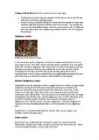
It leaped on the mammoth's back, held on with its long strong claws and stabbed the mammoth many times with its fangs. Another prehistoric elephant was the mastodon. It had long red fur and big tusks, but it did not have humps. Woolly mammoth and woolly mastodon were not the only animals with heavy fur. The woolly rhinoceros had thick, dark fur and long bristles. It also had two horns, one long and one short, and if attacked, the woolly rhino would charge with these sharp horns. Prehistoric man hunted the woolly mammoth and the woolly rhinoceros and they made paintings of these animals on the walls of caves. The paintings were made thousands of years ago during the Ice Age, but they are still in the caves to see today. ANSWER THE QUESTIONS. 1.When did the Great Ice Age begin? 2.Where did the changes of the climate take place first? 3.What kind of changes were they? 4.What are glaciers? 5.How far south did the moving ice sheets reach
khTallinn English College The United Kingdom Topic Mari-Liis Pakats Tallinn 2008 2 Table of Contents Introduction..................................................................................................................4 Geographical Position .................................................................................................4 History .........................................................................................................................4 Government..................................................................................................................5 Queen Victoria.............................................................................................................5 Relief............................................................................................................................6 Climate .....................................
Cuisine of South Africa has had a variety of sources and stages: · Cookery practised by indigenous people of South Africa such as the Khoisan and Xhosa- and Sotho-speaking people · Settler cookery introduced during the colonial period by people of Indian and Afrikaner and British descent and their slaves and servants - this includes the cuisine of the Cape Malay people, which has many characteristics of Malaysia and Java, and recipes from neighbouring colonial cultures such as Portuguese Mozambique. Indigenous cookery traditional South African cuisine In the precolonial period, indigenous cuisine was characterized by the use of a very wide range of fruits, nuts, bulbs, leaves and other products gathered from wild plants and by the hunting of wild game. The domestication of cattle in the region about two thousand years ago by Khoisan groups enabled the use of milk products and the availability of fresh meat. However, during the colon
Australia Fact file: Australia comprises a land area of 7 686 850 square kilometres. Its population is about 21,3 million people. Australia's capital is Canberra. The national language is English. The official name of it is the Commonwealth of Australia. It's divided into six states and two territories: New South Wales, Queensland, South Australia, Western Australia, Tasmania, Victoria, Australian Capital Territory (ACT) and Northern Territory. Symbols: Australia had the British flag as their official flag until 1901, when the Commonwealth of Australia was formed. Over 30 000 entries attracted the official competition. Five of them, which contained almost identical designs, were placed equally first. The Australian flag symbolises Australia's historical links with Britain, because it has British flag on it, and Australia's location in the southern hemisphere, because it has stars of the Southern Cross on it
Tallinna Inglise Kolledž Australia Referaat Tallinn Table of contents: Introduction.....................................................................................................................3 Geographical Position.....................................................................................................3 Relief...............................................................................................................................4 Climate & Time Zones....................................................................................................5 Plants...............................................................................................................................5 Animals...........................................................................................................................6 Population......................................................................................
Topic Australia Introduction Many people know Australia as the land down under because it is the only continent except for Antarctica that is all on the southern hemisphere. Its name means ,,Southland". The official name of the country is the Commonwealth of Australia. It's capital is Canberra. Australia is the sixth largest country in the world but the smallest continent. Australia has 6 states and 2 territories (New South Wales, Victoria, Tasmania, Queensland, Western Australia , South Australia, The Australian Capital Territory and the Northern Territory). The Australian people are culturally the same as the Anglo Americans. There also live aborigines. Aborigines are the ancestors of the people. Like the US and Canada, Australia was an English speaking colony of Great Britain. Today Australia is a modern developed country with a diversified economy. Australia is an island continent of 7.7 million square kilometres, which makes it a little smaller than the USA. Located in
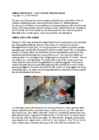
AMBER AND RUSSET - LATE COLOUR CHANGE GENES Copyright 2014, Sarah Hartwell The ancestors of the domestic cat were nondescript black/brown striped tabbies. Over the centuries, mutation produced a wide array of colours based on 2 different pigments. Eumelanin gives the blacks, browns and blues while phaeomelanin gives the reds, fawns and creams. A few other genes give further variations on those colours such silvers, colourpoints and solids/selfs. Mutations continue to occur and unexpected colours also turn up due to inbreeding where recessive genes, hidden for generations, start showing up. AMBER AND LIGHT AMBER During the 1990s, some purebred Norwegian Forest Cats in Sweden produced chocolate/lilac and cinnamon/fawn offspring. However, those colours are not found in the purebred Norwegian Forest Cat gene pool. Had the gene pool become polluted by someone, perhaps generations ago, breeding their Norwegian Forest Cat to another breed? Was it a spontaneous mutation? Crossing of those c
Topic Canada Tallinn English College 2006 1. Introduction If you had to use two words to describe Canada, they might be large and diverse. Canada is the second largest country in the world with a territory of about 10 million square kilometers and it is bordered by three oceans: the Arctic, the Pacific and the Atlantic Oceans. The population of Canada is about 31 million people. About 77% of the people live in cities which lie in a band about 100 miles wide above the border of the United States. The capital of Canada is Ottawa. Other large cities are Montreal, Toronto, Vancouver, Winnipeg and Quebec. 2. Geographical position Canada is a huge country in the continent of North America. It is bordered with the Atlantic Ocean in the east, the Pacific Ocean in the west, the United States of America in the south and the Arctic Ocean in the north. Canada is a vast country, with a territory of 3.8 million square
 annaabi.ee
















Kõik kommentaarid