The foundation stones The Island Britain has a mild climate due to the Gulf Stream which brings warm waters from the Gulf of Mexico. The northern part of the island in average 5'C cooler and it's mountainous or hilly and that's why the south has been more populated.. Britain became an island only 5000 years BC after the Ice Age ended. Britain's prehistory The first evidence of human life on the island are dated back to 250 000 BC. 50 000 BC in a milder Ice Age period Britain became habitable again. People from that time were the ancestors of the modern British. 10 000 BC ige age ended and Britain became inhabited by small groups of hunters who probably followed herds of deer. 5000BC Britain became an island and deer died out
6 Põhjagermaani keel on üks kolmest keelest, mis kuulub germaani keelte hulka. Ülejäänud kahte nimetatakse idagermaani (gooti keel) ja läänegermaani (inglise-, saksa-, hollandi-, friisi -, jidisi-, afrikaani-, alamsaksa-, flaami-, letseburgi keel) keelteks. 7 Ari Siiriäinen. The Stone and Bronze Ages; Michael Barnes. Languages and ethnic groups.The Cambridge History of Scandinavia. Vol. 1, Prehistory to 1520. Koost. Knut Helle. Cambridge University Press. Cambridge 2003, lk94. 8 Elise C Otte, lk10 ; Robert C. Boraker. Uncovering Scandinavian roots. http://www.ensignmessage.com/archives/scandinavianroots.html 9 Elise C Otte, lk13. 10 Kalevi Wiik ,,Eurooplaste juured" Ilmamaa. Tartu 2005, lk.193. 11 Kalevi Wiik, lk.68-69; Refuugium on paik kus elatakse külmadel (jääaeg) perioodidel, Euroopas oli neid kolm: Ibeeria, Ukraina ja Balkan. Kalevi Wiik, lk.69.
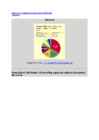
(Note 1) (dropping) Chinese folk 270 BCE None 390 million 6% religion The Tripitaka (consisting of the Vinaya, 350 - 1,600 6% Buddhism 523 BCE the Sutras, million (2) (stable?) and the Abhidharma) Tribal Religions, Prehistory Oral tradition 232 million 4% Shamanism, Animism Atheists No date None 150 million 2% New religions. Various Various 103 million 2% Guru Granth Sikhism 1500 CE 23.8 million <1% Sahib Torah, Judaism Note 3 Tanach, & 14.5 million <1% Talmud Spiritism 12
History of Great Britain Prehistory (55BC) no written records 6th 3rd c. BC the Celts came to British isles hill figures, hill forts, stone circles ( Stonehenge ) RomanBritain (55BC 400AD) Julius Caesar, named the country Albion Hadrian's Wall, villas, roads, the town of Bath The AngloSaxon, Danish and Norman invasions Germanic tribes settled and stayed Anglia Christianity was brought, religion became important, churches were built 8th century = raids by the Vikings and the Danes
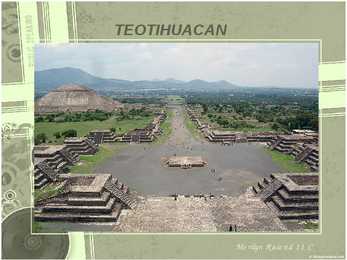
te o tih ua c a no d · Luks u s likud e s e m e d te h tud s p e ts ia a ls e s t s a vis t, m is te h ti o ra n zivä rvilis te ks · Ka us id o lid ka s lih ts a d , ja lg a d e l s e is va d , võ i ka unis ta tud ig a s ug us te o rna m e ntid e g a Savikausid Savikujud Kasutatud kirjandus · http://en.wikipedia.org/wiki/Teotihuacan · http://archaeology.asu.edu/teo/ · http://www.mexicocity.com.mx/teoti_i.html · http://www.mnsu.edu/emuseum/prehistory/latinamerica/ meso/cultures/teotihuacan.html · http://www.fundacion.telefonica.com/en/arsvirtual/patrim onio_lat/visitas_virtuales/teotihuacan.htm · Karl E. Meyer "Teotihuacan"
Seattle, Washington: Eastland Press. 2. Ernst E, Pittler MH, Wider B, Boddy K. (2007). "Acupuncture: its evidence-base is changing". 3. Ernst, Edzard (2006-02). "Acupuncture - a critical analysis". Journal of Internal Medicine 4. Lao L, Hamilton GR, Fu J, Berman BM (2003). "Is acupuncture safe? A systematic review of case reports". Altern Ther Health Med 5. Chiu, M (1993). Chinese acupuncture and moxibustion. 6. Ma, K (1992). "The roots and development of Chinese acupuncture: from prehistory to early 20th century" 7. Melzack R. (1976) Acupuncture and pain mechanisms Anaesthesist. 8. Johnson MI (2006). "The clinical effectiveness of acupuncture for pain relief--you can be certain of uncertainty". Acupunct Med. 24 9. Li K, Shan B, Xu J, et al. (2006). "Changes in FMRI in the human brain related to different durations of manual acupuncture needling". Journal of alternative and complementary medicine. 12
becomes possible), Proust has given modern writing its epic: by a radical reversal, ins- tead of putting his life into his novel, as we say so often, he makes his very life into a work for which his own book was in a sense the model, so that it is quite obvious to us that it is not Charlus who imitates Montesquiou, but that Montesquiou in his anecdo- tal, historical reality is merely a secondary fragment, derived from Charlus. Surrealism lastly — to remain on the level of this prehistory of modernity — surrealism doubtless could not accord language a sovereign place, since language is a system and since what the movement sought was, romantically, a direct subversion of all codes — an illusory subversion, moreover, for a code cannot be destroyed, it can only be “played with”; but by abruptly violating expected meanings (this was the famous surrealist “jolt”), by entrusting to the hand the responsibility of writing as fast as possible what the head
But with electric media Western man himself experiences exactly the same inundation as the remote native. We are no more prepared to encounter radio and TV in our literate milieu than the native of Ghana is able to cope with the literacy that takes him out of his collective tribal world and beaches him in individual isolation. We are as numb in our new electric world as the native involved in our literate and mechanical culture. Electric speed mingles the cultures of prehistory with the dregs of industrial marketeers, the nonliterate with the semiliterate and the postliterate. Mental breakdown of varying degrees is the very common result of uprooting and inundation with new information and endless new patterns of information. Wyndham Lewis made this a theme of his group of novels called The Human Age. The first of these, The Childermass, is concerned precisely with accelerated media change as a kind of massacre of the innocents. In our own world as we become more
mõistagi ülevaadet kõigest, mis puudutab muistsete inimeste elu-olu. Kõige rohkem väljendub selles materiaalne kultuur, st füüsilised asjad ja nende katkendid, ja selle areng aegade jooksul, kuid siingi jääb palju teadmata, kuna kõik materjalid, mida inimesed kasutasid, lihtsalt ei säili. Vähem heidab arheoloogiline materjal valgust ühiskondlikele suhetele, kuigi arheoloogia peaeesmärgiks on omaaegse ühiskonna kõikide tahkude uurimine. Terminit esiajalugu prehistory kasutas esmakordselt inglane Daniel Wilson 1851. aastal, kuigi Prantsusmaal oli mõistet "esiajalooline" kasutatud juba 1833. aastal. Selle terminiga tähistati siis ja tähistatakse ka praegu inimese arenemise lugu enne kirja tundmaõppimist. Lisaks esiajaloole kasutatakse Lääne-Euroopas ka termineid protohistory ja frühgeschichte varaajalugu. Need käivad tegelikult esiajaloole
ühiskondliku ja majandusliku arengu projekte - suurem osa neist tagasihoidlikud, nagu koolid, tervishoiukampaaniad külades ja keskkonnaalased projektid - kogu maailmas. 33 SUMMARY Baha'i faith is a religion, which set up the Bahá'u'lláh 19 century in Iran. Bahá'u'lláh'd be the last of God Baha'i developer row, which goes back to prehistory and which includes Abraham, Moses, Buddha, Zoroaster, Christ and Muhammad. Baha'i faith teaches that the world's major religions founders, including Krisna, Buddha, Zoroaster, Abraham, Moses, Jesus Christ, and Muhamed, are one and the same divine teachers sent by God to educate humanity in accordance with the teachings and laws of development. Baha'i recognizes two teachers from that era: Báb and Bahá'u'lláh. Baha'is believe that
Esimesed põllunduskultuurid tekkisid Egiptuses Niiluse jõe kallastel, Mesopotaamias, Indias ja Hiinas. Esimesed aiad tekkisid igiammu samuti antiiksetes idamaades. Maal, kus oli kuuma kliima, vajati jahedat ja varjulist aeda - see oli iga majapidamise paratamatus ja nõue. Nõnda on põhjust alustada iidsest Egiptusest. SOOVITAVAT KIRJANDUST: Jellicoe, G. ja F. 1975. Landscape of Man: Shaping the Environment from Prehistory to the present Day. The Viking Press: Cambridge. (EPMÜ m-arh. õppetooli raamatukogus). Kangilaski, J. 1997. Üldine kunstiajalugu. Tallinn: Kunst, lk 24...28. Koostanud: Kadi Karro Viimati täiendatud 09.02.13 7 Maastikuarhitektuuri ajalugu 1 2010. a 2. EGIPTUSE LINNAD JA AIAD KESKKOND
 annaabi.ee