 50 punkti
Autor soovib selle materjali allalaadimise eest saada 50 punkti.
50 punkti
Autor soovib selle materjali allalaadimise eest saada 50 punkti.
 ~ 1 leht
Lehekülgede arv dokumendis
~ 1 leht
Lehekülgede arv dokumendis
 2010-10-12
Kuupäev, millal dokument üles laeti
2010-10-12
Kuupäev, millal dokument üles laeti
 49 laadimist
Kokku alla laetud
49 laadimist
Kokku alla laetud
 0 arvamust
Teiste kasutajate poolt lisatud kommentaarid
0 arvamust
Teiste kasutajate poolt lisatud kommentaarid
 nilsv
Õppematerjali autor
nilsv
Õppematerjali autor
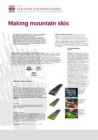
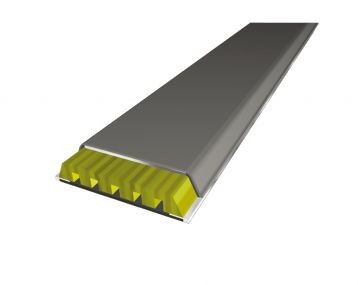
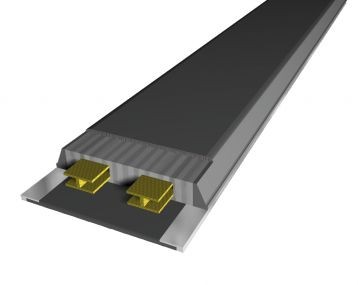
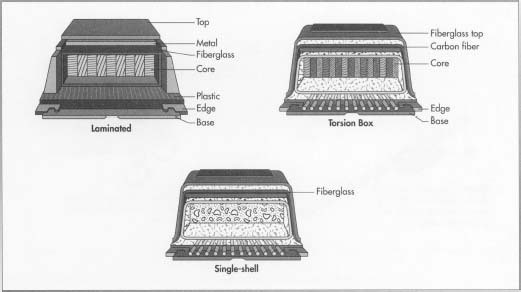
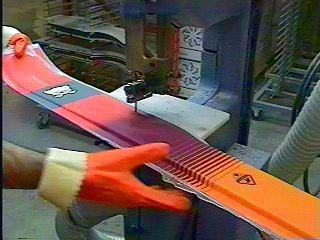
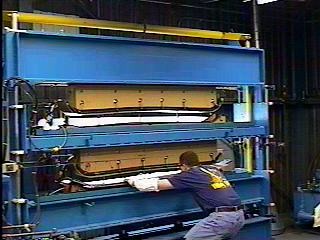
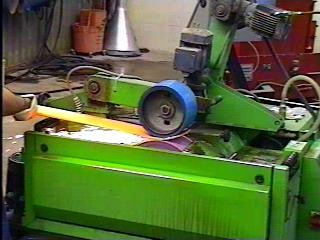
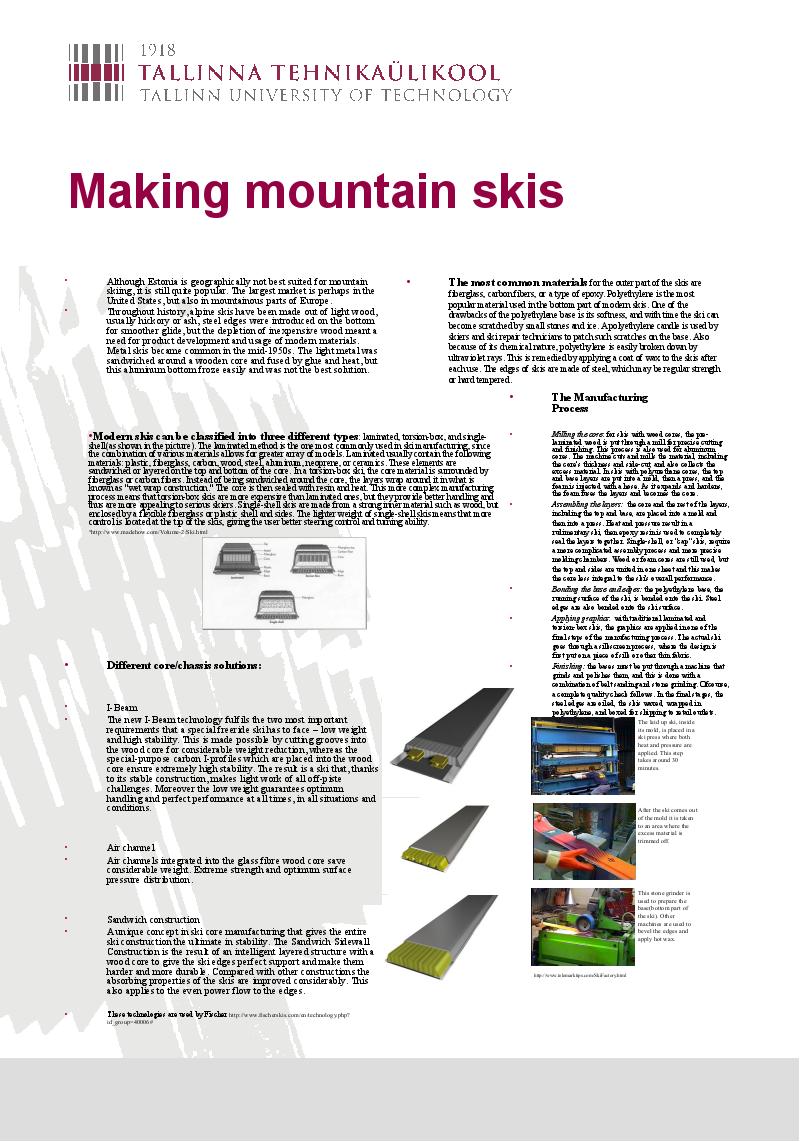
Making mountain skis · History · Different types · Most common materials · The Manufacturing Process Different types · Laminated most common · Torsionbox more expensive · Singleshell lightest History · Light wood, usually hickory or ash · Depletion of inexpensive wood · Metal skis became common in the mid1950s · Aluminum bottom tends to freeze · Modern solutions Most common materials · Outer part of the skis fiberglass, carbon fibers, epoxy · Polyethylene in the bottom part · Coat of wax for maintaining polyethylene · Edges steel, usally hard tempered The Manufacturing Process · Milling the core - the material is put through a mill for precise cutting and finishing · Assembling the layers - the core and layers, are placed into a mold and then into a press. Heat and pressure result in a rudimentary ski, then epoxy
Vocabulary with definitions Body and exterior Body components, including windows and trim: · Bonnet/hood : UK (US hood) the metal cover over the part of a car where the engine is I looked under the bonnet and clouds of smoke poured out. (KAPOTT) · Bonnet/hood latch: a type of mechanical fastener that is used to join two (or more) objects or surfaces together while allowing for the regular or eventual separation of the objects or surfaces. · Bumper: a horizontal bar along the lower front and lower back part of a motor vehicle to help protect it if there is an accident. (AMORTISAATOR/PÕRKERAUD) · Unexposed bumper can´t be seen · Exposed bumper can be seen · Cowl screen: (KAITSEVÕRE) · A cowling: is the covering of a vehicle's engine, most often found on automobiles and aircraft. (KAPOTT) A cowling may be used: · for drag reduction · for en
SISUKORD ENERGY STORY................................................................................................................4 USES OF ENERGY............................................................................................................. 4 2.1 Uses of energy in homes...............................................................................................5 2.2 Types of energy used in homes.................................................................................... 6 2.3 Energy use in different types of homes........................................................................ 6 2.4 Commercial Energy Use...............................................................................................9 2.5 Industrial and Manufacturing Energy Use..................................................................11 2.6 Transportation Energy Use.........................................................................................12 RENE
TOPICS FOR SPEAKING CYLINDER FRAME The cylinder section of the engine consists of a number of cylinder blocks, which are tightened together with the engine frame and the bedplate by means of through- going stay bolts. Two central bores, one at the top and one halfway down inside the cylinder block, enclose the cylinder liner. The upper part of the cylinder block forms part of the cooling water space around the central part of the cylinder liner, whereas the lower part forms the scavenge air space. A central bore in the bottom of the cylinder block encloses the piston rod stuffing box. The bottom is double with a hollow space through which cooling water is circulated. On the exhaust side of the cylinder block there is a circular opening leading into the longitudinal scavenge air receiver of the engine. Furthermore, there is an inlet pipe for cooling and lubricating oil. The cylinder block is provided with cleaning and inspection covers for the cooling water and
Introduction (slide 2) In this presentation I'd like to give a brief overview of clay bricks. I'll speak about 15min to allow time for questions at the end. Firstly clay bricks are known for centuries as one of the most solid and reliable structural elements is set to play a role in reducing global warming. Apart form the many benefits obtained from using clay bricks in construction, such as their durability, insulation properties and aesthetic qualities, recent findings show that they also produce less carbon emissions than any other masonry material. History (slide 3) In more detail the earliest bricks were dried bricks, meaning they were formed from clay- bearing earth or mud and dried usually in the sun until they were strong enough for use. The oldest discovered bricks, originally made from shaped mud and dating before 10000 BC, were found in Mesopotamia related to the first known cities. Ceramic or fired bricks were first introduced by the Romans. These were mainly flat, broad
Review questions English lexicology 1. Size of English vocabulary – 1) Old English – 50,000 to 60,000 words OE – homogeneous; 1/3 of the vocabulary has survived About 450 Latin loans (Amosova) Viking invasions added 2,000 2) Middle English – 100,000 – 125,000 English becomes heterogeneous (Norman French, English, Latin), hybrid of Germanic and Romance languages Norman French influence – about 10,000 words, 75 % are still in use (Baugh) Latin influence continues 3) Early Modern English – 200,000 – 250,000 English becomes a polycentric language; polyglot, cosmopolitan language 4) Modern English – 500,000 words (OED) At present at least 1 billion lexical units 2. Core and periphery – Minkova & Stockwell,2006 Origin of the 10,000 most frequent words: Old English 31.8 % French 45 % Latin 16.7 % Other Germanic languages 4.2 % Other languages 2.3 % The core vocabulary is predominantly Germanic (
Two-Stroke TUNER’S HANDBOOK By Gordon Jennings Illustrations by the author Copyright © 1973 by Gordon Jennings Compiled for reprint © 2007 by Ken i PREFACE Many years have passed since Gordon Jennings first published this manual. Its 2007 and although there have been huge technological changes the basics are still the basics. There is a huge interest in vintage snowmobiles and their “simple” two stroke power plants of yesteryear. There is a wealth of knowledge contained in this manual. Let’s journey back to 1973 and read the book that was the two stroke bible of that era. Decades have passed since I hung around with John and Jim. John and I worked for the same corporation and I found a 500 triple Kawasaki for him at a reasonable price. He converted it into a drag bike, modified the engine completely and added mikuni carbs and tuned pipes. John borrowed Jim’s cop
STRUCTURAL TESTING OF HOMEBUILTS Editor's Note: Alex Strojnik's Aviation articles on laminar flow in in all cases of new designs. He writings and aircraft designs have lightplane design, Alex designed also believes load testing may be in appeared in Sport Aviation many and built a very low drag powered order in a number of instances times in the past decade. A native sailplane, the S-2 (Sport Aviation, involving composite airframes. of Yugoslavia, Alex has very April 1982), which would become While there has been no history of impressive academic credentials. the first homebuilt motorglider in structural failure in composite He holds a degree in electrical engi- which International FAI Silver, Gold homebuilts that have been con- neering, a Ph. D. in aerodynamics .. and Diamond badges would be
 annaabi.ee











Kõik kommentaarid