 50 punkti
Autor soovib selle materjali allalaadimise eest saada 50 punkti.
50 punkti
Autor soovib selle materjali allalaadimise eest saada 50 punkti.
 ~ 8 lehte
Lehekülgede arv dokumendis
~ 8 lehte
Lehekülgede arv dokumendis
 2010-10-12
Kuupäev, millal dokument üles laeti
2010-10-12
Kuupäev, millal dokument üles laeti
 54 laadimist
Kokku alla laetud
54 laadimist
Kokku alla laetud
 0 arvamust
Teiste kasutajate poolt lisatud kommentaarid
0 arvamust
Teiste kasutajate poolt lisatud kommentaarid
 nilsv
Õppematerjali autor
nilsv
Õppematerjali autor
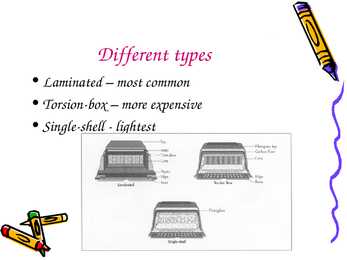
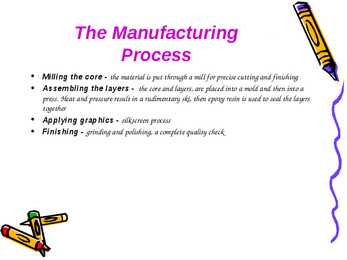
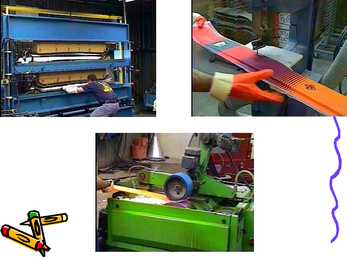
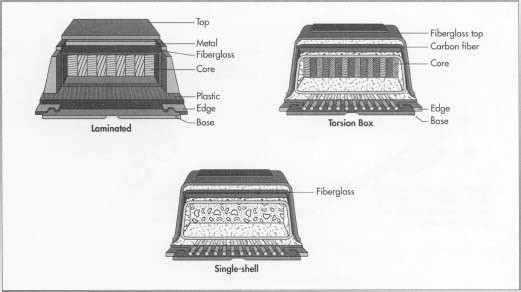
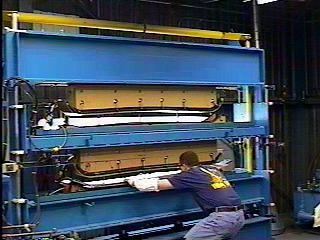
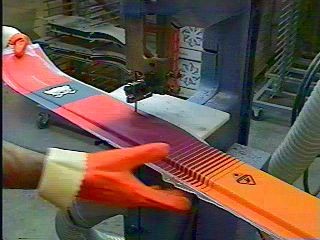
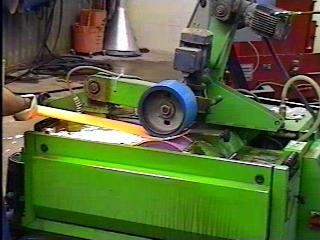
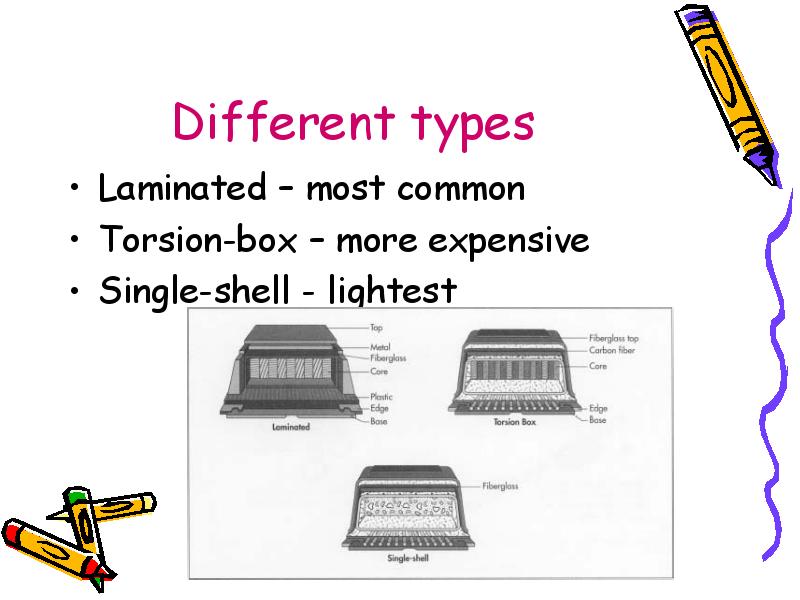
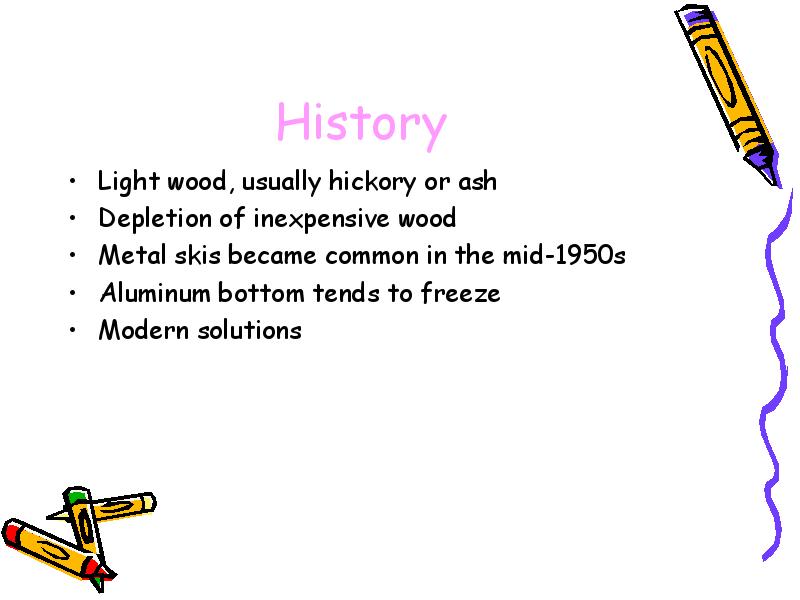
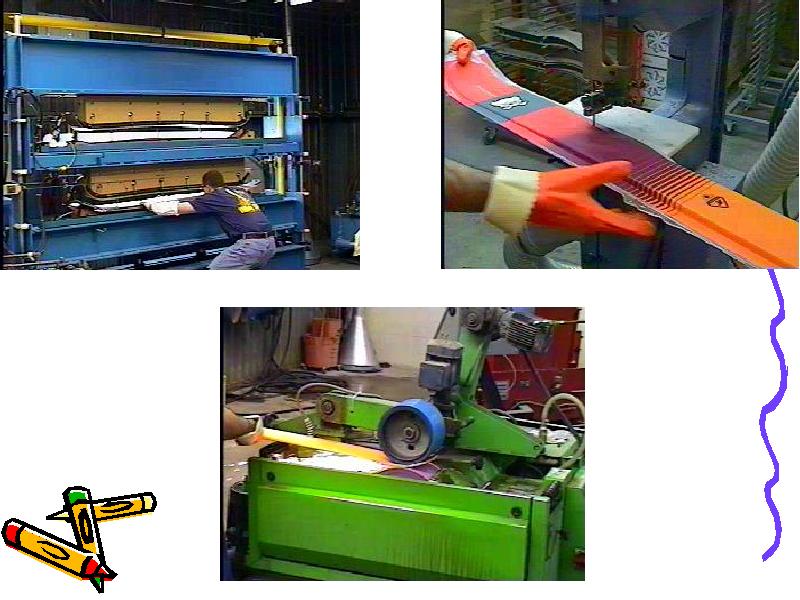
Making mountain skis · Although Estonia is geographically not best suited for mountain skiing, · The most common materials for the outer part of the skis are it is still quite popular. The largest market is perhaps in the United States, but also in mountainous parts of Europe. fiberglass, carbon fibers, or a type of epoxy. Polyethylene is the most · Throughout history, alpine skis have been made out of light wood, popular material used in the bottom part of modern skis. One of the usually hickory or ash, steel edges were introduced on the bottom for drawbacks of the polyethylene base is its softness, and with time the ski can smoother glide, but the depletion of inexpensive wood meant a need for become scratched by small stones and ice. A polyethylene candle is used by pro
SISUKORD ENERGY STORY................................................................................................................4 USES OF ENERGY............................................................................................................. 4 2.1 Uses of energy in homes...............................................................................................5 2.2 Types of energy used in homes.................................................................................... 6 2.3 Energy use in different types of homes........................................................................ 6 2.4 Commercial Energy Use...............................................................................................9 2.5 Industrial and Manufacturing Energy Use..................................................................11 2.6 Transportation Energy Use.........................................................................................12 RENE
Introduction (slide 2) In this presentation I'd like to give a brief overview of clay bricks. I'll speak about 15min to allow time for questions at the end. Firstly clay bricks are known for centuries as one of the most solid and reliable structural elements is set to play a role in reducing global warming. Apart form the many benefits obtained from using clay bricks in construction, such as their durability, insulation properties and aesthetic qualities, recent findings show that they also produce less carbon emissions than any other masonry material. History (slide 3) In more detail the earliest bricks were dried bricks, meaning they were formed from clay- bearing earth or mud and dried usually in the sun until they were strong enough for use. The oldest discovered bricks, originally made from shaped mud and dating before 10000 BC, were found in Mesopotamia related to the first known cities. Ceramic or fired bricks were first introduced by the Romans. These were mainly flat, broad
BOOKS (From Wikipedia, the free encyclopedia) A book is a set or collection of written, printed, illustrated, or blank sheets, made of paper, parchment, or other various material, usually fastened together to hinge at one side. A single sheet within a book is called a leaf, and each side of a leaf is called a page. A book produced in electronic format is known as an electronic book (e-book). Books may also refer to works of literature, or a main division of such a work. In library and information science, a book is called a monograph, to distinguish it from serial periodicals such as magazines, journals or newspaper. The body of all written works including books is literature. In novels and sometimes other types of books (e.g. biographies), a book may be divided into several large sections, also called books (Book 1, Book 2, Book 3, etc.). A lover of books is usually referred to as a bibliophile, or, more informally, a bookworm. A store where books are bought and sold is a bookstore
TOPICS FOR SPEAKING CYLINDER FRAME The cylinder section of the engine consists of a number of cylinder blocks, which are tightened together with the engine frame and the bedplate by means of through- going stay bolts. Two central bores, one at the top and one halfway down inside the cylinder block, enclose the cylinder liner. The upper part of the cylinder block forms part of the cooling water space around the central part of the cylinder liner, whereas the lower part forms the scavenge air space. A central bore in the bottom of the cylinder block encloses the piston rod stuffing box. The bottom is double with a hollow space through which cooling water is circulated. On the exhaust side of the cylinder block there is a circular opening leading into the longitudinal scavenge air receiver of the engine. Furthermore, there is an inlet pipe for cooling and lubricating oil. The cylinder block is provided with cleaning and inspection covers for the cooling water and
Vocabulary with definitions Body and exterior Body components, including windows and trim: · Bonnet/hood : UK (US hood) the metal cover over the part of a car where the engine is I looked under the bonnet and clouds of smoke poured out. (KAPOTT) · Bonnet/hood latch: a type of mechanical fastener that is used to join two (or more) objects or surfaces together while allowing for the regular or eventual separation of the objects or surfaces. · Bumper: a horizontal bar along the lower front and lower back part of a motor vehicle to help protect it if there is an accident. (AMORTISAATOR/PÕRKERAUD) · Unexposed bumper can´t be seen · Exposed bumper can be seen · Cowl screen: (KAITSEVÕRE) · A cowling: is the covering of a vehicle's engine, most often found on automobiles and aircraft. (KAPOTT) A cowling may be used: · for drag reduction · for en
INTRODUCTION OF SUPPLY CHAIN MANAGEMENT (SCM) A supply chain is a network of facilities and distribution options that performs the functions of procurement of materials, transformation of these materials into intermediate and finished products, and the distribution of these finished products to customers. Supply chains exist in both service and manufacturing organizations, although the complexity of the chain may vary greatly from industry to industry and firm to firm. Supply chain management is typically viewed to lie between fully vertically integrated firms, where the entire material flow is owned by a single firm and those where each channel member operates independently. Therefore coordination between the various players in the chain is key in its effective management. Cooper and Ellram [1993] compare supply chain management to a well-balanced and well-practiced relay team. Such a team is more competitive when each player knows how to
Tallinn 2013 Ott Speek Subject: English Geodesy Study group: GI-21b PETROLEUM PRESENTATION Petroleum (L. petroleum, from Greek: Πέτρα (rock) + Latin: oleum (oil) is a naturally occurring flammable liquid consisting of a complex mixture of hydrocarbons of various molecular weights and other liquid organic compounds, that are found in geologic formations beneath the Earth's surface. The name Petroleum covers both naturally occurring unprocessed crude oils and petroleum products that are made up of refined crude oil. A fossil fuel, it is formed when large quantities of dead organisms, usually zooplankton and algae, are buried underneath sedimentary rock and undergo intense heat and pressure. Petroleum is recovered mostly through oil drilling. This comes after the studies of structural geology (at the reservoir scale), sedimentary basin analysis, reservoir characterization (mainly in terms of porosity and permeable structures). It is refined and separated
 annaabi.ee











Kõik kommentaarid