Leidsid 33 sarnast õppematerjali, mis on seotud failiga "Phrasal verbs: Pass and Pull". Need materjalid aitavad sul teemat sügavamalt mõista.
pull, pass, passed, through, something, someone, around, manage, managed, opportunity, away, without, apart, real, message, decline, here, yesterday, passing, property, ahead, move, fight, back, losing, road, police, phrasal, verbs, convince, fake, money, market, invitation, gets, change, subject, british, everybody, there, teacher, handout, georgiacarry out- complete or accomplish st carry over- to continue to another time or situation carry through- to survive carry through- to accomplish, complete successfully pull ahead- overtake, move into the lead or in front pull apart- top from fighting pull apart- weaken an argument or theory pull out- bus or train leaving station pull out- move into traffic pull out- withdraw pull back- score a goal or point when behind pull back- retreat to previous position pull back- decide not to do something previously planned pull down- demolish pull down- depress someone pull down- earn (colloquial) see off- to accompany one to the point of departure for a trip and saygood-bye upon departure see off- to accompany someone who is leaving something see off- to escort someone away from something see off OUT?????- chase somebody or something away see about- to confer with someone about someone or something see about- to investigate see about- to get information
PUT ACROSS (separable) to communicate; convey effectively During the meeting, management put across the message that our concerns were insignificant. PUT AWAY (separable) to discard; renounce Let's put away our worries, and live for the moment. (separable) to consume I watched Max put away several hamburgers in just a few minutes. (separable) to confine; incarcerate; imprison The government put Sherman away for a year for having the wrong information on his website. PUT BACK (separable) to place something where it was previously When you finish the milk, please don't put the empty container back in the fridge. PUT DOWN (separable) to insult or make disparaging remarks about someone I feel sorry for Max. Everytime he and Mary get together with their friends Mary puts him down in front of everybody. (separable) to kill a sick or injured animal (usually out of mercy) The vet said it was necessary to put down the race horse because of its broken leg. PUT OFF (separable) to postpone
post box. wall. chair. hands. Viljandi 2009 Viljandi County Gymnasium 2. Prepositions of movement Picture It Clip Art Preposition Example "He carried the rubbish to the to bin." "The train came through the through tunnel." across "He swam across the channel." along "He walked along the road." down "He skied down the mountain." over "They walked over the bridge."
" "I don't know if I'll make it back in time." I gestured at my yoga pants and fitted workout tank. "After I time the walk to work, I'm going to hit the gym." "Walk fast, work out faster." Cary's perfectly executed arched brow made me laugh. I fully expected his million-dollar face to appear on billboards and fashion magazines all over the world one day. No matter his expression, he was a knockout. "How about tomorrow after work?" I offered as a substitute. "If I make it through the day, that'll be worth celebrating." "Deal. I'm breaking in the new kitchen for dinner." "Uh..." Cooking was one of Cary's joys, but it wasn't one of his talents. "Great." Blowing a wayward strand of hair off his face, he grinned at me. "We've got a kitchen most restaurants would kill for. There's no way to screw up a meal in there." Dubious, I headed out with a wave, choosing to avoid a conversation about cooking. Taking
But of the tree of the knowledge of good and evil, thou shalt not eat of it: for in the day that thou eatest thereof thou shalt surely die. Genesis 2:17 PREFACE I'd never given much thought to how I would die -- though I'd had reason enough in the last few months -- but even if I had, I would not have imagined it like this. I stared without breathing across the long room, into the dark eyes of the hunter, and he looked pleasantly back at me. Surely it was a good way to die, in the place of someone else, someone I loved. Noble, even. That ought to count for something. I knew that if I'd never gone to Forks, I wouldn't be facing death now. But, terrified as I was, I couldn't bring myself to regret the decision. When life offers you a dream so far beyond any of your expectations, it's not reasonable to grieve when it comes to an end. The hunter smiled in a friendly way as he sauntered forward to kill me. 1. FIRST SIGHT My mother drove me to the airport with the windows rolled down
PHRASAL VERB PULL PULL - to remove from a fixed position (the dentist pulled the tooth) - to rip or tear (the dog pulled the toy to pieces) - to strain (a muscle, for example) injuriously. PULL DOWN 1) TO DEMOLISH They pulled down the old sports stadium to build a new one. 2) TO DEPRESS SOMEONE John was really pulled down by his recent divorce. 3) TO MOVE SOMETHING FROM A HIGHER POSITION TO A LOWER ONE The sun was shining in my eyes so I pulled down the blinds. PULL IN 1) TRAIN OR BUS ARRIVAL AT A STATION The train pulled in right on time. 2) TO ATTRACT A CROWD The festival really pulled in the crowds. 3) TO EARN I pulled in more this year than last year. How about you? PULL THROUGH - to recover from an illness We didn't know if he was going to pull through but in the end he did. PULL UP - to slow and stop a car
envelope is heavy. You can just send registered letter! J: - And if you don't know the exact address of addressee, you can send post restante letters. H: - And we can send even gifts for birthdays! Of course, it's not cheep, but it's better than nothing. I mean sending parcels. J: - Yeah, that's good. They go not very fast, but, after all, if there is no occasion to congratulate you nearest and dearest, it's really nice thing! But you shouldn't forget to insure your parcel in case there is something valuable. H: - Then, we shouldn't forget about telegrams! Urgent, express, photo, greetings...They are so useful if we really need to say something to those who are far! J: - And very pleasant moment we can cash our money orders!!! 2.Making a trunk call H: - I what to make a trunk call, so I'm calling to switchboard. Hello! I'd like to book a trunk call. Could you put me through to Moscow? J: - Of course. Give me the number of subscriber. Ah, well... The line isn't engaged, but
Maturita Solutions Advanced Workbook Key stand bananas and coffee! It's a bit 3 1 to 8 of Unit 1 uncanny really. Is it something she's 2 about 9 century passed on to me genetically, or is it 3 like 10 assumed / 1A Memories page 3 learned behaviour? Who knows? 4 of thought / 1 See exercise 2 2 5 6
27. Use who, not which, for people in relative structures. The woman who lives upstairs is from Thailand. (NOT The woman which lives upstairs is from Thailand.) I don't like people who shout all the time. (NOT I don't like people which shout all the time.) 28. Use for, not during, to say `how long'. We waited for six hours. (NOT We waited during six hours.) He was ill for three weeks. (NOT He was ill during three weeks.) 29. Use to ..., not for ..., to say why you do something. I came here to study English. (NOT I came here for study English.) She telephoned me to explain the problem. (NOT She telephoned me for explain the problem.) 30. Use reflexives (myself etc) when the object is the same as the subject. I looked at myself in the mirror. (NOT I looked at me in the mirror.) Why are you talking to yourself? (NOT Why are you talking to you?) 31. Use a present tense to talk about the future after when, until, as soon as, after, before etc.
Marks: /10 5 Complete these sentences using an appropriate word in each space. 1 The film was very ________________________ and not at all boring. 2 The party was very ________________________. Nobody wore casual clothes. 3 Heavy metal music is so ________________________. Can't you listen to something quiet? 4 We bought a ________________________ pizza because the restaurant was expensive. 5 These trousers are too ________________________. I need some bigger ones! 6 He's a very _____________________ basketball player and so scores more points than the short ones. 7 The rest of the flat is neat but her room is very ________________________. 8 It was a ________________________ thing to do, but he isn't very clever. 9 This test is ________________________
They told him he was to live with other wards of the state to become educated and learn a trade. Oliver did not mind this, but soon after he arrived, the state decided to implement a plan that would save money by feeding the people very little. After a time on this diet, the boys at the table chose Oliver to go ask the head cook for more gruel. Oliver did this, and was taken away. A flyer was then posted that said the state would give five pounds for someone to take young Oliver off their hands. Chapter3: The board locked up Oliver in what he called the `dark room' all day until someone would take him as an apprentice. After several days of solitary confinement, several beatings, and being made an example of at mealtime, Oliver thought he would do just about anything to leave the workhouse. However, when a chimneysweep, Mr. Gamfield, came to get the money offered and Oliver the boy quickly changed his mind. The board assessing Mr
the reason why he or she is drawn toward it, feels an affinity with it. Because of its ethereal nature, its form obscures the indwelling spirit to a lesser degree than is the case with other life-forms. The exception to this are all newborn life-forms – babies, puppies, kittens, lambs, and so on. They are fragile, delicate, not yet firmly established in materiality. An innocence, a sweetness and beauty that are not of this world still shine through them. They delight even relatively insensitive humans. So when you are alert and contemplate a flower, crystal, or bird without naming it mentally, it becomes a window for you into the formless. There is an inner opening, however slight, into the realm of spirit. This is why these three “en-lightened” life-forms have played such an important part in the evolution of human consciousness since ancient times; why, for
I'll fix it anyway, and then you can have it or not, as you like." She stood up and placed her sewing on the table by the lamp. "Sit down," he said. "Just for a minute, sit down." It wasn't till then that she began to get frightened. "Go on," he said. "Sit down." She lowered herself back slowly into the chair, watching him all the time with those large, bewildered eyes. He had finished the second drink and was staring down into the glass, frowning. "Listen," he said. "I've got something to tell you." "What is it, darling? What's the matter?" He had now become absolutely motionless, and he kept his head down so that the light from the lamp beside him fell across the upper part of his face, leaving the chin and mouth in shadow. She noticed there was a little muscle moving near the corner of his left eye. "This is going to be a bit of a shock to you, I'm afraid," he said. "But I've thought about it a good deal and I've decided the only thing to do is tell you right away
, Hoboken, New Jersey. Published simultaneously in Canada. No part of this publication may be reproduced, stored in a retrieval system, or transmitted in any form or by any means, electronic, mechanical, photocopying, recording, scanning, or otherwise, except as permitted under Section 107 or 108 of the 1976 United States Copyright Act, without either the prior written permission of the Publisher, or authorization through payment of the appropriate per-copy fee to the Copyright Clearance Center, Inc., 222 Rosewood Drive, Danvers, MA 01923, (978) 750-8400, fax (978) 750-4470, or on the web at www.copyright.com. Requests to the Publisher for permission should be addressed to the Permissions Department, John Wiley & Sons, Inc., 111 River Street, Hoboken, NJ 07030, (201) 748-6011, fax (201) 748-6008, e-mail: [email protected].
.. up to a point. But it's not the type of advice that will make friends greet you with "What the #$%& have you been doing?!", whether in the dressing room or on the playing field. That requires an altogether different approach. The Unintentional Dark Horse Let's be clear: I'm neither a doctor nor a PhD. I am a meticulous data cruncher with access to many of the world's best athletes and scientists. This puts me in a rather unusual position. I'm able to pull from disciplines and subcultures that rarely touch one another, and I'm able to test hypotheses using the kind of self-experimentation mainstream practitioners can't condone (though their help behind the scenes is critical). By challenging basic assumptions, it's possible to stumble upon simple and unusual solutions to long-standing problems. Overfat? Try timed protein and pre-meal lemon juice. Undermuscled? Try ginger and sauerkraut. Can't sleep
1. Slow down. Obey the speed limit even if every other car is surpassing it. Remember that police officers often stay hidden from view while looking for speeders. If you're caught driving too fast, they won't hesitate to give you a ticket. 2. 2 Let others pass you. Defensive driving means letting others go ahead-not defending your position in traffic. Avoid the urge to be a vigilante ("Oh yeah? Let me show you what it's like to be cut off like that!") Accept the fact that someone is always going to think they're in more of a hurry than you. These are the drivers you want to move far away from, not to 'teach them a lesson.' 3 3 Try to avoid driving in bad weather. Always keep your windshield wipers going in the rain or
(Carrie kukkus koolist välja.) FIND OUT (discover): I found out the reason for his actions. (Ma sain ta tegude põhjuse teada.) GET ALONG WITH (have a good relationship with): I don't get along with my dad. (Ma ei saa oma isaga läbi.) GET BY (survive): Michael should get by with that money. (Michael peaks selle rahaga hakkama saama.) GET OVER (recover): Hallie hasn't still got over the divorce. (Halle ei ole ikka veel lahutusest üle saanud.) GET THROUGH WITH (finish): Will you ever get through with that essay? (Kas sa kunagi selle essee lõpetad ka?) GET UP (arise): Sue got up at 9 a.m. (Sue ärkas kell 9 hommikul.) GO ON (continue). Henry will go on with that survey. (Henry jätkab seda uuringut.) GO ON (happen): Mother came to see what was going on.(Ema tuli vaatama, mis toimub.) GO OVER (review): The students went over the material. (Õpilased vaatasid materjali üle.) GO THROUGH (use up): Have you gone through all your money? (Kas sa oled kogu oma raha ära kulutanud?)
Mary Martin follows Gordie into the apple trees but losts him. The whole morning they were waiting for the orderlies and the tribal police to come, they heard him cry like a drowned person. to be/stay at somebody's beck and call (230) - Ready to comply with any wish or command. Lipsha is grateful for his Grandma... a smokescreen (232) - An action or statement used to conceal actual plans or intentions.; A disguise. to hanker after/for something (239) - To want someone or something; to long for someone or something. The problem wasn't that Nector was not all there, but that what was there of him often hankered after Lamartine. to prickle (241) - slough (242) - A swamp.; The dropping off of dead tissue from living flesh. malpractice (245) - 1. Improper or negligent treatment of a patient, as by a physician, resulting in injury, damage, or loss. 2. Improper or unethical conduct by the holder of a professional or official position. 3. The act or an instance of improper practice.
whichever he chooses of the girls; though I must throw in a good word for my little Lizzy." "I desire you will do no such thing. Lizzy is not a bit better than the others; and I am sure she is not half so handsome as Jane, nor half so good-humoured as Lydia. But you are always giving her the preference." "They have none of them much to recommend them," replied he; "they are all silly and ignorant like other girls; but Lizzy has something more of quickness than her sisters." "Mr. Bennet, how can you abuse your own children in such a way? You take delight in vexing me. You have no compassion for my poor nerves." "You mistake me, my dear. I have a high respect for your nerves. They are my old friends. I have heard you mention them with consideration these last twenty years at least." "Ah, you do not know what I suffer." "But I hope you will get over it, and live to see many young men of four thousand a year
6 I enjoy relaxing in front of the TV 5 worthless 11 overpriced 12 Everyone wants to be happy. in the evening. 6 profitable 12 precious 7 I finally managed to solve the 2C Buying abroad page 13 crossword. 3 a 5 be dirt cheap 1 1 unfurnished 5 basement 8 I reminded Millie to bring some b 6 cost a fortune 2 detached 6 period CDs to the party.
What! Will you find no difference between Hypocrisy and genuine devoutness? And will you treat them both alike, and pay The self-same honour both to masks and faces Set artifice beside sincerity, Confuse the semblance with reality, Esteem a phantom like a living person, And counterfeit as good as honest coin? Men, for the most part, are strange creatures, truly! You never find them keep the golden mean; The limits of good sense, too narrow for them, Must always be passed by, in each direction; They often spoil the noblest things, because They go too far, and push them to extremes. I merely say this by the way, good brother. ORGON You are the sole expounder of the doctrine; Wisdom shall die with you, no doubt, good brother, You are the only wise, the sole enlightened, The oracle, the Cato, of our age. All men, compared to you, are downright fools. CLEANTE I'm not the sole expounder of the doctrine, And wisdom shall not die with me, good brother.
Scientific (17.-18. century) o Nucleus, formula, vertebra, corpuscle, atomic, carnivorous, incubate, aqueous, molecule Latin abbreviations o i.e – id est – that is to say Latin adjectives for english nouns o Nasal, oral, solar, paternal, maternal, lithic, lunar, filial Actual inflected Latin verbs used as nouns o Audio, audit, caveat, video. Endings dropped or adapted, often through French o add, addition, additive, agent, agentive, aqueduct, candle, colo(u)r, colossal, consider, contemplate, decide, decision, erupt, eruption, general, generic, hono(u)r, hono(u)rable, honorary, igneous, ignite, ignition, ignoble, illiteracy, illiterate, immoral, immortality, ingenious, ingenuity, literacy, literate, literature, meditate, meditation, meditative,
it ends. This anxiety arises from his belief that the war will have ruined his generation, will have so eviscerated his and his friends' minds that they will always be "bewildered." Against such depressing expectations, Paul is relieved by his death: "his face had an expression of calm, as though almost glad the end had come." The war becomes not merely a traumatic experience or a hardship to be endured but something that actually transforms the essence of human existence into irrevocable, endless suffering. The war destroys Paul long before it kills him. Kantorek Though he is not central to the novel's plot, Kantorek is an important figure as a focus of Remarque's bitter critique of the ideals of patriotism and nationalism that drove nations into the catastrophe of World War I. Kantorek, the teacher who filled his students' heads with
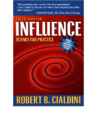
Polish neighborhood, in a historically German city (Milwaukee), in an otherwise rural state. Preface The initial version of Influence was designed for the popular reader, and as such, an attempt was made to write it in an engaging style. In the subsequent versions, that style is retained, but in addition, I present the research evidence for my statements, recommendations, and conclusions. Although they are dramatized and corrobo- rated through such devices as interviews, quotes, and systematic personal observa- tions, the conclusions of Influence are based on controlled, psychological research. This fact allows the reader to feel confident that the book is not "pop" psychology but represents work that is scientifically grounded. The subsequent versions also provide new and updated material, chapter summaries, and study questions to en- hance its utility.
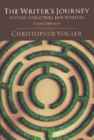
• A revised chapter which looks back at the Star Wars phenomenon and analyzes the six feature films as an epic on the theme of father-son relationships • New illustrations and diagrams that give additional depth to the mythic principles • A final chapter, "Trust the Path," an inspiring call to adventure for those who want to discover themselves through writing "This book is like having the smartest person in the story meeting come home with you and whisper what to do in your ear as you write a screenplay. Insightfor insight, step for step, Chris Vogler takes us through the process of connecting theme to story and making a script come alive. " - Lynda Obst, Producer, Sleepless in Seattle, How to Lose a Guy in 10 Days; Author, Hello, He Lied
It gives you an idea of what grammar is about. Read and remember it. Every name is called a noun, Pronoun As field and fountain, street and town. Noun In place of noun the pronoun stands, As he and she can clap their hands. The adjective describes a thing, As magic wand or bridal ring. Adjective Most verbs mean action, something done, Verb To read and write, to jump and run. How things are done the adverbs tell, As quickly, slowly, badly, well. ition Adverb Prepos The preposition shows relation, As in the street or at the station.
"I am become death, the destroyer of worlds." So said the physicist Robert Oppenheimer, who helped to invent the atomic bomb. The two bombs dropped on Hiroshima and Nagasaki in 1945 killed around 200,000 Japanese people. No other species has ever wielded such power, and no species could. The technology behind the atomic bomb only exists because of a cooperative hive mind: hundreds of scientists and engineers working together. The same unique intelligence and cooperation also underlies more positive advances, such as modern medicine. But is that all that defines us? In recent years, many traits once believed to
Thus Stylistics is a part of theory of literature (literary criticism) and poetics. Poetics is a science viewing a structure of a literary work and esthetic means "employ with it". Linguistic Stylistics studies linguistic facts from the point of view of their ability to convey extra shades of meaning (connotations we call them). Any speech act (oral or written) is meant to pass an information. There are 2 types of information: 1. the content proper 2. additional information, which is connected with the conditions and participants of the act of the communication. This additional information finds expression in emotional overtones that are attached to the main content of the utterance. Every speaker has experienced that the form of speech may vary depending on a speaker, a
Phrasal verb BREAK Anni Haasma Tartu 2009 Break sth off SEPARATE to separate a part from a larger piece, or to become separate: He broke off a piece of chocolate. RELATIONSHIP to end a relationship: They've broken off their engagement. The governments have broken off diplomatic relations. STOP DOING to suddenly stop speaking or doing something: She broke off in the middle of a sentence. Break away ESCAPE to leave or to escape from someone who is holding you: He grabbed her, but she managed to break away. FIGURATIVE One or two of the tourists broke away from the tour group. NOT AGREE to stop being part of a group because you begin to disagree with them: Some members of the British Labour Party broke away to form the Social Democratic Party. Break out
sense of slow pace or slowness, heaviness. RHYME - is a special kind of regular sound repetition occurring at the end of poetic lines or at other, symmetrically placed stretches of a poem. Rhyming words are often situated at a regular distance from each other. Rhyme has a twofold nature, it plays an important role in sound orchestration. Rhyme is the most obvious regular sound pattern in poetry that helps to structure ideas by linking lines together through similarities in the sounds of correlated words. The rhyming words have either identical or similar sound combinations. Identity of sounds results in full rhymes, comprising the repetition of the last stressed vowel and the following consonant: tide - side, gold - cold, land - hand, miss - kiss. Incomplete rhymes derive from certain modifications of full rhymes. Incomplete Vowel rhymes require identical vowels, whereas consonants are different: world - serve, bulb - skull, pen - best
institutions. When a widow drops by to ask Stiva's help with a petition she's submitting to the government, Stiva helps her--not because he actually cares about the woman or her cause, but because he wants her to think well of him. We find out about Stiva's history: he was lazy in school but nevertheless used his connections to achieve a distinguished government career. Stiva represents the worst aspects of the social world, since he hasn't earned his way through life. On his way out of the house, Stiva almost forgets to apologize to Dolly. When he does so, she becomes furious with him, humiliated by his pity. She realizes she wants his love but can never have it. It is important to note here that Dolly and Stiva are the product of an arranged, "French," marriage, in which romance was not a major element. Their marriage, modeled on those of 18th and 19th century France, was arranged to augment the families' social status.
I'm waiting you to miss me. 8. You're getting on my nerves!!! 9. 9. If you do that I'll break all the bones in your body!!! 10. Sometimes just the sound of someone's voice can make you happy!!! :) xx (Zayn Malik's words on twitter) 11. I'm not so rich to buy cheap things. 12. I would do anything for love. 13. All I need is love and you're my love. 14. Never wanting to leave, always wanting to return. 15. We were born to love, not to hide. 16. What I feel is something real. 17. Take my eyes, but let me see you. Take my mind, but let me think about you. Take my hands, but let me touch you. But don't try to take my heart, because it's already yours! (or “already with you”). 18. If you love something let it go. If it's come back to you it's yours, If it doesn't, it never was. 19. 19. Love never fails. People fails on Love. 20. Lives are for living I live for you. Dreams are for dreaming I dream about you.
Body language Body language means communication with the movement or position of the human body. It can be conscious or unconscious. It is something that is noticed by everybody but is not always given enough attention. We sometimes ignore it and try to hide behind words, but we should never forget that we cannot fool everyone! Children react to body language because they experience the world through intuition. The same can be true for adults when feelings are involved. People who are in bad shape emotionally will often place great importance in it. In fact, they often pick up the smallest hint of a lapse in attention in the person they are speaking to. And they frequently jump to the conclusion that they are boring or a nuisance - thus compounding any sense of depression or poor self-esteem. A way to learn the secrets of body language is to watch television with the sound turned off and
 annaabi.ee