 50 punkti
Autor soovib selle materjali allalaadimise eest saada 50 punkti.
50 punkti
Autor soovib selle materjali allalaadimise eest saada 50 punkti.
 ~ 11 lehte
Lehekülgede arv dokumendis
~ 11 lehte
Lehekülgede arv dokumendis
 2017-04-11
Kuupäev, millal dokument üles laeti
2017-04-11
Kuupäev, millal dokument üles laeti
 2 laadimist
Kokku alla laetud
2 laadimist
Kokku alla laetud
 0 arvamust
Teiste kasutajate poolt lisatud kommentaarid
0 arvamust
Teiste kasutajate poolt lisatud kommentaarid
 Mann Rask
Õppematerjali autor
Mann Rask
Õppematerjali autor
Lawrence River and to the Hudson River by a canal. Between Lake Ontario and Lake Erie is Niagara Falls (51 m). Another large lake in the USA is Great Salt Lake. It is saltier than the sea. Rivers The Mississippi river is the major river of North America and the United States. It flows from north-western Minnesota south to the Gulf of Mexico. It is a significant transportation artery and when combined with its major tributaries (the Missouri and the Ohio rivers) it becomes the third largest river system in the world (at 6,236 km). The western tributaries are the Red River, the Arkansas and the Missouri. The eastern tributaries are the Tennessee and the Ohio. Its name means the Father of Waters in the Red Indian. Together with its tributaries it forms 20,000 km of navigable waterways. The Colorado River is a river in the south-western United States, approximately 1450 miles long,
Book 1 BASIC ENGLISH BASIC ENGLISH GRAMMAR GRAMMAR BASIC ENGLISH GRAMMAR Book 1 Book 1 Younger students at beginning to intermediate levels will greatly benefit from this step-by-step approach to English grammar basics. This is the ideal supplement to your language arts program whether your students are native English speakers or beginning English language learners. Skill-specific lessons make it easy to locate and prescribe instant reinforcement or intervention. · Illustrated lessons a
Malestrom Major Rivers N am e Continent Out fl o w T o tal Lengt h (mi.) Nile Africa Mediterran ean Sea 4,1 60 Am azo n South Am erica Atlantic Oce an 4,000 Ch ang (Yangtze) Asia East China Sea 3,964 M ississippi-M iss o u ri N o rt h Am eri ca Gul f of Mexico 3,710 Major Deserts Name Continent Area (sq. m i.)
Some of the things you will learn in THE CODEBREAKERS • How secret Japanese messages were decoded in Washington hours before Pearl Harbor. • How German codebreakers helped usher in the Russian Revolution. • How John F. Kennedy escaped capture in the Pacific because the Japanese failed to solve a simple cipher. • How codebreaking determined a presidential election, convicted an underworld syndicate head, won the battle of Midway, led to cruel Allied defeats in North Africa, and broke up a vast Nazi spy ring. • How one American became the world's most famous codebreaker, and another became the world's greatest. • How codes and codebreakers operate today within the secret agencies of the U.S. and Russia. • And incredibly much more. "For many evenings of gripping reading, no better choice can be made than this book." —Christian Science Monitor THE Codebreakers
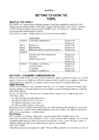
CHAPTER 1 GETTING TO KNOW THE TOEFL WHAT IS THE TOEFL? The TOEFL is a comprehensive English language examination required by more than 3,000 colleges and universities in the United States, Canada, and other parts of the world. In addition, foreign born professionals frequently need a TOEFL score for certification to practice their profession in the United States or Canada. The TOEFL is a timed test that consists of the three sections listed here. THE TOEFL Section 1 Listening Comprehension 50 questions 35 minutes Part A Statements 20 questions Part B Short Dialogs 15 questions Part C Minitalks and Extended Conversation
More praise for Influence: Science and Practice! "We've known for years that people buy based on emotions and justify their buying decision based on logic. Dr. Cialdini was able, in a lucid and cogent manner, to tell us why this happens." --MARK BLACKBURN, Sr. Vice President, Director of Insurance Operations, State Auto Insurance Companies "Dr. Cialdini's ability to relate his material directly to the specifics of what we do with our customers and how we do it, enabled us to make significant changes. His work has enabled us to gain significant competitive differentiation and advantage" -LAURENCE HOF, Vice President, Relationship Consulting, Advanta Corporation "This will help executives make better decisions and use their influence wisely ... Robert Cialdini has had a greater impact on my thinking on this topic than any other scientist." -CHARLES T. MUNGER, Vice Chairman, Berkshire Hathaway, Inc.
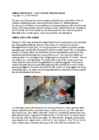
AMBER AND RUSSET - LATE COLOUR CHANGE GENES Copyright 2014, Sarah Hartwell The ancestors of the domestic cat were nondescript black/brown striped tabbies. Over the centuries, mutation produced a wide array of colours based on 2 different pigments. Eumelanin gives the blacks, browns and blues while phaeomelanin gives the reds, fawns and creams. A few other genes give further variations on those colours such silvers, colourpoints and solids/selfs. Mutations continue to occur and unexpected colours also turn up due to inbreeding where recessive genes, hidden for generations, start showing up. AMBER AND LIGHT AMBER During the 1990s, some purebred Norwegian Forest Cats in Sweden produced chocolate/lilac and cinnamon/fawn offspring. However, those colours are not found in the purebred Norwegian Forest Cat gene pool. Had the gene pool become polluted by someone, perhaps generations ago, breeding their Norwegian Forest Cat to another breed? Was it a spontaneous mutation? Crossing of those c
Philosophy of Language Philosophy of Language: a Contemporary Introduction introduces the student to the main issues and theories in twentieth and twenty-first-century phi- losophy of language, focusing specifically on linguistic phenomena. Topics are structured in four parts in the book. Part I, Reference and Referring, includes topics such as Russell's Theory of Descriptions, Donnellan's distinction, problems of anaphora, the description theory of proper names, Searle's cluster theory, and the causalhistorical theory. Part II, Theories of Meaning, surveys the competing theories of linguistic mean- ing and compares their various advantages and liabilities. Part III, Pragmatics and Speech Acts, introduces the basic concepts of linguistic pragmatics, includes a detailed discussion of the problem of indirect force and surveys approaches to metaphor. Part IV, new to this edition, examines the four theories of metaphor. Features of Philosophy of Language include: · new c
 annaabi.ee






























Kõik kommentaarid