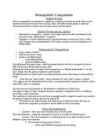
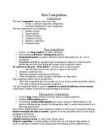
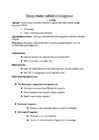
Monopolistic Competition Market Power Firms in monopolistic competition or imperfectly competitive markets are more likely to have limited market power because there are many firms with differentiated products (there are substitutes) and there is relative ease of entry and exit into the market Market Power among Sellers · Monopolistic competition - a market with a large number of sellers and relatively free entry; each firm "differentiates" its product. · Oligopoly - a market characterized by significant barriers to entry and "a few "sellers who recognize their interdependence in the market; products may be homogeneous or differentiated. Monopolistic Competition · Large number of sellers · relative ease of exit / entry
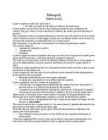
violated. This gives sellers or buyers the ability to influence the market price and allocation of resources Pure competition results in an optimal allocation or resources given the objective of an economic system to allocate resources to their highest valued uses or to allocate relative scarce resource to maximize the satisfaction of (unlimited) wants in a cultural context. Pure competition is the ideal that is be benchmark to evaluate the performance markets. The economic theory of · monopolistic competitive markets, · oligopoly and · monopoly is used to suggest the nature of problems that may exist when firms or agents have market power and are able to distort prices away from the purely competitive optimum. The existence of market power is tied to the demand conditions the firm faces. If their product is (or can be differentiated), consumers may have a preference for one firm's output relative to others.
ressursid on ebaefektiivselt paigutatud. Edward Chamberlin luges pakkujate rohkust aga positiivseks, nii on tarbijatel valikuvõimalus ja nad saavad oma vajadusi rahuldada vastavalt soovidele. 3 Kasutatud allikad: 1. Kerem, K., Keres K., Randveer M. (2004). Mikroökonoomika alused. Tallinn: Külim 2. Arrak, A. (2002). Majanduse ABC. Kättesaadav: http://www.avatar.ee/majanduseabc/ index.php?ID=102, 22. detsember 2017. 3. Monopolistic competition. Kättesaadav: http://www.economicsonline.co.uk/Business_ economics/Monopolistic_competition, 22. detsember 2017. 4. Bellante, D. (2004). Edward Chamberlin: Monopolistic Competition And Pareto Optimality. Kättesaadav: https://www.researchgate.net/publication/267415603_Edward_ Chamberlin_Monopolistic_Competition_And_Pareto_Optimality, 22. detsember 2017. 4
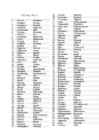
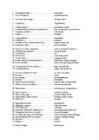
94. Legislation Seadusandlus 45. Concrete Betoon 95. Lossy Kadudega 46. Conflated Segunema 96. Lucrative Tulus 47. Consumption Tarbimine 97. Methodology Metoodika 124. Required Nõutav 98. Monolithic Monoliit 125. Retrieved Andmebaasist 99. Monopolistic Monopolistlik 126. Reverse Tagasikäik 100. Mount Alus 127. Sequence Jada 101. Noncommittal Ebamäärane 128. Shale Gas Kildagaas 102. Nuisance Tüütus 129. Significant Olulisi 103. Obliged Kohustatud 130. Sizing Dimensioneerimine 104. Occur Tekkida 131. Sophisticated Keerukamaid 105. Peripheral perifeerne 132. Source Allikas 106
· Perfect competition includes complete information. ex. Agriculture Pure competition markets do not actually exist. · Note: Pure competition does not actually exist in our society, and the agriculture industry is the closest industry to being purely competitive. The pure competition model is used as a standard to evaluate the efficiency of our economy (something to compare to and help our understanding of economy.) Monopolistic Competition · Involves large number of firms, but not as many as in pure competition. · Produces differentiated products · In marketing, product differentiation (also known simply as "differentiation" is the process of distinguishing a product or offering from others, to make it more attractive to a particular target market. This involves differentiating it from competitors' products as well as one's own product offerings
The population thinks that with such a high number and variety of different international media publications it would be impossible to deceive the public. The truth is media manipulation and propaganda is still all around us. Global news and magazines still dominate what kind of news see on television and latest fashion determines which clothes to wear. The large variety of international media publications does not necessarily mean more opinions as many of them belong the same monopolistic companies, which only distribute their content on different platforms and for different audiences across countries. This kind of concentration of media power can be a real threat to democratic societies. (Concentration, 1980). The story of a man who has taken all control over public media and uses it politically to govern a country is not only the history of Adolf Hitler, but can also be found in the modern day Europe. A living example of this could be found in Italy, where the former Prime
in our social emancipation. The main evil from which we suffer and the main barrier to social progress is the disgraceful inequality in the distribution of income and property that we still tolerate. We can only remove this evil by abolishing property as a main source of income for anyone. To do this, it will be necessary to modify the right of inheritance so that it is only possible to pass comparatively small sums of money or nothing at all from generation to generation. Private monopolistic control will bring into existence a better balanced and a more securely progressive economy. A socialised industry should be owned by the State and its technical management remain responsible to the nation. But it should retain all the advantages of small enterprise: plants that are small enough to be managed efficiently. With knowledge would come power. Better educated men and women, freed from the bonds
De Beers executives are at last free to visit and work directly in the largest diamond market, America. (Johannesburg. Windhoek 2004) DeBeers agreed to pay fine, but they was not certify that they are guilty. For conclusion of this case they were still winners, because the fine was not fateful to them and they were legally back again in American market, which is world's largest diamond market as we see on Table 2. Also the EU went to court with DeBeers to decrease their monopolistic position in Europe. In February 2006 European Commission decided that: World No. 1 diamond producer De Beers settled a monopoly abuse case with the European Commission by agreeing not to buy rough diamonds from Russian diamond miner Alrosa from 2009. The Commission said this would make more diamonds available in the market. (Miningmx 2009) With this sort moves they will decrease DeBeers monopoly and hope to get diamonds prices not so high.
299. Microeconomics ............................................. mikroökonoomika 300. Minister of economics affairs ........................majandusminister 301. Minumum wage .............................................. miinimumtasu 302. Monetary union .............................................rahaliit 303. Money ............................................................. raha 304. Money supply ................................................raha pakkumine 305. Monopolistic competition ..............................monopolistlik konkurents 306. Move offshore ................................................riiklikule järelevalvele mittekuuluv 307. Mutual funds ..................................................ühisfondide osakud 308. National currency ..........................................rahvusvaluuta 309. National dept .................................................riigivõlg 310. National income ........................................
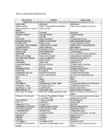
Loomulik monopol Natural monopoly Естественная монополия Mittetäielik konkurents Imperfect competition Несовершенная конкуренция Mittekokkuleppe oligopol Non-collusive oligopoly Не сговорная олигополия Monopol Monopoly монополия Monopolistliku konkurentsi Monopolistic competition Монополистическая конкуренция turg Murtud nõudluskõver Kinked demand curve «сломанная» кривая спроса Mänguteooria Game theory Теория игр Oligopol Oligopoly олигополия
samatoodangukõver, mis lõikub valitud samakulujoonega. + lahendatud ülesanded TURUSTRUKTUURID Majandusteadlased eristavad nelja peamist turustruktuuri, mille põhjal õppida tundma ning teha eeldusi turgude (ja nendes tegutsevate tootjate) käitumise kohta. Alljärgnev turustruktuuride klassifikatsioon põhineb ettevõtete arvul tootmisharus, alustades kõige suuremast: (1) täielik konkurents (perfect competition) Mittetäielik konkrents: (2) monopolistlik konkurents (monopolistic competition) (3) oligopol (oligopoly) 25 (4) monopol (monopoly) Eraldi: (5) monopson (monopsony) 1) Täielik konkurents (tunnused). Täieliku konkurentsi turul tegutseb suur hulk väikeseid iseseisvaid ettevõtteid, mis toodavad standardset toodangut. Seejuures ei suuda ükski neist iseseisvalt turuhinda mõjutada. Nii ostjad kui müüjad on hinnavõtjad.
Successive enhancements that Samuel made to the learning apparatus eventually led to the program winning a game against a former Connecticut checkers champion in 1962 (who immediately turned the tables and beat the program in six games straight). 1952 Heinz Nixdorf founded Nixdorf Computer Corp. in Germany. It remained an independent corporation until merging with Siemens in 1990. A complaint is filed against IBM, alleging monopolistic practices in its computer business, in violation of the Sherman Act. G. W. Dummer, a radar expert from Britain's Royal Radar Establishment presents a paper proposing that a solid block of materials be used to connect electronic components, with no connecting wires. 1953 IBM shipped its first electronic computer, the 701. Speedcoding: John Backus 1954 Texas Instruments announces the start of commercial production on silicon transistors. [110]
The program soon learned enough to outplay its creator. Successive enhancements that Samuel made to the learning apparatus eventually led to the program winning a game against a former Connecticut checkers champion in 1962 (who immediately turned the tables and beat the program in six games straight). 1952 Heinz Nixdorf founded Nixdorf Computer Corp. in Germany. It remained an independent corporation until merging with Siemens in 1990. A complaint is filed against IBM, alleging monopolistic practices in its computer business, in violation of the Sherman Act. G. W. Dummer, a radar expert from Britain's Royal Radar Establishment presents a paper proposing that a solid block of materials be used to connect electronic components, with no connecting wires. 1953 IBM shipped its first electronic computer, the 701. Speedcoding: John Backus. 1954 Texas Instruments announces the start of commercial production on silicon transistors. [110]
 annaabi.ee